Last updated: 2026-09-03 by Ted Sellers, Owner
Protect rooftop HVAC equipment with properly engineered hail guards, secure curb and flashing details, clear drainage, and documented roof maintenance. Effective rooftop HVAC protection keeps hail from striking vulnerable condenser coils while preserving airflow, service access, wind resistance, and the waterproof integrity of the roof system.
When Rooftop HVAC Protection Applies
Buildings with exposed low-slope equipment
This applies to warehouses, restaurants, offices, multifamily properties, schools, and retail buildings with condensers, makeup-air units, exhaust fans, or packaged units on the roof.
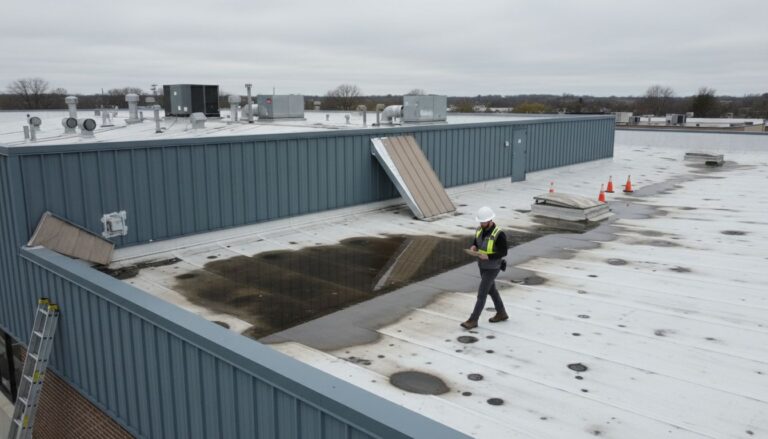
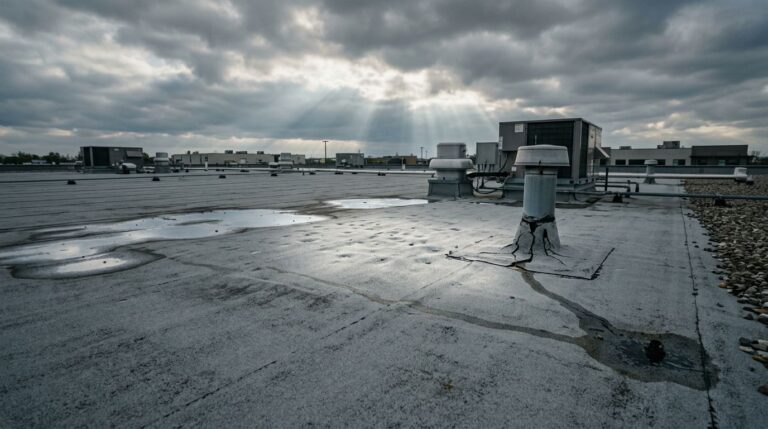
A commercial flat roof with multiple curbs and penetrations needs special attention before Minnesota’s spring and summer storm season. Hail can bend coil fins, dent fan guards, crack plastic components, loosen curb caps, and damage flashing where the unit meets the roof.
The National Weather Service defines a severe thunderstorm as one capable of producing hail at least one inch wide or wind gusts over 58 mph. Monitor severe thunderstorm safety guidance whenever a warning reaches Saint Paul, Minneapolis, Roseville, Maplewood, or nearby communities.
Situations that need a different plan
Hail guards are not a substitute for replacing unsafe equipment, repairing failed curbs, or correcting poor drainage. A guard also cannot fix a leaking condensate line or a roof membrane that has already reached the end of its service life.
Buildings with rooftop solar, fragile skylights, aging smoke vents, or deteriorated structural supports may need an engineer, HVAC contractor, or roofing professional involved before anything is attached. Never let a guard block equipment access, exhaust paths, or required service clearances.
Rooftop HVAC Protection Must Protect the Roof Too
Choose guards built for the actual unit
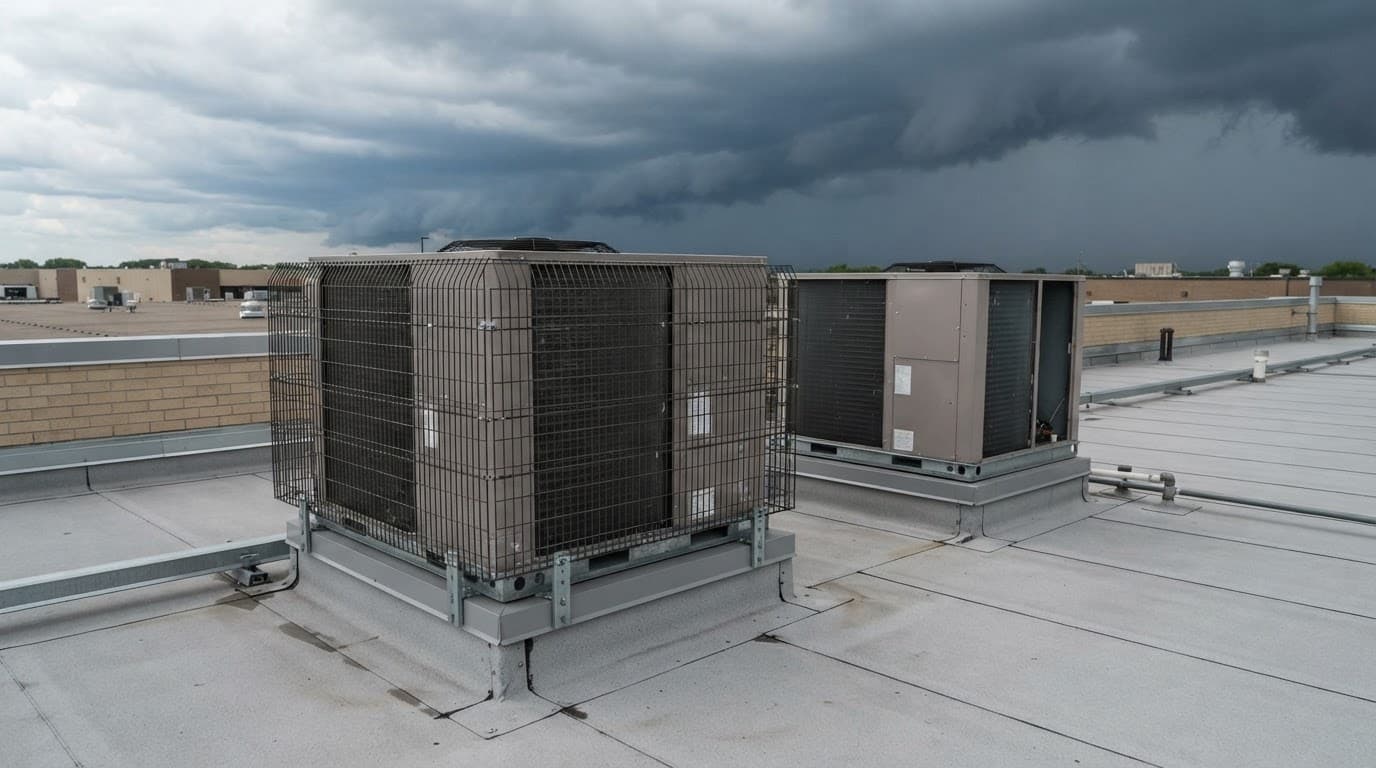
A proper hail guard uses a rigid frame and impact-resistant screen placed around the equipment’s exposed coils. The screen must stop direct impacts without choking airflow. It should also have removable or hinged sections so HVAC technicians can service the unit.
Hail guard installation guidance stresses that rooftop equipment and retrofitted guards must be secured against wind movement. That matters in the Twin Cities, where a hailstorm often brings strong gusts behind it.
Keep roof penetrations under control
Do not fasten a guard through the membrane without a roof-specific detail. A few careless screws can create more leaks than the guard prevents.
The best mounting approach depends on the unit, curb, structural frame, roof deck, wind exposure, and manufacturer requirements. Review flashing, pitch pans, conduit supports, and condensate lines at the same time. Rooftop HVAC protection fails if the equipment survives hail but water enters around its base.
A hail guard protects the unit’s coils. It does not prove that the roof membrane, curb flashing, or insulation below remained dry.
Step-by-Step: Prepare Rooftop HVAC Before Hail
Build a pre-storm equipment plan
- Inventory every rooftop unit. Record the model, age, location, service company, curb condition, and visible coil damage. Mark each unit on a roof plan so maintenance staff can report problems by location, not by guesswork.
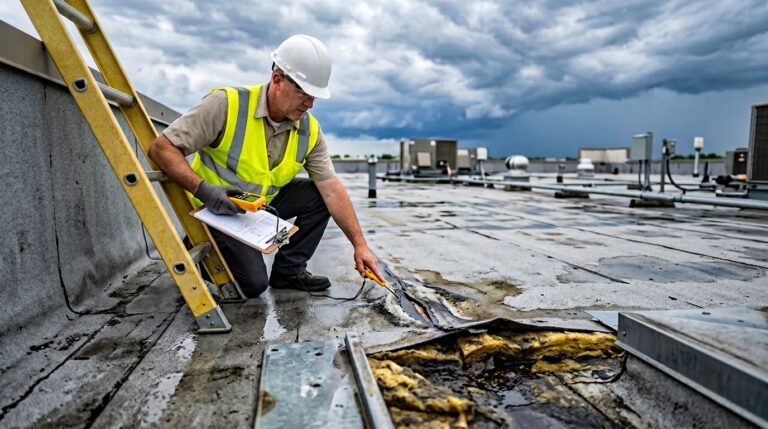
- Schedule a commercial roof inspection before storm season. The inspection should cover seams, drains, edge metal, curbs, flashings, walk pads, and the equipment supports. Get a Free Commercial Roof Inspection when a low-slope roof has aging details or prior storm issues.
- Install compatible hail protection. Confirm the guard fits the unit’s dimensions and does not obstruct airflow. Keep a clear service path and follow the HVAC manufacturer’s clearance requirements.
- Clear drainage routes around the units. Remove leaves, loose debris, and sediment from drains and scuppers. Water ponding near a curb can work into seams during freeze-thaw cycles, even when the hail itself caused no puncture. If a storm has already hit, see what businesses should do after hail damages a roof drain.
- Photograph the roof before the weather changes. Take wide shots of each roof area and close-ups of coils, curb caps, flashing, drains, and existing repairs. Date the files and keep them with service records.
Match the Protection Plan to the Roof System
Membrane roofs need close curb inspection
TPO roofing, EPDM, modified bitumen, and BUR systems react differently after impact. TPO and EPDM often show punctures, split seams, or pulled flashing. Modified bitumen and BUR may hide damage in torn plies, fractured surfacing, or saturated layers.
A roof professional should inspect where HVAC work has stressed the membrane. Repeated technician traffic, dropped tools, loose conduit, and sharp unit edges can create weak points before hail arrives.
Coatings are maintenance, not a hail shield
Commercial roof restoration and commercial roof coatings can extend the useful life of a sound membrane. They are not a substitute for wet-insulation removal, failed flashing repair, or a damaged curb.
The UL 2218 impact-resistance standard is useful when evaluating roof materials, but it does not make rooftop HVAC equipment immune to hail. The roof, equipment, guard, drainage, and flashing must work as one system.
Document the Roof Before a Storm Creates a Claim
Create a file that separates old wear from new damage
A clear record protects the building owner if a roof insurance claim becomes necessary. Keep inspection reports, repair invoices, maintenance logs, rooftop-unit service records, and dated photos in one location.
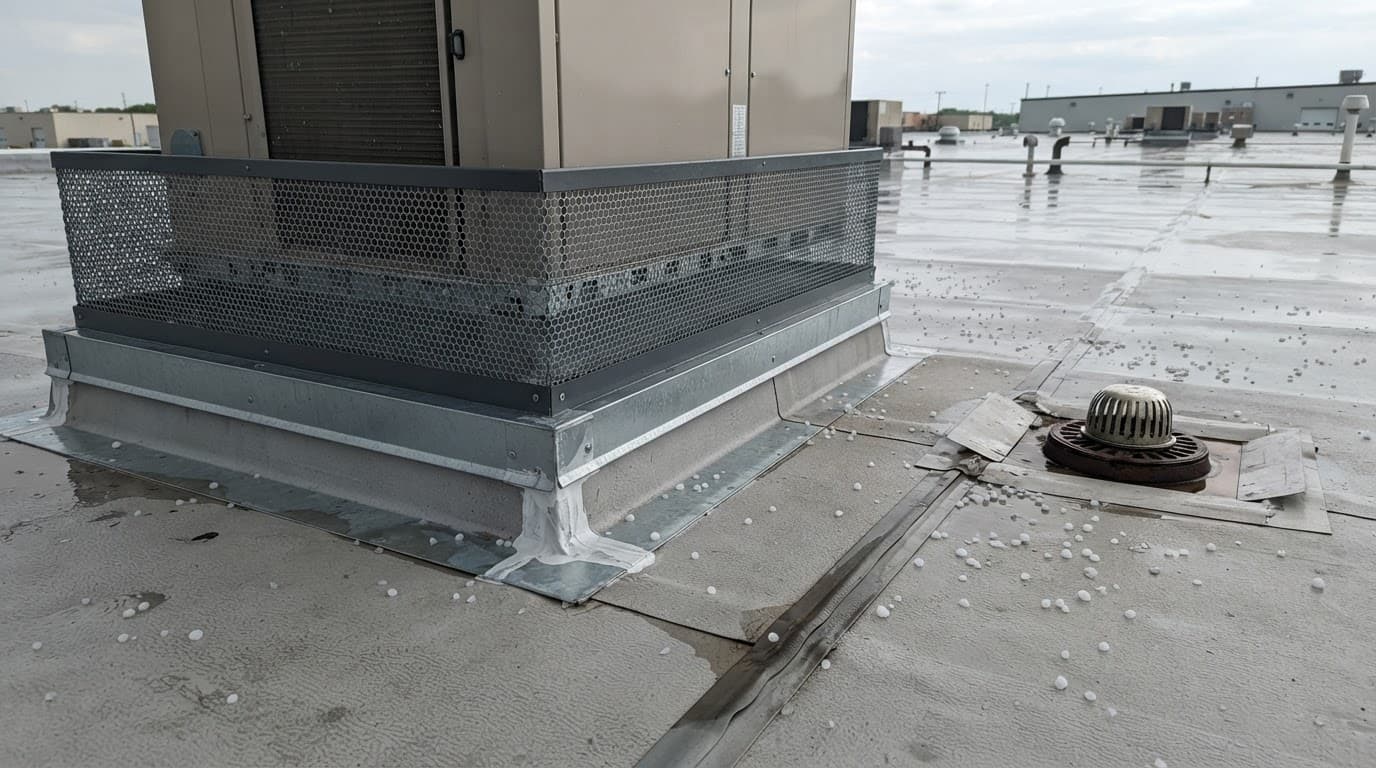
For Saint Paul roofing and Minneapolis roofing properties, note existing ponding, prior leaks, worn sealant, dents, and previous patches. An adjuster needs to see the difference between long-term maintenance issues and fresh storm damage roof conditions.
Know what photos cannot prove
A ceiling stain does not identify the roof opening. Water can move below the membrane, insulation boards, and deck flutes before appearing indoors. The stain may be several feet from the actual breach.
If the source is unclear, use commercial roof leak detection in Saint Paul to trace the entry point. Moisture mapping, test cuts, and targeted inspections can prevent a patch in the wrong location.
What to Do After Hail Hits the Building
Protect people and limit added damage
Do not send maintenance staff onto a wet roof during lightning, high winds, or active hail. Check the interior first. Keep people away from wet electrical equipment, sagging ceiling tiles, slippery floors, and affected inventory.
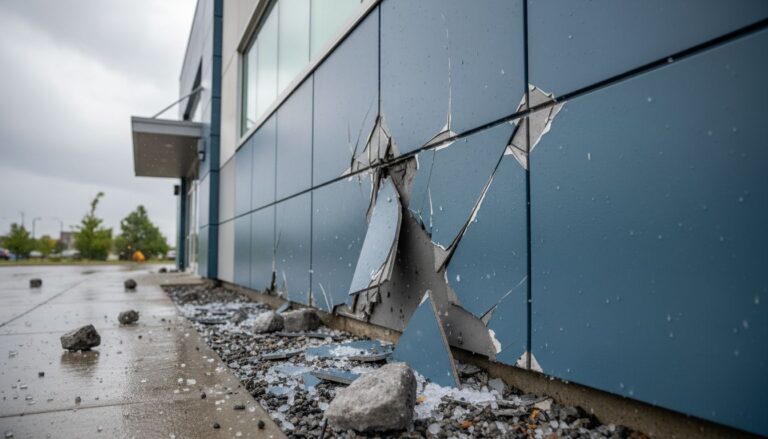
Once conditions are safe, photograph hailstones, dents on equipment, damaged coil guards, punctures, loose flashing, and interior water. A temporary tarp or emergency sealing may be reasonable when water is entering, but broad permanent work can erase evidence.
If water is entering the building, Call 651-703-2336 for 24/7 Emergency Roofing. Keep invoices, photos, labor tickets, and removed materials until the damage has been documented.
Repair, restore, or replace based on evidence
A small puncture with dry insulation may call for commercial roof repair. Widespread wet insulation, repeated seam failures, or large membrane damage may point toward commercial roof replacement.
Don’t assume a tarp tells you which one applies. A tarp buys time. It does not reveal how far moisture traveled or whether the roof system can still perform.
Include the Rest of the Property in Storm Planning
Steep-slope areas need their own inspection
Many commercial properties have a flat main roof and pitched entryways, mansards, or attached residences. Inspect asphalt shingles and metal roofing separately. Hail can damage shingles, dent metal trim, disturb flashing, and crack skylights.
Winter planning matters too. Ice dam removal is not a rooftop HVAC repair, but it can protect adjoining steep-slope areas from meltwater. Twin Cities roofing systems face snow loads, ice, wind, and hail in the same year.
Select contractors who document the work
A contractor should provide a written scope, photos, measurements, and a clear explanation of whether the recommended work is repair, restoration, or replacement.
Sellers Roofing Company is based at 801 Transfer Road in Saint Paul and has completed more than 1,100 roofs since 2017. For Minnesota roofing work, owners may also look for union-built roofing, a GAF certified contractor, crews affiliated with IUPAT Local 96, and active credentials such as MN License 803862.
Homeowners dealing with roof damage on a related property can request a Free Residential Roof Estimate. Residential roof repair or residential roof replacement should be scoped separately from the commercial building claim.
Protect the Equipment Before the Next Storm
Treat the curb, guard, and membrane as one assembly
The strongest rooftop HVAC protection plan is simple: protect the coils, keep water moving, maintain curb flashing, document existing conditions, and inspect after major storms.
Hail is often the visible event. The expensive damage may sit below the membrane, behind a curb cap, or inside a coil that looked fine from the ground.
Frequently Asked Questions
Can hail guards reduce HVAC efficiency?
They can if the screen is too restrictive or installed too close to the coils. Use equipment-compatible guards that maintain manufacturer-required airflow and service clearance.
Should maintenance staff install a temporary roof tarp?
Only if access is safe and the work is limited to temporary dry-in. Document the damage first when possible, save receipts, and avoid permanent patching before an inspection.
Will insurance cover dented rooftop HVAC equipment?
Coverage depends on the policy, deductible, cause of loss, and whether the damage affects operation. Dented panels may be cosmetic, while crushed coils, damaged controls, or impaired airflow are functional issues.
Can commercial roof coatings cover hail damage?
No. Coatings should not be applied over wet insulation, punctures, open seams, or failed flashing. The roof needs diagnosis before restoration work begins.
How often should rooftop HVAC and roof curbs be inspected?
Inspect them at least annually, after major storms, and after HVAC service that involved rooftop traffic. Older roofs, high-traffic roofs, and buildings with frequent leaks may need more frequent reviews.
Need a roof inspection in Saint Paul or the Twin Cities? Call Sellers Roofing Company at +1-651-703-2336 or schedule a free estimate. We are a black-owned, NMSDC-certified MBE roofing contractor with 9+ years experience.