Last updated: 2026-10-09 by Ted Sellers, Owner
Yes. Snow drifts behind parapets can overload Minnesota flat roofs after wind-driven storms. Wind concentrates weight along roof edges, while wet snow, ice, and blocked drainage can increase loading beyond structural capacity.
A drift doesn’t prove damage, but new sagging, cracking sounds, or binding doors require immediate action. Check building conditions before anyone accesses the roof.
Contents
- When This Applies
- How Do Snow Drifts Load Flat Roofs?
- Which Warning Signs Require Immediate Action?
- Step-by-Step
- Does Snow Damage Require Roof Replacement?
- Frequently Asked Questions
- Resolve the Load Concern Before Repairing the Roof
When This Applies
Which buildings need closer monitoring?
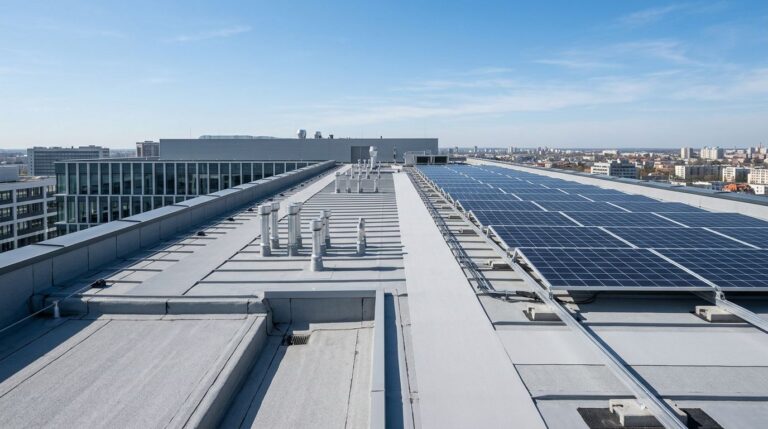
This concern applies to warehouses, offices, multifamily buildings, and other properties with a commercial flat roof. Parapets, taller adjoining walls, roof-level changes, and mechanical screens can collect drifting snow.
TPO roofing, EPDM, modified bitumen, and BUR all transfer snow weight through the roof assembly to structural supports. The membrane type alone doesn’t establish load capacity.
When is removal unnecessary?
A light, uniform snow layer on a sound roof doesn’t automatically require removal. If drainage functions and conditions remain unchanged, monitoring may be appropriate.
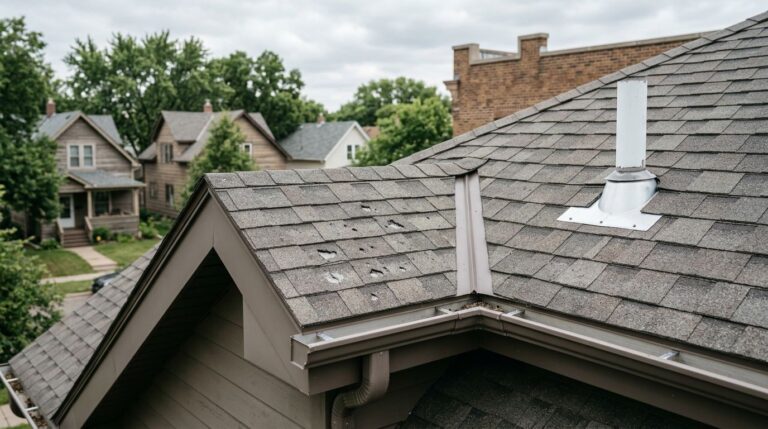
Mixed roofs need separate evaluations. Asphalt shingles and metal roofing have different snow-shedding and ice-dam conditions than low-slope membranes.
How Do Snow Drifts Load Flat Roofs?
Why does the perimeter carry extra weight?
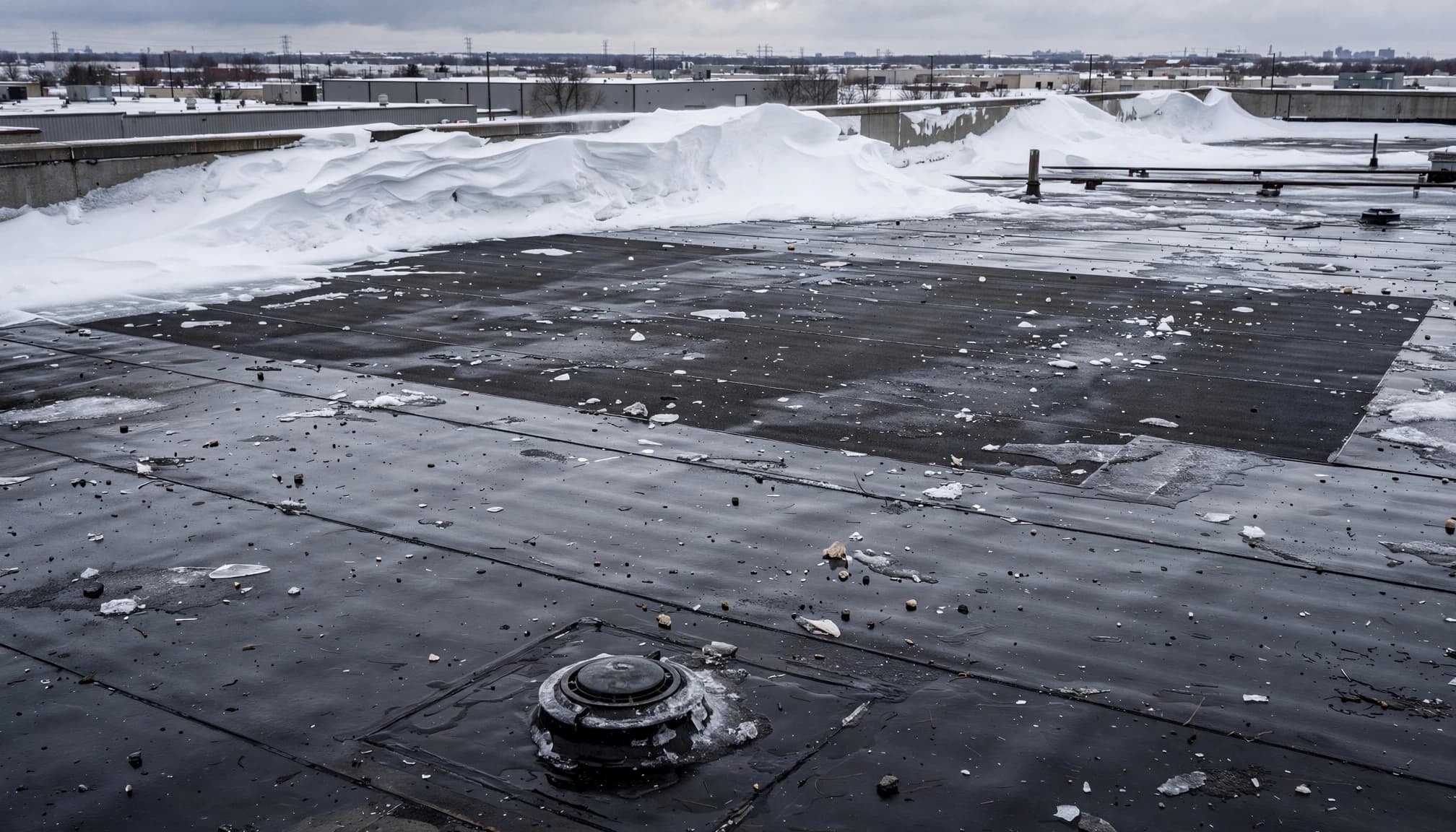
Wind transports snow across the roof and deposits it near obstructions. A parapet drift creates a localized surcharge above the balanced snow load.
Lerch Bates identifies parapet-related snow accumulation among conditions associated with structural roof failures. A relatively clear roof center doesn’t establish that the perimeter is safe.
Why isn’t snow depth a reliable threshold?
Depth doesn’t reveal snow density, ice content, or structural capacity. One inch of retained water adds approximately 5.2 pounds per square foot.
ASCE 7 addresses balanced snow, unbalanced loading, and drifting. An engineer must evaluate the applicable design criteria, roof geometry, existing deterioration, and equipment loads.
Ground snow load is a design input, not an existing roof’s allowable snow load.
Which Warning Signs Require Immediate Action?
New deck sagging, structural popping, spreading cracks, or doors that suddenly bind can indicate overstress. Evacuate if these warnings appear or collapse is suspected. Call 911 for an immediate hazard.
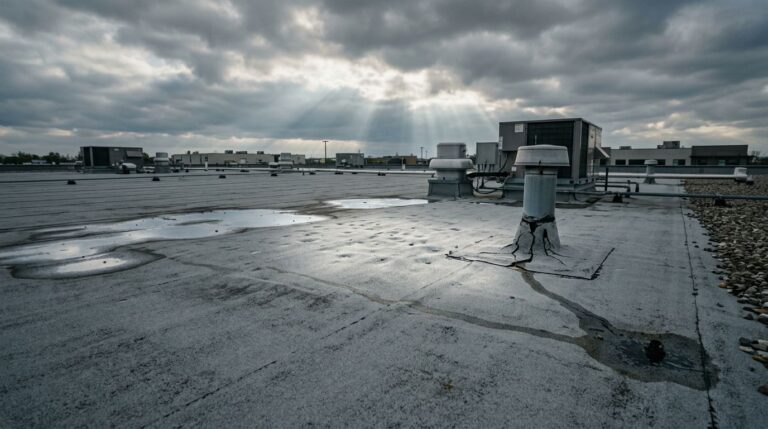
Severe leaks and unexpected ponding also require prompt evaluation. Keep employees off the roof and away from suspected structural movement.
A roofing contractor evaluates membrane and drainage conditions. A structural engineer evaluates deck, joists, connections, and load capacity when movement or overstress is suspected.
Step-by-Step
- Check interior conditions without entering unsafe areas. Record ceiling changes, leaks, unusual sounds, and problems beneath drifted roof edges.
- Document the event from safe locations. Photograph drift locations, parapets, drains, equipment, and interior damage before removal changes the evidence.
- Retrieve structural drawings and previous inspection reports. Have a qualified professional review unusual accumulation against the building’s actual design and condition.
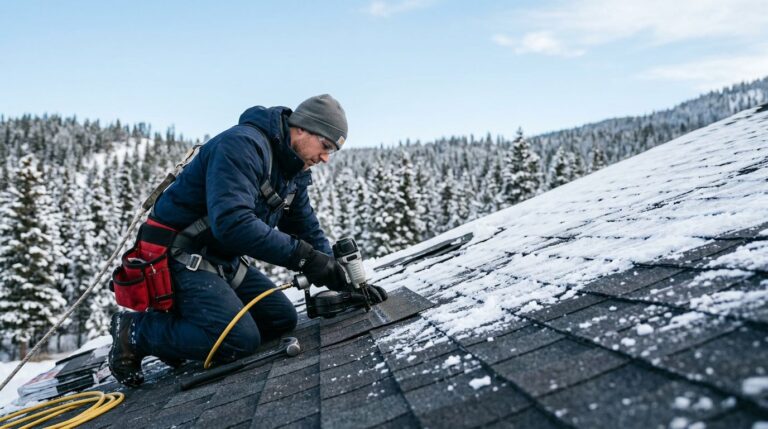
- Establish a removal plan before roof access. Account for workers, equipment, fall protection, skylights, electrical hazards, and snow-disposal areas.
- Use trained crews for controlled removal. FEMA P-957 recommends leaving at least 2 inches of snow to protect the roof covering. Avoid metal scraping and ice chopping.
- Recheck drains, scuppers, seams, and flashing after removal. Don’t stockpile snow elsewhere on the roof or drop it onto lower roofs, exits, or walkways.
Does Snow Damage Require Roof Replacement?
When does targeted repair make sense?
A commercial roof inspection should examine seams, penetration flashings, perimeter attachments, drains, insulation, and accessible deck conditions.
Isolated punctures or failed flashing may need commercial roof repair. Water can travel beneath insulation before appearing indoors, so commercial roof leak detection helps identify the entry point rather than patching above the stain.
When is restoration insufficient?
Commercial roof restoration and commercial roof coatings cannot increase structural capacity or correct saturated insulation and failed drainage.
Widespread moisture, deteriorated decking, or repeated membrane failures may support commercial roof replacement. Structural rehabilitation must address applicable loading requirements; Minnesota’s 2020 existing-building provisions provide a reference. Confirm the governing edition with the building official.
Frequently Asked Questions
Will insurance cover parapet drift damage?
A roof insurance claim depends on policy terms and the cause of loss. Preserve dated photographs, weather records, inspection findings, and mitigation invoices. Distinguish new damage from older leaks or deferred maintenance.
Can adding a parapet change snow loading?
Yes. Raising a parapet or adding rooftop screens can change drift patterns. Have an engineer review the alteration before construction rather than assuming the original structural design covers it.
Can snow removal damage a new TPO roof?
Yes. Shovel edges can cut seams, curb flashing, or membrane corners. Plastic tools also cause damage when crews scrape to the surface. New roofing doesn’t eliminate removal hazards.
Is ice dam removal the same job?
No. Residential eave icing and frozen commercial drainage need different methods. Bonded ice around drains or parapets requires controlled removal that protects flashing, drain bowls, and the membrane.
What if the roof already has hail damage?
Document existing hail damage and storm damage separately. Snow or ice may expose an older opening without proving a new covered loss. Mixed properties also need separate residential roof repair or replacement scopes.
Resolve the Load Concern Before Repairing the Roof
A parapet drift requires evaluation of localized loading, drainage, and structural condition. Relieving snow weight and repairing water entry are separate decisions.
For routine Saint Paul and Twin Cities evaluations, Get a Free Commercial Roof Inspection from Sellers Roofing Company, MN License 803862. Suspected structural movement requires evacuation and structural assessment before roofing work begins.
Need a roof inspection in Saint Paul or the Twin Cities? Call Sellers Roofing Company at +1-651-703-2336 or schedule a free estimate. We are a black-owned, NMSDC-certified MBE roofing contractor with 9+ years experience.