Last updated: 2026-10-08 by Ted Sellers, Owner
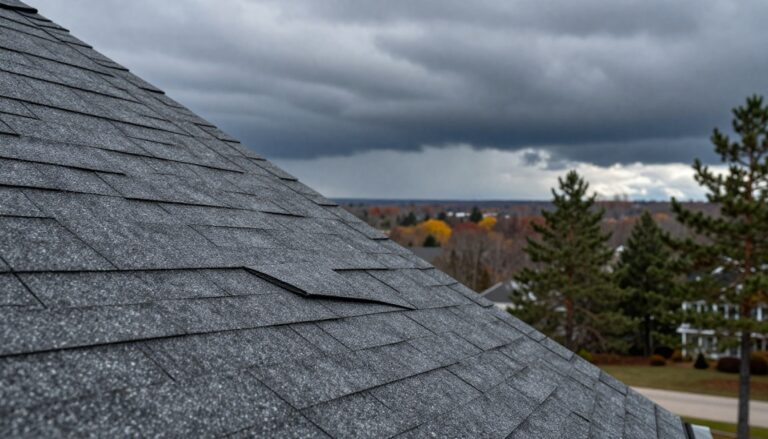
Yes, Minnesota homeowners insurance commonly covers roof collapse caused by the weight of snow, ice, or sleet. Coverage depends on the policy’s collapse definition, exclusions, and evidence showing what caused the failure.
A sudden structural collapse is different from gradual sagging, deterioration, or an ice-dam leak. Report the damage promptly, keep people away from unstable areas, and document conditions before permanent repairs.
On this page
- When This Applies
- What Warning Signs Require Immediate Action?
- What Will Insurance Pay After a Covered Collapse?
- Step-by-Step
- Does the Roof Need Repair or Replacement?
- What Changes for Commercial Roofs?
- Frequently Asked Questions
- Conclusion: Establish the Cause Before Approving the Scope
When This Applies
When does snow-related collapse qualify?
This applies to Minnesota homeowners whose insured dwelling suffers structural failure under accumulated snow or ice. A detached garage may fall under other-structures coverage, depending on the policy.
Many homeowners policies address damage caused by the weight of ice, snow, or sleet. Collapse provisions may also apply. Allstate’s ice-damage overview describes roof collapse as a potential covered loss, but your policy controls the claim.
The inspection must establish whether snow loading caused the failure. Roof age alone doesn’t answer that question. An older roof can sustain new covered damage.
When does a different coverage analysis apply?
Sagging, cracked finishes, and roof movement don’t automatically satisfy a policy’s definition of collapse. Some policies require an abrupt falling down or caving in. Damage without collapse may still qualify under another covered cause of loss.
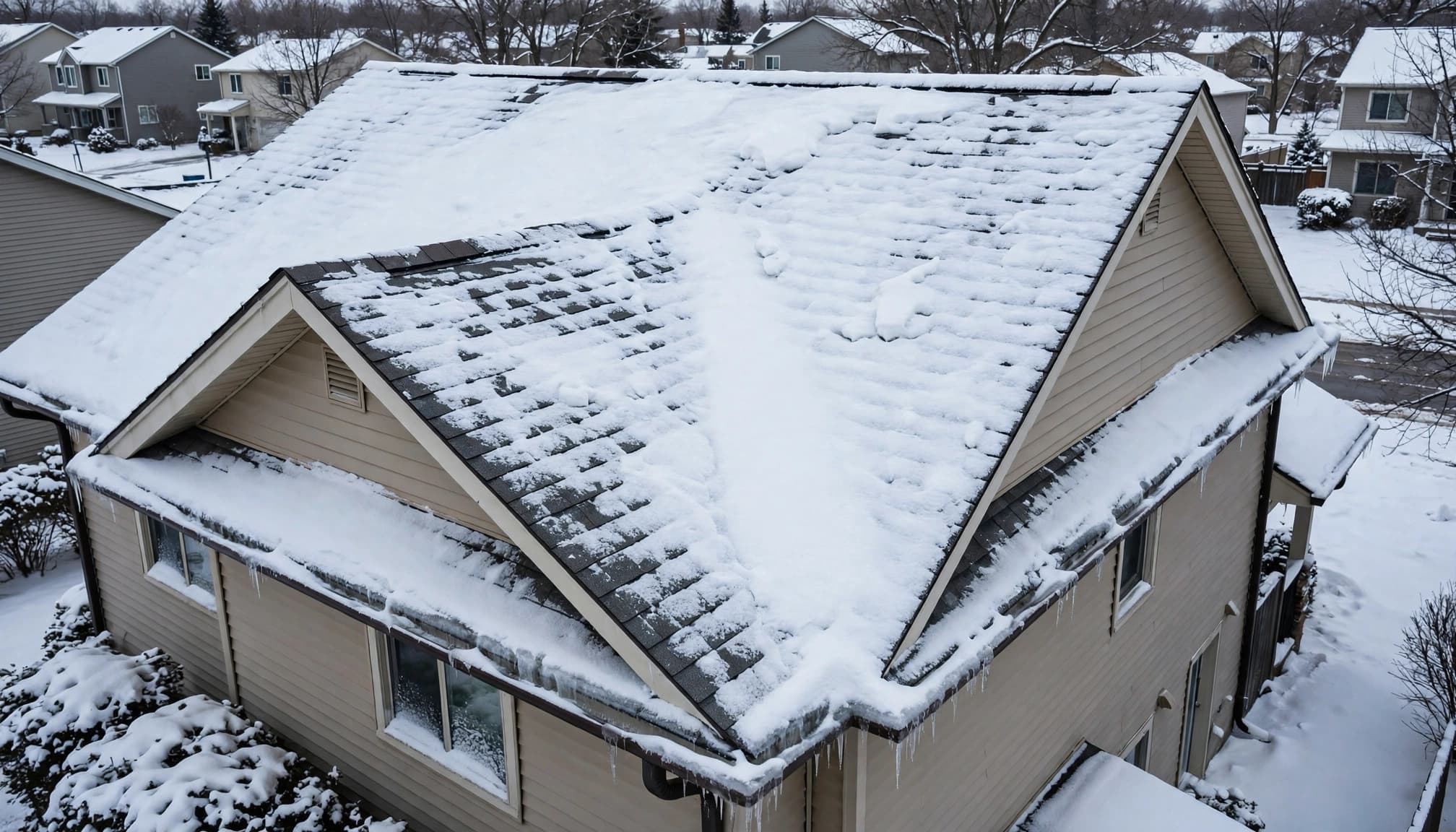
An ice-dam leak also requires a separate diagnosis. Meltwater backing beneath shingles is different from framing failing under snow weight.
Long-term leakage, deterioration, installation defects, and maintenance problems can affect coverage. They don’t automatically settle every claim. The report should separate existing defects from damage caused by the reported event.
For overlapping winter conditions, distinguish ice storm damage and insurance claims by date, location, and observed failure.
What Warning Signs Require Immediate Action?
Which symptoms suggest structural movement?
New roof sagging, unusual cracking or popping, separating ceiling joints, and doors suddenly binding can indicate building movement. These symptoms don’t prove collapse, but they justify an urgent safety assessment.
Stay out of rooms beneath visibly sagging ceilings. Don’t enter the attic to investigate unstable framing. If collapse appears imminent or has occurred, leave the affected building and contact emergency services.
A roofing contractor documents the roof assembly. A structural engineer evaluates load-bearing framing, connections, deflection, and stabilization requirements. Roof replacement alone doesn’t correct failed trusses or joists.
How much snow is too much?
There isn’t one safe snow-depth threshold for every roof. Wet snow, ice layers, drifting, roof geometry, and existing structural condition change the load.
Minnesota’s residential roof snow-load rule uses design criteria tied to ground snow loads. Those criteria aren’t a field measurement or a universal removal trigger.
Wind can concentrate snow beside parapets or lower roof sections. Freeze-thaw cycles can add ice and obstruct drainage.
Don’t climb onto a loaded roof or remove snow unevenly without professional direction. A snow-removal plan must account for structural stability and damage to the roofing surface.
What Will Insurance Pay After a Covered Collapse?
Which building and household losses may qualify?
Depending on coverage, the claim may include damaged roofing, decking, framing, insulation, ceilings, and other affected building components. Damaged belongings are evaluated under personal-property coverage.
If a covered loss makes the home uninhabitable, loss-of-use coverage may help with eligible additional living expenses. Limits, exclusions, and documentation requirements still apply.
Keep temporary housing and emergency mitigation receipts separate from permanent construction invoices. The insurer needs to identify which expense belongs to which coverage.
NerdWallet’s homeowners coverage guide explains the distinction between dwelling, personal-property, and loss-of-use protection.
How do deductibles, depreciation, and code upgrades affect payment?
Check the deductible that applies to this loss. Don’t assume a separate wind or hail deductible applies to snow collapse.
Actual cash value generally accounts for depreciation. Replacement-cost coverage may release recoverable depreciation after qualifying repairs, subject to policy conditions. A roof-specific endorsement can change the settlement.
Code-required work needs its own review. Ordinance-or-law coverage may address eligible increased construction costs, but limits and exclusions matter.
Ask the contractor to separate damaged components, code-required work, maintenance, and optional upgrades. The insurer’s estimate should identify the same categories rather than combining everything into one roofing total.
Step-by-Step
Protect occupants and report the loss
- Leave unstable areas and restrict access. Keep occupants away from sagging ceilings, damaged electrical fixtures, and affected roof sections. Obtain emergency assistance when collapse or electrical danger is present.
- Notify the insurer promptly. Give the storm date, discovery date, observed damage, and actions taken. Request the claim number, adjuster’s contact information, notice requirements, and any proof-of-loss deadline in writing.
- Arrange safe emergency protection. Qualified crews may install temporary weather protection, extract water, or stabilize affected areas after hazards are assessed. Save receipts. Temporary roof protection after a storm requires safe access; don’t attempt homeowner tarping on a snow-loaded roof.
Build the evidence and resolve the scope
- Record conditions before cleanup changes them. Photograph exterior damage from safe locations, affected rooms, damaged belongings, and temporary work. Preserve earlier roof invoices, maintenance records, and inspection photographs. Don’t discard damaged materials before documentation unless safety requires removal.
- Obtain roofing and structural evaluations. Request dated photographs, mapped damage locations, moisture findings, and a written explanation of the observed failure. Reports should distinguish snow-load damage from old leaks, ice backup, and unrelated hail damage.
- Compare estimates line by line. Review roofing, framing, insulation, interior repairs, permits, disposal, and code items. Submit documented omissions as a supplement. If coverage is denied, request the denial language and supporting reports. Obtain qualified claims or legal assistance when causation or policy interpretation remains disputed.
Does the Roof Need Repair or Replacement?
When can a limited repair restore performance?
Targeted residential roof repair may be appropriate when damage is isolated and the supporting structure remains sound. The scope must restore water shedding, fastening, flashing, and the affected assembly.
On asphalt shingles, inspect damaged shingles, underlayment, decking, valleys, and penetrations. On metal roofing, evaluate seams, clips or fasteners, panel distortion, and snow-retention components.
A repair decision needs more than a surface photograph. Snow can conceal fractured decking or displaced connections. Structural findings must be resolved before the permanent roof work begins.
When is replacement the supported scope?
Residential roof replacement becomes a stronger option when failure affects multiple sections or the remaining assembly can’t support a reliable repair. The inspection should explain that conclusion with locations, measurements, and photographs.
Wet insulation, damaged decking, and framing repairs can expand the project. Replacement isn’t automatic because one area collapsed, and a partial repair isn’t adequate if connected damage remains.
For Saint Paul and Minneapolis roofing projects, coordinate the roofer, structural engineer, building official, and adjuster. A documented storm-damage inspection and repair scope helps keep construction decisions tied to actual conditions rather than assumptions.
What Changes for Commercial Roofs?
Which policy and roof conditions need separate review?
A commercial property policy, condominium master policy, or landlord policy requires its own coverage analysis. Homeowners insurance terms shouldn’t be applied to a commercial flat roof.
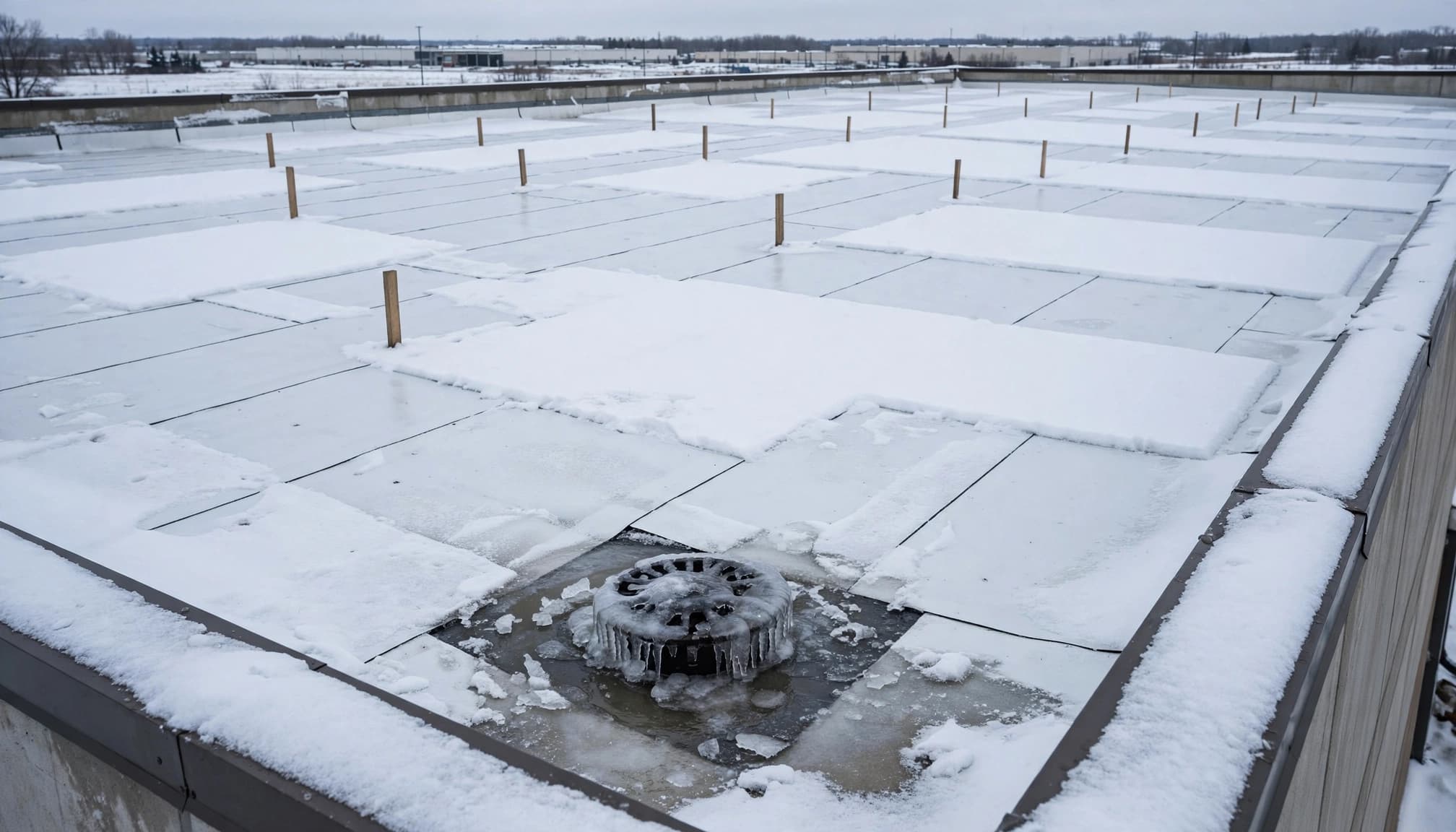
A commercial roof inspection should document drains, parapets, rooftop equipment, membrane condition, and moisture. On TPO roofing and EPDM, inspect seams, punctures, and flashings. On modified bitumen and BUR, inspect laps, plies, and concealed moisture.
Twins Cities buildings can contain several roof systems. Map each affected section rather than assuming every leak has the same source.
Can repair, restoration, or coatings correct the damage?
Commercial roof repair may address isolated membrane damage after structural safety is confirmed. Extensive deck damage or saturated insulation may support commercial roof replacement.
Commercial roof restoration and commercial roof coatings aren’t substitutes for structural repairs. Coating over wet insulation or unstable decking leaves the underlying failure unresolved.
Moisture readings, infrared surveys under suitable conditions, and authorized core samples can establish hidden water movement. Keep prior hail damage separate from later snow-load damage so the claim identifies each event correctly.
Frequently Asked Questions
Will insurance pay for snow removal before anything collapses?
Preventive snow removal isn’t automatically covered. Emergency work after a covered loss may receive different treatment. Ask the insurer about authorization, reimbursement, and required documentation before assuming the expense belongs in the claim.
What if the roof leaked but never collapsed?
A leak may qualify under another policy provision. The Hartford’s roof-leak overview discusses snow- and ice-related damage. Identify whether water entered through damaged roofing, ice backup, or a pre-existing opening.
Does ice dam removal prove the loss is covered?
No. Ice dam removal can limit water entry, but the invoice doesn’t establish coverage. Document the resulting damage and water path. Investigating attic heat loss around recessed lights may also identify a recurring cause.
What if older hail damage was already present?
Separate the events. Use earlier inspections and photographs to distinguish hail impacts from later structural failure. Ask whether newly discovered damage belongs in an existing claim supplement or requires a separate claim.
What if the insurer says poor maintenance caused the collapse?
Request the policy provisions and factual basis in writing. Compare that explanation with maintenance records, prior photographs, and structural findings. A contractor documents conditions; disputed coverage interpretation may require an insurance professional or attorney.
Conclusion: Establish the Cause Before Approving the Scope
Confirm coverage with evidence
Minnesota homeowners insurance often covers snow-related roof collapse, but the policy and documented cause control the result. Keep structural failure, ice-dam leakage, and existing deterioration distinct.
Match the work to the failure
Protect occupants first, preserve evidence, and obtain roofing and structural evaluations before permanent reconstruction. Approve a scope that addresses the documented damage, including concealed moisture and affected framing.
Need a roof inspection in Saint Paul or the Twin Cities? Call Sellers Roofing Company at +1-651-703-2336 or schedule a free estimate. We are a black-owned, NMSDC-certified MBE roofing contractor with 9+ years experience.