Last updated: 2026-09-11 by Ted Sellers, Owner
Yes. Snow load roof damage can affect a commercial roof deck’s fasteners, but snow rarely pulls a sound fastener out by itself. Drifts and deck deflection can compress insulation, deform plates, enlarge deck holes, and open seams. In Minnesota, new sagging, membrane wrinkles, or leaks after a snow event are roof and structural warnings.
When This Applies
Low-slope roofs with concentrated snow accumulation
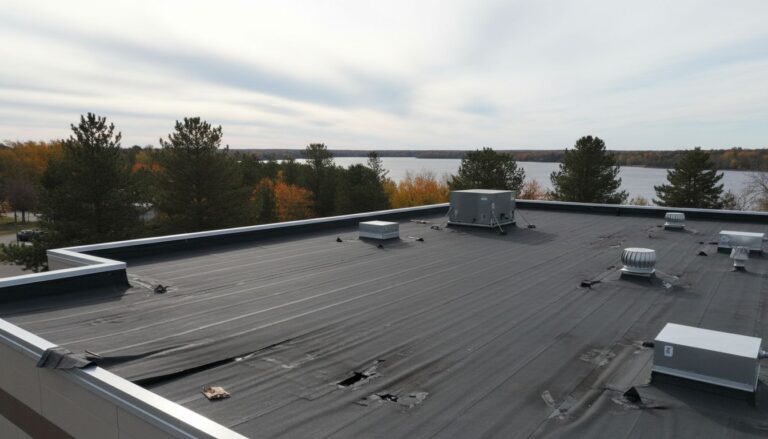
This applies most often to a commercial flat roof with TPO roofing, EPDM, PVC, modified bitumen, or BUR. Snow that lies evenly across a roof is one issue. Snow that drifts against parapet walls, higher roof sections, mechanical curbs, or rooftop units is another.
The load moves through the membrane assembly, insulation, deck, joists, and structural frame. If the deck bends or shifts, fasteners can lose holding power. Existing corrosion, wet insulation, poorly seated screws, and prior hail damage roof openings make the risk worse.
Minnesota’s commercial code framework references ASCE 7 for snow criteria. Local drift conditions still matter. Minnesota Rules Chapter 1311 also requires rehabilitation of gravity-load components with substantial structural damage to meet applicable dead, live, and snow loads.
Cases where fasteners are not the main concern
A fully adhered membrane has fewer membrane fasteners than a mechanically attached system. A ballasted roof has a different attachment layout. Both can still develop deck deflection, insulation compression, blocked drainage, and membrane damage under heavy snow.
Steep-slope metal roofing and asphalt shingles shed snow differently. Those systems can still develop ice dams, flashing failures, or loose exposed fasteners. Residential roof repair and residential roof replacement should be evaluated separately from a commercial low-slope assembly.
Snow is not proof of damage. A change in roof shape, drainage, attachment, or interior conditions is the warning sign.
Step-by-Step: What to Do After Heavy Snow
Secure the building and preserve evidence
- Restrict rooftop access if employees report sagging ceilings, popping sounds, new leaks, bowed deck areas, or doors that suddenly bind. Keep people out of any area below suspected structural movement.
- Photograph snow depth, drift locations, parapets, drains, rooftop equipment, ceiling stains, and active leaks before snow removal changes the scene. Include wide building views and close roof-detail images.
- Record the date, weather event, indoor leak location, and when occupants first noticed the issue. This record helps separate snow load roof damage from an older maintenance problem.
Get the roof evaluated before broad repairs
- Have a qualified contractor inspect the membrane, fastener lines, plates, seams, insulation, deck condition, drains, and flashing. If deck deflection or structural movement is visible, involve a structural engineer.
- Use controlled roof snow removal only after the roof has been assessed. Aggressive scraping, ice dam removal, or heavy foot traffic can tear a membrane and create a second source of damage.
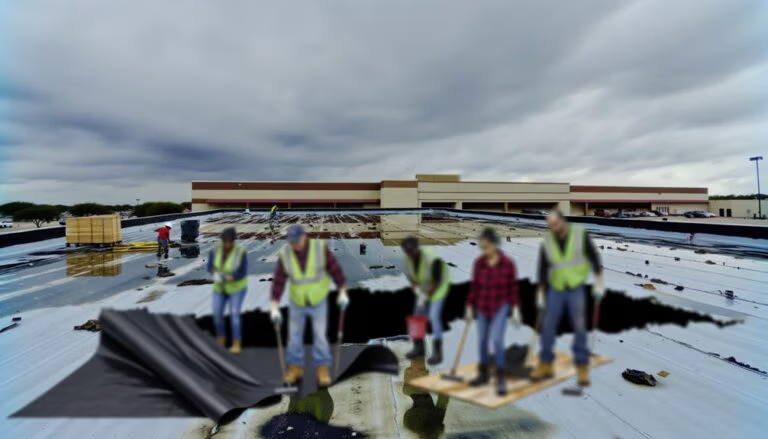
- Address active leaks with temporary protection, then define the permanent scope. A small opening may need commercial roof repair. Saturated insulation, widespread attachment failure, or a damaged deck can require commercial roof replacement.
Snow Load Roof Damage and the Fastener Load Path
Deflection can change fastener performance
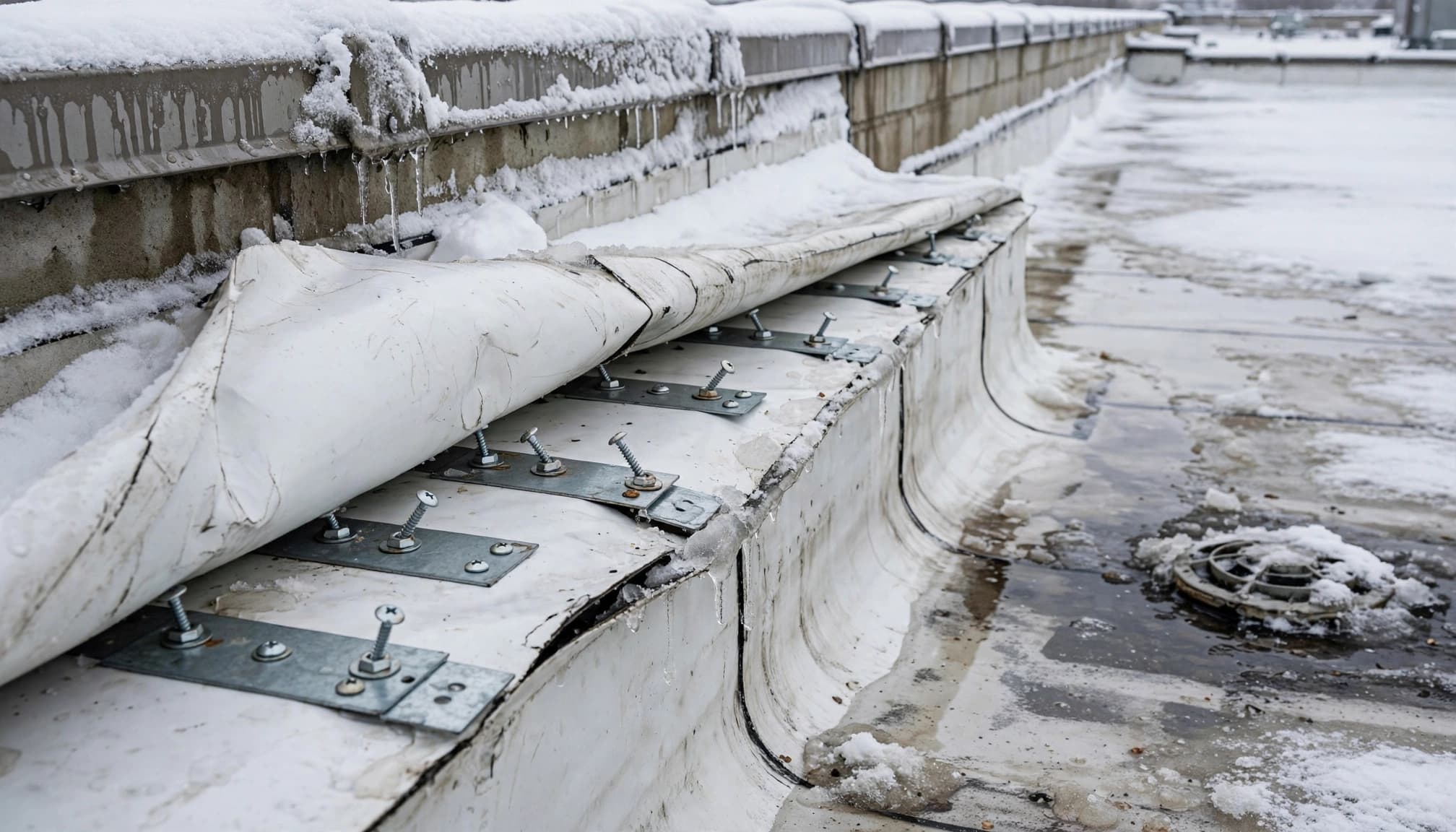
Roof fasteners do two different jobs. Membrane and insulation fasteners secure the roofing assembly to the deck. The deck and framing carry the building load. Under heavy or uneven snow, the deck can deflect and insulation can compress.
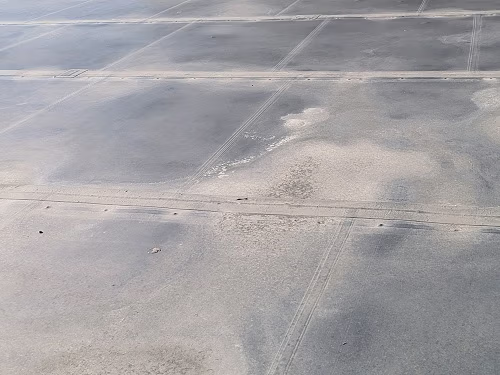
That movement can deform a fastening plate, pull a screw at an angle, strip threads in a weakened metal deck, or enlarge a hole in deteriorated wood. The membrane may wrinkle around fastener rows or show stress at seams and perimeter details.
IKO’s commercial attachment guide lists minimum pullout values of 300 pounds for insulation fasteners and 400 pounds for membrane fasteners in its tested assemblies. Those values are not a universal code rule or proof that every roof is safe. Deck type, fastener pattern, corrosion, insulation thickness, and system design all affect performance.
Drifts create the highest-risk areas
Snow rarely builds evenly in Saint Paul or Minneapolis. Wind moves it toward parapets and roof-height transitions. Warm exhaust air can create uneven melting around equipment. Water refreezes near drains and scuppers, adding ice weight where drainage already struggles.
Check these locations first:
- Parapet walls, expansion joints, and transitions between high and low roofs.
- Mechanical curbs, pipe penetrations, skylights, and rooftop units.
- Drains, scuppers, and gutters where ice can hold meltwater in place.
- Areas with previous storm damage roof repairs, patches, or known leaks.
A fastener problem near a drain can turn into a moisture problem quickly. Ponded water adds load and can move beneath a membrane through a small seam opening. A pre-storm drainage check and documentation plan keeps drift and ice buildup from turning these spots into roof damage, as covered in the commercial roof ice storm preparation guide.
How Roof Systems Respond to Winter Stress
TPO and EPDM need different checks
TPO membranes use heat-welded seams. EPDM relies on taped or adhered seams. Both systems can develop membrane wrinkles, seam stress, flashing separation, and loose plates after movement beneath the assembly.
An EPDM roof may show lifted tape edges or stretched flashing. TPO may show stressed welds, pull-out around plates, or a membrane that billows after the snow clears. Those signs do not prove snow caused the failure. Wind uplift, aging materials, hail, thermal cycling, and poor drainage may also be involved.
For a targeted evaluation of seams, penetrations, flashing, and hidden moisture, use commercial roof leak detection. Water can travel a long distance beneath a membrane before it appears inside.
Modified bitumen, BUR, and metal assemblies
Modified bitumen and BUR roofs are heavier assemblies with different failure patterns. Look for splits at flashings, alligatoring, displaced gravel, cracked surfacing, or water trapped below the roof layers. A snow load can expose weak areas that were already near failure.
Commercial roof coatings can extend the life of a dry, stable roof. They do not restore stripped deck fasteners, saturated insulation, failed seams, or a bowed deck. A coating applied over active problems can hide the evidence while moisture keeps moving.
Metal roofing can shed snow abruptly, loading lower roof sections and damaging gutters or wall details. On exposed-fastener metal panels, inspect washer seals, backed-out screws, and panel laps after a hard winter.
What a Commercial Roof Inspection Should Find
Roof-surface evidence and concealed moisture
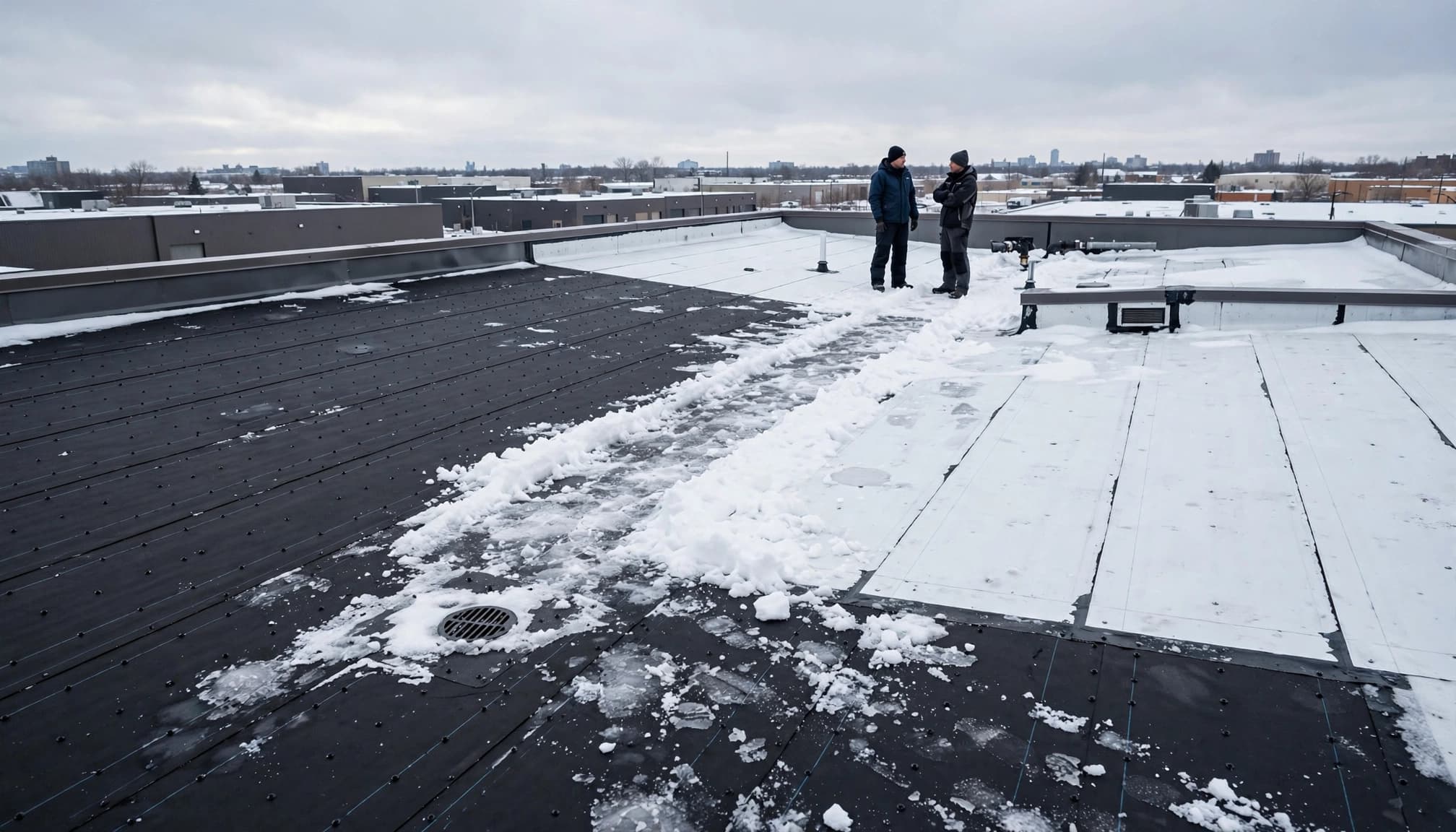
A complete commercial roof inspection should document fastener rows, plate deformation, seam condition, flashing, drains, curbs, membrane tension, and visible deck deflection. It should also identify whether insulation has compressed or become wet.
Infrared scanning, moisture readings, and carefully placed test cuts can help define the wet area. Interior staining is useful evidence, but it does not show the full moisture path. Meltwater can enter near a perimeter wall and appear far from the original opening.
When a structural review is necessary
Call for structural review when the deck visibly sags, roof lines change, fasteners withdraw across a broad area, ceiling tiles drop, or occupants hear cracking and popping after snow accumulation. Do not assume the membrane contractor can clear a structural concern without engineering input.
A winter inspection should also distinguish snow loading from hail damage, wind uplift, poor installation, age-related deterioration, and damage from snow-removal tools. That distinction controls the repair scope and can affect a roof insurance claim.
For Twin Cities properties with new leaks, drift buildup, or visible movement, Get a Free Commercial Roof Inspection before authorizing widespread repairs.
Repair, Restoration, or Replacement?
Match the scope to the failed component
A localized fastener issue with dry insulation and a sound deck may be repairable. The work can include replacing fasteners and plates, repairing membrane seams, improving flashing, and correcting drainage.
Commercial roof restoration is appropriate only after the assembly is dry, attached, and structurally sound. Commercial roof coatings are a finish system, not a cure for wet insulation or deck movement. If fastener withdrawal, moisture, and membrane stress extend across large areas, replacement is often the more durable option.
Minnesota crews need winter-specific discipline
Saint Paul roofing and Minneapolis roofing work must account for snow, ice, frozen drains, and repeated freeze-thaw movement. Sellers Roofing Company has completed more than 1,100 roofs since 2017, including 300 commercial roofs. Its union-built roofing crews include IUPAT Local 96 Roofers, Carpenters Local 322, and Laborers Local 563.
The company works from 801 Transfer Road in Saint Paul under MN License 803862. GAF certified crews and documented inspection findings help property owners make a repair decision based on roof condition, not guesswork.
Active water entry or rapidly increasing deflection needs immediate attention. Call 651-703-2336 for 24/7 Emergency Roofing if the building needs temporary protection while the cause is assessed.
Protecting a Roof Insurance Claim
Document before the evidence disappears
A roof insurance claim is stronger when the file shows conditions before broad removal or permanent repairs. Keep time-stamped photos, weather records, maintenance logs, interior leak reports, contractor findings, moisture data, and repair estimates.
Do not remove wet materials, discard damaged fasteners, or coat over seams before documenting them. Temporary measures to stop water are appropriate. Permanent work can wait until the scope is clear, unless building safety requires faster action.
Separate new damage from old deterioration
A storm-damaged roof may already have hail bruises, open seams, weak flashings, or prior patches. Snow can worsen those conditions without being the only cause. The file should state what is new, what is older, and what cannot be confirmed without testing.
Insurance coverage depends on the policy language, exclusions, deductibles, maintenance history, and documented cause of loss. A contractor can provide roof findings and repair scope. The carrier decides coverage.
Frequently Asked Questions
Can snow damage fasteners without causing an immediate leak?
Yes. Fastener plates can deform and screws can lose holding strength before the membrane opens. A wrinkle, lifted seam, or small amount of billowing may appear first. The leak can arrive later during spring melt or the next wind event.
Does snow load damage only happen on older roofs?
No. Older roofs are more likely to have corrosion, weakened seams, wet insulation, or prior repairs. A newer roof can still develop problems if snow drifts heavily, drainage is blocked, or the attachment pattern does not match the deck and design requirements.
Should I remove all snow from a commercial roof?
Not automatically. Snow removal can reduce load, but it can also puncture TPO, EPDM, modified bitumen, or BUR if done carelessly. Start with an assessment when there is visible deflection, deep drifting, or active leakage.
Can roof coatings fix loose fasteners or a damaged deck?
No. Coatings can protect a stable roof surface. They cannot tighten fasteners, correct deck deformation, dry saturated insulation, or repair structural damage. Those conditions require repair or replacement of the affected roof components.
Can hail make snow-load problems worse?
Yes. Hail can bruise membranes, crack coatings, dent metal roofing, or weaken flashing details. If a hail-damaged roof later holds drifted snow and meltwater, pre-existing weak points can open faster. Document both events and inspect the roof after each one.
The Practical Next Move
Treat movement as a warning
Heavy snow does not automatically mean roof failure. Visible deck movement, stressed membrane details, distorted fastener plates, and new interior leaks require prompt evaluation.
Fix the assembly, not only the symptom
The right repair follows the load path. Confirm the condition of the membrane, insulation, fasteners, deck, drainage, and structure before choosing a patch, restoration, or replacement. That is how snow load roof damage stays a contained repair instead of a springtime building problem.
Need a roof inspection in Saint Paul or the Twin Cities? Call Sellers Roofing Company at +1-651-703-2336 or schedule a free estimate. We are a black-owned, NMSDC-certified MBE roofing contractor with 9+ years experience.