Last updated: 2026-09-15 by Ted Sellers, Owner
Before winter weather arrives, a St. Paul business should inspect drains, seams, flashing, and roof edges. Property managers should confirm design snow-load information, remove debris, document current conditions, and arrange qualified snow removal and emergency repair support. Keep people off icy roofing, protect the interior if leaks start, and save records for a roof insurance claim.
Ice storms can turn a minor maintenance issue into roof damage when blocked drainage, refreezing, and concentrated snow and ice add stress overnight. The inspection should focus first on water movement and roof load.
Minnesota roofs deal with snow, melting, refreezing, and wind-driven moisture in the same week. Preparation gives facility managers a clear response plan before the roof is under stress.
Key Takeaways
Clear the paths that move water off the roof
Drains, scuppers, gutters and downspouts, and overflow routes need to be open before freezing rain arrives. A flat roof cannot drain through ice.
Check strainers for leaves, gravel, packaging, and other debris. Photograph each drain area after cleaning. Those photos establish the pre-storm condition and document potential water damage if water backs up later.
Treat winter warning signs as active issues
Water stains, dripping near exterior walls, bowed gutters, ice accumulation at roof edges, blocked drainage, soft ceiling tiles, and new interior humidity can signal roof leaks. These aren’t cosmetic problems. They can point to trapped water or insulation damage.
Snow hides roof conditions. It does not confirm that the roof is sound.
A dated condition record also helps distinguish a new ice-related opening from pre-existing roof damage, hail damage, or earlier storm damage.
When This Applies
Buildings that need a commercial winter plan
This applies to warehouses, retail buildings, schools, churches, offices, multifamily properties, and mixed-use buildings in Saint Paul, Minneapolis, Roseville, Maplewood, Shoreview, New Brighton, and the broader Twin Cities.
It matters most for flat roof systems where drainage is slow, including TPO, EPDM, modified bitumen, and BUR roofing materials. Buildings with parapet walls, internal drains, rooftop units, or known ponding areas need closer attention during periods of ice accumulation.
When the response is different
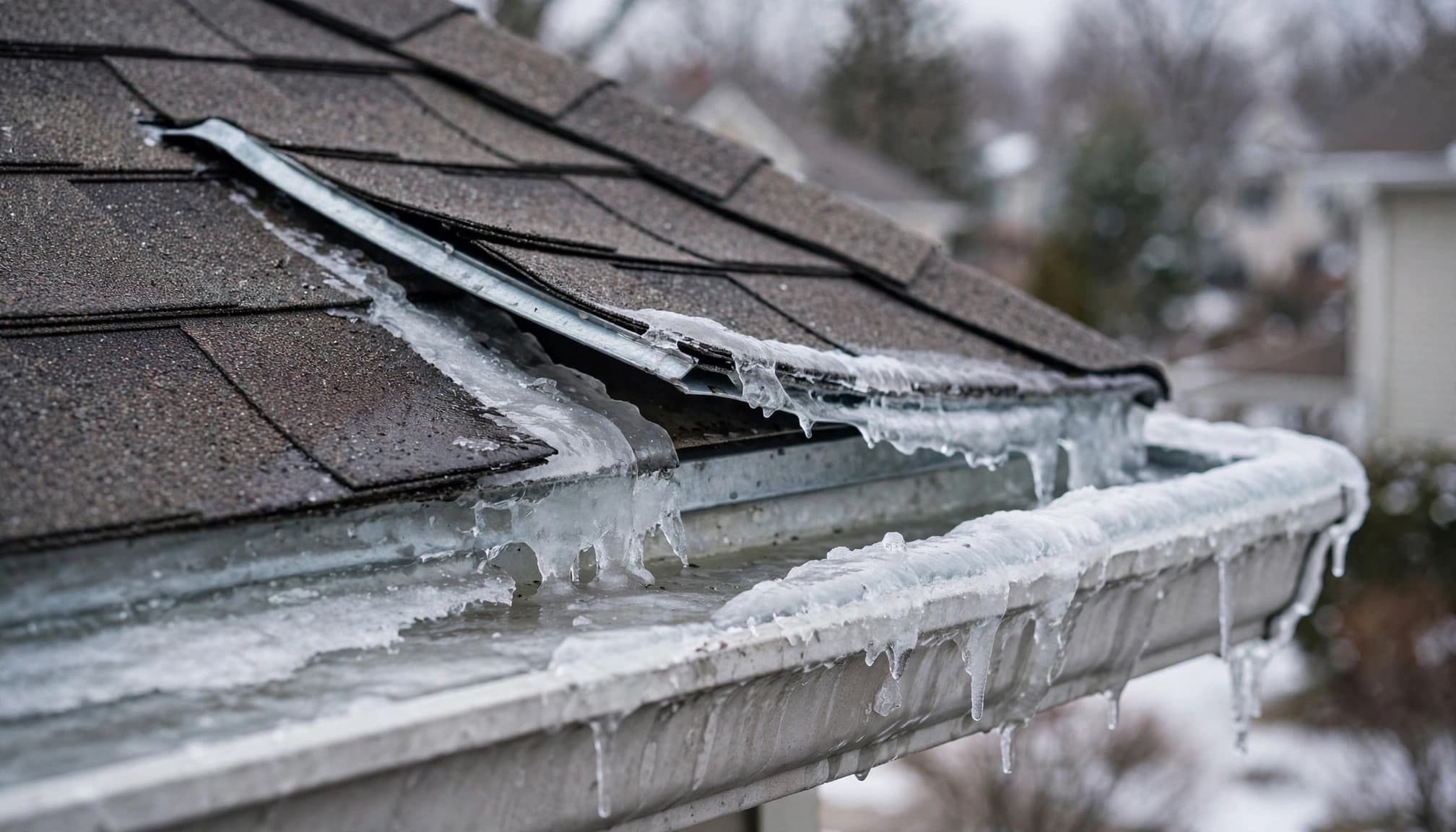
Steep-slope sections with asphalt shingles or metal roofing can develop an ice dam. Meltwater may refreeze at eaves, valleys, gutters, or around penetrations.
Insulation and ventilation conditions can contribute on shingle or metal roof sections, but they aren’t the cause of every ice dam. Freeze and thaw cycles can also cause the same roof edge or transition to deteriorate repeatedly.
Removal at those roof edges may be appropriate, but it doesn’t solve a blocked internal drain on a low-slope roof. A roof with structural deflection, cracked decking, or widespread wet insulation needs professional evaluation, not routine ice removal.
How Does a Commercial Roof Ice Storm Create Damage?
Frozen drainage creates a membrane problem
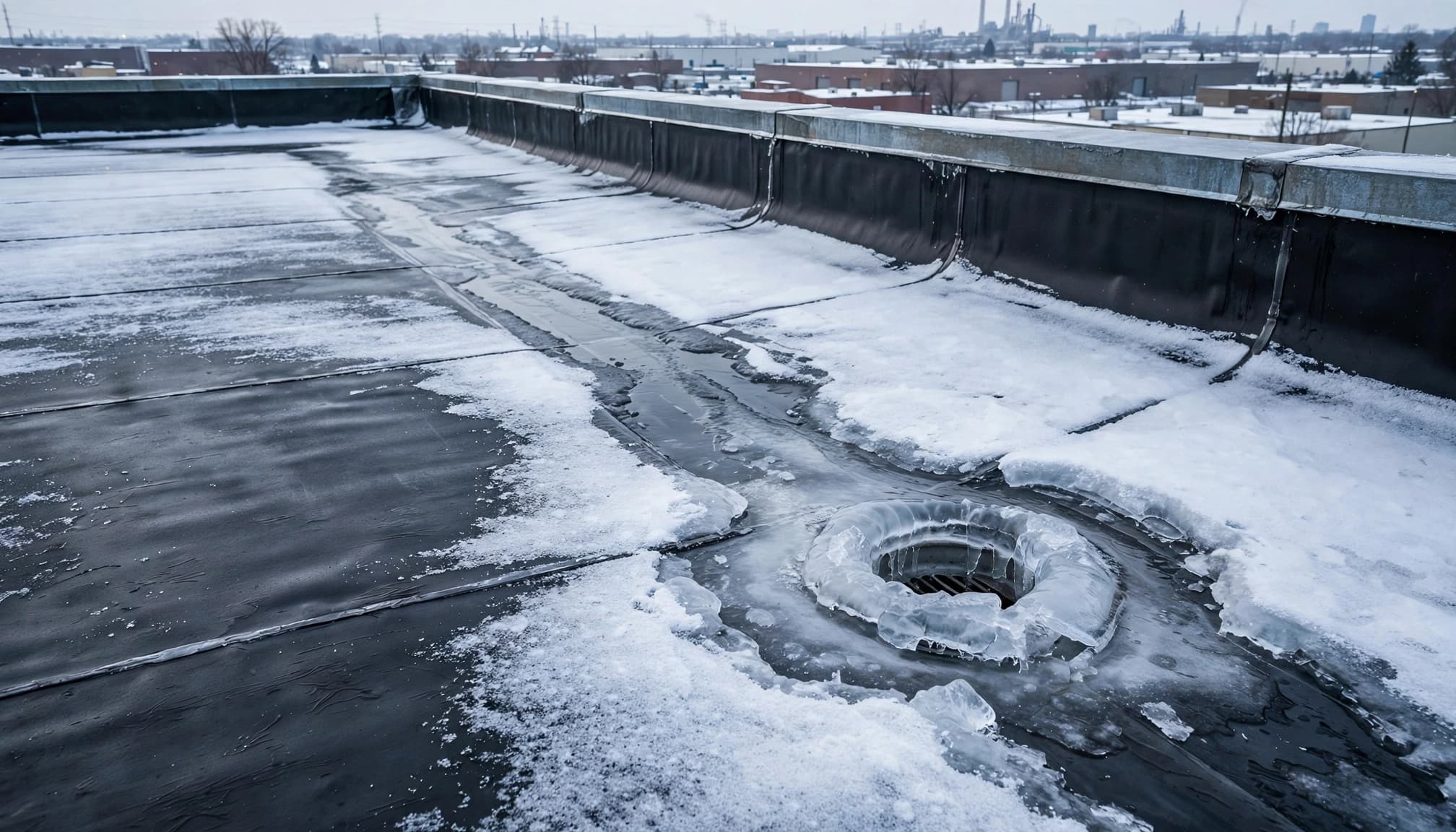
Flat roofs are vulnerable because freezing rain and snowmelt can create ponding water behind ice at drains and scuppers. Trapped water can then work beneath laps, edge metal, pipe boots, and rooftop equipment curbs.
TPO, EPDM, modified bitumen, and BUR are different roofing materials, so freezing water affects their seams and transitions differently. TPO and EPDM seams can open as water freezes and expands. Modified bitumen and BUR systems can crack at stressed transitions. Repeated freeze and thaw cycles also weaken flashing and sealants around penetrations, parapet transitions, and rooftop equipment curbs.
Snow depth doesn’t show total weight
Wet snow weighs much more than dry snow. Drifts and ice accumulation near parapets, taller walls, rooftop units, and mechanical screens can concentrate weight in one area.
Don’t judge roof safety by snow depth alone. Review the roof’s original design documents to understand the snow load, if available. Then have a qualified professional evaluate unusual drifting, sagging, cracked finishes, sticking doors, or visible roofline movement. These conditions can signal roof damage or structural damage. Rimkus explains commercial roof snow-load considerations and why a competent assessment matters.
Step-by-Step: Prepare the Roof Before Freezing Rain Starts
1. Complete commercial roof inspections
Schedule the inspection before the forecast turns into an emergency. Inspect field seams, penetration flashings, expansion joints, perimeter metal, copings, roof curbs, drains, and areas with prior repairs.
Look for blisters, cracks, loose sealant, punctures, open laps, rust, and soft spots. Mark existing issues on a roof plan. A pre-storm report makes later repair decisions faster and more defensible.
2. Clean drains and verify overflow paths
Remove debris from drain bowls and check that dome strainers are seated and intact. Flush accessible leaders where practical. Verify roof drainage by confirming that scuppers, gutters and downspouts discharge away from the building and that overflow paths remain open.
Don’t use salt, open flames, pressure washers, hammers, or sharp tools on the roof. Those methods can damage membranes, coatings, gutters, and flashing before the storm even arrives.
3. Document the roof and the building interior
Take wide photos of the roof, rooftop units, drain areas, parapet walls, seams, and flashing details. Inside, photograph ceiling tiles, walls, electrical rooms, stock areas, and any existing water damage or staining.
Keep the storm date, the time a leak first appears, weather alerts, invoices, and emergency work records together. This creates a usable timeline for a roof insurance claim.
4. Set the response plan before access becomes unsafe
Identify qualified commercial roofing contractors for snow removal, leak detection, and emergency work. Decide who can authorize temporary dry-in work and tenant notifications. Move sensitive inventory away from known leak zones and protect electrical equipment below roof drains and mechanical rooms.
For Saint Paul commercial properties, Get a Free Commercial Roof Inspection before snow and ice cover the evidence. A written scope should separate immediate work from work that can wait for dry conditions.
How Should Snow and Ice Be Removed Safely?
Use ground-based methods where possible
Long-handled, non-conductive roof rakes and draglines can reduce snow at accessible edges without putting workers directly on the roof. Keep tools off the membrane surface and leave a protective layer of snow rather than scraping to the roofing material.
ICW Group’s roof snow-removal guidance also advises planning removal methods that avoid direct roof access when possible.
Keep untrained workers off icy roofs
Employees should not shovel an icy membrane, chip ice around drains, or walk near roof edges. Snow cover can hide skylights, weak areas, roof hatches, and elevation changes.
OSHA warns that workers are killed or seriously injured during rooftop snow and ice removal. Review OSHA’s roof snow hazard guidance before assigning any removal work.
Professional crews should use fall protection, controlled access, proper tools, and a plan that does not overload one section of the roof with piled snow.
Which Winter Repairs Actually Fit the Roof System?
Repair the opening before discussing coatings
A split seam, puncture, failed pipe flashing, or open edge detail may need targeted commercial roof repair. The roofing materials must match the existing membrane and cold-weather conditions.
Roof coatings can extend the life of a suitable, dry membrane when applied as a compatible coating system. A coating system cannot correct saturated insulation, active leaks, failed drainage, or a storm-created opening. Coating over moisture can trap the problem below the surface.
Know when restoration is no longer enough
Roof restoration can make sense when the membrane and insulation remain dry and the roof has isolated wear. A qualified contractor may recommend commercial roof replacement when moisture is widespread, insulation is saturated, drainage has failed, or the system is aging.
Isolated openings and dry insulation often support repair or restoration instead of full roof replacement. Ponding water that remains more than 48 hours after a thaw needs investigation. Review repair or replacement options before approving patches that only delay a larger failure.
When Should a Business Call a Roofer During an Ice Storm?
Call immediately for active leaks and structural warnings
Call for help when roof leaks allow water into occupied space, ceiling tiles sag, drains freeze over, roof areas appear bowed, or ice forces water beneath flashing. Temporary containment and emergency roof repair can limit interior damage.
Don’t approve broad permanent repairs before the source and moisture spread are documented, unless safety requires immediate work. If water is actively entering, Call 651-703-2336 for 24/7 Emergency Roofing.
Ask for evidence, not assumptions
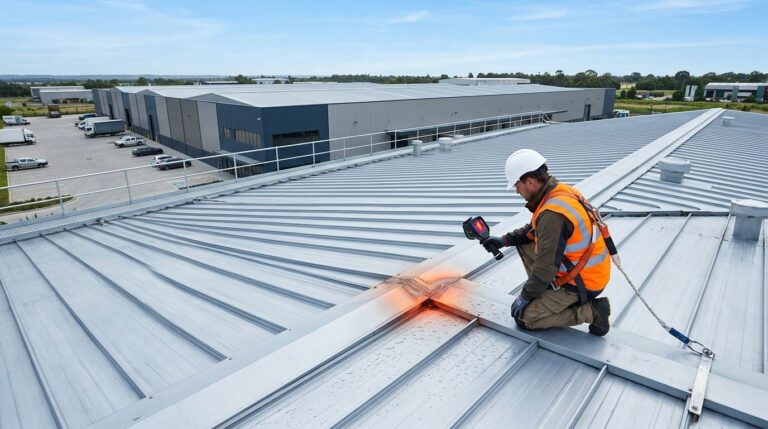
A proper inspection may include moisture testing or infrared imaging beneath an intact surface. This helps determine whether a coating system is appropriate and identifies wet insulation before repairs begin. Commercial roof leak detection in Saint Paul can locate hidden moisture before a surface-only patch closes the visible opening.
Sellers Roofing Company has completed more than 1,100 roofs since 2017, including 300 commercial projects. For Saint Paul roofing, Minneapolis roofing, and Twin Cities roofing work, ask commercial roofing contractors for written scopes, system experience, insurance documentation, and winter access procedures. Ask whether the evidence supports targeted repair, restoration, or roof replacement. Sellers holds MN License 803862, uses union-built roofing crews that include IUPAT Local 96 roofers, and is GAF certified.
Frequently Asked Questions
Can ice dams form on a commercial building?
Yes. They form when meltwater reaches a colder edge, drain area, gutter, or parapet transition and refreezes. On low-slope systems, frozen drainage and backed-up water are often bigger concerns than classic shingle-edge ice dams.
Should a facility manager calculate snow load from snow depth?
No. Snow depth doesn’t show moisture content, drift loading, roof design, or structural condition. Use original roof records and call a qualified professional when drifting, sagging, cracking, or unusual accumulation appears.
Does insurance cover an ice storm roof loss?
Coverage depends on the policy, cause of loss, exclusions, deductible, and documentation. Water damage claims need dated photographs, emergency invoices, mitigation records, and prompt reporting to support insurance documentation. Protect the building and don’t remove damaged materials before documenting the condition unless safety requires it.
What if the property also has residential roofs?
A mixed portfolio needs separate scopes. Asphalt shingles and metal roofing may need residential roof repair or residential roof replacement after edge leaks, while commercial membrane systems may need drainage work, moisture testing, or seam repair.
Can hail damage be addressed during a winter inspection?
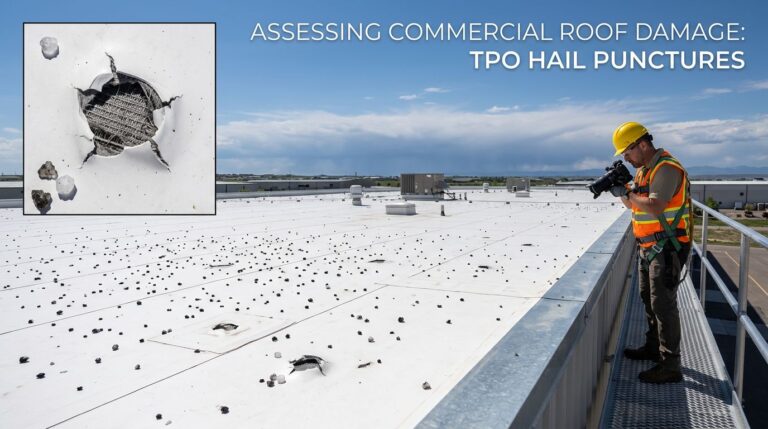
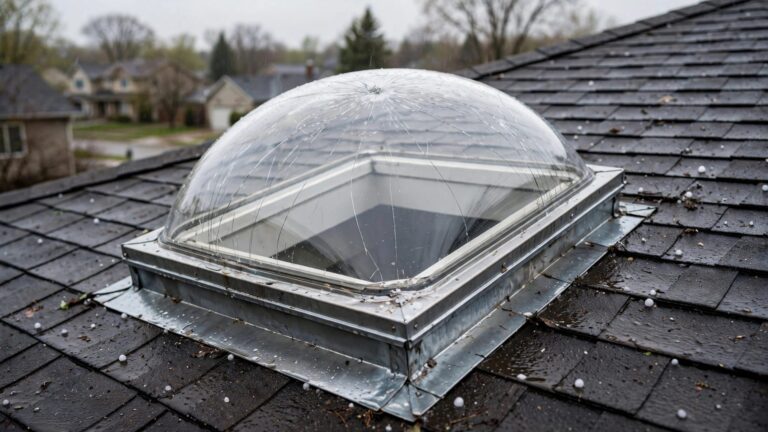
Yes. Snow can hide roof damage, cracked sealant, punctures, and damaged flashing. A contractor should document suspected hail or ice impact, then distinguish new impacts from aging, foot traffic, ice-removal marks, and deferred maintenance.
Keep the Roof Ready Before the Next Freeze
An ice storm response starts before the first drain freezes. Clear drainage, document the roof, confirm snow-load information, and keep untrained workers off icy surfaces.
The strongest winter plan protects people first, then limits water entry and preserves evidence for the right repair. Fast documentation and qualified inspection help determine whether targeted repair or roof replacement is justified.
Need a roof inspection in Saint Paul or the Twin Cities? Call Sellers Roofing Company at +1-651-703-2336 or schedule a free estimate. We are a black-owned, NMSDC-certified MBE roofing contractor with 9+ years experience.