Last updated: 2026-11-07 by Ted Sellers, Owner
Evacuate the building immediately if heavy snow accompanies new roof sagging, repeated structural cracking or popping, bowed framing, separating walls, or doors that suddenly bind. Sagging ceilings, falling ceiling materials, displaced sprinkler piping, and severe new leakage also warrant evacuation and urgent assessment. Stay off the roof, don’t enter the attic, and call 911 if collapse is suspected.
What Actually Causes Snow-Load Distress in Harsh Winter Climates?
Why does snow depth give an incomplete picture?
Snow load is weight per unit area, usually expressed in pounds per square foot (psf). Depth alone doesn’t establish weight because powder, compacted snow, wet snow, and ice have different densities.
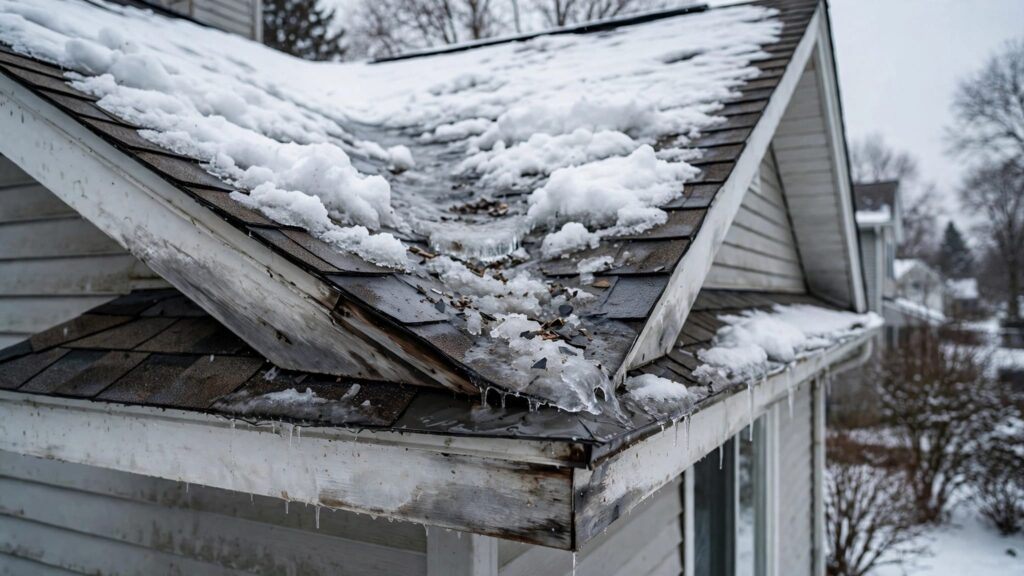
Settling can reduce snow depth without reducing its weight. Rain adds weight, while melting and refreezing can move existing weight toward low spots and blocked drains.
One inch of retained water adds approximately 5.2 psf. Across 1,000 square feet, that equals about 5,200 pounds. That calculation describes added weight, not a roof’s available capacity.
Why do drifts create localized problems?
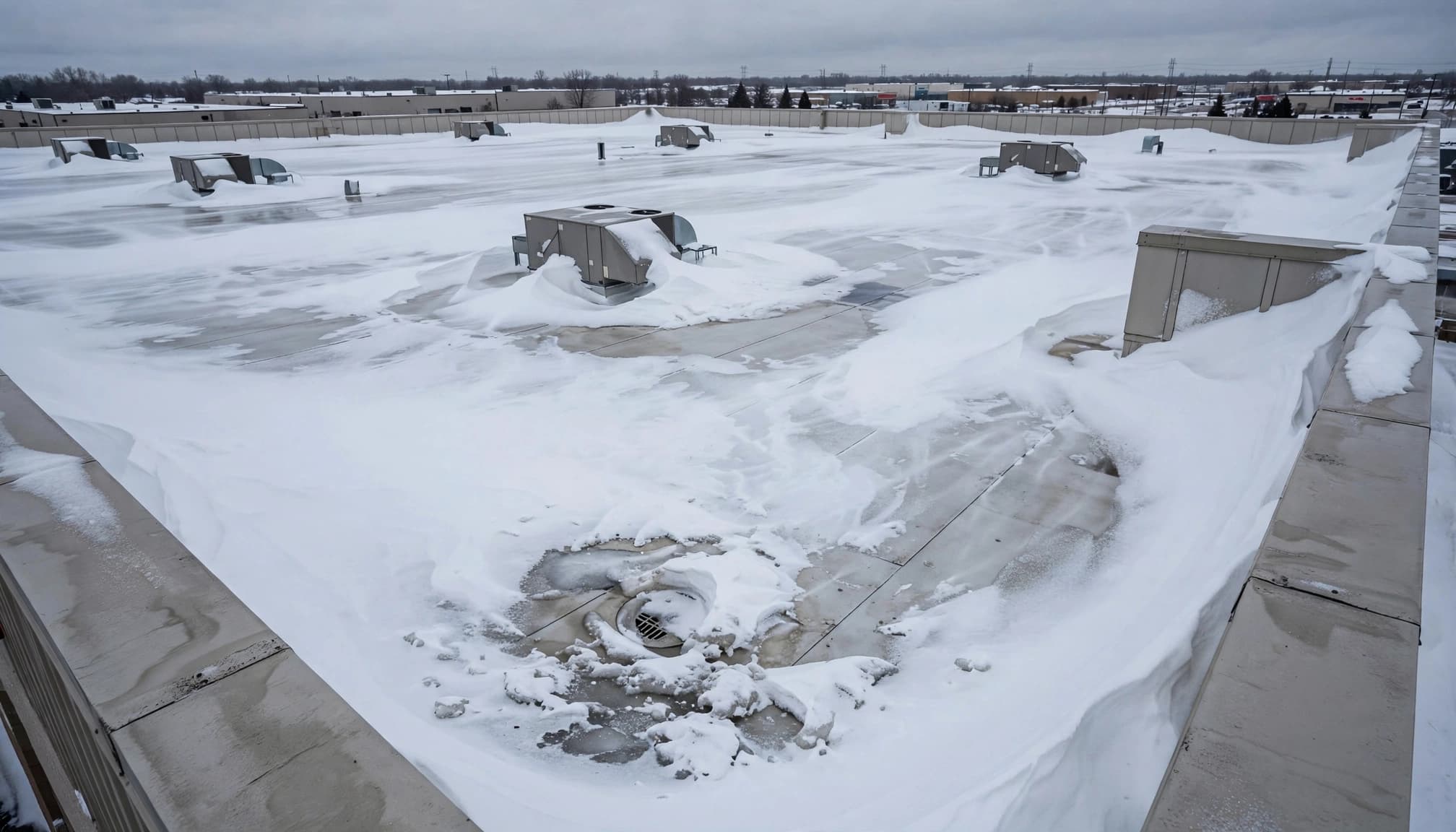
Parapets, taller adjoining walls, rooftop equipment, and roof valleys collect uneven accumulations. One bay can carry substantially more snow than neighboring bays.
Our guide to parapet snow-drift loading explains why these concentrations need separate assessment.
The Minnesota DLI snow-load map illustrates residential roof-load examples of 35 and 42 psf, derived from ground loads of 50 and 60 psf. Those figures are design references, not evacuation thresholds or an existing building’s remaining capacity.
When This Applies
Which buildings need this response?
These precautions apply to homes, apartment buildings, warehouses, schools, churches, and retail properties. A commercial flat roof deserves close attention around long spans, height changes, drains, and equipment curbs.
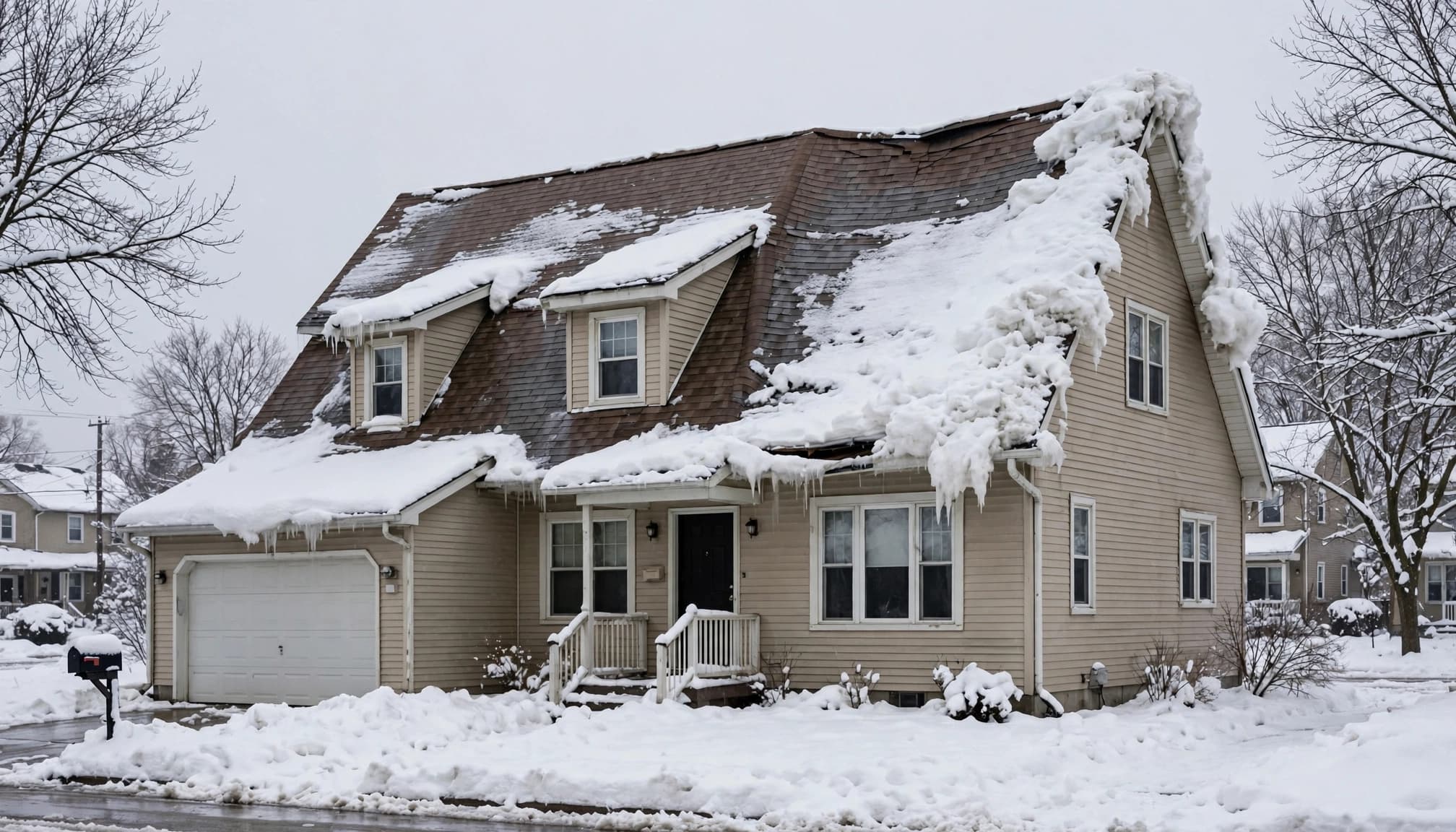
However, pitched roofs aren’t exempt. Valleys, additions, deteriorated decking, and altered framing can concentrate stress beneath asphalt shingles or metal roofing.
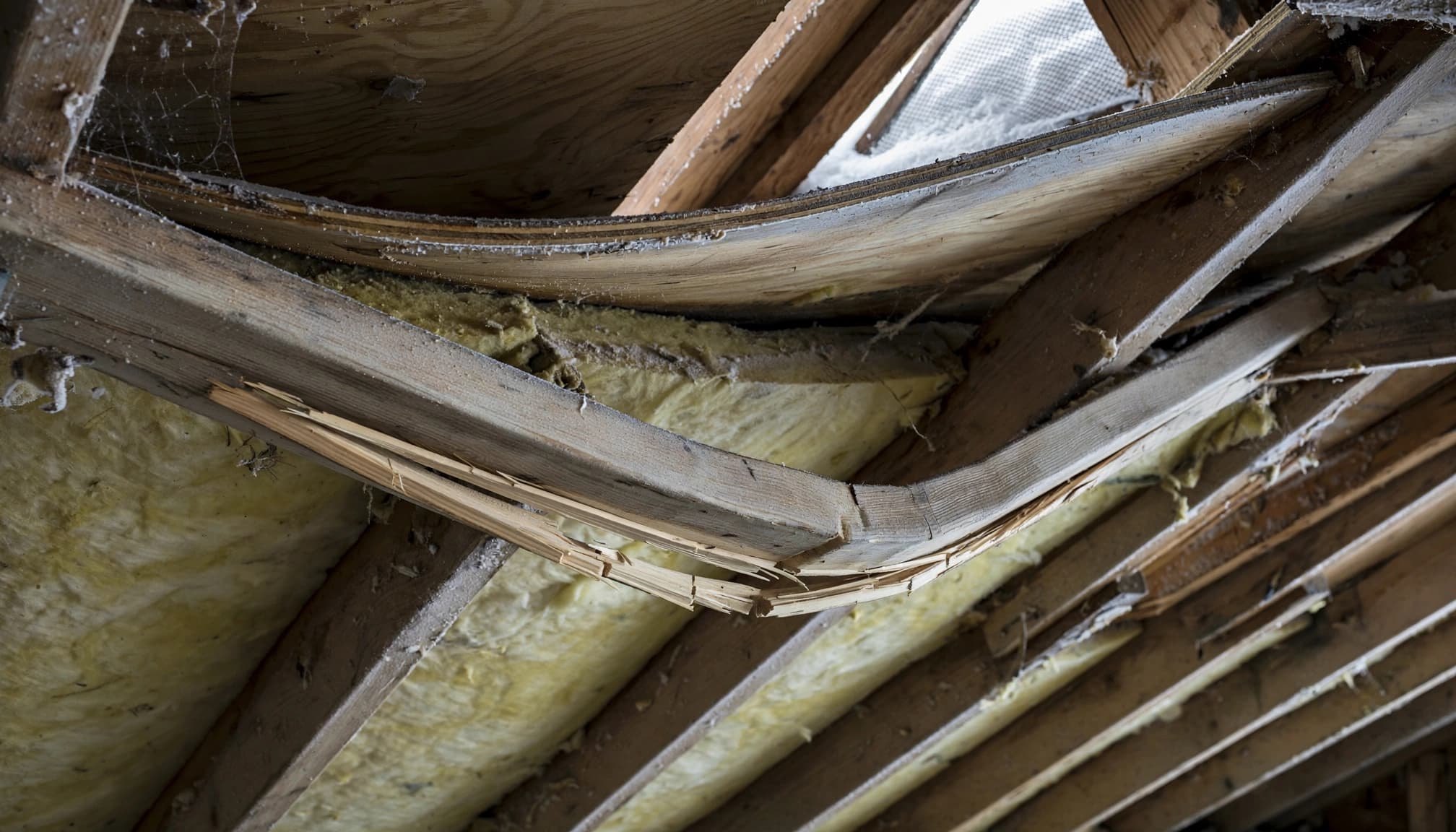
FEMA’s Snow Load Safety Guide identifies sagging roof members, split wood, unusual structural noises, and sudden door or window binding as potential overstress indicators. Any new structural warning warrants leaving before investigation.
Which conditions need a different response?
A light, even snow layer without movement or leakage doesn’t automatically require evacuation or removal. Similarly, one small ice-dam drip doesn’t establish that framing is overloaded.
A sagging ceiling still creates a falling-material hazard, even without roof-frame failure. Keep people away and obtain urgent assessment.
A building doesn’t need every warning sign before evacuation is justified. New structural movement is enough.
How to Inspect and Document the Damage (Field Checklist)
What can you record without entering danger?
During suspected overload, observation stops at safe locations. Don’t enter an attic, climb a ladder, or stand beneath a bowed ceiling to obtain better photographs.
From outside the exclusion area, record the location and time of visible changes. Describe noises without returning inside to reproduce them. Save original photographs, weather records, maintenance reports, and previous inspection findings.
University of Minnesota Extension advises against entering buildings or climbing roofs when apparent structural damage remains beneath snow. Its agricultural-building guidance is useful for recognizing distress, but its snow-depth examples aren’t universal commercial or residential limits.
What does the contractor inspect after clearance?
Once structural professionals authorize access, the inspection follows drainage paths and roof details:
- Examine eaves and perimeter flashing for separation, displaced gutters, and ice accumulation.
- Follow valleys and roof transitions for trapped water, displaced materials, and concentrated snow.
- Map granule-loss patterns, bruised shingles, punctures, and damaged membrane areas.
- Inspect pipe-boot cracking, curb flashing, seams, and drain connections.
- Document deck deflection and visible framing damage without disturbing structural connections.
Granule loss may indicate weathering or hail damage; it doesn’t establish snow overload. Likewise, a cracked pipe boot can cause leakage without framing failure. The inspection must distinguish these conditions.
Step-by-Step
What should you do immediately?
- Leave the building by a safe route away from falling snow, glass, and visibly distressed areas. Don’t stop for belongings.
- Call 911 when collapse is suspected, structural movement is continuing, or people remain at risk. Describe the building, observed symptoms, and occupied areas.
- Stop roof access and snow-removal work. Keep occupants, delivery drivers, and maintenance staff outside the affected building and falling-debris zone.
What happens after everyone is outside?
- Give responders the evacuation status, known hazards, and location of roof drawings. Don’t re-enter to retrieve documents.
- Arrange structural evaluation through a qualified structural engineer and coordinate with the building authority. A roofer assesses the covering and drainage; the engineer evaluates load-bearing members and stabilization.
- Resume removal or repair only under the approved access and work plan. Reoccupation requires clearance, not an owner’s visual judgment.
The National Weather Service’s winter workplace hazard guidance identifies roof snow clearing and work at height as separate worker hazards. Sending employees onto an icy roof can add exposure before anyone understands the structure’s condition.
Repair vs. Replace: The Decision Framework
When does targeted repair make sense?
After structural clearance, commercial roof repair may address isolated seam openings, damaged flashing, or a limited puncture. Residential roof repair can address localized shingle or flashing damage when surrounding materials remain serviceable.
The decision depends on moisture spread, attachment condition, deterioration, and repair compatibility. Snow on the roof doesn’t establish a replacement requirement.
Use these factors to separate a limited repair from a larger project.
| Factor | Targeted repair | Full replacement |
|---|---|---|
| Cost basis | Limited area and detail work | Entire assembly, disposal, and reconstruction |
| Remaining service life | Sound surrounding materials | Widespread aging or repeated failures |
| Moisture | Localized wet materials | Broad saturation or damaged substrate |
| Insurance implications | Document event-related scope | Support why lesser repairs won’t restore function |
| Compatibility | Approved matching repair materials | Complete compatible assembly |
| Structural damage | Engineered repairs remain separate | Engineered repairs remain separate |
The structural finding controls both options. A new covering cannot correct failed framing.
When is restoration insufficient?
Commercial roof restoration and commercial roof coatings require a suitable substrate and a compatible system. They don’t restore broken trusses, deteriorated decking, or overloaded joists.
Commercial roof replacement becomes reasonable when widespread deterioration, wet insulation, or exhausted service life defeats reliable localized repairs. The same condition-based reasoning applies to residential roof replacement.
Material Specs That Matter for This Repair or Replacement
Which residential specifications affect the scope?
GAF Timberline HDZ, CertainTeed Landmark, and Malarkey Legacy are named shingle options, but product selection follows structural assessment. Malarkey Legacy’s Class 4 impact rating addresses impact testing, not snow-load capacity.
Synthetic underlayment and asphalt-saturated felt have different installation requirements. Neither substitutes for a required ice barrier.
For applicable Minnesota residential assemblies, the ice barrier extends at least 24 inches inside the exterior wall line. That is different from measuring 24 inches upslope from the eave. Valley protection must also follow the specified assembly.
Recurring ice dams require attention to attic air leakage, insulation, ventilation, and drainage. Ice dam removal alone doesn’t correct those causes.
Which commercial specifications affect compatibility?
TPO roofing repairs require compatible membrane and properly prepared heat-welded details. A specified 60-mil TPO membrane describes thickness, not structural capacity.
Similarly, EPDM in 45-mil and 60-mil thicknesses requires system-compatible seams, flashing, and adhesives. Modified bitumen and built-up roofing (BUR) need repair materials suited to their existing construction.
A heavier replacement assembly also changes permanent roof weight. The engineer must account for retained roofing layers, insulation, ballast, and equipment rather than evaluating snow alone.
Insurance Documentation and the Claim Process
What evidence separates one cause from another?
A roof insurance claim needs a dated damage record. Separate earlier hail damage, wind damage, ice-related leakage, and suspected structural overload rather than calling every condition storm damage.
For example, photograph hail-related bruising and granule displacement when safe access becomes available. Record lifted shingle tabs and displaced flashing without manipulating them. For interior intrusion, capture the room location, ceiling condition, and affected finishes from a safe position.
Fresh snow, equipment dents, or ceiling stains alone don’t establish the cause of loss.
What do the adjuster and contractor document?
The adjuster evaluates reported damage against policy terms. The contractor records affected materials, failed details, moisture findings, quantities, and the work needed to restore the assembly.
A structural engineer addresses framing failure, connection damage, deflection, and stabilization. Those findings belong beside the roofing scope, not buried inside a general reroof estimate.
Our commercial insurance inspection guide explains that division of work.
Save emergency invoices, removal records, photographs, and written access restrictions. Also document pre-existing defects honestly. Coverage depends on the policy and facts; neither snow accumulation nor a contractor’s recommendation guarantees payment.
What a Professional Roof Contractor Does Differently
How does the crew protect the assembly?
A professional removal plan addresses worker access, fall protection, skylights, electrical hazards, disposal zones, and loading sequence. Crews don’t stockpile removed snow elsewhere on the roof or dump it onto lower roofs and exits.
Structural movement during removal means stopping work and evacuating. Clearing weight unevenly can also change loading patterns, so removal follows the approved plan.
During authorized tear-off, crews expose and inspect the deck. They remove deteriorated sheathing, provide supported replacement edges, and use the specified fastening. Cutting a truss or altering a joist requires engineered direction.
What belongs in the permanent repair scope?
The written scope should separate structural work, roofing, drainage, ventilation, and equipment coordination. Local permits and the Minnesota State Building Code framework apply to the relevant construction work.
Ventilation requires an actual net free area (NFA) calculation. For example, a 1:150 design serving 1,500 square feet requires 10 square feet of total NFA. Any permitted reduction depends on applicable code conditions.
Inspect pipe boots individually and replace failed components rather than covering cracks with surface sealant. After structural clearance, Get a Free Commercial Roof Inspection for a condition-based roofing scope.
What Drives Snow-Load Roof Damage Costs in Minnesota?
Which emergency items affect the bill?
Emergency work and permanent reconstruction are separate costs. Access restrictions, structural assessment, temporary stabilization, controlled removal, and temporary weather protection can each require different personnel and equipment.
A warehouse with buried skylights and deep parapet drifts has a different removal scope than an accessible residential eave. Active structural distress changes the work sequence again.
Quotes should identify mobilization, access equipment, disposal areas, and work limits. A snow-removal price shouldn’t imply structural clearance or permanent leak repair.
Which reconstruction items change the total?
Roofing estimates should identify the measured area, damaged decking, insulation condition, compatible materials, disposal fees, and permit requirements. One roofing square equals 100 square feet, but area alone doesn’t establish installed cost.
Deck deterioration, difficult access, equipment relocation, and concealed framing damage can increase the scope. Separate allowances for concealed conditions so the owner understands what triggers additional work.
For a structurally cleared home with damaged shingles or flashing, Get a Free Residential Roof Estimate based on the exposed conditions.
Frequently Asked Questions
Can I go back inside for medication or business records?
Don’t re-enter a building with suspected structural instability. Tell emergency responders what you need and where it is located. A short visit still exposes you to falling ceilings or progressive collapse.
Can I remove snow from only one side of the roof?
Unbalanced removal can change loading across framing and connections. The removal sequence must suit the roof geometry and structural condition. Don’t improvise by clearing one accessible section while leaving adjoining bays heavily loaded.
Does a thaw mean the roof is becoming safer?
Only water that leaves the roof reduces its total weight. Meltwater trapped behind ice or blocked drains remains on the building. It may also concentrate in low areas, so warming temperatures don’t establish structural safety.
Can tenants return once the ceiling stops leaking?
A stopped leak doesn’t prove that framing or wet ceiling materials are sound. Reoccupation depends on the structural assessment and any restrictions from responders or the building authority. Roofing repairs alone don’t provide that clearance.
Will insurance pay for a hotel or business closure?
Some homeowners policies include additional living expense coverage, while commercial policies may include business-income coverage. Payment depends on the covered cause, policy terms, limits, and deductible. Keep lodging receipts and closure records without assuming reimbursement.
Keep the Building Closed Until It Is Cleared
What should control the immediate decision?
New structural movement requires evacuation, regardless of how deep the snow looks. Leave first and keep others out. Don’t use a stopped noise, warmer weather, or a neighbor’s roof as permission to return.
When should roofing work begin?
After responders and structural professionals establish safe access, Call 651-703-2336 for 24/7 Emergency Roofing to coordinate roofing assessment and temporary weather protection. Keep structural stabilization separate from covering repairs so each problem receives the right scope.
Need a roof inspection in Saint Paul or the Twin Cities? Call Sellers Roofing Company at +1-651-703-2336 or schedule a free estimate. We are a black-owned, NMSDC-certified MBE roofing contractor with 9+ years experience.
