Last updated: 2026-08-01 by Ted Sellers, Owner
Usually, yes, especially on a commercial roof. A roofer helps the adjuster spot hidden damage, separate old wear from the new loss, and document the scope if the roof may need commercial flat roof repair or even commercial roof replacement. If the claim is simple and the roofer can’t attend, the inspection can still move forward, but follow-up documentation matters.
When This Applies
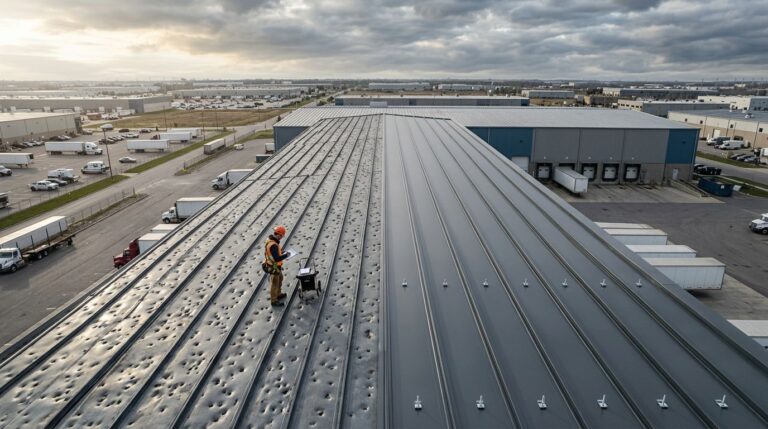
This matters most when your commercial roof needs repair after hail, wind, punctures, repeated leaks, or a prior patch that may have failed. It also matters when you expect a scope dispute, because the adjuster may only see the surface while water has already moved into insulation or other hidden layers.

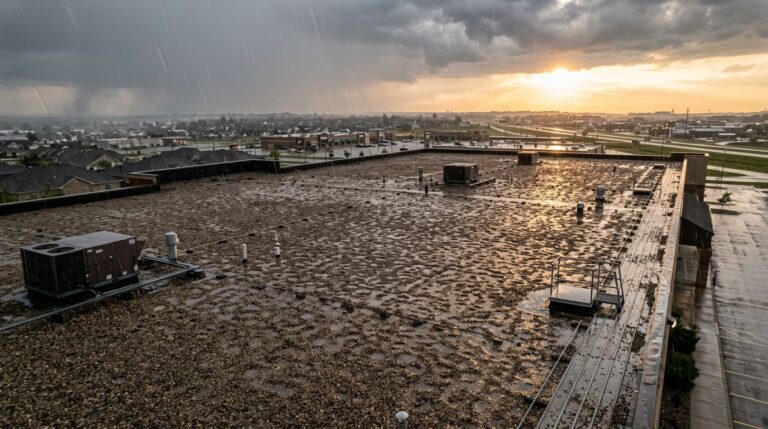
When the roof has seams, flashings, rooftop units, or past repairs, hidden damage is easy to miss. That is where commercial roof leak detection services help, because they can document where water entered and how far it spread before the claim scope gets locked in.
When a roofer should be there
A roofer should attend when the cause of loss is not obvious, when the building has active leaks, or when previous repairs may complicate the claim. Prior patches do not erase coverage for a new hail strike, wind tear, or puncture in a different area, but the insurer may still question cause.
When it matters less
If the damage is small, visible, and isolated, the adjuster can inspect alone and the roofer can follow up later. That said, if the roof is flat, old, or already patched in several places, a roofer’s presence still improves the record.
The real issue is causation. The carrier has to connect the loss to policy terms, not just point to an old patch.
Step-by-Step
1. Schedule the roofer before the inspection
Set the inspection time with your roofer first, then confirm the adjuster can meet them on site. A roofer who knows commercial claims can point out what the adjuster should measure, photograph, and note.
If you need a local starting point, a commercial roofing contractor in Saint Paul can help prepare the file and show the adjuster the roof in plain terms.
2. Walk the roof together
The best insurance adjuster roof inspection is one where everyone sees the same damage at the same time. That lets the roofer explain membrane splits, wet insulation, crushed flashing, loose fasteners, and drainage problems before anyone writes the scope.
If the adjuster will not wait
Do not stop the claim. Ask the roofer to inspect right after, then send the adjuster the missing photos, measurements, and notes. A same-day follow-up is better than a weak inspection record.
3. Separate old wear from new damage
This is where many claims get stuck. An adjuster may blame maintenance if an old repair used mixed materials, trapped moisture, or failed around a seam. Your roofer should show whether that old work caused the current leak, or whether a new storm event opened a different area.
Old work does not cancel coverage for fresh damage. If one section is tied to wear and another to a covered event, ask for a partial approval instead of accepting a blanket denial.
4. Match the scope to the roof condition
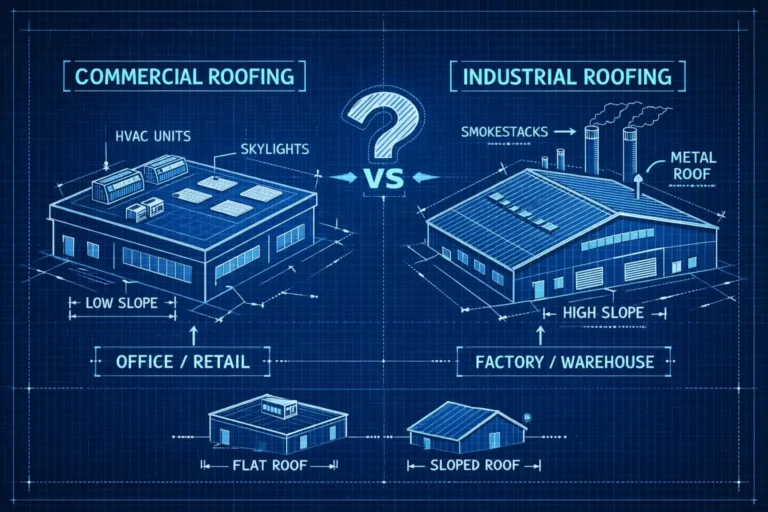
A small failure may call for commercial flat roof repair. Widespread wet insulation, failed seams across the field, or membrane shrinkage may point toward commercial roof replacement instead. The adjuster may start with a tight scope, but hidden damage can change that.
If the first estimate misses covered items, your roofer can submit a supplement with photos, moisture readings, and measurements. That is common after tear-off, when the roof team finds more damage than the first walkthrough showed.
5. Keep emergency work temporary
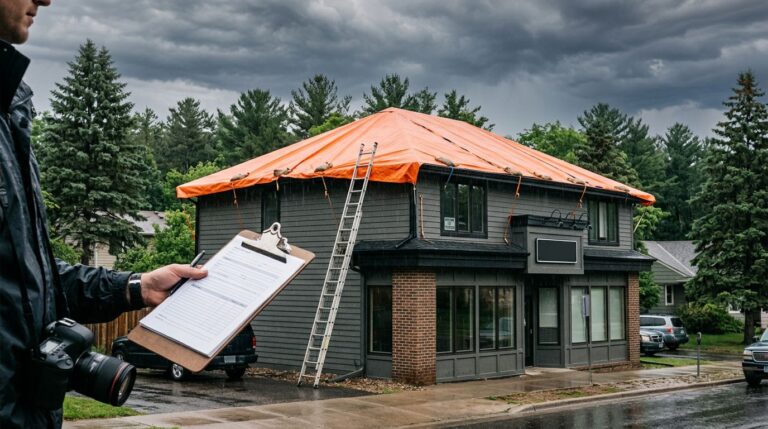
Protect the building right away, but keep the work temporary until the claim is documented. Tarping, dry-in work, interior protection, and leak tracing do not weaken a claim. They show you acted reasonably and prevented more loss.
Do not remove wet materials before they are photographed unless safety demands it. If that happens, save samples, note the location, and tell the carrier what changed.
FAQ
Can the adjuster inspect without a roofer?
Yes. The claim can still move forward if your roofer is unavailable. Even so, on commercial roofs, a roofer’s notes often make the difference between a fair scope and a short one.
What if my roofer can’t get there the same day?
Ask the adjuster to document the date, the weather, and the exact areas seen. Then have the roofer inspect as soon as possible and compare notes against the carrier’s scope.
Does the roofer need to stay for the whole visit?
Usually, yes, if the roof is complex or the damage is disputed. A full visit helps the roofer answer questions in real time and point out details that might get missed on a quick walk.
What if the adjuster says the damage is maintenance?
Ask for that position in writing and have the roofer respond with photos, dates, and a cause-of-loss review. If only part of the roof ties back to older work, the rest may still qualify for coverage.
Will temporary tarping hurt my claim?
No, as long as the work is temporary and documented. Emergency protection is often expected, especially when water is still entering the building.
Conclusion
If the roof is simple and the loss is tiny, the inspection can happen without a roofer. For most commercial claims, though, having one there helps the adjuster see the real condition of the roof, not just the surface damage.
That matters most when the roof has old patches, hidden moisture, or signs that the repair may be larger than the first estimate. When the question is whether your roof needs repair or replacement, the best answer usually comes from a proper inspection, clear photos, and a roofer who can explain the damage in plain language.
Need a roof inspection in Saint Paul or the Twin Cities? Call Sellers Roofing Company at +1-651-703-2336 or schedule a free estimate. We are a black-owned, NMSDC-certified MBE roofing contractor with 9+ years experience.