Last updated: 2026-10-17 by Ted Sellers, Owner
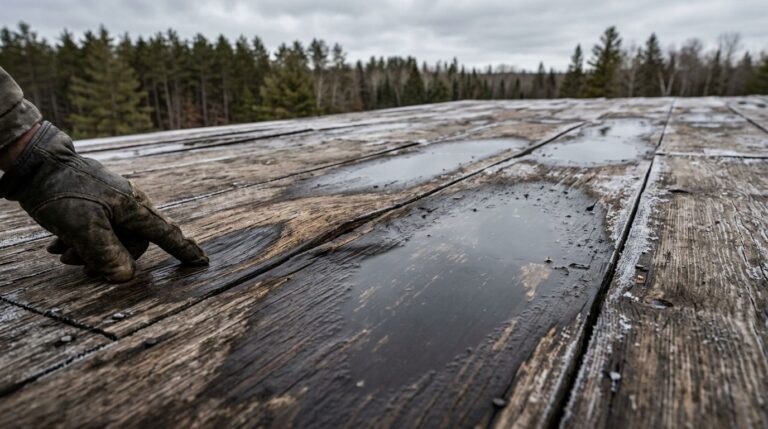
After a Minnesota thunderstorm with heavy rain, inspect your roof from the ground, then check accessible attic areas for water entry. Take photos of missing shingles, dented metal, gutter overflow, and water stains without climbing onto wet roofing. Arrange a storm damage roof inspection after hail damage, visible roof damage, or a new leak, and use emergency service for uncontrolled water entry.
On this page: When This Applies; Step-by-Step; Damage Signs; Professional Inspection; Repair or Replacement; Insurance Claims; Frequently Asked Questions; Next Steps.
When This Applies
Which properties need a post-storm inspection?
This guidance applies to homeowners, landlords, and commercial property managers after heavy rain accompanied by hail, strong winds, or leaks. Heavy rain can also expose existing flashing or drainage failures without causing new roof damage.
A practical Minnesota roofing maintenance schedule includes professional inspections in spring and fall, plus an inspection after any hailstorm. A post-storm inspection documents a specific event; routine inspections track aging, drainage, and maintenance needs.
When should you skip the inspection and get emergency help?
Stay away from sagging ceilings, displaced roof sections, downed wires, and large fallen branches. Keep occupants out of affected rooms.
Wait at least 30 minutes after the last thunder before going outside. Don’t enter an attic with damaged framing, unsafe access, or water near electrical equipment. Structural movement requires professional assessment before anyone accesses the roof.
Step-by-Step
Steps 1 through 3: Check the exterior and accessible interior
- Walk the perimeter from the ground. Use binoculars or phone zoom to examine each slope, ridge, valley, and roof edge. Record missing shingles, lifted, curled, cracked, or creased areas, displaced metal, exposed underlayment, and branches resting on roofing. Don’t climb a ladder or handle roofing material yourself.
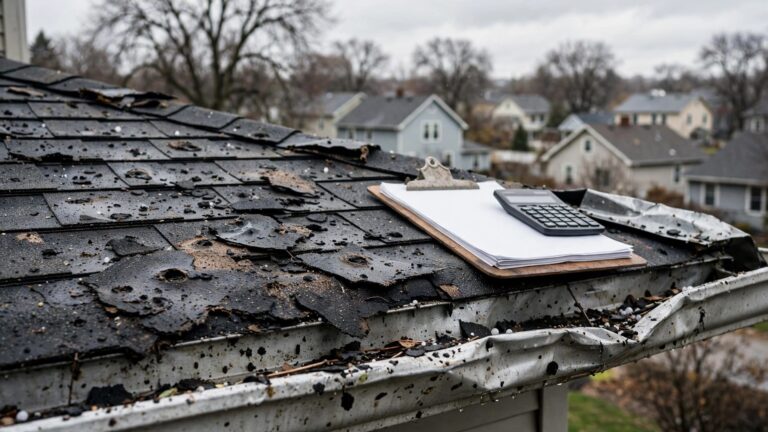
- Examine gutters, downspouts, and vents. Look for dents, chipped paint, loose attachments, and debris blocking discharge. Photograph asphalt granules around downspout outlets. Clogged gutters can push water beneath roofing material, causing ceiling leaks, water stains, and conditions that support mold growth.
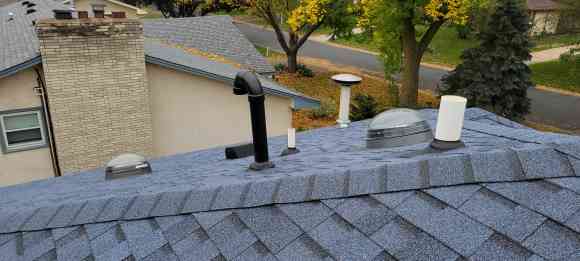
- Inspect accessible attic areas and upper-floor rooms. Look for damp insulation or drywall, wet decking, musty odors, water trails, and unexpected sunlight through the roof deck. Use an established walkway, never ceiling drywall. Photograph stains near chimneys, skylights, vents, and other roof penetrations.
Steps 4 through 6: Preserve evidence and limit additional damage
- Create a location-based photo record. Capture wide views before close-ups. Label each damaged area by slope, room, or building elevation. Take photos and preserve the original files. Note the storm date, when water appeared, and any previous leaks. Don’t guess at the cause.
- Protect people and property. Move belongings away from leaks when safe and collect drips without approaching a sagging ceiling. Have a contractor perform temporary dry-in work. Keep receipts and photograph temporary repairs before permanent work conceals damage.
- Schedule the appropriate inspection promptly. Report active leaks, exposed decking, punctures, and loose roof edges when requesting service. Notify your insurer promptly when evidence indicates a potential covered loss. Don’t delay emergency protection while waiting for an adjuster.
How Does Minnesota Weather Affect Storm Damage to a Roof?
How do hail and wind affect different materials?
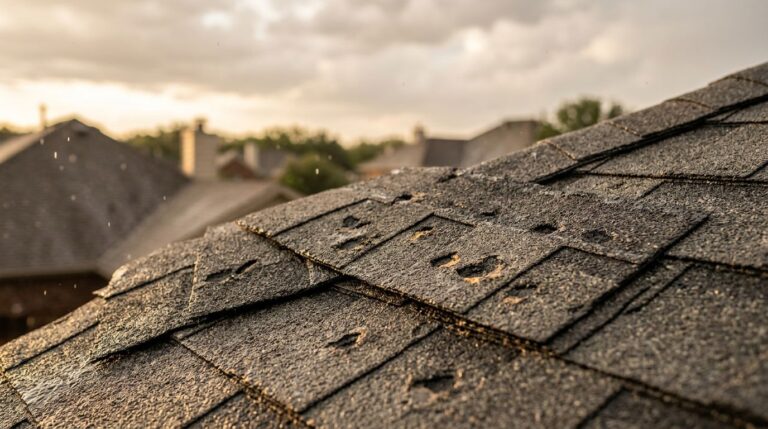
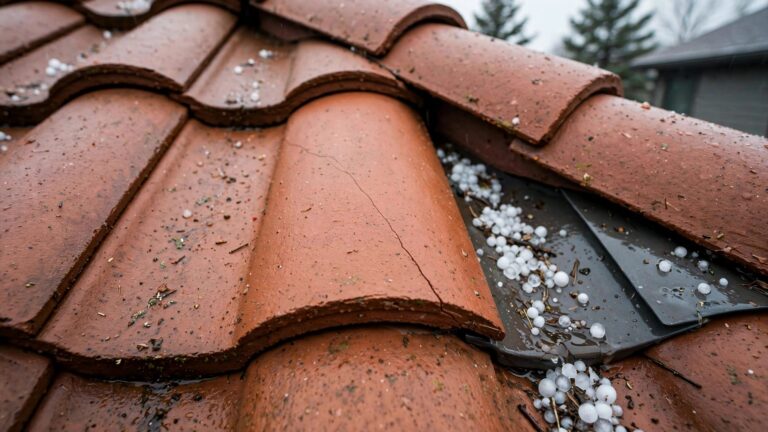
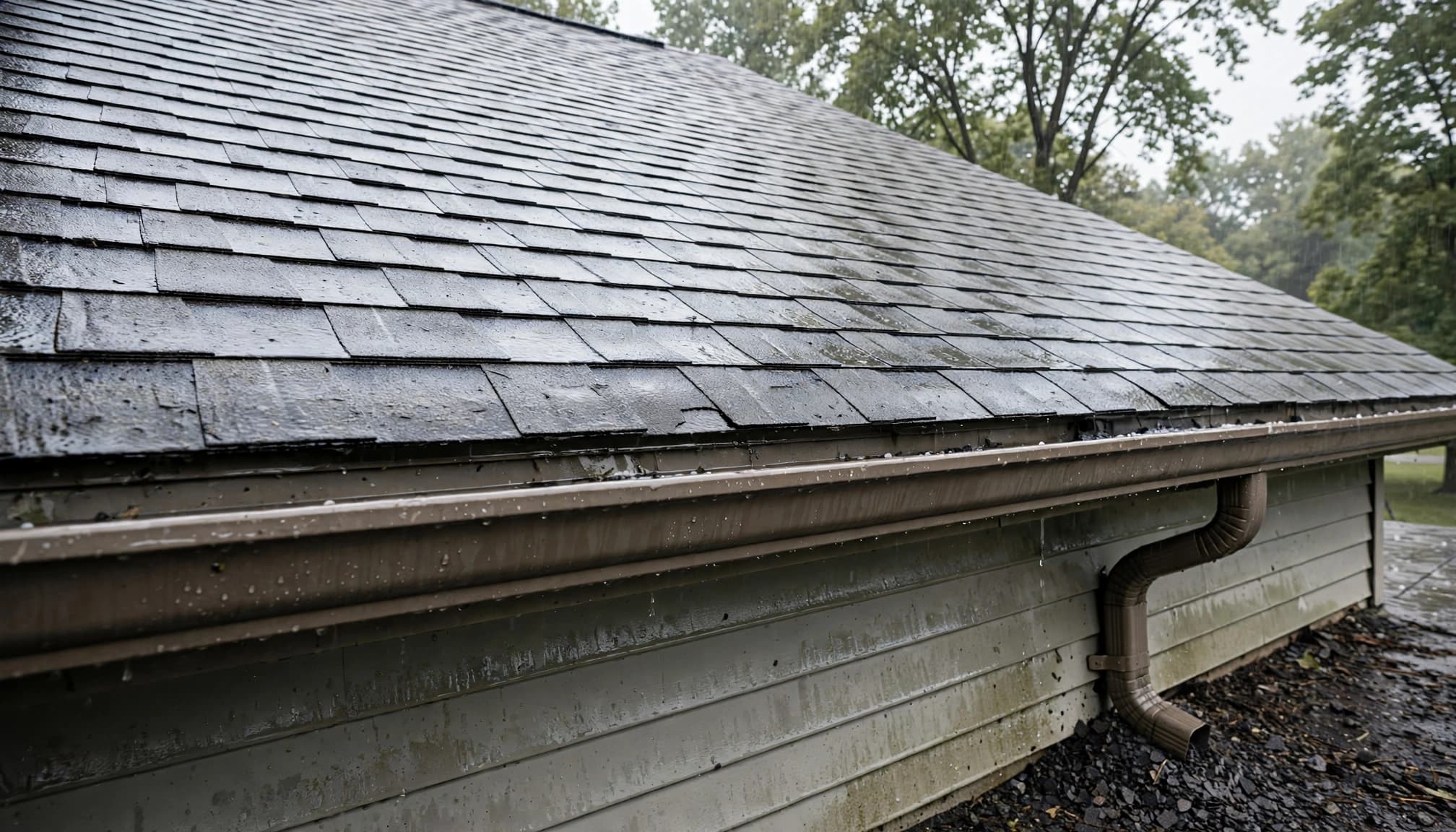
Hail damage can dent metal roofing, fracture tiles, and dislodge protective granules from asphalt roofing. Impacts may also damage the reinforcing mat or leave missing shingles without causing an immediate leak.
Wind can crease shingle tabs, break seal strips, loosen flashing, or lift membrane edges. A shingle that remains attached can still have a failed seal.
No single hail size or wind speed determines whether roof damage requires replacement. Material condition, impact angle, installation, and the damage pattern matter.
Which clues need closer investigation?
Fresh granule deposits at downspouts deserve attention, but granules alone don’t prove storm damage. Aging shingles also shed them.
Dents and paint chips on gutters, downspouts, and vents establish impact locations. They don’t establish the extent of shingle damage. Our guidance on hail-damaged gutters and roof edges explains why those findings need to be evaluated together.
In Minnesota, document existing ice-dam damage, mold, and previous ice dam removal separately. Freeze-thaw cycles can enlarge weak flashing joints or other openings after the summer storm has passed.
What Should a Storm Damage Roof Inspection Include?
What findings belong in the written report?
A professional inspection should cover the exterior roof, accessible attic or interior areas, and distinguish storm-related damage from pre-existing wear.
The report should identify roof materials, affected slopes or sections, flashing conditions, penetration details, drainage problems, and interior moisture locations. Photos need location references so another person can find each defect.
It should also explain inspection limitations, temporary protection, recommended repairs, and the evidence supporting replacement. Moisture readings or targeted testing may be necessary when insulation or decking is suspected to be wet.
How should you choose the inspector?
Avoid contractors who arrive unannounced after storms offering quick repairs or pushing an immediate replacement contract. Request written findings and a defined scope before authorizing permanent work.
Manufacturer credentials don’t replace damage documentation. At Sellers Roofing Company, we are GAF-certified and hold Minnesota Builder Contractor License 803862.
Inspection fees and repair estimates are separate items. A free estimate doesn’t automatically include moisture mapping, testing, or a detailed insurance report. The proposed scope should identify which services are included.
Should You Repair or Replace the Roof?
When does residential roof repair make sense?
An isolated damaged area can often be repaired when surrounding shingles remain serviceable and compatible materials can be installed correctly.
Choosing repair or replacement depends on the extent of the damage and the condition of the roof. Residential roof replacement becomes more reasonable when damage affects multiple slopes, shingles are too brittle for reliable repairs, or decking deterioration is extensive. Many asphalt-shingle roofs approach major repair or replacement around 20 years, although product, installation, and ventilation affect service life.
Age alone doesn’t establish an insured loss. The inspection must distinguish storm damage from ordinary deterioration.
What changes on a commercial flat roof?
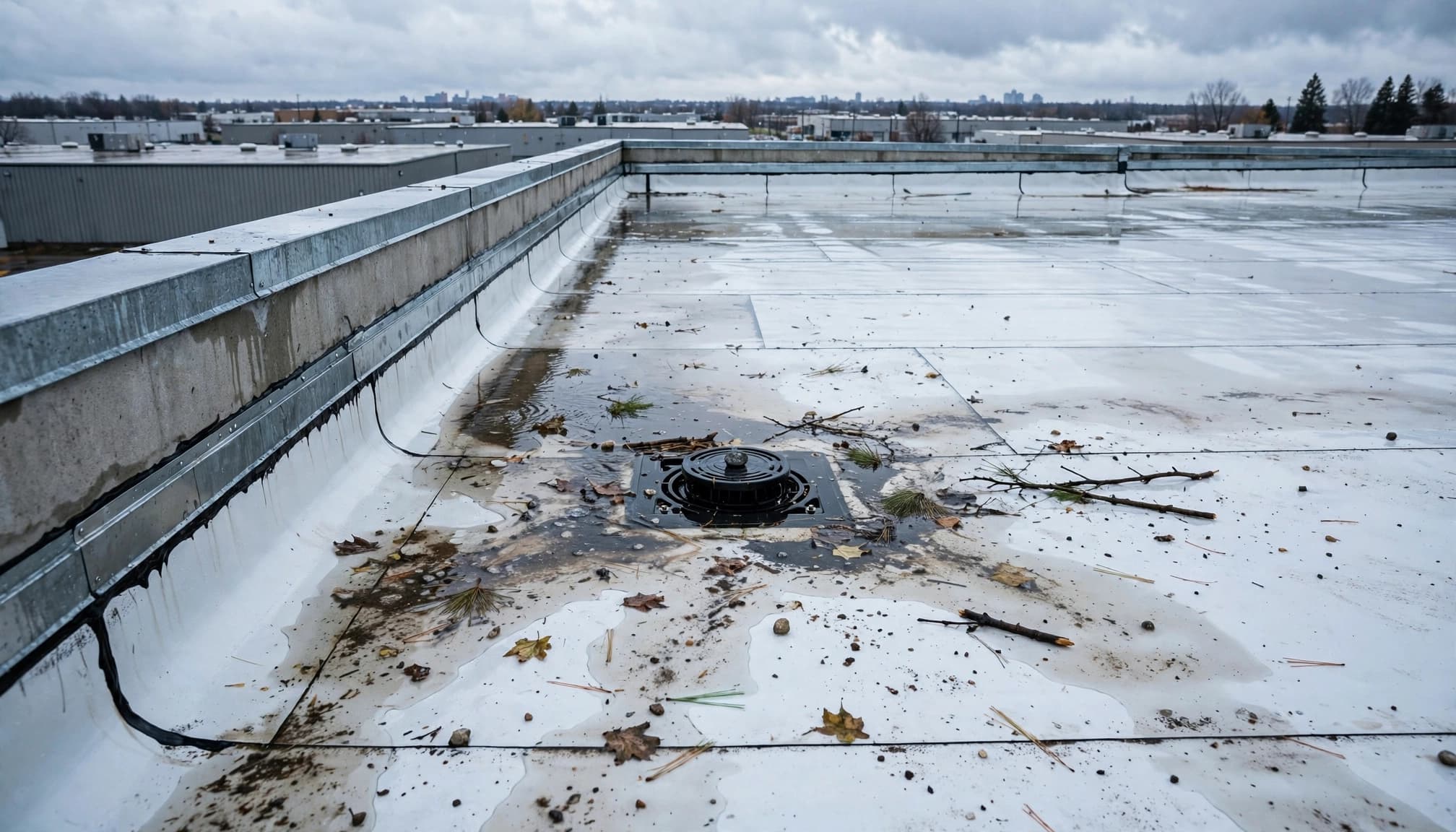
A commercial roof inspection should examine TPO roofing, EPDM, modified bitumen, or built-up roofing (BUR) based on each system’s seams, flashings, and drainage details.
Localized punctures may need commercial roof repair. Widespread damage or wet insulation can require section replacement or commercial roof replacement.
Commercial roof restoration and commercial roof coatings require a suitable substrate. Coating over punctures, failed seams, or wet insulation doesn’t correct the underlying failure.
Standing water also needs a drainage assessment. A patch won’t solve a blocked drain or a low area that repeatedly holds water.
How Do You Handle a Roof Insurance Claim?
What should you report, and how soon?
Report suspected covered damage promptly. Have your policy number, storm date, observed damage, and contact details ready, consistent with this homeowners claim reporting guidance.
You may have a one-year claim-reporting limit, but that isn’t a universal Minnesota rule. Policy notice requirements can apply sooner; lawsuit deadlines are separate.
Preserve photos showing where and when damage occurred, inspection findings, maintenance records, and emergency invoices. These support a roof insurance claim but don’t guarantee payment.
Sudden wind or hail damage may be covered. Wear, maintenance failures, and repeated seepage are commonly excluded. Some wind-driven-rain coverage requires evidence of a storm-created opening.
How should you work with the adjuster?
Provide the inspection report and make affected areas available for safe assessment. Adjusters evaluate the cause, extent, repairability, policy terms, and deductible.
Compare the carrier’s estimate with the actual repair scope. Missing flashing, insulation, drainage work, and interior repairs should be supported with photos and written findings. Our guide to disputing an incomplete roof scope explains how to document omitted flashing work.
Separate storm repairs from maintenance and owner-selected upgrades. Keep temporary mitigation expenses distinct from permanent construction costs.
Replacement-cost and actual-cash-value coverage produce different payments. A separate wind or hail deductible can also change the amount you pay.
Frequently Asked Questions
How soon should a professional inspection happen after hail?
A dry ceiling doesn’t rule out fractured shingles, punctures, or damaged seams. Arrange a professional inspection promptly after suspected hail damage. Uncontrolled water entry needs emergency protection.
How much does a post-storm roof inspection cost?
The cost of a post-storm inspection depends on its scope. A basic estimate may not include testing or detailed documentation.
What if I don’t know the storm date?
Record the best date range you have and when you first noticed damage or leakage. Keep weather alerts, tenant reports, photos, and maintenance records. Don’t assign an exact loss date without supporting information.
What happens if insurance calls the damage old wear?
Request the explanation in writing. Compare it with dated photos, maintenance records, and the roofer’s findings. Submit evidence of missed storm damage for reconsideration. An older roof can have pre-existing deterioration and separate storm damage.
Can the roofer patch directly above the ceiling stain?
The leak source may be elsewhere. Water can travel along decking, framing, insulation, or metal deck channels before appearing indoors. Trace the leak to its entry point before choosing a permanent patch, especially on commercial buildings.
What Should You Do Next?
Is water entering now?
Keep people away from wet electrical areas and unstable ceilings. Call 651-703-2336 for 24/7 Emergency Roofing when uncontrolled water entry or an exposed roof requires immediate protection.
Do you need a documented repair plan?
For a Twin Cities commercial property, Get a Free Commercial Roof Inspection to identify damage and define the next steps.
Homeowners can Get a Free Residential Roof Estimate for a written repair or replacement scope. The decision should follow documented roof condition, not the appearance of the storm alone.
Need a roof inspection in Saint Paul or the Twin Cities? Call Sellers Roofing Company at +1-651-703-2336 or schedule a free estimate. We are a black-owned, NMSDC-certified MBE roofing contractor with 9+ years experience.