Last updated: 2026-08-01 by Ted Sellers, Owner
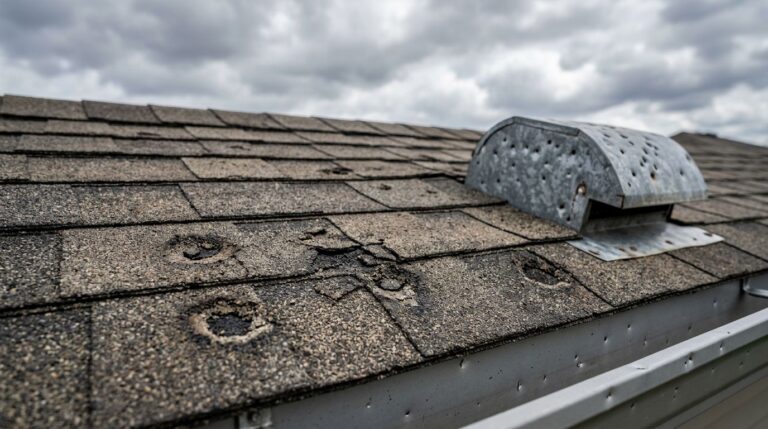
Yes. Hail can dent, bend, or loosen gutters while shingles show little or no visible damage. Gutters are thinner metal, sit on exposed roof edges, and often take direct impact first.
Still, visible gutter damage after a storm means the full roof system should be checked for hidden problems.
When This Applies
Why gutters often show damage first
This usually applies to buildings with aluminum gutters, metal fascia, or long exposed eaves. Small or mid-size hail can leave sharp dents in those parts because thin metal marks faster than thicker roofing materials.
Wind also matters. Hail often strikes the roof edge at an angle, so the gutter lip and front face take the hit first. Meanwhile, shingles on a steeper or partly protected slope may show no obvious cracking from ground level.
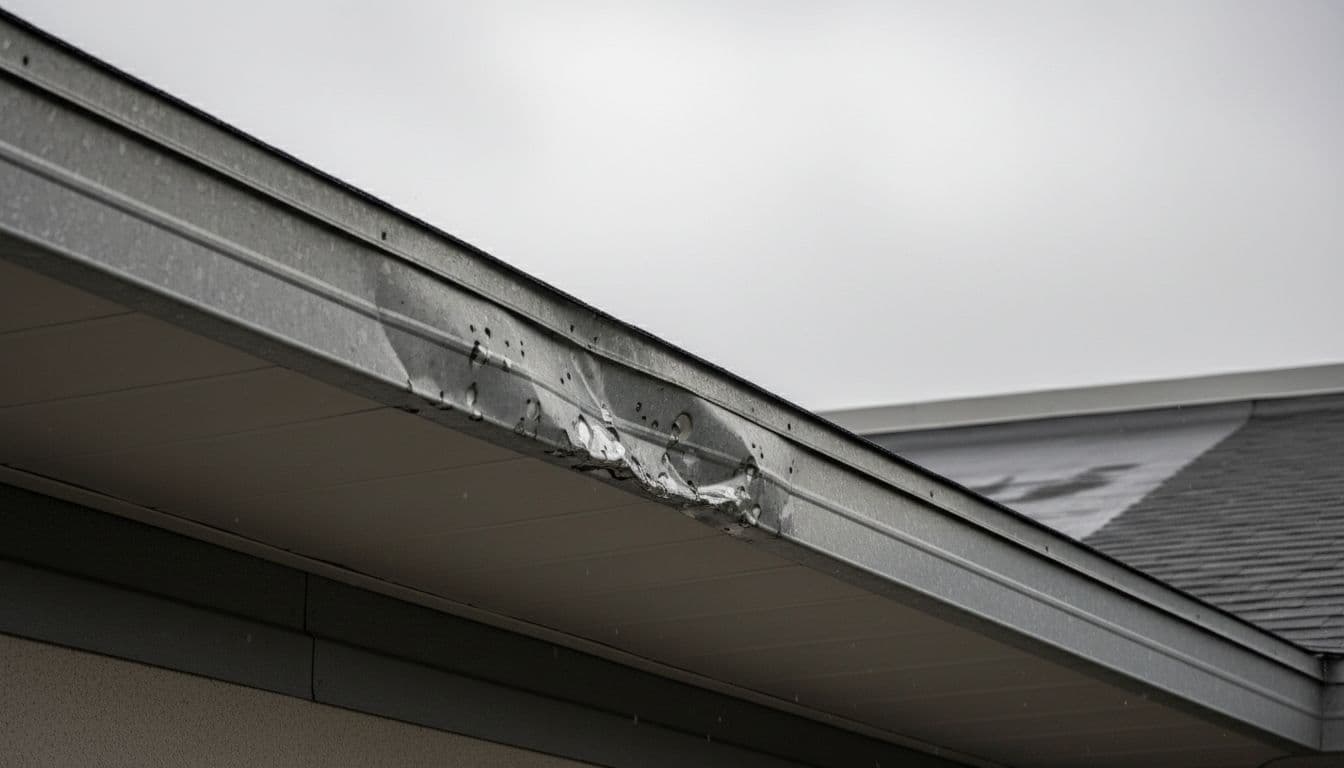
Roof setups where this is common
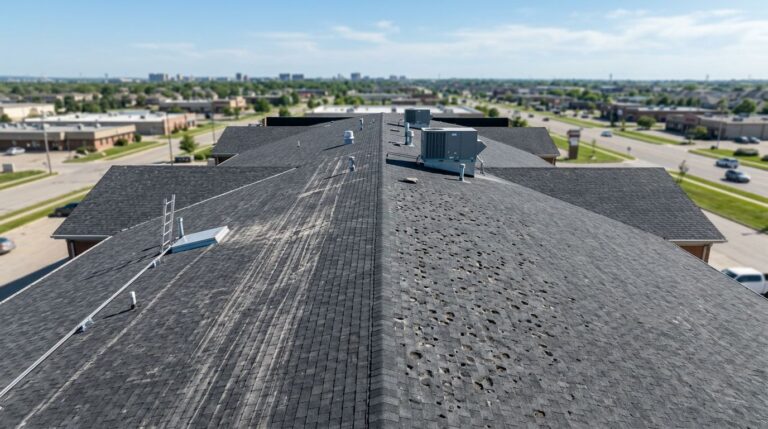
Commercial owners see this on office buildings, retail strips, churches, and warehouses with shingled entry canopies or mansards. It also happens on low-slope buildings, where the main roof is membrane but the edge metal and gutters tell the storm story first.
Dented gutters are often the first clue after hail, not the last clue.
When gutter dents do not mean the roof is safe
This does not apply when hailstones are large, hard, or driven hard by wind. Then shingles may lose granules, crack, or loosen at the same time the gutters get dented.
Age changes the picture too. Old shingles, dry seal strips, and worn membrane seams fail sooner than newer systems. On the other hand, heavier steel gutters may shrug off smaller hail that would mark thin aluminum.
A gutter impact can also create a drainage problem. If the trough loses slope, pulls away from the fascia, or opens at a seam, water may back up behind the gutter. Then the commercial roof needs repair even if the shingle field looks normal.
That is why hail damage gutters should trigger a perimeter inspection, not a quick visual guess.
Step-by-Step
1. Photograph the gutter damage first
Take clear photos of dents, loose hangers, seam splits, and bent downspouts. Also note the storm date and which sides of the building were hit, because wind direction often explains why one elevation looks worse than another.
2. Compare the gutters with nearby roof-edge materials
Check fascia metal, drip edge, flashing, soffits, and splash marks below the gutter. If those surfaces show matching impact marks, the storm likely had enough force to affect more than the gutter alone.
On low-slope commercial roofs
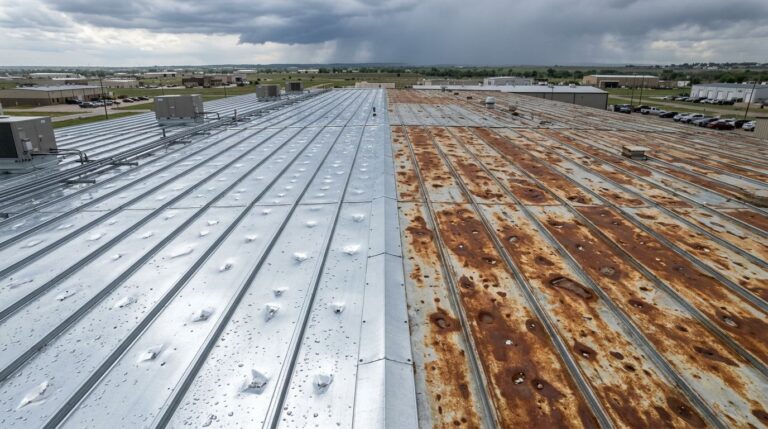
Inspect edge metal, termination bars, drains, and scuppers. A membrane roof may look fine from the ground, yet the perimeter details can still fail after hail and wind.
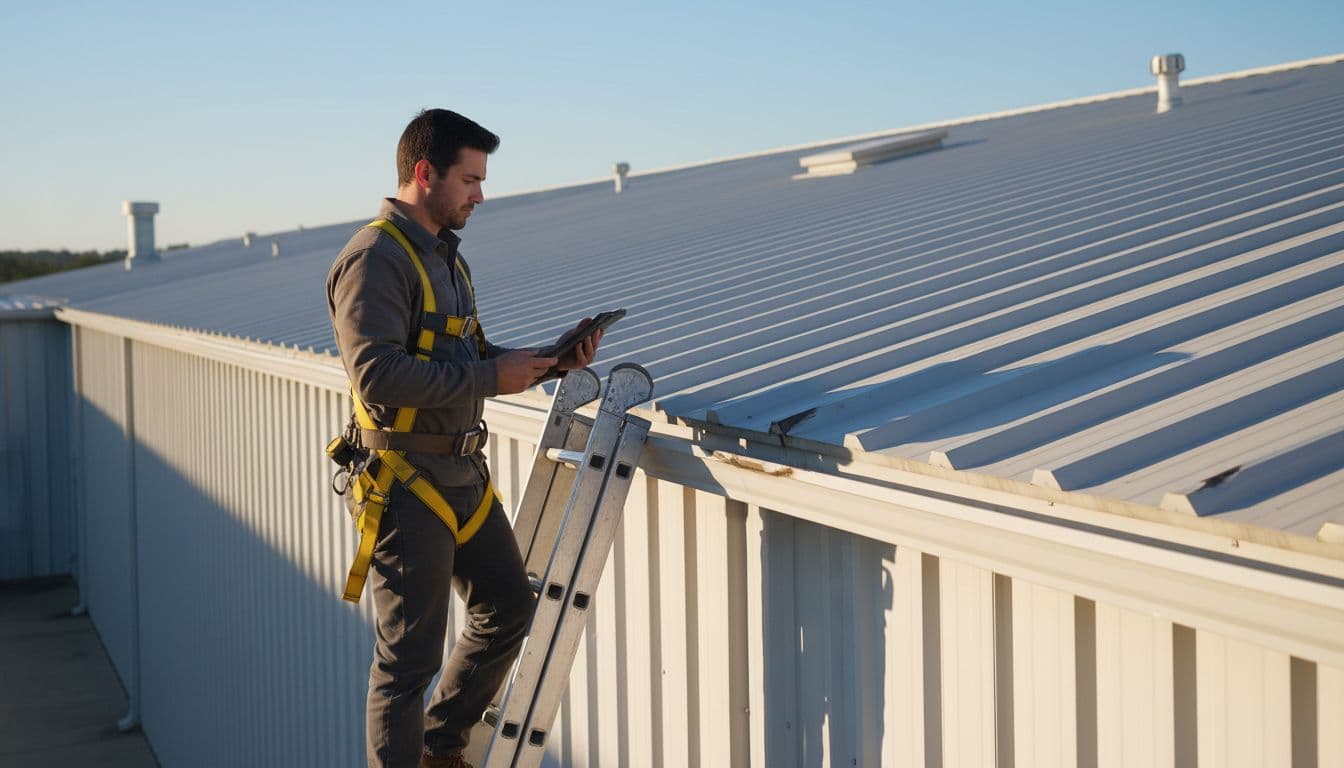
3. Look for water clues inside the building
Search for stains near exterior walls, damp insulation, drips at parapets, overflow marks, or wet spots near entry canopies. If anything looks off, a professional commercial leak inspection can help find damage that a quick walk-around will miss.
4. Decide whether the fix is local or system-wide
A single dented run with solid drainage may only need gutter repair or replacement. However, if seams opened, fasteners pulled loose, or water started backing up at the edge, the issue has moved beyond cosmetics and into functional damage.
On membrane buildings, that can mean commercial flat roof repair near the perimeter. If wet insulation, recurring leaks, or broad impact damage show up across the assembly, commercial roof replacement may be the better long-term answer.
5. Bring in a roofer when the signs conflict
Mixed signals are common after hail. You might see dented gutters, clean-looking shingles, and no leak today, then find staining after the next hard rain. That is why many owners rely on Sellers Roofing Company’s commercial roofing team for a full storm inspection instead of guessing from the parking lot.
Frequently asked questions after gutter hail damage
Will insurance cover gutters if shingles are not damaged?
It can. Many policies cover functional storm damage to gutters, downspouts, and roof-edge metal even when shingle damage is limited. The result usually depends on the policy language, the age of the system, and whether the dents affect drainage or performance.
Can dented gutters cause leaks weeks after the storm?
Yes. Water problems often show up later, especially after a heavy rain. A small change in slope, a loosened seam, or a pulled hanger can send water behind the gutter and into walls, soffits, or roof edges.
Should I wait to repair gutters until I see an interior leak?
Waiting raises the risk. Gutters control runoff, so a damaged section can push water onto fascia, siding, or the base of the building long before a ceiling stain appears. Early repair is usually cheaper than chasing moisture after it spreads.
What if my building has a flat roof, not shingles?
The same principle still applies. Hail can dent gutters, scuppers, and edge metal while the field of the roof looks normal from below, so the lack of shingle damage does not rule out storm-related issues.
TPO and EPDM buildings
Those roofs need a close perimeter check. Seams, edge details, and drain areas can fail without obvious surface marks, especially after wind-driven hail.
How fast should gutter damage be fixed before winter?
As soon as practical. In Minnesota, dented or loose gutters can trap water, create ice problems, and worsen freeze-thaw movement at the roof edge. A fall hailstorm can become a winter leak if repairs sit too long.
A hailstorm can beat up gutters and leave shingles looking fine. That happens because roof edges and thin metal take impact differently than thicker roofing materials.
Still, “looks fine” is not the same as hidden damage-free. For a commercial property, the smart move is to document the dents, inspect the perimeter, and confirm whether the problem stops at the gutter or reaches the roof system.
Need a roof inspection in Saint Paul or the Twin Cities? Call Sellers Roofing Company at +1-651-703-2336 or schedule a free estimate. We are a black-owned, NMSDC-certified MBE roofing contractor with 9+ years experience.