Last updated: 2026-08-10 by Ted Sellers, Owner
Yes, you can tarp roof in rain, but only as a temporary fix for emergency protection and only when conditions are safe. Rain, wind, lightning, slick shingles, wet membranes, and icy edges make roof access incredibly dangerous. If you are experiencing active roof damage and water is entering your home, prioritize protecting your interior first, document the damage for your records, and contact a qualified roofer to handle the exterior dry-in.
A tarp is merely a temporary fix to buy you time. It cannot diagnose a leak, dry out wet insulation, or restore the structural integrity of a storm-damaged roof.
Key Takeaways
The safe rule for emergency tarping
- Do not climb onto a roof during lightning, high winds, freezing rain, or active hail.
- A tarp should stop additional water, but it is not a substitute for permanent repairs.
- Low-slope systems can carry water far from the visible ceiling stain.
- Photos, receipts, and moisture findings support an insurance claim.
- A commercial or residential roofing contractor should inspect the roof once weather allows.
When This Applies
Rainy-day tarping is for active water entry
This applies when rain is entering through a fresh opening caused by storm damage, such as missing shingles after high winds, hail impact, a fallen limb, loose flashing, or other structural roof failure. Whether dealing with wind-driven rain on asphalt shingles or metal roofing, this advice applies to residential homes, warehouses, churches, retail buildings, and multifamily properties with a commercial flat roof.
A tarp may be reasonable when water leaks are reaching ceiling tiles, electrical equipment, inventory, insulation, or finished interior spaces. Interior protection often comes first. Move contents, place containers under active drips, cover equipment with plastic, and shut off affected electrical circuits if water is near fixtures.
Do not tarp a roof during an active thunderstorm. The National Weather Service lightning safety guidance is direct: stay indoors when thunder is audible. A wet roof is not worth a fall or a lightning strike.
This does not apply when the roof is unsafe to approach, the leak is small and contained, or water is coming from plumbing, condensation, a backed-up drain, or attic frost. Minnesota homes can have both roof leaks and humidity-related frost problems during the same cold stretch. Those causes need separate documentation.
A tarp belongs over the damaged area where there is a confirmed or suspected opening. It is not a blanket for an intact roof just in case.
Step-by-Step: How to Protect a Roof While It Is Raining
1. Stay off the roof if the weather is still dangerous
Rain turns asphalt shingles slick. Wet TPO roofing, EPDM, modified bitumen, and BUR surfaces can be worse because they may look stable while holding a thin layer of water. Wind can also catch a tarp like a sail.
Climbing a ladder during a storm is incredibly hazardous. You should avoid scaling a roof in lightning, strong gusts, ice, or poor visibility. While OSHA ladder safety guidance provides a standard for base operations, proper ladder safety and the use of appropriate safety equipment are often insufficient when the roof surface itself has become a high-risk zone. If water is entering fast, call a professional roofing crew instead of sending maintenance staff or a homeowner onto the roof. Call 651-703-2336 for 24/7 Emergency Roofing when the building needs emergency dry-in work.
2. Control the water from inside the building
Put buckets below water leaks and remove wet ceiling tiles where safe. Move furniture, electronics, documents, and stock away from the affected area. If a ceiling is sagging under trapped water, keep people out from beneath it. Watch for loose debris if the roof integrity has been compromised by falling limbs or storm impact.
Take wide photos of the room, then close photos of stains, dripping water, damaged contents, and the time of the event. A ceiling stain shows where water exited, but it does not prove where water entered. That distinction matters on a commercial flat roof, where water can travel under membrane laps, insulation boards, cover boards, and deck flutes before it appears inside. A drip in a Saint Paul office suite may begin near a parapet wall, rooftop unit, drain, skylight curb, or seam several feet away.
3. Use temporary exterior protection only after conditions improve
Once lightning has passed and the roof is safe to access, an emergency crew can place a temporary roof tarp over the damaged area. This requires measuring the roof to ensure the material covers the opening with enough overlap uphill so water sheds over it instead of running beneath it.
A proper installation uses a heavy duty tarp, wooden boards to secure the edges, and roofing nails to hold the battens in place, creating a reliable, watertight seal. On a steep roof, fasteners must be placed carefully to avoid adding new nail holes. Do not seal every visible crack with roof cement during the storm, do not coat over hail impacts, and do not remove wet membrane or insulation before it is documented. Permanent work done too early can erase evidence of fresh storm damage.
4. Photograph the roof before and after any tarp work
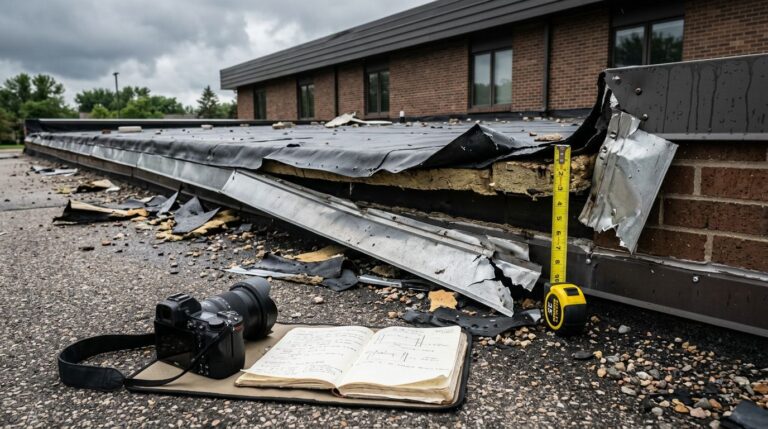
Capture lifted shingles, torn membrane, open seams, loose edge metal, punctures, flashing damage, cracked skylights, and fallen debris. Photograph the tarp once it is secured. Save material receipts, labor tickets, invoices, and written notes showing when the leak began.
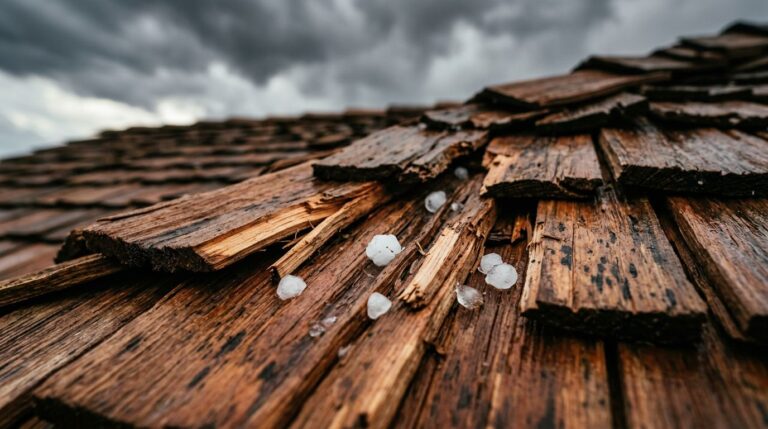
A hail damage roof may show punctures, fractured skylight domes, damaged metal flashings, or displaced shingle granules. A storm damage roof caused by wind may have lifted tabs, exposed underlayment, separated membrane seams, or loose perimeter metal. Keep damaged materials when practical. A removed section of membrane, broken shingle, or bent metal component may help establish cause and timing later, provided you have avoided creating unnecessary nail holes during your temporary repair.
5. Schedule a roof inspection after the rain stops
The visible opening is often only part of the problem. An inspection by local roofers can identify wet insulation, membrane movement, compromised flashing, or drainage defects that a tarp cannot reveal. For low-slope systems, commercial roof leak detection can trace moisture beyond the first stain.
For homes, a professional inspection can separate a small residential roof repair from conditions that support total residential roof replacement. The same decision applies to commercial properties. An isolated puncture may need commercial roof repair, but broad saturation, repeated seam failure, or aged materials may point toward the necessity of a commercial roof replacement.
The Roof Material Changes the Tarping Decision
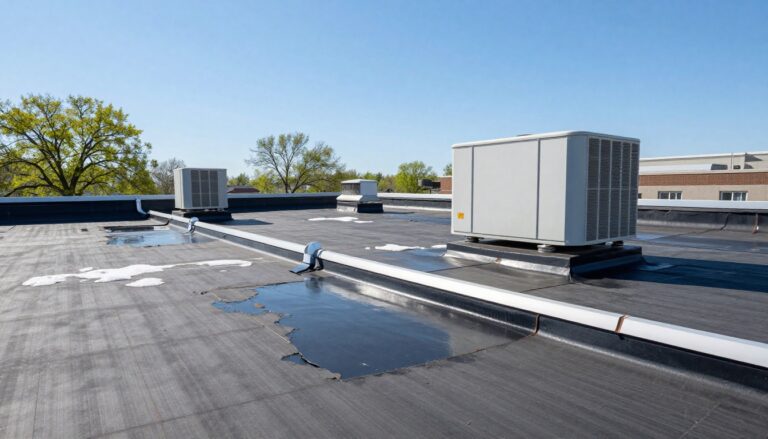
Low-slope commercial roof systems need careful leak tracing
TPO roofing, EPDM, modified bitumen, and BUR possess distinct characteristics compared to standard asphalt shingles. When evaluating these various roofing materials, it is important to understand that they do not fail in the same way. Wind may lift an edge, open a seam, split flashing, loosen a penetration detail, or expose a weak lap, allowing rainwater to spread beneath the surface.
A tarp acts only as a temporary fix to reduce incoming water, but it cannot determine whether the insulation underneath is wet. It also cannot correct ponding, failed drainage, or a membrane that has pulled away from a parapet wall.
Commercial roof restoration and commercial roof coatings can extend service life on a sound, dry roof. However, they are not intended to be permanent repairs for an active leak that involves hidden moisture. Applying a coating over saturated insulation simply traps the underlying problem.
For large buildings in Saint Paul, Minneapolis, Roseville, Maplewood, and the wider Twin Cities roofing market, Get a Free Commercial Roof Inspection after emergency dry-in work. The right scope starts with the whole roof system, not just the wet ceiling tile.
Steep roofs bring different hazards
Asphalt shingles become slippery quickly, especially when algae, frost, or loose granules are present. Metal roofing can be even more hazardous in the rain. A tarp placed incorrectly can trap water against valleys, chimneys, wall flashing, or roof penetrations.
Minnesota roofing also has a winter complication. Ice dams can force meltwater beneath shingles even when the roofing surface looks intact. While tarping can serve as a temporary fix to reduce direct rain entry, it will not solve an ice dam. That problem may require controlled snow clearing, attic ventilation review, insulation work, and professional ice dam removal.
Tarping, Insurance, and Choosing the Right Repair
Temporary mitigation usually helps the claim
Most property policies require owners to take reasonable steps to prevent additional damage after a covered loss. Emergency repairs, such as temporary tarping, interior protection, emergency seam sealing, and water removal, are often reimbursable when a storm has caused an opening. These steps are vital because a tarp prevents structural damage to the building by keeping interior components dry while you wait for professional help.
The key is causation. A new wind tear or hail puncture is different from an old leak caused by neglected maintenance, failed drainage, or a worn-out membrane. An older roof can still result in a successful insurance claim, but fresh damage must be clearly separated from old wear.
Report the loss promptly. Ask the carrier whether emergency mitigation is approved, then keep every receipt and photo. Do not sign off on a permanent scope until the roof condition is documented.
Sellers Roofing Company has completed more than 1,100 roofs since 2017, including 300 commercial projects. As experienced local roofers, its Saint Paul roofing crews work from 801 Transfer Road, Saint Paul, MN 55114, under MN License 803862. Union-built roofing through IUPAT Local 96, along with GAF certified installation standards, matters when a temporary dry-in turns into a full repair scope.
Homeowners who need documented repair options can Get a Free Residential Roof Estimate. A written scope is better than guessing whether a tarp solved the actual leak.
Final Thought
Keep the tarp temporary and the evidence intact
You can install a temporary roof tarp during rain only when the work can be done safely. In many Minnesota storms, the safer move is to focus on interior protection and make a prompt emergency roofing call after lightning and dangerous wind pass.
A temporary roof tarp is designed to stop water intrusion for the moment, but it is not a long term solution. A proper professional inspection will help you determine whether your home needs a targeted repair, restoration work, or a full roof replacement that will hold through the next storm. While the tarp manages the immediate leak, investing in permanent repairs or a complete roof replacement is the only way to ensure your property remains protected against future weather events.
Frequently Asked Questions
Can I put a tarp over a roof while it is still raining?
Yes, but only if there is no lightning, dangerous wind, ice, or unsafe roof access. While a professional crew can sometimes install emergency protection in light rain, homeowners should avoid the temptation to tarp roof in rain conditions on their own. Do not take unnecessary risks on steep shingles, metal roofing, or wet low-slope membranes.
Will a tarp damage asphalt shingles?
A tarp can damage shingles if it is pulled across the roof, fastened carelessly, or left to flap in the wind. It can also trap water if it is installed below the damaged area instead of extending properly from the upslope side. Always ensure the tarp is secured to shed water away from the vulnerable spot rather than pooling against it.
Can maintenance staff tarp a commercial flat roof?
They can handle basic interior protection and limited temporary work if access is safe. However, they should not attempt major membrane repairs during a storm. For complex systems like TPO roofing, EPDM, modified bitumen, or BUR, it is best to consult a professional roofing contractor, as these materials may have hidden moisture that requires expert testing and specialized installation.
Does insurance pay for emergency roof tarping?
Often, yes, if sudden covered damage caused the opening and the tarp successfully limited further loss. Save your invoices, photos, and all communication with the insurer. Coverage is less likely if the leak originated from long-term wear, chronic ponding, or missed maintenance.
Should I remove the tarp before the adjuster arrives?
Leave a functioning tarp in place unless it has failed or a roofer needs to replace it. Photograph the roof before covering it, take additional photos of the installed tarp afterward, and keep any removed damaged materials available for the adjuster to inspect.
Need a roof inspection in Saint Paul or the Twin Cities? Call Sellers Roofing Company at +1-651-703-2336 or schedule a free estimate. We are a black-owned, NMSDC-certified MBE roofing contractor with 9+ years experience.