Last updated: 2026-08-01 by Ted Sellers, Owner
Poor roof ventilation usually shows up as moisture, frost, heat buildup, or uneven roof temperatures, and you can often spot it in minutes from the attic hatch. Proper roof ventilation maintains balanced airflow and prevents these issues. In Minnesota, the clearest clues are winter frost on nails, damp insulation, moldy smells, and ice-dam patterns. If you see two or more of the signs below, your roof system is under stress.
When This Applies
This attic-hatch check fits many Minnesota commercial buildings
This approach applies if your building has a pitched roof with an attic, or a roof cavity you can access from an interior hatch. That includes plenty of small to mid-size commercial properties in the Twin Cities, like older retail strips, churches, offices in converted homes, and mixed-use buildings.
It’s also useful after a sudden change, like new runs in the HVAC system, added attic insulation, or air-sealing work. Those improvements can be great, but they sometimes block attic ventilation paths or increase indoor moisture that ends up in the attic.
For a broader look at how poor attic ventilation leads to damage symptoms like moisture and mold, see Angi’s overview of signs of poor ventilation.
Cases where these “roof ventilation signs” don’t translate cleanly
If you have a flat commercial roof (most low-slope systems)
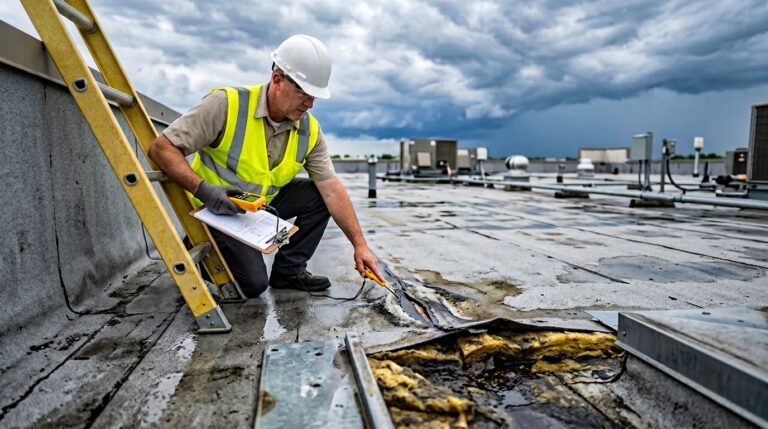
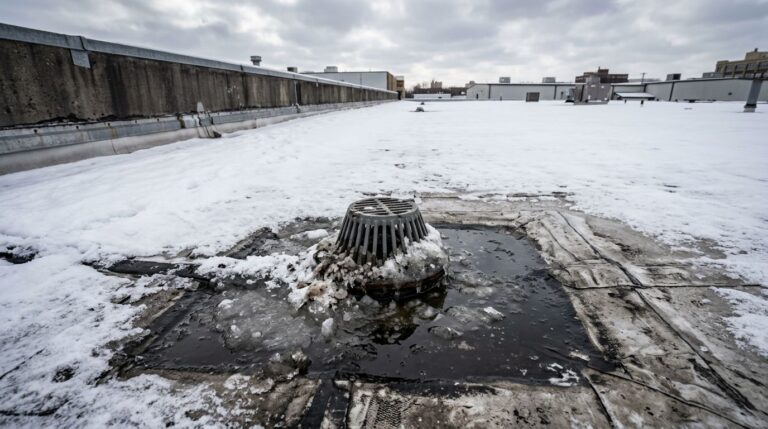
Most low-slope commercial roofs are not “vented attics” in the usual sense. Ventilation problems can still happen, but they show up as condensation, moisture buildup in the assembly, blistering, or interior humidity issues, not ridge and soffit airflow problems. If you own a low-slope building and you’re seeing staining or recurring leaks, you’re often looking at an investigation that can lead to commercial flat roof repair.
If your roof is built as an unvented assembly
Some buildings use “hot roof” designs (spray foam or compact roofs) that are intentionally unvented. In those cases, frost on nails might not be the main signal. Instead, you watch for persistent odors, moisture readings, and localized staining, and you’ll want a professional to confirm the assembly is performing as designed.
Step-by-Step
10-minute attic hatch roof inspection for ventilation signs
Before you open the hatch (do this every time)
- Turn on lights, bring a bright flashlight, and wear eye protection and a mask, attics hold dust and fiberglass.
- Step only on framing or a stable catwalk, never on drywall, ceiling tiles, or ductwork.
- Take photos as you go, you’ll want “before” pictures if a contractor needs to trace patterns later.
The 7 signs to look for from the hatch
- Frost on nails or the underside of roof sheathing (winter clue): In February, shiny nail tips or white frost lines are a loud warning. Frost means warm, moist indoor air is reaching a cold roof deck and freezing. That usually points to weak exhaust flow from exhaust vents, blocked intake vents, or air leaks from the occupied space below.
- Damp, matted, or compressed insulation near the hatch area: Healthy insulation stays fluffy and dry. If you see darkened patches, a “packed down” look, or wet spots, moisture is condensing and soaking into the insulation, and ventilation is not clearing it out.
- Musty smell or mold growth on wood: A musty odor signaling mildew growth when you crack the hatch is often the first hint. Look at the roof decking and truss chords for speckled dark staining. Mold growth does not prove ventilation is the only issue, but it’s a strong sign moisture is lingering too long.
- Rusted nails, metal straps, or fasteners: Rust inside an attic is a humidity gauge you didn’t ask for. If fasteners are rusting, the air up there is frequently damp, which often pairs with poor airflow or heavy air leakage from below.
- “Dirty snow” patterns at eaves or a history of ice dams: You can’t see the roof surface from the hatch, but you can connect the dots. If your building gets thick ice at the eaves or repeated ice dams, the attic is likely warming the roof deck. Uneven roof temperature is a ventilation and air-sealing red flag in Minnesota winters.
- Roof decking staining that follows rafters or shows “ghost lines”: Dark lines that trace framing members can happen when warm, moist air condenses on colder surfaces. If the pattern is widespread (not a single point), think ventilation imbalance or widespread bypasses rather than one roof leak.
- Excess heat in the attic during sun (summer clue): In warm months, an attic that feels like a kiln at the hatch often means hot air is not exhausting. High attic temperature can bake roofing materials and drive up cooling costs, and it can shorten roof life over time.
What to do after you spot one or more signs
Quick next steps that limit damage
- Don’t assume you need a new roof on day one. Contact a roofing contractor to investigate roof leaks, HVAC issues, or indoor humidity that’s escaping upward.
- Check the basics below the attic, especially bathroom exhaust fans, kitchen vents, and any ductwork that might dump warm air into the attic.
- Schedule an inspection that includes the air circulation layout (intake and exhaust) and the air-sealing points around penetrations, lights, and chases.
- If you see wet insulation, active dripping, or heavy frost, treat it as urgent. Moisture plus freezing cycles can move fast, and “we’ll watch it” often becomes “our commercial roof needs repair.”
What poor ventilation can cost a Minnesota commercial roof
The damage isn’t always dramatic at first
Poor ventilation is sneaky because it often starts as discomfort, minor staining, shingle curling, and water stains. In Minnesota, the freeze-thaw cycle turns small moisture issues into bigger ones. Condensation from poor roof ventilation can soak roof decking, then refreeze, then thaw, loosening fasteners and stressing joints. Over time, that leads to warped decking, rot causing structural damage, persistent odors that tenants notice, and higher energy bills from inefficiency.
On some properties, ventilation trouble also worsens ice dams. Ice dams back water up under shingles and edge details, and that water can land in wall cavities, not just ceilings. When owners see repeated winter leaks, they sometimes jump straight to commercial roof replacement, even though the roof covering might not be the root cause. A ventilation and air-leak review with proper roof ventilation can prevent replacing the wrong thing.
Flat roofs have a different failure path, but moisture still wins
Low-slope assemblies can trap moisture and show bubbling, seam stress, and recurring interior staining. If that’s your situation, the fix may be targeted commercial flat roof repair plus moisture diagnostics, not “add more vents.” For a manufacturer perspective on why airflow and moisture control matter to roof durability, see GAF’s article on signs of poor ventilation.
FAQ: Roof ventilation in Minnesota commercial buildings
Can poor ventilation look like a roof leak?
Yes. Condensation from moisture buildup can drip and stain ceilings just like a leak, and it can show up after big temperature swings. A clue is pattern and timing: condensation problems often appear broadly, or after cold snaps, while leaks are often tied to one area or one flashing line. A moisture meter and attic inspection usually separate the two.
If I see frost on nails, does that mean my roof is failing?
Not automatically. Frost is a strong sign warm, moist air is reaching cold surfaces, but the roof covering may still be fine. It does mean the system is under stress, and repeated frost cycles can lead to wood decay and insulation damage. Treat it as a “fix the cause now” warning, not a “wait until spring” issue.
What’s the most common attic ventilation mistake after adding insulation?
Blocking intake at the soffit vents. Added insulation can cover soffit paths, and then ridge vents can’t pull fresh air through. The attic becomes a stagnant box, and moisture stays trapped. If your building had energy upgrades recently and new attic symptoms appeared, that’s a prime place to look.
Is more ventilation always better?
No. Ventilation has to be balanced, and it can’t make up for major air leaks from below. Too much exhaust without enough intake can pull conditioned air from the building, raising energy costs and adding moisture, especially as hot air rises in summer. The goal is controlled airflow, not a windy attic.
When “more vents” can backfire
If the attic is drawing air from the occupied space instead of from soffits, adding exhaust can increase that draw. Air-sealing often needs to happen before vent changes.
When should I stop troubleshooting and call a pro?
Call right away if insulation is wet, mold is spreading, ice dams are recurring, or ceiling tiles are staining in multiple spots. Those conditions can move from annoyance to structural damage, and they can trigger tenant complaints fast. A good inspection should explain whether you’re dealing with ventilation imbalance, air leakage, roof leakage, or a mix.
If your attic hatch is sending up signs of poor ventilation, trust what you’re seeing. Minnesota weather doesn’t give roofs much slack, and the right fix early can prevent bigger repairs later.
Need a roof inspection in Saint Paul or the Twin Cities? Call Sellers Roofing Company at +1-651-703-2336 or schedule a free estimate. We are a black-owned, NMSDC-certified MBE roofing contractor with 9+ years experience.