Last updated: 2026-08-01 by Ted Sellers, Owner
Yes. Hail can damage roof coatings on flat roofs in Minnesota, especially when the coating is older, cold-stiffened, thin, or poorly bonded. Damage may include cracks, punctures, loss of coating thickness, split seams, and hidden moisture below the surface. Sometimes the coating looks mostly fine while the roof assembly underneath has still taken a hit.
When This Applies
If your building has a coated low-slope roof
This applies to commercial buildings with a coated flat or low-slope roof, including warehouses, offices, retail buildings, schools, and multi-unit properties. If your roof has a silicone, acrylic, or similar coating over single-ply membrane, metal, or modified bitumen, hail can affect that top layer first.
Minnesota owners often deal with hail after the coating has already aged through sharp temperature swings. That matters because coatings lose flexibility over time. If you manage a coated roof and want broader help beyond storm damage, Sellers Roofing’s Saint Paul commercial roofing services cover repair, coatings, and replacement planning.
When it may not be a coating problem
This does not apply the same way to steep-slope shingle roofs or flat roofs with no coating system. It also doesn’t always mean failure when you see surface marks. A newer, thicker coating may show impact scuffs but still keep water out.
Edge cases matter. Cold-weather hail can crack a coating that might have survived the same storm in July. Poor drainage also changes the picture, because hail stress around ponding areas, drains, and seams tends to do more harm.
What Hail Damage Looks Like on a Coated Flat Roof
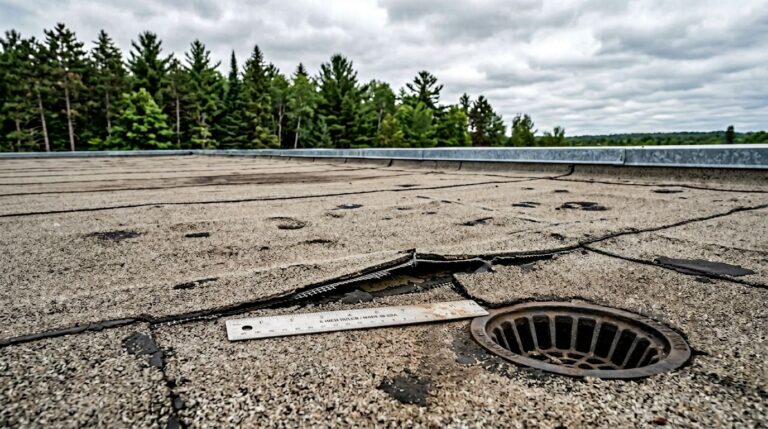
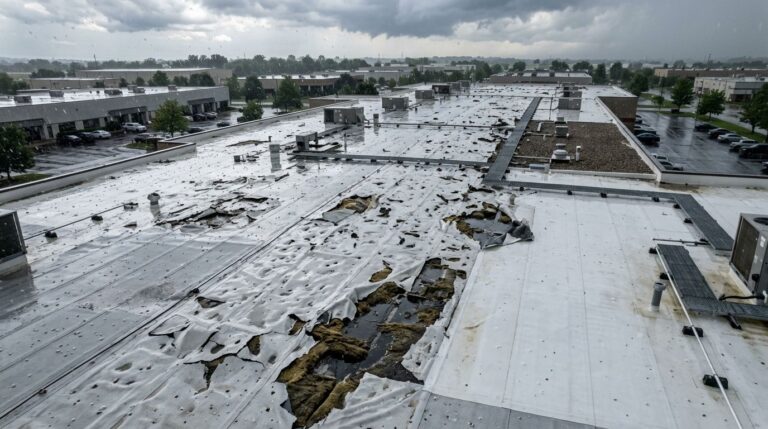
When contractors discuss hail damage roof coatings can suffer, they look for more than dents. The big concern is whether hail broke the weatherproof layer or weakened the roof below it. On flat roofs, damage often shows up as small impact fractures, chipped coating, exposed membrane, crushed flashing corners, or stress at seams and penetrations.
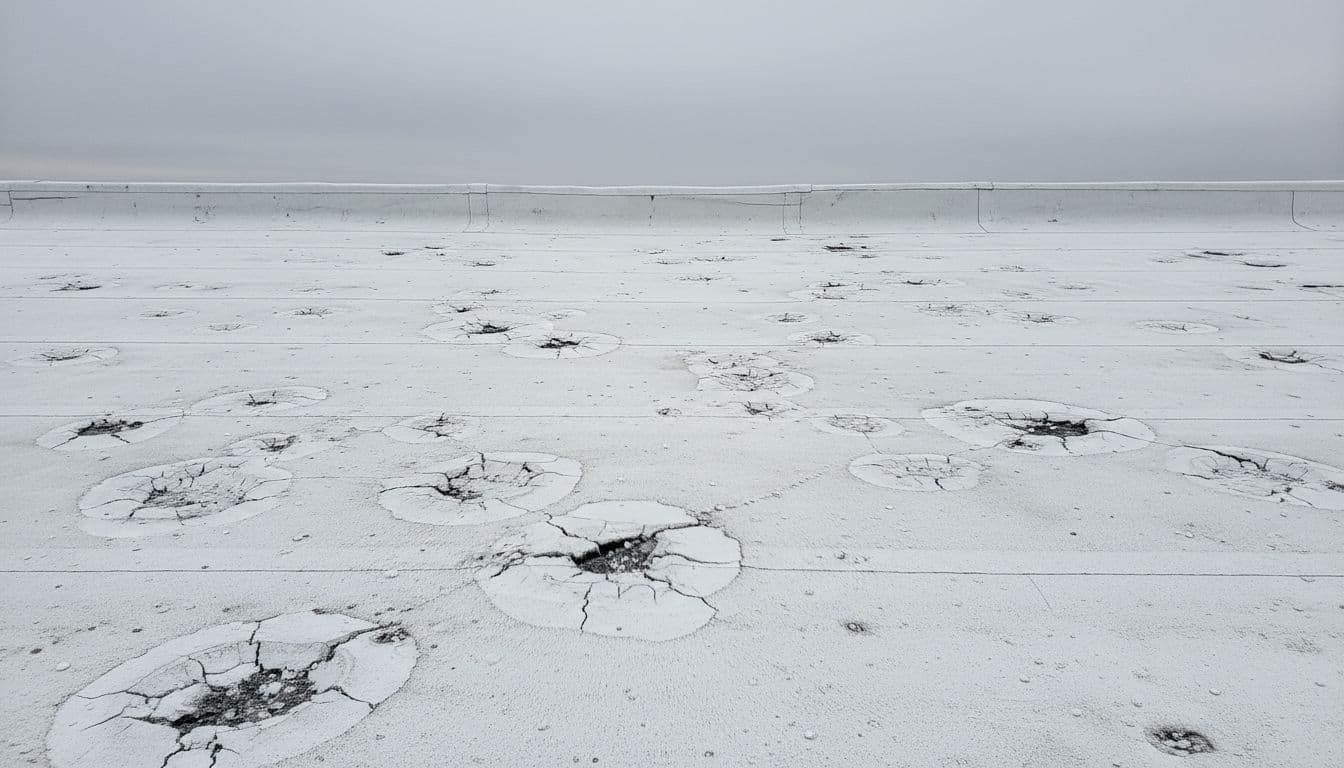
A coating works like the roof’s outer skin. If hail bruises that skin but doesn’t break it, the roof may still perform. If hail opens the skin, water can move sideways through the assembly before you ever see a ceiling stain.
Hail marks alone don’t prove failure, but cracks, splits, exposed membrane, and wet insulation do.
Cosmetic marks versus true failure
Cosmetic damage changes appearance. Functional damage changes performance. That’s the line that matters for business owners.
If the coating still has full coverage, tight adhesion, and no breaks at seams or flashing, the roof may only need monitoring. If the surface has splits, blisters, soft spots, punctures, or moisture below the top layer, your commercial roof needs repair even if the building interior still looks dry.
Why Minnesota makes impact damage worse
Coatings get less forgiving in cold weather. That means late-season hail can create brittle cracks that are easy to miss during a quick walk-through. Freeze-thaw cycles then widen those breaks and turn a small impact into a leak path.
Step-by-Step
1. Record the storm and the roof’s age
Start with the storm date, hail size, and any photos from the property. Also pull past repair records and the coating age. A five-year-old coating and a fifteen-year-old coating do not react the same way to impact.
2. Inspect the roof surface safely and up close
Have someone qualified inspect seams, drains, flashings, parapet edges, rooftop equipment curbs, and ponding zones. These are the first places hail damage tends to show up on flat roofs.

3. Confirm whether the coating alone was hit
This step decides the budget. If hail only damaged the coating surface, localized repair or recoating may work. If the membrane, fasteners, insulation, or seams were also damaged, the fix becomes larger. For hidden problems, professional leak detection for flat roofs can locate moisture that a visual check misses.
If moisture is trapped below the coating
A dry-looking roof can still hold wet insulation. Once that happens, patching the top layer alone may not solve the problem.
4. Match the repair to the actual damage
Small isolated breaks may call for targeted commercial flat roof repair. Wider impact fields, wet insulation, or repeated seam failure may push the decision toward section replacement. If hail exposed broad roof failure on an aging system, commercial roof replacement can cost less over time than repeat patching.
5. Monitor the roof after the next rain or thaw
Flat roofs often show delayed symptoms. Check the roof again after rain, snowmelt, or the next freeze-thaw swing. If new soft spots, staining, or seam movement appear, the original hail damage was likely deeper than it first looked.
FAQ About Hail on Coated Flat Roofs
Can hail damage a coating without causing an immediate leak?
Yes. Hail can bruise or crack a coating and still leave the roof watertight for a while. Leaks often show up later, after temperature swings widen the damage or after water works into a weak seam.
Will insurance cover hail damage to a coated flat roof?
Often, yes, but coverage depends on the policy and the proof of functional damage. Clear photos, inspection notes, and moisture findings help show that the hail changed roof performance, not only appearance.
When damage is called cosmetic
If the coating is marked but still watertight, some claims get pushed into the cosmetic category. That is why documentation matters.
Can you recoat over hail damage?
Sometimes. Recoating works when the substrate is dry, adhesion is sound, and damage is shallow. It does not work well when hail has opened seams, punctured the membrane, or soaked insulation.
When recoating still makes sense
A recoat is best for limited surface wear after repairs are completed, not as a cover-up for deeper storm damage.
How fast should a business owner respond after a hailstorm?
Move quickly, ideally within days. Early photos are stronger, and early inspection catches small breaks before water spreads. Fast action also helps if a claim is involved.
What if leaks show up weeks later?
That is common on flat roofs. Water can travel far from the impact point. A leak that appears later does not mean the hail was minor, it may mean the roof hid the damage at first.
The Bottom Line for Minnesota Businesses
Yes, hail can damage coated flat roofs in Minnesota, and the coating may be only part of the story. The real question is whether the impact stopped at the surface or reached seams, flashing, and insulation.
For business owners, the safest approach is simple: document the storm, inspect the roof closely, and fix damage based on testing, not guesswork. Surface marks are not the same as roof performance.
Need a roof inspection in Saint Paul or the Twin Cities? Call Sellers Roofing Company at +1-651-703-2336 or schedule a free estimate. We are a black-owned, NMSDC-certified MBE roofing contractor with 9+ years experience.