Last updated: 2026-09-28 by Ted Sellers, Owner
Snow removal can prevent excessive load and drainage problems, but the wrong method can damage a TPO roof. This article explains the practical balance between protecting the roof and creating new membrane damage.
Can TPO Roof Snow Removal Cause Damage in Minnesota?
TPO roof snow removal can cause damage when tools cut, scrape, puncture, or stress the membrane and flashings. Use trained crews, avoid aggressive scraping at the roof surface, keep drainage paths clear, and inspect the roof afterward if there is any concern about a breach.
Yes. TPO roof snow removal can puncture the membrane, break seam welds, deform flashing, and block drainage when crews scrape too hard or use unsuitable tools. In Minnesota, cold weather tightens the membrane and turns loose snow into dense packed material. Controlled removal reduces load. Bare-surface scraping creates leak risk.
When This Applies
Low-slope commercial roofs with heavy, drifting snow
This applies to warehouses, retail centers, churches, multifamily buildings, schools, and offices with a TPO commercial flat roof. It matters most after repeated snow events, drifting near parapets, or a thaw that leaves standing water around drains and scuppers.
Snow is not the only issue. A rooftop unit, skylight curb, pipe penetration, or loose perimeter detail can turn snow removal into a membrane repair problem.
Act sooner if the building shows distress
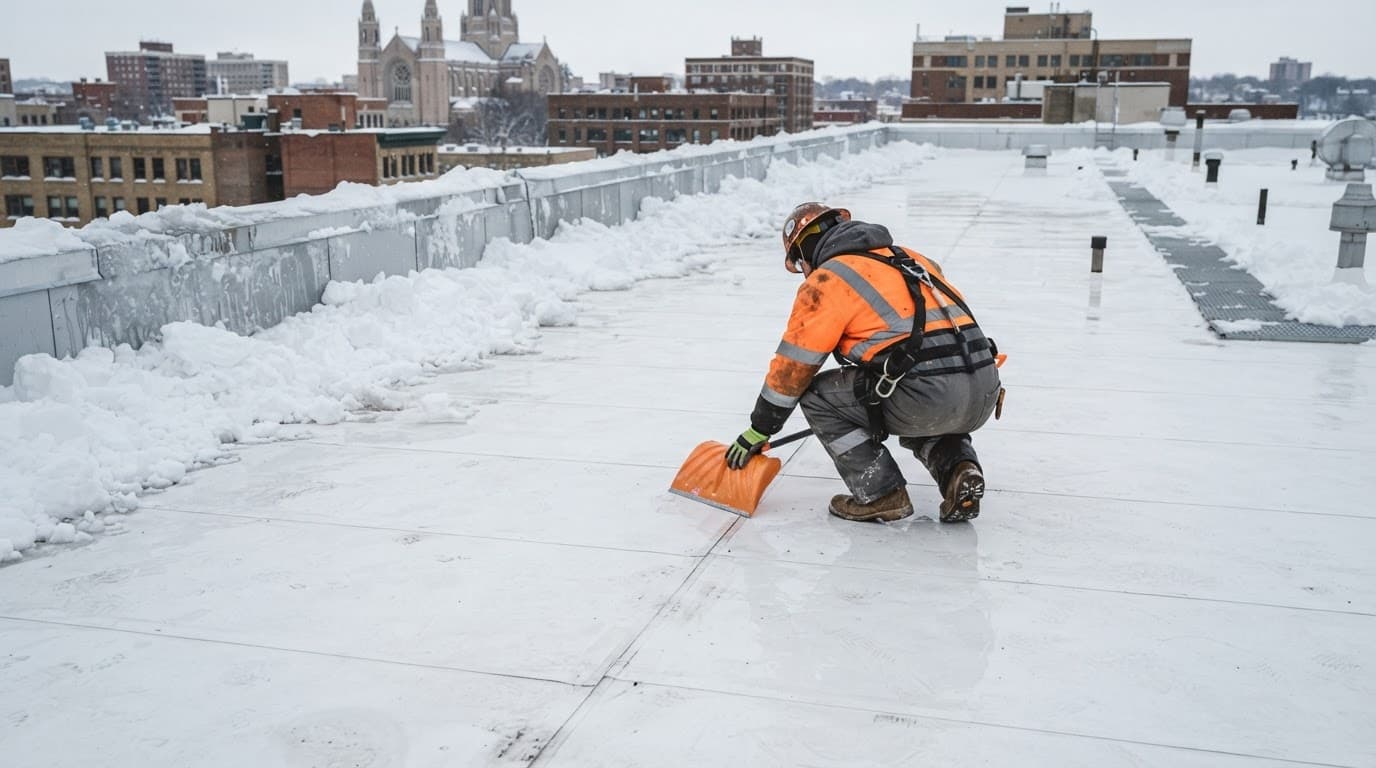
Escalate quickly if you see a bowed roofline, sagging ceiling areas, new interior leaks, unusual popping sounds, or doors that suddenly bind. Keep people off the roof if there is any concern about structural movement.
When snow removal is not the first answer
A light, even layer of snow on a sound roof does not always need removal. Do not send maintenance staff onto a slick membrane only because snow is visible. If drains are open and there are no leak or load concerns, monitor the roof instead.
A commercial roof snow-removal plan should focus on monitoring, drainage, and targeted response, not stripping the roof down to exposed membrane.
How TPO Roof Snow Removal Causes Damage
Scraping can turn a snow issue into a leak
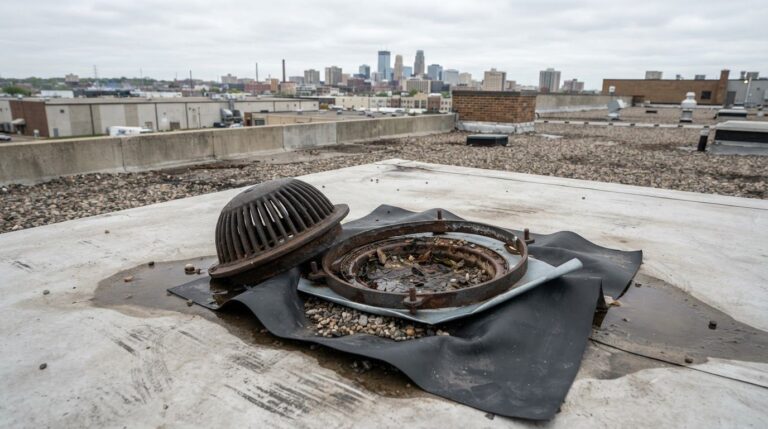
TPO roofing relies on heat-welded seams, flashed penetrations, and secure perimeter terminations. In cold conditions, the membrane contracts. A shovel edge can catch a seam, slice a corner, or tear flashing at a curb.
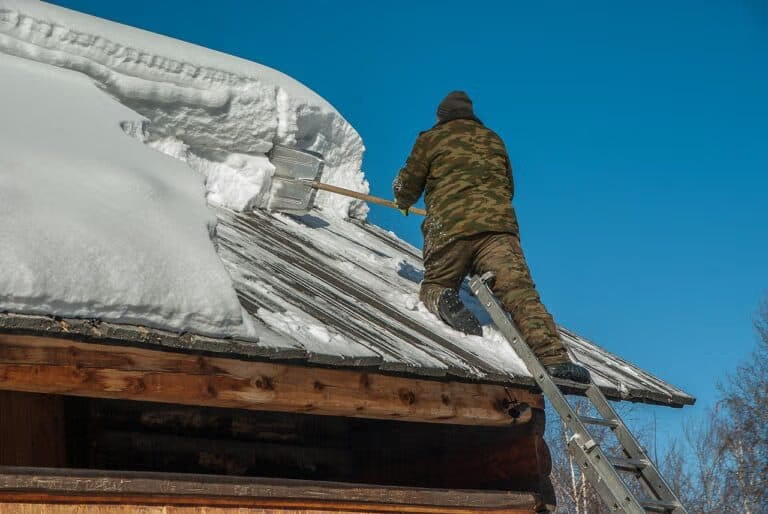
Metal shovels are a clear risk. Plastic tools can also cause damage if a worker digs down to the membrane or uses the shovel like an ice chisel.
A puncture may not leak right away. Water can move under insulation boards or along deck flutes before it reaches a ceiling tile.
Drains, curbs, and edges take the hardest hits
Pushing snow toward a drain can compact ice around it. Throwing snow against a parapet, rooftop unit, or skylight curb can damage flashing and create a water path during the next thaw.
Ice dam removal on a low-slope roof also needs restraint. Chipping at ice can damage the membrane, drain bowl, or metal edge detail.
The goal is lower snow load and open drainage, not a bare membrane.
Step-by-Step: Remove Snow Without Cutting TPO
1. Check the building before roof access
Inspect ceilings, exterior walls, roof edges, and the interior below drifted areas. Note active leaks, ceiling movement, wet insulation, or sagging components before anyone climbs onto the roof.
Do not send untrained staff onto a snow-covered TPO surface. New membranes can be extremely slick, and hidden ice makes fall protection harder to manage.
2. Photograph the roof and interior before work starts
Document snow depth, drift locations, blocked drains, damaged flashings, ceiling stains, and any existing punctures. Photos taken before removal help separate old wear from damage caused by winter work.
This record matters if a roof insurance claim later involves a prior hail event, a storm-damaged roof, or a contractor-caused puncture.
3. Use tools that protect the membrane
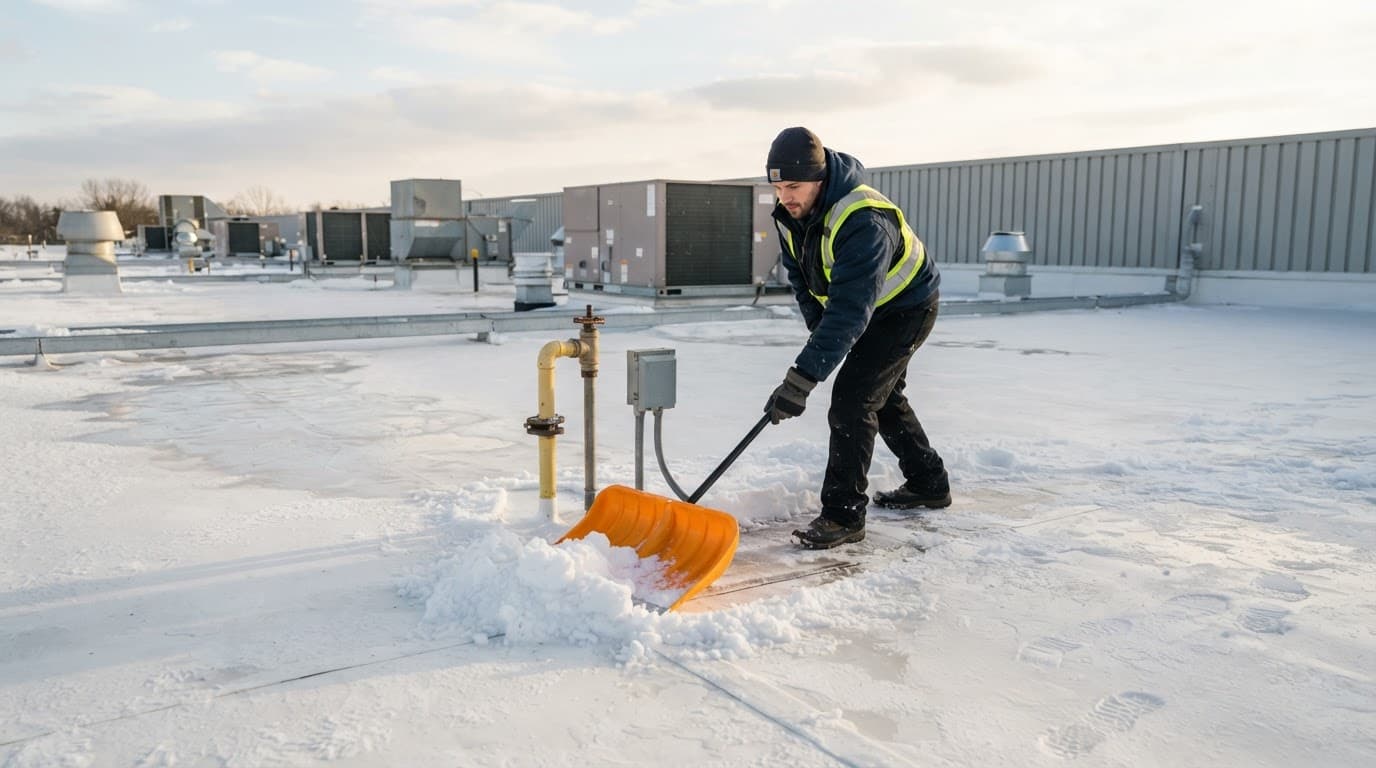
Use soft-edge pushers or plastic shovels without sharp corners. Leave a shallow protective layer of snow above the TPO instead of scraping to bare white membrane.
Work in controlled sections. Pull snow away from sensitive details rather than driving a loaded shovel into a seam, curb, or drain.
4. Open drainage paths before clearing large field areas
Clear snow around drains, scuppers, and overflow routes first. Keep snow piles away from roof edges, rooftop equipment, and expansion joints.
Never push snow off the roof where it could strike pedestrians, block exits, overload awnings, or pile against lower roof sections.
5. Inspect again after the thaw
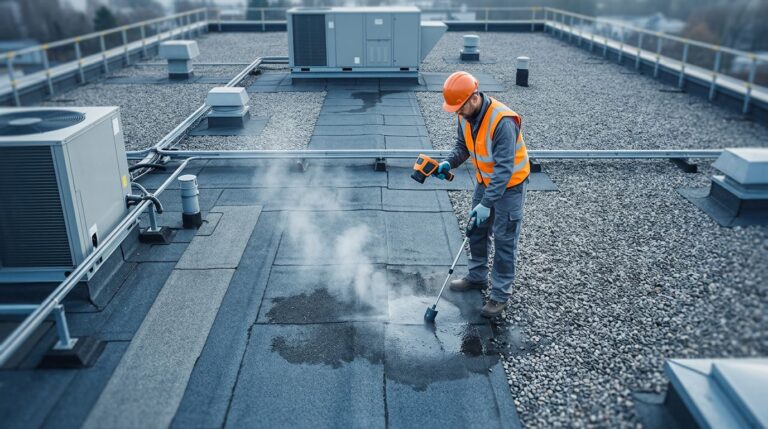
Check seams, penetrations, drain bowls, and perimeter flashing after snow melts. Look for standing water, lifted edges, cuts, or a leak that appears far from the original work area.
If water is entering but the opening is unclear, commercial roof leak detection can trace the source instead of guessing from the location of an interior stain.
6. Match the repair scope to the actual damage
A single puncture with dry insulation may need commercial roof repair. Widespread wet insulation, repeated seam separation, or failed attachment across connected areas may support commercial roof replacement.
Commercial roof restoration and commercial roof coatings can extend the life of a dry, stable membrane. They do not fix saturated insulation, active seam failure, or a damaged deck. For a documented assessment, Get a Free Commercial Roof Inspection.
Snow Removal Rules Change by Roof System
TPO, EPDM, modified bitumen, and BUR need different handling
A commercial flat roof is not one uniform surface. Crews should know the membrane type before choosing tools and removal methods.
| Roof system | Main snow-removal concern | What to inspect after thaw |
|---|---|---|
| TPO | Cut seams, punctures, damaged flashing | Welded seams, curbs, drains |
| EPDM | Stretched seams or disturbed adhered edges | Lap seams and perimeter terminations |
| Modified bitumen | Scoured granules, torn laps, split plies | Cap sheet, laps, blisters |
| BUR | Damaged surfacing or broken roof plies | Aggregate loss, splits, wet areas |
A commercial snow-removal guide also draws the line between reducing load and aggressively clearing the whole roof surface.
Mixed roof buildings need separate plans
Do not apply steep-slope snow-rake rules to a low-slope membrane. A building can have asphalt shingles or metal roofing above a TPO entrance canopy, loading dock, or rear addition.
Each roof section needs its own inspection plan, drainage review, and safe access method.
After Damage, Diagnose the Cause Before Patching
Keep winter damage separate from storm damage
A roof with hail damage or prior storm damage may already have weak seams, punctures, or compromised flashing. Document those areas before snow work begins. A clean record helps show whether a new opening came from snow removal, wind, impact, or long-term wear.
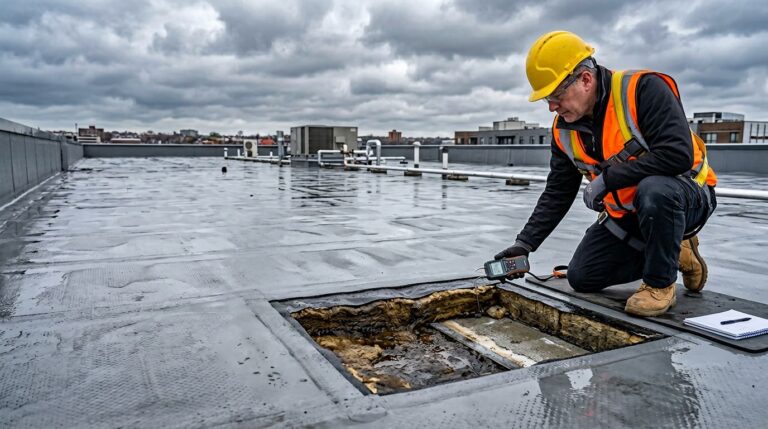
Use photos, moisture readings, and test cuts where needed. Water can travel far beneath TPO, EPDM, modified bitumen, or BUR before it appears indoors.
Keep permanent work on hold
Stop active water with temporary protection, but avoid broad permanent repairs before the scope is clear. Removing wet insulation or coating over damaged seams can make the cause harder to prove during a roof insurance claim.
Choose a contractor who documents winter conditions
For Minnesota roofing work across Saint Paul, Minneapolis, and the wider Twin Cities, ask who will perform the removal, what tools they will use, and how they will inspect the roof afterward. Confirm workers’ compensation and commercial liability coverage before the first shovel reaches the membrane.
Sellers Roofing Company, established in 2017 at 801 Transfer Road in Saint Paul, has completed more than 1,100 roofs, including 300 commercial projects. Its union-built roofing crews include IUPAT Local 96 members, and the company holds MN Builder Contractor License 803862, also known as MN License 803862, along with GAF certification.
The Right Goal Is Controlled Removal
Snow removal can damage a TPO roof, but it does not have to. The safe method reduces snow load, protects drainage paths, and leaves the membrane intact.
A careful inspection before and after removal is cheaper than chasing a hidden leak after the next thaw. Protect the roof system, not just the roof surface.
Frequently Asked Questions
Can a plastic shovel still damage a TPO roof?
Yes. A plastic shovel is safer than metal, but it can still snag a seam, puncture a cold membrane, or damage flashing if the worker scrapes hard. Leave a thin layer of snow over the roof and keep tools away from seams and curbs.
Should we clear every inch of snow from a commercial roof?
No. Full clearing is rarely the goal. Open drains, relieve heavy drifts, and reduce unusual snow loads without scraping the membrane bare. A controlled amount of snow can protect the roof surface from tool contact.
What should we do if water starts leaking during snow removal?
Protect people, inventory, and electrical equipment first. Keep staff off the roof if conditions are unsafe, then document the leak and use temporary mitigation. For active water entry, Call 651-703-2336 for 24/7 Emergency Roofing.
Will insurance pay for TPO damage caused during snow removal?
It depends on the policy and the cause. A snow-removal puncture is different from a covered wind or hail loss. Preserve photos, invoices, removed materials, and written findings before authorizing permanent repairs.
What if our property has both a flat roof and a home-style roof?
Treat each section as a separate system. A lower TPO roof may need commercial roof repair, while damaged asphalt shingles on an attached residence may call for residential roof repair or residential roof replacement. The snow-removal tools and inspection points are not the same.
For the larger documentation and claim process, read our Minnesota roof storm damage and insurance claims guide.
Need a roof inspection in Saint Paul or the Twin Cities? Call Sellers Roofing Company at +1-651-703-2336 or schedule a free estimate. We are a black-owned, NMSDC-certified MBE roofing contractor with 9+ years experience.