Last updated: 2026-09-28 by Ted Sellers, Owner
Wind can affect a commercial drain and its membrane connection without creating an immediate ceiling stain. This article explains what can shift after a storm and why the roof assembly deserves a closer look before the next heavy rain.
Can Wind Damage Roof Drains on Commercial Buildings Without Immediate Leaks?
Wind can damage commercial roof drains without an immediate leak by loosening strainers, stressing membrane flashings, shifting surrounding components, or changing drainage. Document the condition after the storm and have the drain and nearby roof assembly inspected before a small issue becomes a moisture problem.
Can wind damage roof drains without immediate leaks? Yes. Strong gusts can shift a strainer, deform flashing, loosen a clamping ring, or lift membrane beside the bowl without creating a ceiling stain. The opening may not admit water until rain, snowmelt, debris, or ponding loads the affected area. A prompt inspection finds hidden movement before moisture spreads.
Can Wind Damage Roof Drains Before an Interior Leak Appears?
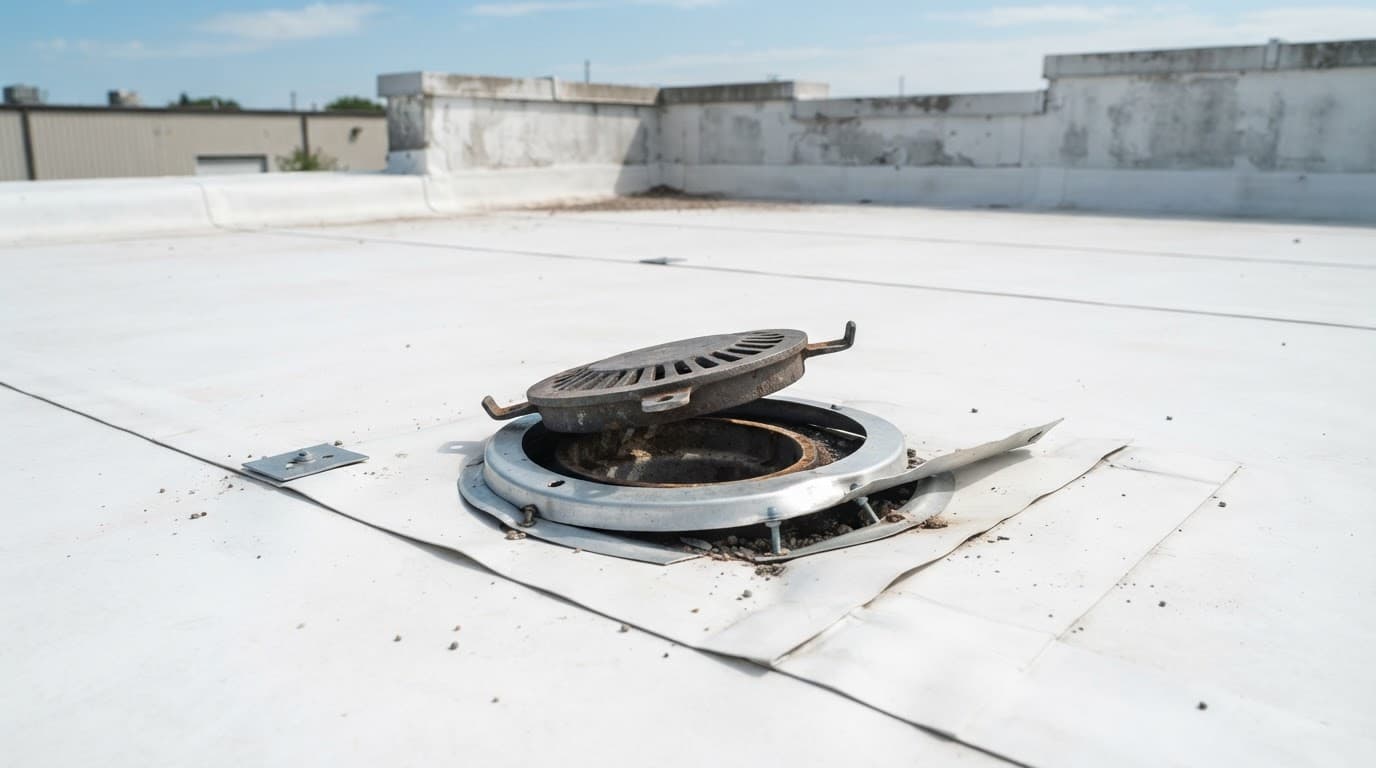
Early drain damage is mechanical, not always visible
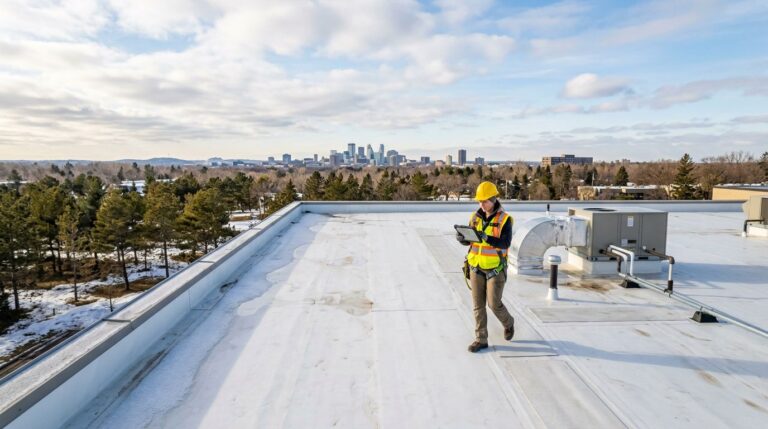
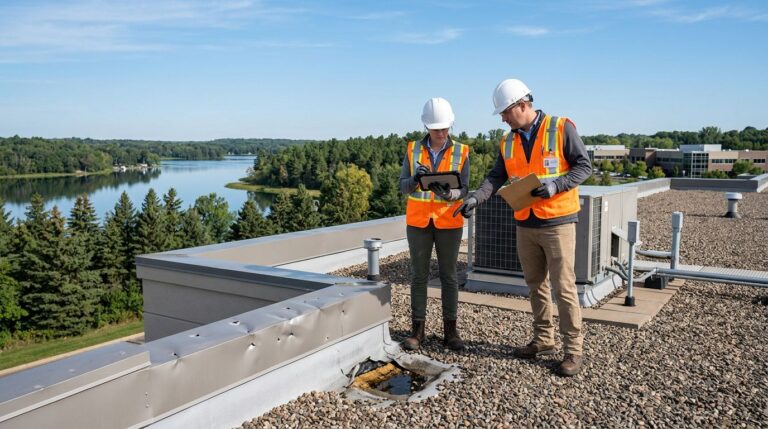
Wind stress concentrates around perimeter metal, parapets, penetrations, and drain flashing. On TPO roofing and EPDM, look for lifted seams, stretched corners, loose termination bars, and a strainer that no longer sits firm. Modified bitumen and BUR can crack at laps or drain plies.
On a commercial flat roof, water can travel below the membrane, insulation, and deck flutes before showing indoors. The stain is often the exit point, not the roof opening. This commercial roof drain component guide shows why each part around the drain matters.
Conditions and exceptions that change the diagnosis
This applies after strong gusts, wind-driven rain, or debris impact. Minnesota freeze-thaw cycles can turn a small gap into a repeat problem, especially where leaves slow drainage.
Not every drain defect is wind-related. Chronic ponding, a long-clogged bowl, or settled insulation may be maintenance issues. A hail-damaged roof needs a separate check for punctures. Ice dam removal on an adjoining sloped roof may help meltwater flow, but it cannot repair a compromised drain assembly. Use commercial roof drainage and leak inspections when the leak path is unclear.
Step-by-Step: Inspect a Wind-Damaged Drain
Step 1: Protect people and contents
- Keep staff off a wet or visibly lifted roof surface, and move inventory below active drips.
- If water is entering the building, use temporary dry-in work only. Call 651-703-2336 for 24/7 Emergency Roofing for active water entry.
Step 2: Document the condition before repairs
- Photograph the drain bowl, strainer, flashing, seams, parapet edges, interior stains, and displaced materials.
- Save removed materials, record the storm date, and avoid pulling loose membrane back into place.
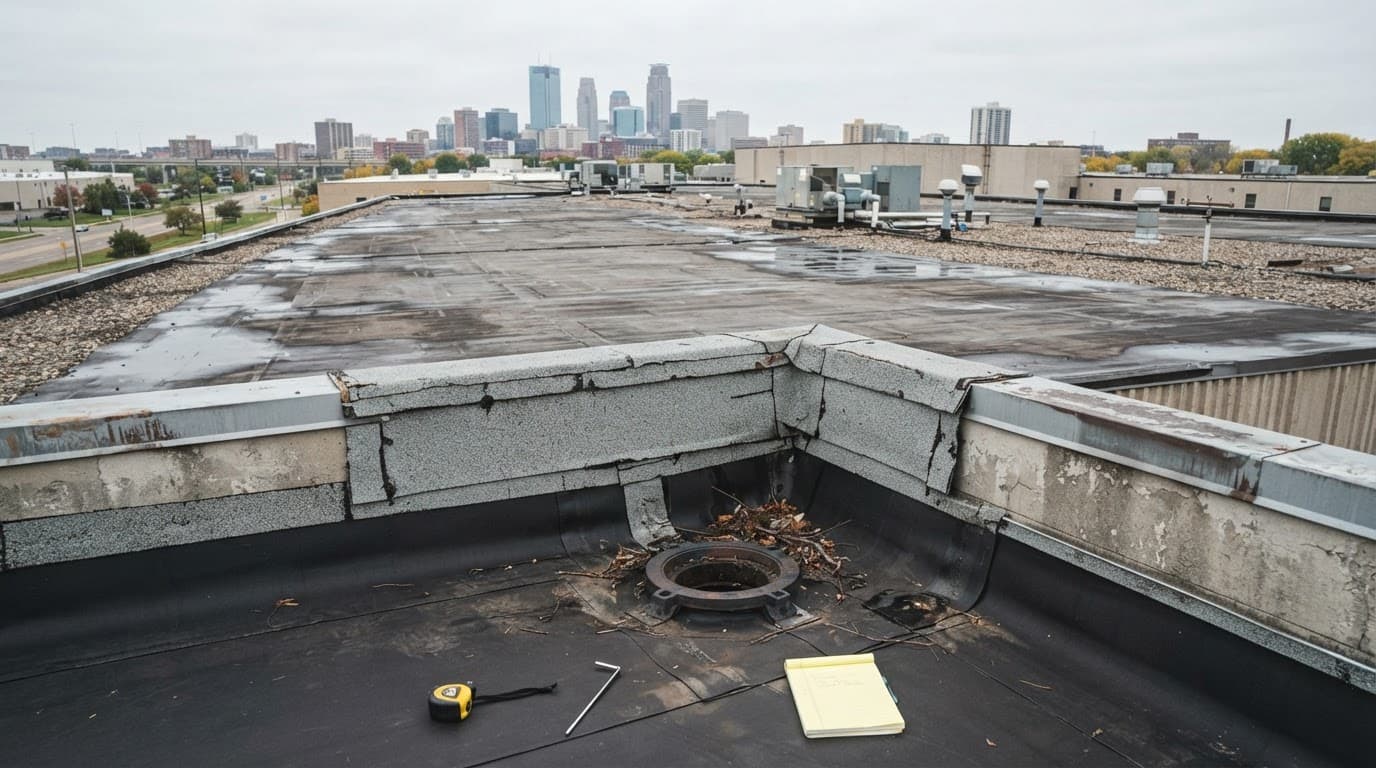
Step 3: Schedule a commercial roof inspection
- Request a Get a Free Commercial Roof Inspection once conditions are safe.
- Ask for moisture testing, drain-flow checks, seam inspection, and a written finding that separates fresh damage from old wear.
Choose Commercial Roof Repair, Restoration, or Replacement
Localized damage may allow a targeted fix
A dry, isolated defect may need commercial roof repair. That can include resetting a strainer, repairing drain flashing, welding an open TPO seam, or replacing a damaged drain ply.
Commercial roof restoration with commercial roof coatings only makes sense after the drain detail is sound and moisture testing confirms dry materials. Coatings cannot lock wet insulation into place or restore a loose clamping ring.
Widespread wet materials change the scope
Commercial roof replacement becomes the stronger option when moisture mapping finds broad wet insulation, multiple failed seams, or extensive wind uplift. A patch over saturated materials only delays the next failure.
Drainage layout belongs in that decision. IIBEC’s ASCE 7 low-slope drainage guidance explains how roof drainage and design loads connect on low-slope systems.
Document a Roof Insurance Claim by Cause
Build a clean, cause-based file
Open a roof insurance claim promptly when evidence points to a storm-created opening. Describe observed facts, such as lifted drain flashing and interior water below that roof area. Avoid calling the roof destroyed before inspection confirms the scope.
Keep photos, temporary repair invoices, moisture findings, and damaged materials. A storm-damaged roof can also have older ponding elsewhere. The report should separate the conditions instead of treating the loss as all-or-nothing.
Use Minnesota-specific roofing experience
Saint Paul roofing and Minneapolis roofing crews see the same Twin Cities roofing pattern: wind-driven rain, wet snow, hard freezes, and fast melt periods. That Minnesota roofing cycle can hide moisture long after a storm.
Sellers Roofing Company provides union-built roofing work that includes IUPAT Local 96 roofers. The company is GAF certified and operates under MN License 803862.
The Drain Can Fail Before the Ceiling Does
Inspect movement, slope, and moisture together
A drain can look functional while wind has already weakened its waterproofing detail. Check the bowl, membrane, flashing, drainage path, and insulation as one assembly.
Early evidence protects the building and the repair scope. Waiting for a ceiling stain gives water more time to move through the roof system.
FAQs About Wind-Damaged Commercial Roof Drains
Can wind damage roof drains even if the strainer is still in place?
Yes. A strainer can appear normal while the clamp ring, drain flashing, or membrane below it has shifted. Inspection must include the full drain assembly.
Will insurance cover a drain issue caused by wind?
Coverage depends on policy language and documented cause. Fresh wind damage may be covered, while chronic clogs, ponding, and skipped maintenance are often excluded.
Can a roof coating stop a drain leak?
Not by itself. The drain detail, membrane, and substrate need repair first. Applying coating over movement or trapped moisture can hide the problem temporarily.
Is this different from damage to residential roofs?
Yes. Asphalt shingles and metal roofing shed water differently than low-slope membranes. A home may need residential roof repair or residential roof replacement, while a commercial drain needs moisture tracing.
What if no leak appears after the next rain?
Keep the inspection record and monitor the area. Wind-related movement can remain dry until a heavier storm, snowmelt event, or debris blockage increases water at the drain.
For the larger documentation and claim process, read our Minnesota roof storm damage and insurance claims guide.
Need a roof inspection in Saint Paul or the Twin Cities? Call Sellers Roofing Company at +1-651-703-2336 or schedule a free estimate. We are a black-owned, NMSDC-certified MBE roofing contractor with 9+ years experience.