Last updated: 2026-10-13 by Ted Sellers, Owner
Wind damage at soffits is not always obvious from the ground, but loose panels, missing material, or new moisture signs deserve prompt attention. This article explains what to document and why soffit damage can connect to a broader roof issue.
What Does Wind Damage Look Like on Roof Soffits?
Wind damage on roof soffits can appear as loose or missing panels, exposed fasteners, gaps at eaves, displaced fascia, or new moisture signs. Document the area from the ground, avoid unsafe access, and have the roof edge and ventilation details inspected after a significant storm.
Wind damage roof soffits usually looks like loose, missing, cracked, or sagging panels beneath the roof edge. You may also see bent fascia, pulled trim channels, exposed attic framing, displaced vent panels, or fresh water staining. These defects can let wind-driven rain and pests into the attic, so they need prompt inspection.
Key Takeaways
The fast read
- Soffit panels often fail at corners, gable ends, and long exposed eaves where wind pressure is strongest.
- A dropped panel may be wind damage, but rot, ice buildup, loose fasteners, and animals can create similar symptoms.
- Check from the ground first. Storm-damaged trim can fall, and wet roof edges are unsafe.
- Photograph damage before permanent repairs, especially if you may file a roof insurance claim.
- Water stains inside the soffit can point to a roof-edge leak, failed flashing, or an ice dam.
When This Applies
Storm clues on residential eaves
This applies to homes with aluminum, vinyl, wood, fiber-cement, or enclosed soffit systems after high winds, hail, fallen branches, or wind-driven rain. It is common on homes with asphalt shingles, metal roofing, wide overhangs, and older wood fascia.
Look closely after a storm if you hear rattling at the eaves, find a panel in the yard, or notice birds entering a new gap. A thorough storm damage roof checklist also includes the gutters, vents, fascia, and roof edge, not only the shingle field.
Conditions that can mimic wind damage
Not every loose soffit came from one storm. Long-term moisture can rot wood panels. An ice dam can force meltwater behind fascia and soak the soffit from above. Poor attic ventilation can leave condensation on the back of panels.
Animal activity is another exception. Squirrels, birds, and raccoons can tear open a weak section, especially where a panel was already loose. In Minnesota, heavy snow and freeze-thaw cycles can also shift gutters and pull on the fascia board that supports the soffit.
A soffit issue is less relevant on many low-slope buildings with parapet walls. On those properties, wind damage often appears at perimeter metal, coping, drains, seams, and wall flashing instead.
Wind Damage Roof Soffits: Visible Signs After a Storm
Physical damage you can see from the ground
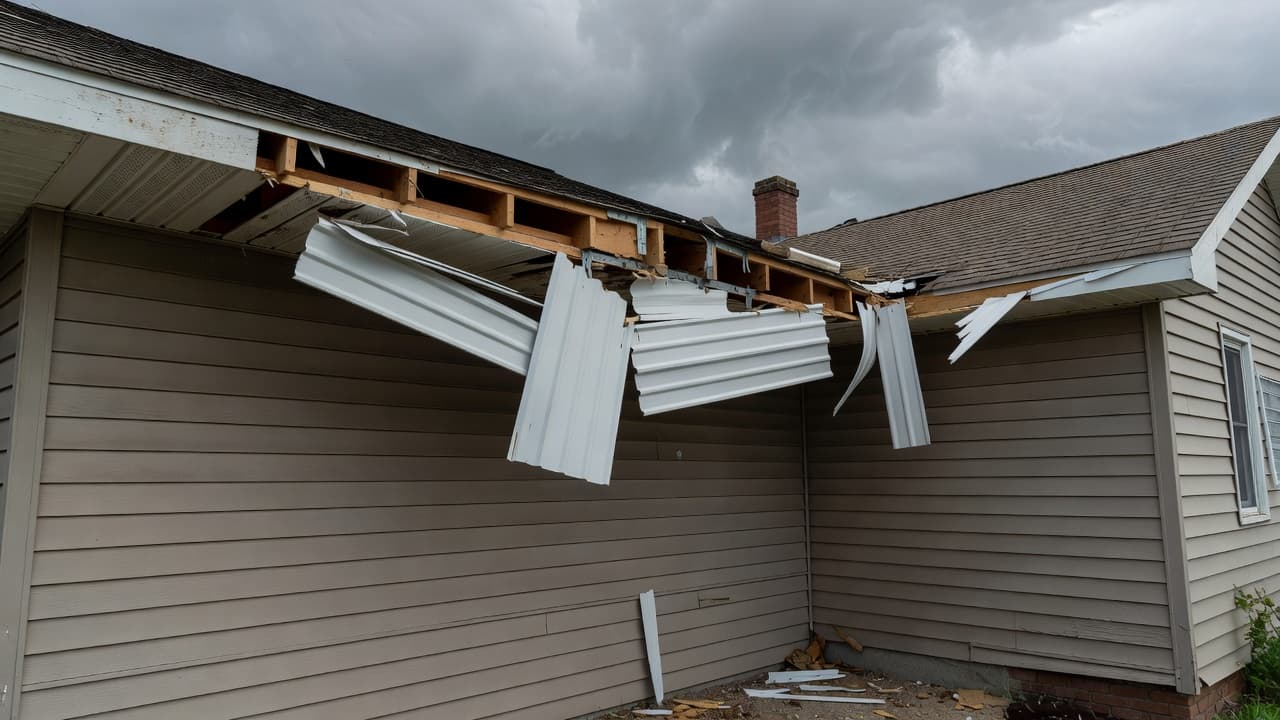
The clearest sign is a panel that has slipped out of its channel. It may hang down at one end, bow in the middle, or leave a dark opening along the eave. Wind can pull a panel loose without dropping it completely.
Other visible signs include:
- Cracked, split, or missing soffit panels near a corner or gable end.
- Bent J-channel, loose trim, or exposed fasteners around the panel edges.
- Fascia metal that looks rippled, lifted, or pulled away from the roofline.
- Fresh gaps exposing rafter tails, insulation, attic framing, or vent screens.
- Broken perforated vent panels that reduce attic airflow.
- Water marks, peeling paint, swollen wood, or dark staining beneath the overhang.
Wind rarely damages one piece in isolation. Check the nearest shingles, drip edge, gutters, ridge vents, and flashing. Missing shingles, creased tabs, or loose metal can direct water into the same roof-edge assembly. This guide to wind-damage repair signs describes related warning signs such as bent flashing and exposed underlayment. Uplift can even reach the structure itself: wind can damage roof trusses without cracking the roof deck, so a post-storm attic check is worth adding to the list.
A soffit stain marks where water showed itself, not always where it entered. The actual opening may be higher on the roof or several feet away.
Step-by-Step
1. Inspect safely, document clearly, and stop active water
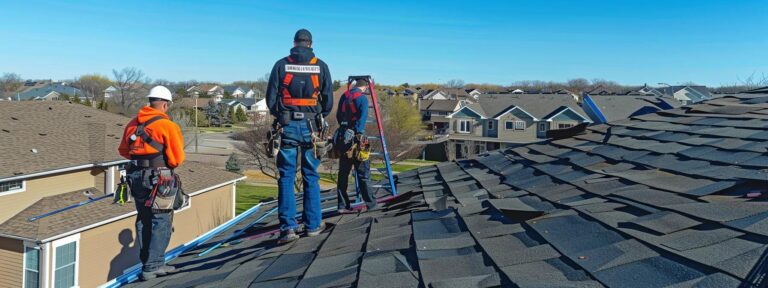
- Walk the property from the ground. Use binoculars or a phone zoom to check every eave, gable, gutter run, and downspout. Do not climb a ladder during wind, rain, lightning, or icy conditions.
- Photograph the whole area first. Take wide photos that show the roof slope and close photos of loose panels, bent fascia, debris, and interior stains. Record the storm date and save any panel that fell, if it is safe to collect.
- Check the attic and interior. Look for damp insulation, water trails on roof decking, wet framing, ceiling stains, or drips near exterior walls. Keep clear of wet electrical fixtures and exposed wiring.
- Use temporary protection if water is entering. A tarp, temporary cover, or limited emergency sealing can reduce additional damage. Keep the work narrow. Permanent repairs before inspection can remove evidence of fresh storm damage roof conditions.
- Schedule a cause-based inspection. A contractor should determine whether the failure is wind uplift, water intrusion, ice damage, age, or a combination. For an active leak or fallen roof material, Call 651-703-2336 for 24/7 Emergency Roofing.
A proper inspection separates a small residential roof repair from a larger residential roof replacement. It also prevents a crew from replacing soffit panels while leaving the wet fascia or roof-edge leak behind them.
Read the Soffit Along With the Whole Roof System
Residential slopes and roof-edge details
On a house, wind can lift shingles, loosen drip edge, flex gutters, and pull fascia outward. The soffit then loses the channel that holds it in place. Reinstalling panels without correcting the fascia attachment creates the same problem during the next strong gust.
A hail damage roof may show bruised shingles, dented vents, and impact marks on soft metals. Hail alone does not usually pull down soffit panels, but hail and wind often arrive together. Inspect both forms of damage before calling the event cosmetic.
Minnesota homeowners should also rule out ice-related damage. Ice dam removal can reduce immediate backup at the eaves, but it does not repair soaked decking, failed underlayment, or rotted fascia. Saint Paul roofing, Minneapolis roofing, and wider Twin Cities roofing inspections often find a mix of wind damage and winter moisture at the same roof edge.
Commercial edges need system-specific inspection
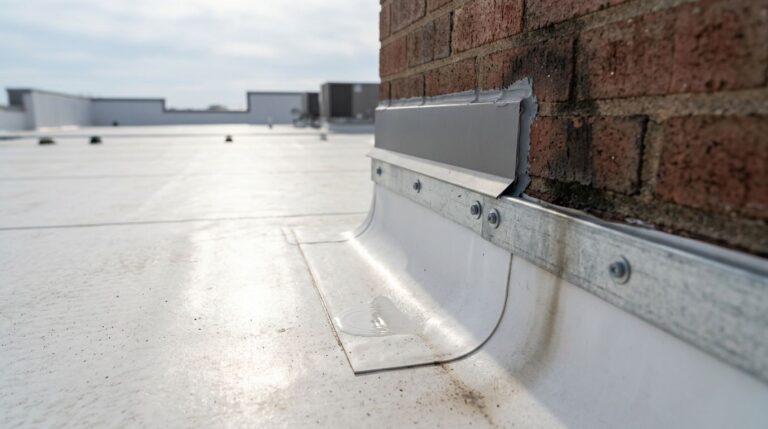
A commercial flat roof handles wind differently. TPO roofing, EPDM, modified bitumen, and BUR do not fail through shingle creases. Look for lifted membrane edges, separated seams, loose flashing, punctures, open termination bars, and displaced perimeter metal.
A drip inside a building may be far from the actual opening. Water can move beneath insulation and membrane layers before reaching a ceiling tile. That is why commercial roof leak detection is useful when the source is not obvious.
Limited damage may support commercial roof repair. Widespread wet insulation, repeated seam failures, or broad wind uplift can justify commercial roof replacement. Commercial roof restoration and commercial roof coatings may extend a sound roof’s service life, but neither fixes saturated insulation or loose edge metal.
For a commercial roof inspection after high winds, Get a Free Commercial Roof Inspection.
Protect the Claim Without Erasing the Evidence
Temporary work is different from permanent repair
Open a roof insurance claim promptly if wind created a new opening, pulled down soffit material, damaged shingles, or allowed water inside. Use plain facts: “Wind displaced soffit panels and rain entered the attic.” Avoid guessing about the full scope before an inspection.
Keep dated photos, contractor notes, emergency invoices, moisture findings, and damaged materials. A reasonable temporary dry-in can help show you acted to limit further loss. Broad permanent repairs can make it harder to prove whether the damage was fresh, old, or more extensive than it first appeared. Storm repair documentation should connect the weather event, the physical opening, and the water path.
For homes with damaged fascia, soffits, or shingles, Get a Free Residential Roof Estimate. Sellers Roofing Company uses union-built roofing crews, including IUPAT Local 96 members, and holds MN Builder Contractor License 803862. GAF-certified installation standards matter when roof-edge repairs affect the roofing system and its warranty.
Conclusion
The practical call
A loose soffit panel is often the first visible sign that wind reached the roof edge. Look for damaged trim, shifted fascia, exposed framing, water staining, and related roof damage before treating it as a simple cosmetic repair.
Fast documentation and a cause-based inspection protect the attic, the roof system, and the repair scope. Fix the opening, the water path, and the supporting fascia together.
FAQs
Can wind damage soffits without damaging shingles?
Yes. Wind may catch a loose soffit panel or weak fascia connection while the shingles remain intact. The roof edge should still be inspected for lifted drip edge, loose gutters, and gaps that admit rain.
Will homeowners insurance cover a wind-damaged soffit?
It may, if wind caused sudden physical damage and the policy covers wind. Coverage depends on policy language, the deductible, the condition of the materials, and documentation of the event.
Can I push a loose soffit panel back into place?
Avoid forcing it back from a ladder. The panel may have cracked, the channel may be bent, or the fascia board may be wet and weak. A temporary fix can also hide the cause of the failure.
What happens if water enters through a damaged soffit?
Water can wet attic insulation, roof decking, wall framing, and ceiling finishes. It can also reduce insulation performance and create conditions for mold growth if the area stays damp.
Does a commercial building need soffit repair after wind damage?
Some commercial buildings use soffits beneath entry canopies or roof overhangs. Others have parapets instead. On a low-slope roof, inspect the membrane, edge metal, flashings, drains, and coping even if the visible damage is limited to a canopy soffit.
For the larger documentation and claim process, read our Minnesota roof storm damage and insurance claims guide.
Need a roof inspection in Saint Paul or the Twin Cities? Call Sellers Roofing Company at +1-651-703-2336 or schedule a free estimate. We are a black-owned, NMSDC-certified MBE roofing contractor with 9+ years experience.