Last updated: 2026-10-13 by Ted Sellers, Owner
Yes. Wind damage to roof eaves can loosen soffit, fascia, and overhang connections before the roof covering shifts, even after a Minnesota windstorm. The roof covering and overhang have different attachment systems, so an intact roof surface doesn’t rule out damage beneath or along the edge.
Table of Contents
- When This Applies
- Why Can Roof Eave Wind Damage Happen First?
- What Wind Speeds Can Damage Roof Edges?
- What Should You Look for Along the Roof Edge?
- Step-by-Step
- Does the Roof Need Repair or Replacement?
- How Should You Document an Insurance Claim?
- Protect the Edge Before Damage Spreads
- Frequently Asked Questions
When This Applies
Which properties are affected?
This guidance applies to homes, apartments, and commercial buildings with projecting roof edges, enclosed soffits, exposed rafter tails, or attached fascia.
After high winds, inspect long overhangs, outside corners, and gable ends for wind damage. A rattling panel, displaced gutter, or fresh opening deserves attention even without missing asphalt shingles.
Saint Paul and Minneapolis properties face another complication: winter moisture and ice can weaken components along the eaves before summer winds put them under strain.
When is wind an incomplete explanation?
Rot, animal damage, installation defects, and ice buildup can produce similar symptoms. Freeze-thaw movement and heavy snow can also pull gutters away from weakened fascia.
An ice dam can soak the overhang without wind creating an opening. Ice dam removal addresses the buildup, but it doesn’t repair damaged wood or flashing.
Buildings with parapets may have no residential-style roof edges. Their inspection priorities are coping, perimeter metal, and membrane terminations.
Why Can Roof Eave Wind Damage Happen First?
How does wind load the overhang?
Wind flowing over a roof creates areas of negative pressure, often described as suction. Pressure beneath an overhang can combine with suction above it.
Edges, corners, and ridges face concentrated wind uplift. Turbulence can concentrate forces around corners and gable ends, so inspect the windward edge and other sides.
Soffit panels may escape their retaining channels when turbulence affects airflow beneath an overhang, even while shingle seals remain intact. Fascia metal can pull loose when fasteners lose their hold in deteriorated wood.
Why can shingles look undamaged?
Roofing materials and structural parts have separate connections. Drip edge, flashing, soffit, fascia, and framing can fail at different thresholds.
Shingle sealing strips need sufficient warmth, usually from sun exposure, to bond. Cold-weather installation, shade, or improper installation can leave tabs unsealed.
The IBHS roof materials guidance distinguishes roofing materials, installation methods, and test standards. A product rating doesn’t establish the strength of every installed connection.
Concealed openings can expose the roof deck and affect lower roofing layers. Our guidance on wind-damaged roof underlayment addresses that hidden leak path.
What Wind Speeds Can Damage Roof Edges?
Which ranges deserve attention?
These ranges describe possible outcomes, not guaranteed damage thresholds.
| Wind speed (mph) | Possible roof effects |
|---|---|
| Up to 45 | Usually little significant damage on sound roofs; loose components can lift. |
| About 40-50 | Weak shingles or flashing can loosen. |
| 45-60 | Minor loss of shingles and displaced edge components are possible. |
| 60-85 | Significant damage can occur; gusts over 60 can tear off roofing materials. |
| Above 85 | Catastrophic roof failure or structural detachment is possible. |
Attachment, deterioration, exposure, turbulence, debris impacts, and gust duration determine actual results. Moderate winds can cause roof damage at weak connections without leaving obvious gaps along the edge.
How does the Beaufort scale compare?
The National Weather Service Beaufort scale identifies 47-54 as severe gale and 55-63 as storm force.
Violent storm covers 64-73. Higher speeds enter the hurricane-force category.
These are wind classifications, not roofing performance ratings. Nearby weather observations support a storm timeline but don’t establish the exact pressure at your eave.
What Should You Look for Along the Eaves?
Which visible defects matter?
A soffit panel hanging at one end, bowed between channels, or missing completely is a clear inspection priority. Check for pulled trim channels, displaced vent panels, and exposed framing.
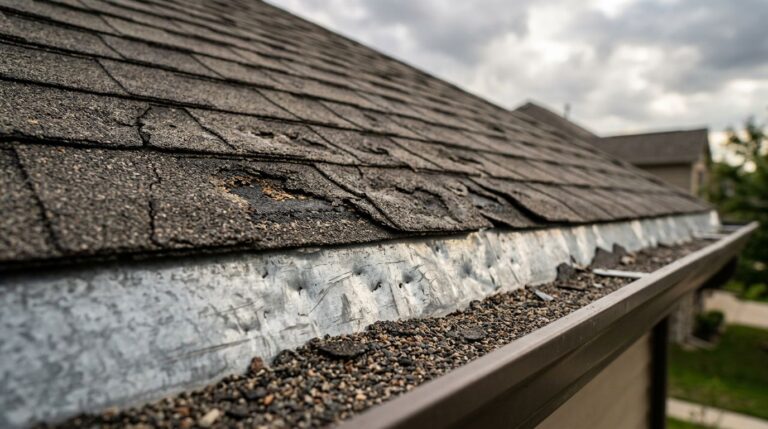
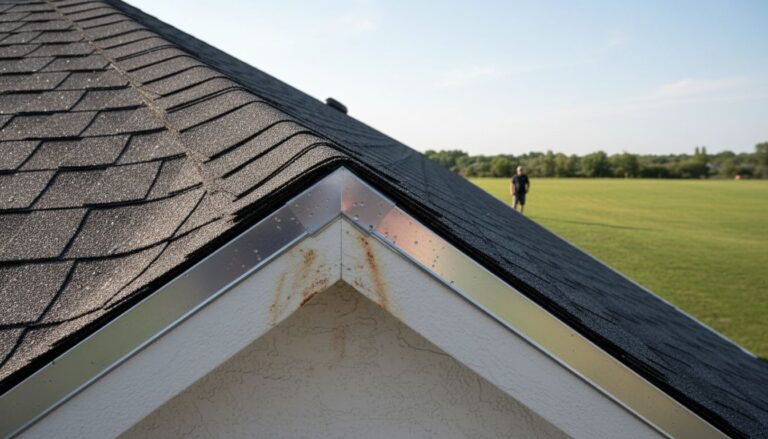
Fascia may look rippled or separated from the roofline. Drip edge can bend upward or pull away, a sign of wind damage to roof edges even when nearby shingles remain flat.
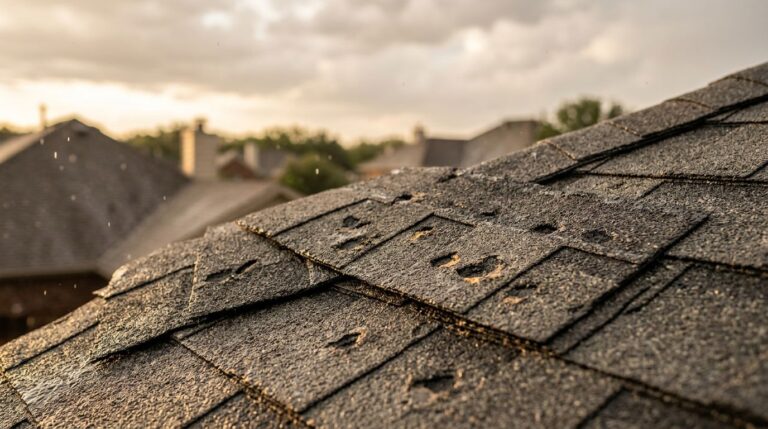
Also look for lifted shingles, missing shingles, curling or creased material, bent flashing, exposed nails, and granule loss in gutters. Visible roof damage can have multiple causes, so granule loss and exposed nails alone don’t establish wind damage.
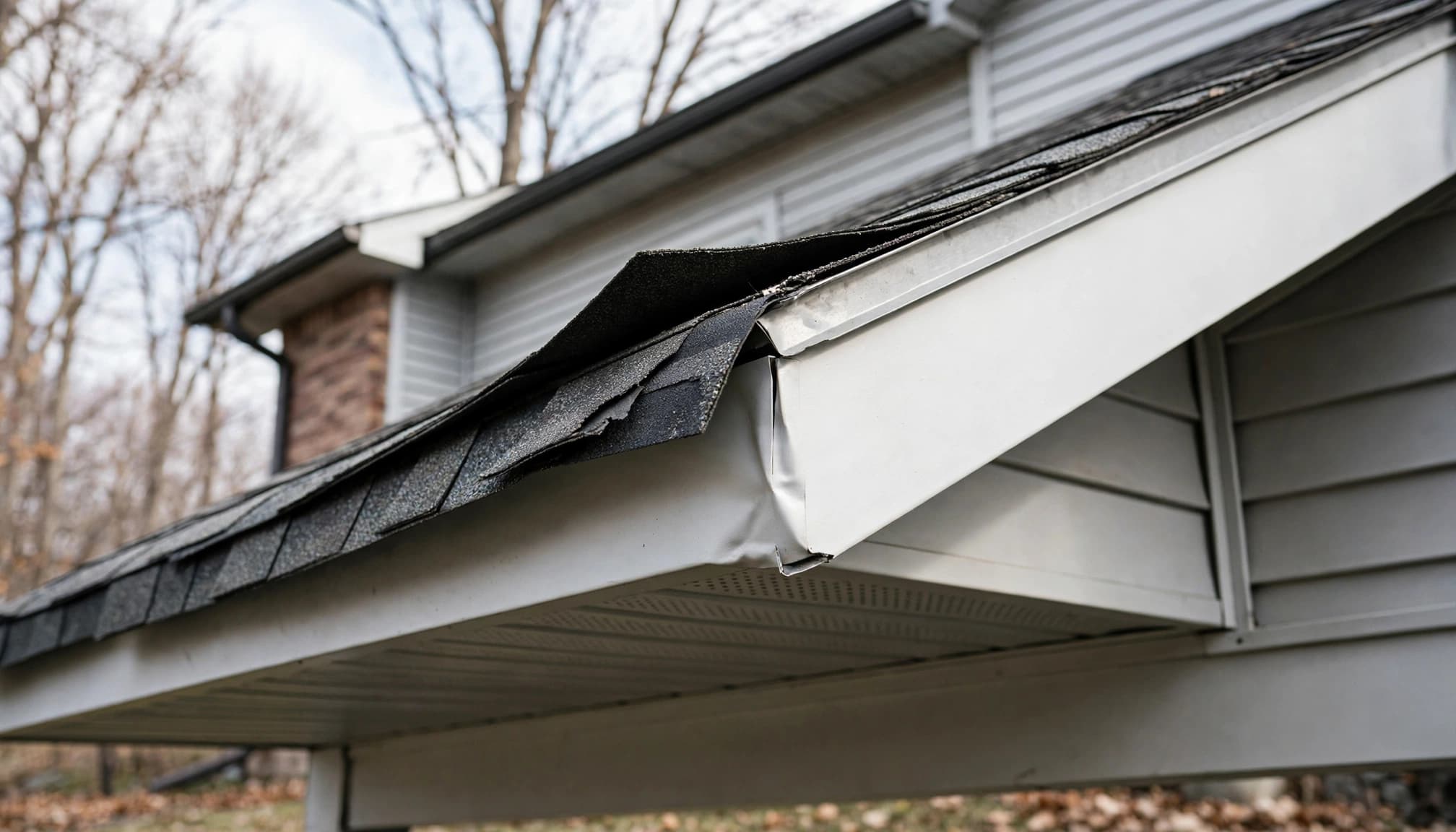
Illustrative roof-edge view.
How do you distinguish wind from aging?
Fresh displacement, torn material, and changes documented immediately after a storm support a wind-related finding.
Soft wood, persistent staining, corrosion, and repeated deterioration suggest older problems. New storm damage can coexist with those conditions.
Our comparison of winter and spring roof damage addresses overlapping seasonal symptoms.
Inside an attic, water trails and wet insulation need investigation. Daylight at a designed ventilation opening is normal; a new gap beside displaced framing isn’t.
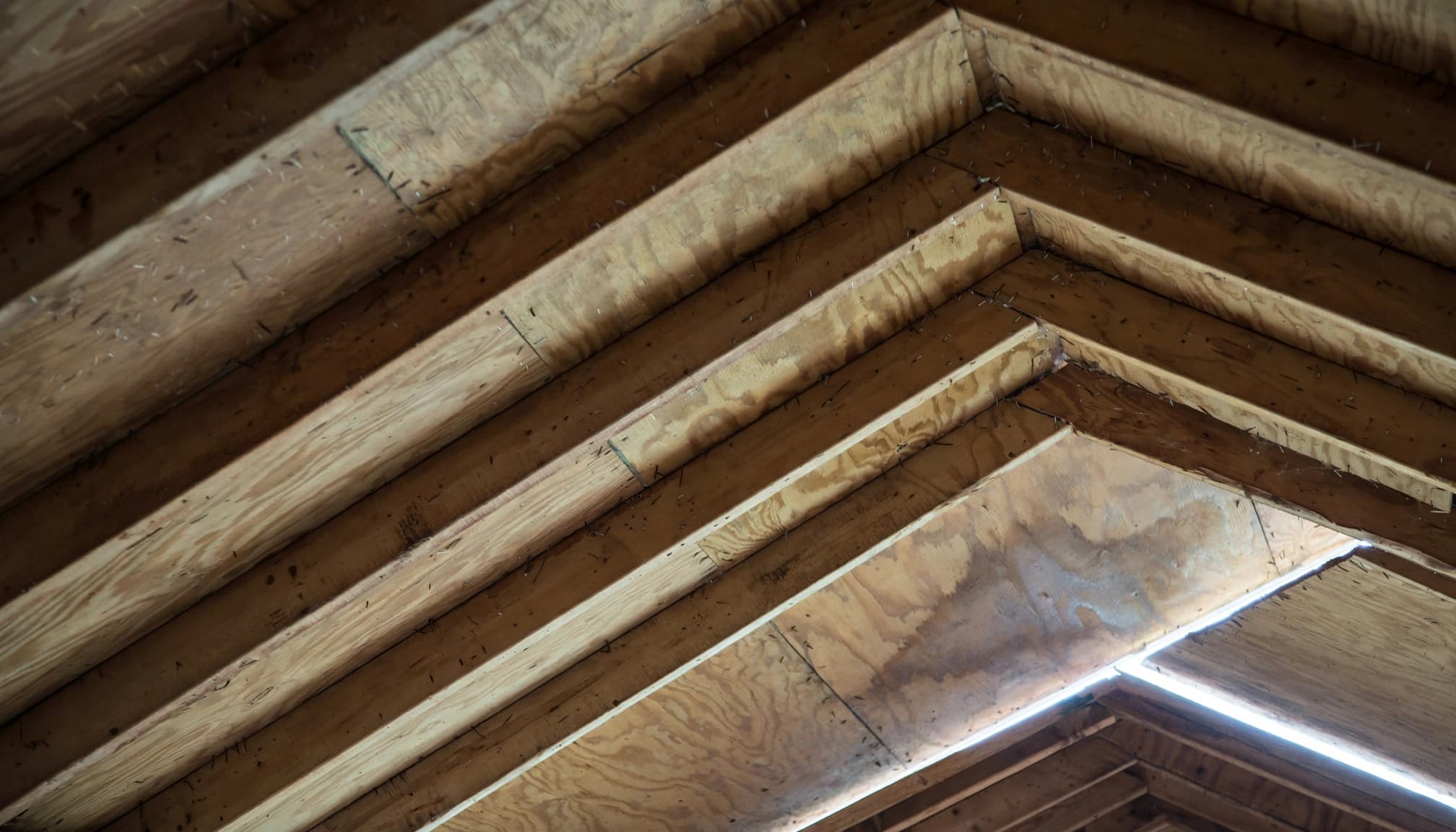
Illustrative attic view; daylight alone doesn’t prove damage.
Step-by-Step
How do you inspect without creating another hazard?
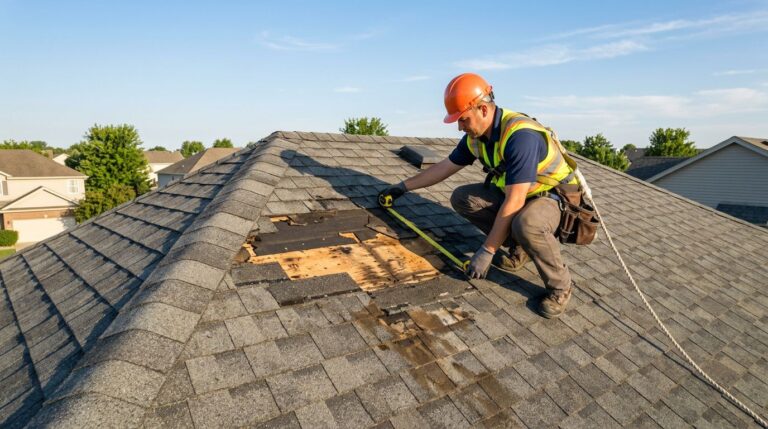
- Walk the property only after wind, lightning, and falling-debris hazards have passed. Use binoculars or phone zoom. Stay clear of hanging metal, displaced gutters, and damaged power lines. Don’t climb onto a wet, icy, or storm-damaged roof.
- Photograph each building elevation before taking closer views of eaves, debris, and interior stains. Record the storm date and when changes appeared. Inspect the attic only from safe access or a proper walkway. Never step on ceiling drywall or alter trusses.
What should happen before permanent repairs?
- Arrange a roof inspection with a roofing contractor before the insurance adjuster visits. This gives the contractor time to document and explain concealed edge damage. Notify your insurer promptly if you may file an insurance claim; don’t wait for the roofer. Request findings that separate roof-covering damage, trim failure, deteriorated supports, and structural movement.
- Stop active water entry with documented temporary protection. Keep invoices and safely collected damaged pieces, including loose fasteners. Don’t screw loose trim back into unknown wood or cover evidence with permanent coatings. If the opening admits rain, Call 651-703-2336 for 24/7 Emergency Roofing. Visible framing separation or increasing sag requires urgent structural assessment.
Does the Roof Need Repair or Replacement?
When can a residential repair solve it?
Localized soffit, fascia, flashing, or drip-edge damage often supports residential roof repair when the backing wood, roof deck, and adjoining materials remain sound.
Residential roof replacement is a stronger option when damage is widespread, fasteners repeatedly fail, or repairs can’t restore a watertight assembly. Missing trim alone doesn’t justify replacing every shingle.
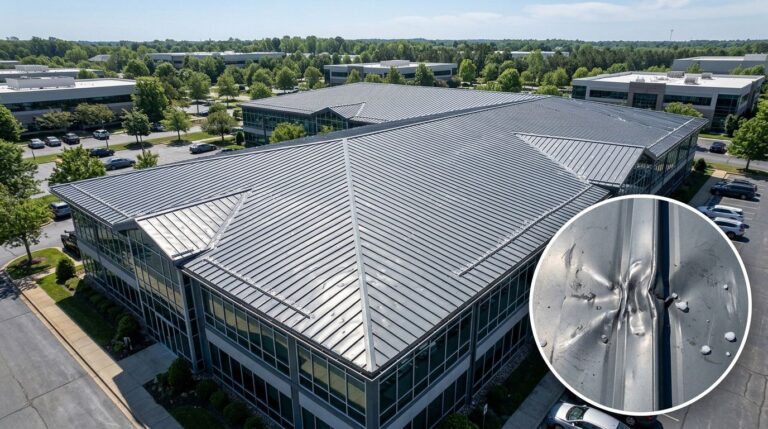
A roofing contractor should inspect eave trim, panel ends, seams, and clips on a metal roof. Our standing-seam wind damage signs identify those differences.
What changes on a commercial flat roof?
A commercial flat roof inspection must assess perimeter attachment and moisture beyond the visible opening.
TPO roofing and EPDM can develop lifted terminations or membrane tears. Modified bitumen and BUR require assessment of laps, plies, and edge securement.
Commercial roof repair may address isolated damage when surrounding insulation is dry. Widespread saturation or attachment failure can support commercial roof replacement.
Commercial roof restoration and commercial roof coatings require a sound, suitable substrate. Coatings don’t reconnect loose edges or correct saturated insulation. Our EPDM wind damage guidance covers membrane-specific warning signs.
How Should You Document an Insurance Claim?
What evidence connects the storm to the loss?
Preserve date-stamped original photos, weather reports, prior inspections, maintenance records, and temporary repair receipts.
Start with wide views, then show the damaged edge and its consequences. For commercial properties, include tenant leak reports and affected rooms or inventory.
A useful roof insurance claim record connects the storm date, physical opening, and water path. A compliance certificate supports the building history, but it doesn’t prove cause or coverage.
GAF’s roof insurance claim guidance covers documentation, temporary repairs, and preparation for the insurance adjuster.
What can affect payment?
Insurance usually covers direct wind damage, subject to policy terms. Wear exclusions, deductibles, reporting deadlines, depreciation, and replacement-cost conditions affect payment.
Moderate-wind uplift can be missed when an inspection focuses only on missing shingles. A written report should document wind damage, including evidence of concealed damage and its storm-related cause.
A small repair may cost less than the deductible, as Travelers explains when considering a claim. Claim payment and repair scope are separate decisions.
Protect the Edge Before Damage Spreads
What is the main takeaway?
Flat shingles don’t rule out damaged soffit, fascia, drip edge, or overhang connections. Evaluate the whole roof-edge assembly, including the supports behind visible trim.
What should you do next?
Document changes before permanent work hides them, then obtain a written, cause-based inspection. Prompt temporary protection limits water entry while the repair scope is established.
Frequently Asked Questions
Can wind detach an entire roof even if the covering looks intact?
Yes. Roof-deck fasteners or roof-to-wall connections can fail even when the shingles remain attached. Movement in the roof structure needs urgent assessment.
How much does it cost to repair wind or hail damage along the roof edge?
The cost to repair wind damage or hail damage at the roof edge depends on the scope, access, and any concealed deterioration. An inspection can identify what the estimate needs to cover, including any damaged shingles.
How often should roof edges be inspected?
Inspect roof edges annually and after severe storms. Check gutters for signs of damage during these inspections.
Can walking on the roof cause damage?
It can. Foot traffic can scuff granules, crack brittle shingles, dent metal, or puncture membranes. Ground observations and a qualified inspection reduce the risk of further damage and falls.
What should I tell the insurance adjuster?
Share observed facts, dates, and when any leaks began. Don’t guess at wind speed, roof age, or concealed damage. Provide documented contractor findings and identify uncertain details clearly.
Need a roof inspection in Saint Paul or the Twin Cities? Call Sellers Roofing Company at +1-651-703-2336 or schedule a free estimate. We are a black-owned, NMSDC-certified MBE roofing contractor with 9+ years experience.