Last updated: 2026-08-01 by Ted Sellers, Owner
Short answer: Wind uplift damage on flat roofs often shows up as lifted membrane edges, curling seams, “bubbles” or billowing areas, wrinkles that weren’t there before, and loose or missing edge metal. On gravel roofs, you may see displaced ballast and exposed membrane. Damage usually concentrates at corners, perimeters, and around rooftop units, then turns into leaks after the next rain.
Wind doesn’t “push down” on a flat roof the way many people picture it. It can act more like someone trying to peel a sticker off glass. Once an edge starts to lift, the roof can unzip fast.
For commercial owners, the main risk isn’t just a wet ceiling tile. Uplift can soak insulation, rust decks, and disrupt tenants, even when the surface looks only mildly disturbed.
When This Applies
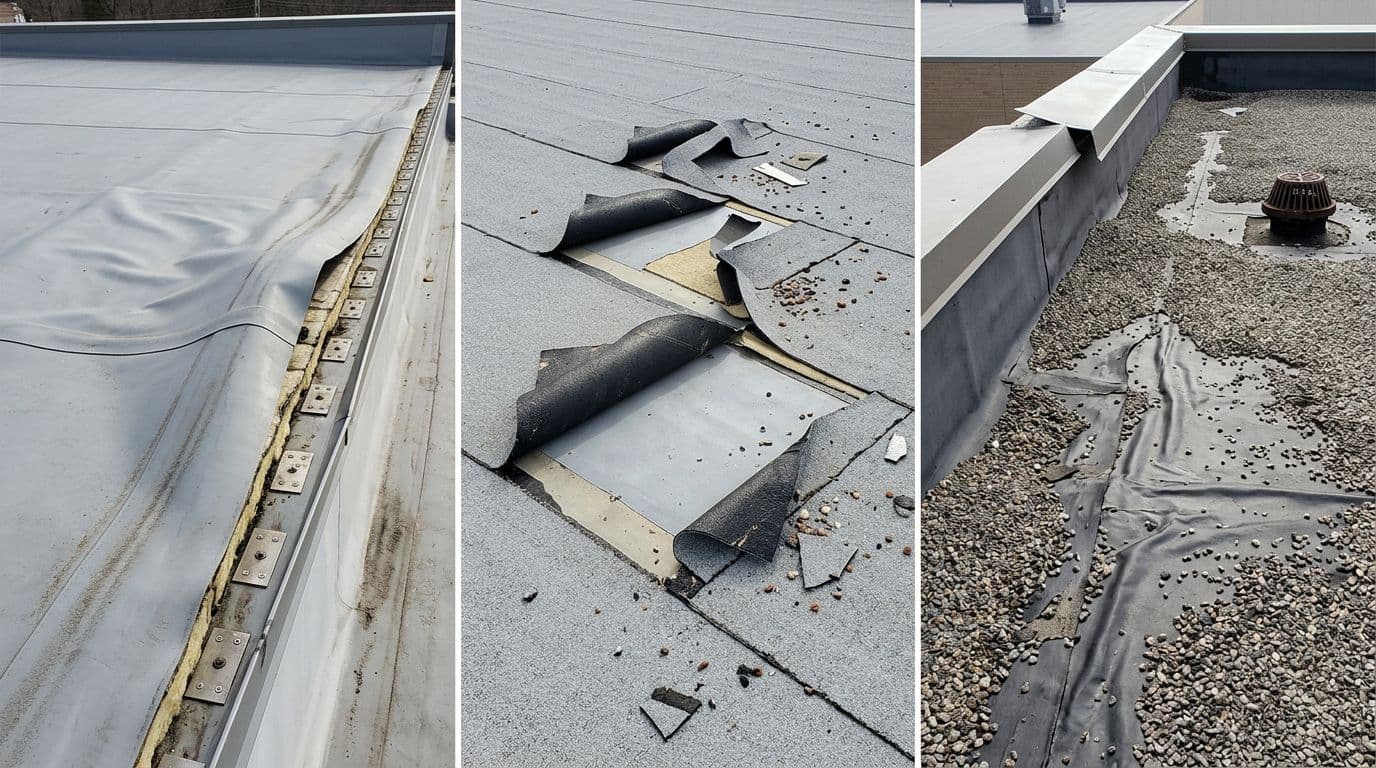
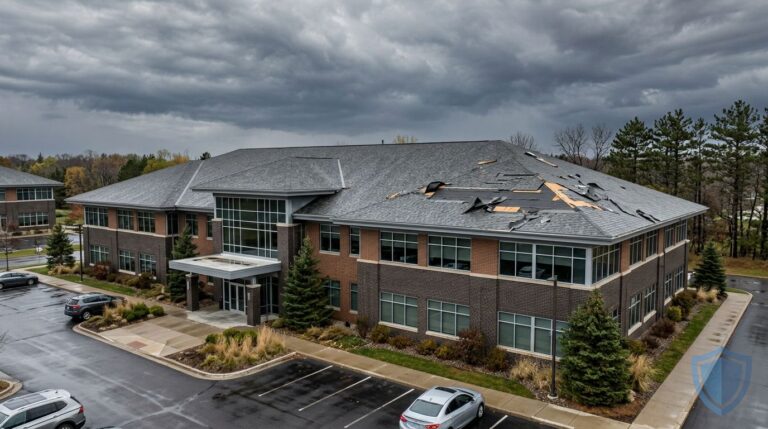
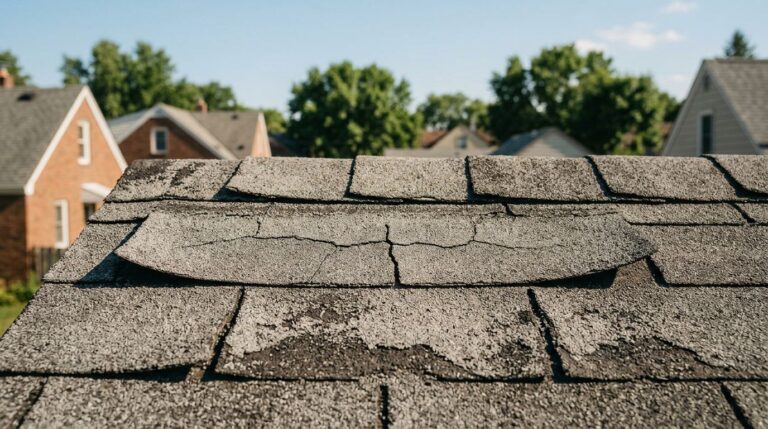
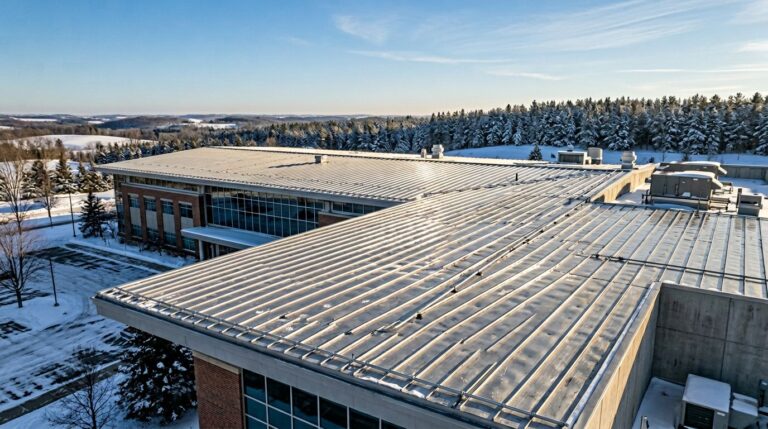
Common examples of wind uplift damage patterns on three flat roof systems, created with AI.
Where wind uplift hits hardest on flat roofs
This applies most to commercial buildings with low-slope systems like TPO, EPDM, modified bitumen, and built-up roofing (BUR). Wind uplift damage is also more likely when your roof has long, exposed edges, tall parapet walls, or wide-open surroundings like industrial parks.
You’ll usually find the “first moves” of uplift in predictable zones:
- Corners and perimeters (highest suction forces).
- Along edge metal and terminations where the membrane stops.
- At seams and laps that can start to separate under stress.
- Near penetrations like HVAC curbs, vents, and skylights.
On single-ply roofs, look for lifted seams, “fishmouths” (a curled lap edge), fluttering membrane, and exposed fastener plates near the edge. On modified bitumen, wind can peel back cap sheets and tear laps, especially near corners. On BUR or gravel-surfaced roofs, ballast may shift, leaving thin spots or bare membrane.
If you want a plain-language explanation of why suction forms over flat roofs, see this guide on how wind uplift forms.
A small lift at the edge can act like a pull tab. Once air gets underneath, damage can spread beyond the obvious area.
For local support after storms, it helps to work with trusted commercial roofers in Saint Paul who see these patterns often and can document them correctly.
When it looks like uplift, but it isn’t (and the edge cases)
Some roof problems imitate uplift, so you don’t want to guess and repair the wrong thing.
Clues it may be traffic, heat, or drainage instead
Foot traffic tends to leave scuffs, punctures, and random wear paths, not a clean “peel line” at the perimeter. Thermal movement often creates broader wrinkles, but without the telltale lifted edge metal or pulled fasteners. Ponding water leaves dirt rings and algae staining, then stresses seams over time, yet it doesn’t usually “roll back” a membrane edge after a single windy day.
This quick comparison helps you sort the symptoms:
| What you see on the roof | More likely wind uplift | More likely something else |
|---|---|---|
| Lifted edge, flapping membrane, pulled fasteners | Yes | Rare |
| Random punctures near walk paths and units | Sometimes | Often foot traffic |
| Dirt rings, stains, standing water areas | Indirect | Often drainage/slope |
If water shows up inside but the roof surface looks “fine,” wind may have opened a seam that’s hard to spot. In that case, commercial roof leak detection in Saint Paul can locate wet insulation and the true entry point before repairs turn into a guessing game.
Step-by-Step
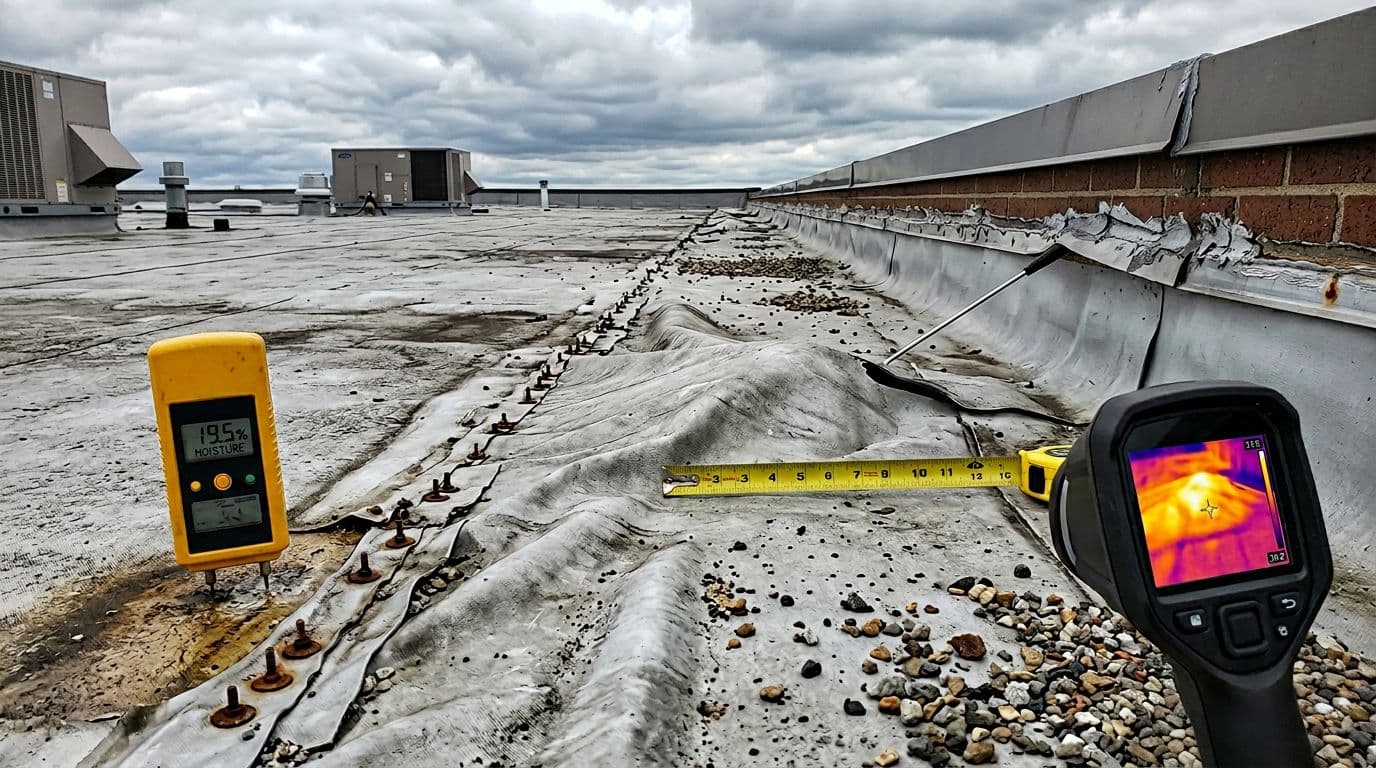
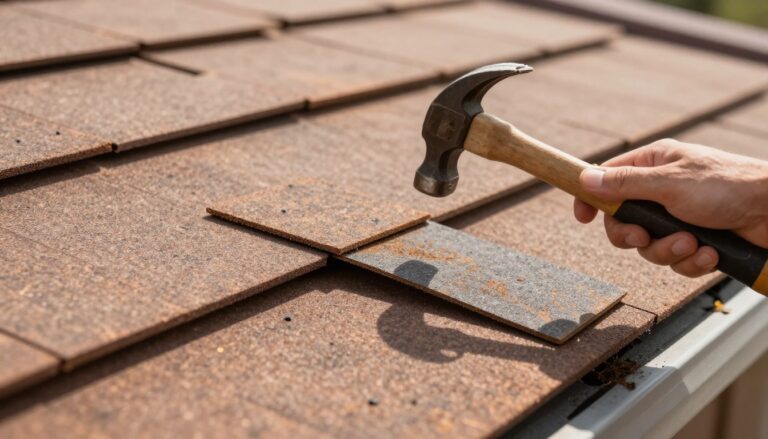
Typical tools and roof details used to confirm uplift and hidden moisture, created with AI.
Immediate actions (same day or next day)
- Check safety first, avoid roof access during high winds, lightning, or icy conditions.
- Walk the interior and note new stains, damp odors, or drips, then move valuables out of risk areas.
- If water is actively dripping, contain it with bins and protect equipment, then shut off power where needed.
Spotting wind uplift damage without “creating” more damage
- Look from access points toward edges and corners, because uplift often starts there.
- Photograph lifted seams, curled laps, displaced gravel, loose coping, and any membrane that looks billowed.
- Mark suspect areas on a simple roof sketch, including rooftop unit locations and drains.
- Avoid pulling on seams or peeling anything back, because that can void warranties or worsen tears.
For reference photos that help you compare patterns, this wind damage identification guide with pictures can be useful when you’re sorting “what am I looking at?” from the ground.
Getting the right fix (repair vs larger scope)
- Schedule a professional inspection that checks edge securement, seams, flashings, and attachment patterns.
- Ask whether moisture mapping or infrared scanning is needed, because wet insulation changes repair scope.
- Approve commercial flat roof repair when damage is isolated and the roof assembly is still dry and stable.
- Plan commercial roof replacement when uplift is widespread, insulation is saturated, or edge details keep failing.
If you’re unsure which direction you’re headed, this article on addressing wind damage on commercial roofs explains why quick documentation and early action often reduce the final bill.
FAQ
Will my roof still leak if uplift damage looks “small”?
Yes, because tiny openings can move a lot of water on low-slope roofs. Wind can open a seam, then rain travels sideways before it drops inside. If staining appears far from the roof edge, the entry point may still be at the perimeter.
What happens if wind uplift exposes fastener plates or insulation?
Exposed plates and insulation usually mean the system lost securement where it matters most. At that point, the roof has less resistance to the next wind event. Treat it as urgent, because continued fluttering can tear seams and enlarge the opening quickly.
Can we just patch it and move on?
Sometimes. A patch can work when the membrane is sound and the wet area is small or non-existent. However, if trapped moisture remains, a patch can “hide” a growing problem. That’s when a contractor may say your commercial roof needs repair beyond the first visible tear.
Will wind uplift damage affect my warranty or insurance claim?
It can. Many warranties require timely notice and approved repair methods. Insurance carriers also expect clear photos and storm timelines. Save weather alerts, take date-stamped photos, and don’t authorize removal of materials until documentation is complete.
What if the storm was weeks ago?
You can still file, but it may be harder to prove cause and date. The sooner you document and inspect, the cleaner the claim file tends to be.
How do I know if the damage is limited to the surface?
You usually can’t confirm that by sight alone. A roof can look mostly intact while insulation is wet underneath. Moisture mapping, infrared scans, and targeted test cuts (when justified) help confirm whether the assembly stayed dry.
Wind uplift damage is easiest to manage when it’s caught early, before the roof starts “unzipping” at the edges. If you’ve noticed lifted seams, shifted gravel, or new interior staining, treat it as a real building risk, not a cosmetic issue. The right inspection can tell you whether a repair is enough or whether a larger commercial roof replacement plan makes more sense.
Need a roof inspection in Saint Paul or the Twin Cities? Call Sellers Roofing Company at +1-651-703-2336 or schedule a free estimate. We are a black-owned, NMSDC-certified MBE roofing contractor with 9+ years experience.