Last updated: 2026-08-01 by Ted Sellers, Owner
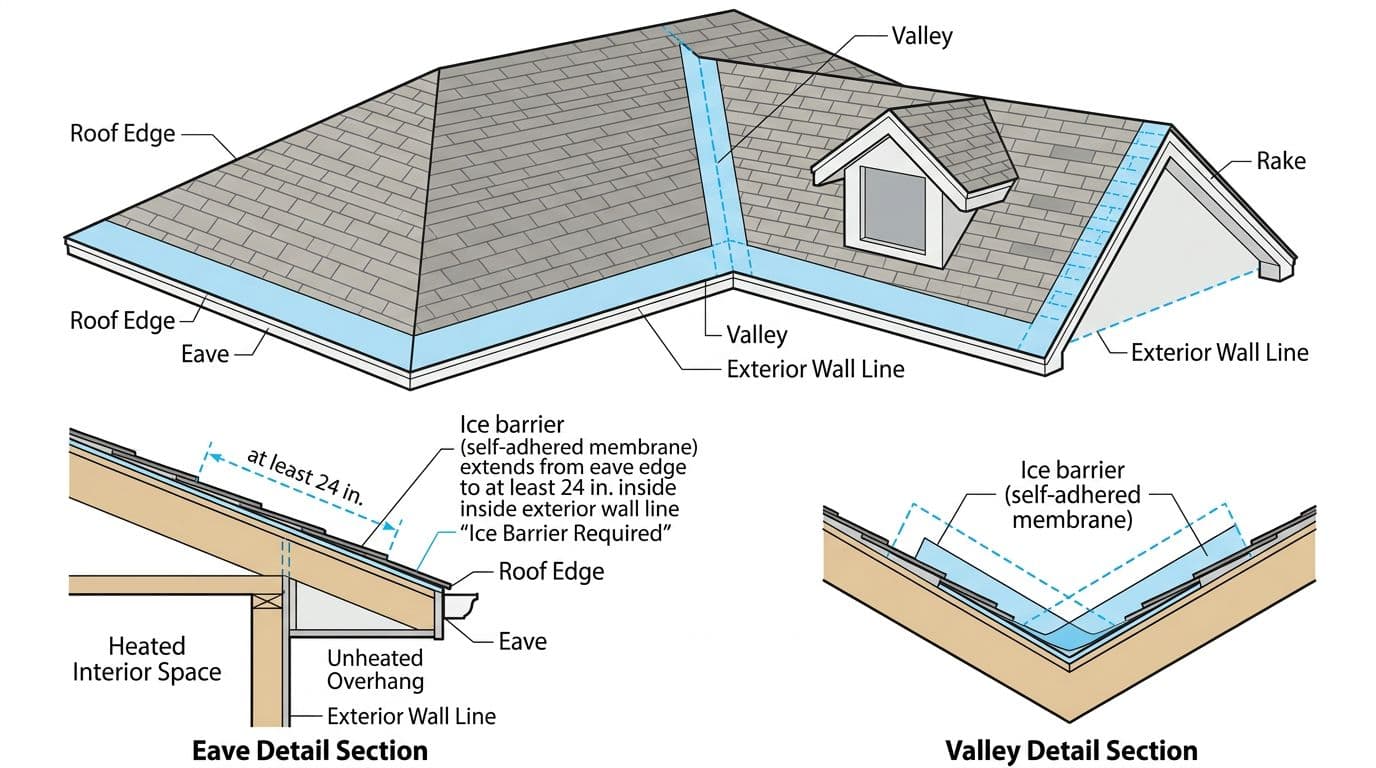
Short answer: The Minnesota ice barrier code requires an ice barrier at roof eaves on many heated, shingle-style sloped roofs. The barrier must extend from the eave edge to a point at least 24 inches inside the exterior wall line (measured on the roof). The code language does not require ice barrier in valleys, and it does not call out rakes by name, so rake coverage is usually a design or manufacturer choice.
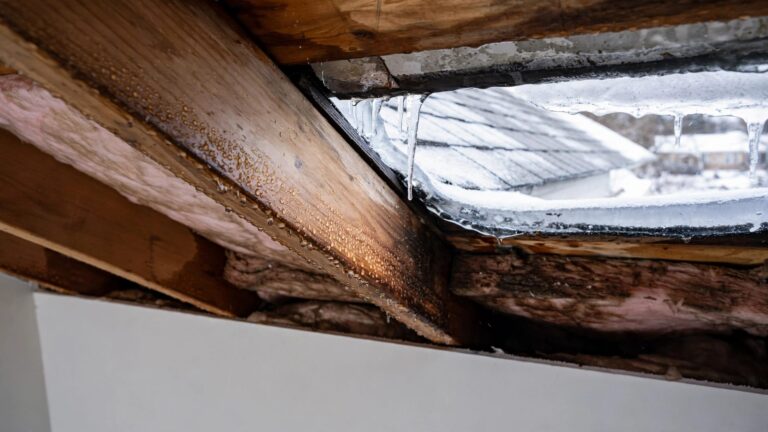
Snow and refreeze cycles in Minnesota can push water under shingles. An ice barrier works like a raincoat under the roofing, so backup water hits a watertight layer instead of wood decking.
When This Applies
The eave rule that triggers ice barrier
In plain terms, the code detail is about eaves on heated buildings with sloped roofing where ice dams can form. The requirement is not “two feet up from the edge.” Instead, it is “far enough up the roof” so the membrane reaches at least 24 inches inside the exterior wall line. That distance changes with overhang depth and roof pitch.
If you want the exact wording contractors and inspectors reference, read the state’s published code section on underlayment and ice barrier requirements. That source is also useful when you are comparing bids, because it clarifies what is required versus “nice to have.”
Valleys and rakes: what’s required, and what’s smart
Many owners assume valleys automatically require the same membrane. However, the Minnesota code language commonly cited for this topic does not require ice barrier in valleys. Still, valleys collect water, slush, and debris, so contractors often install a self-adhered membrane there as a best practice or to meet a manufacturer spec. That’s not “extra for no reason.” It’s risk control in a high-flow area.
Rakes (the sloped roof edges) are different. The ice-barrier rule is tied to eaves and the exterior wall line, not the gable edge itself. As a result, rake membrane coverage is usually about wind-driven rain, edge detailing, and shingle warranty rules, not ice-dam backup.
A quick reality check: code minimums aim to prevent common failures, not every leak your building can suffer.
Who this matters to in commercial ownership (and when it doesn’t)
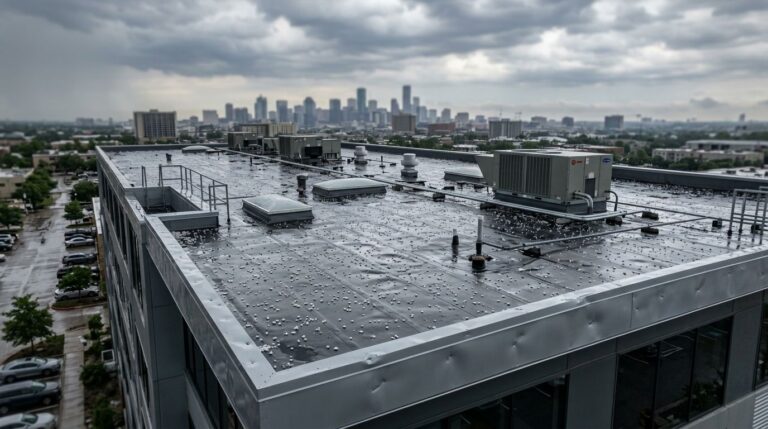
This topic matters most to commercial owners who have steep-slope shingle sections on a property (offices, churches, retail with decorative gables, canopies, and multi-family you manage). It matters less for typical low-slope membranes where “ice barrier” is not the main waterproofing system.
If water shows up inside a low-slope building in winter, the fix may be commercial flat roof repair, not a shingle ice-barrier upgrade. In that case, targeted diagnostics save money. For example, commercial roof leak detection in Saint Paul helps pinpoint whether the source is a seam, drain, curb flashing, or a wall transition.
Step-by-Step
Confirm whether the rule applies to your roof area
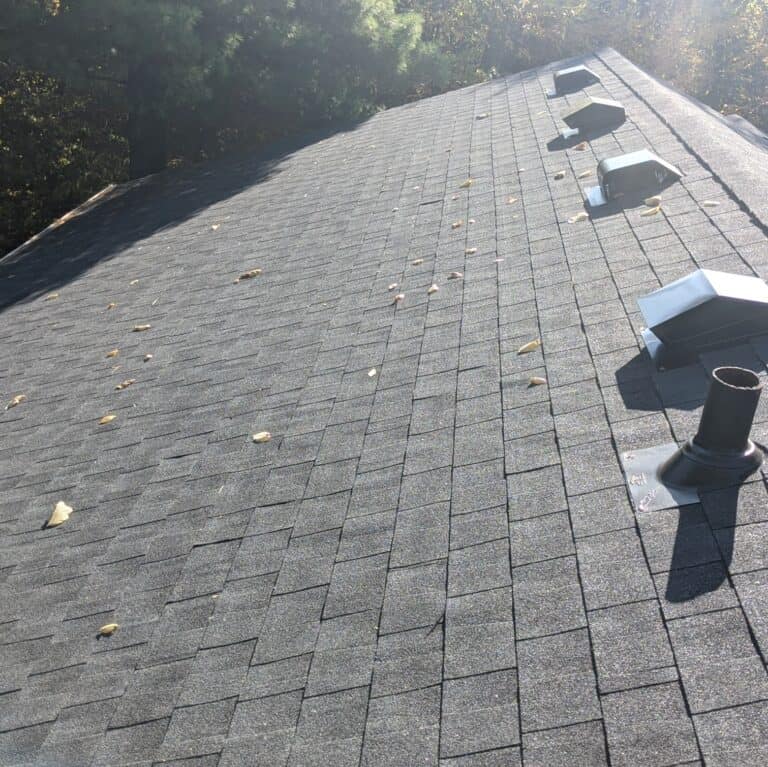
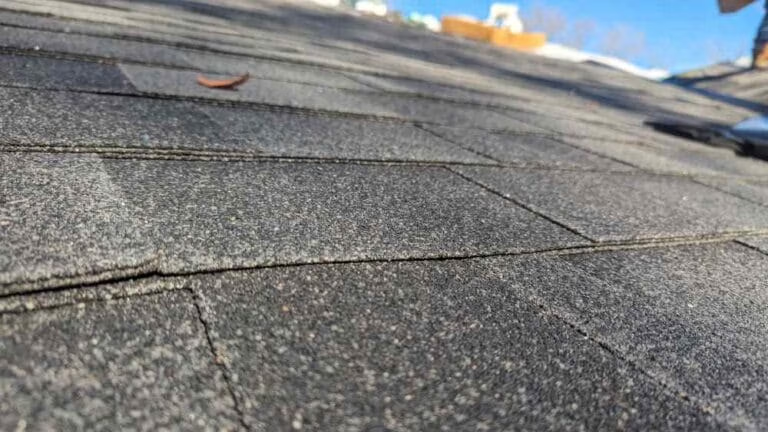
- Identify the roof type at the problem area. Ice barrier rules like this are written for sloped, shingle-style roof assemblies, not for every commercial roof type.
- Confirm the space below is heated. The typical trigger is heat loss that melts snow, which then refreezes at colder eaves.
- Mark the exterior wall line on your plans. If you don’t have drawings, mark it from the interior by locating the outer wall and projecting that line up to the roof deck.
Measure the required coverage correctly (the part most bids get wrong)
- Measure from the eave edge inward on the roof surface. The membrane must reach a point at least 24 inches inside the exterior wall line, not just 24 inches from the drip edge.
If the building has deep overhangs
- Account for the overhang distance. A deeper soffit pushes the wall line farther from the edge, so you may need more than one roll width of membrane to satisfy the inside-the-wall requirement.
Specify what gets installed at eaves, valleys, and rakes
- Choose a code-accepted ice barrier product. Common options include a self-adhered polymer-modified bitumen membrane, or two layers of underlayment cemented together (confirm what your inspector accepts for the assembly).
If the bid includes valley membrane
- Treat valley coverage as a scope decision. It can reduce leak risk, even if it isn’t required by the ice-barrier rule, especially where drifting snow dumps into the valley.
If the bid includes rake membrane
- Ask why the rake needs it. Good reasons include wind-driven rain exposure, edge metal details, and manufacturer requirements. “Because we always do it” is not a reason.
Verify installation and protect your capital plan
- Document the coverage before shingles go on. Photos that show the eave edge, the wall line reference, and the membrane laps help with permits, warranties, and future due diligence. If problems keep recurring, that documentation also supports decisions about commercial roof replacement versus repeated patching when your commercial roof needs repair again next winter.
For broader ice dam causes and prevention beyond membranes, the University of Minnesota offers practical guidance in its ice dam prevention and safety overview.
FAQ
If valleys aren’t required, why do some specs call for them anyway?
Valleys move a lot of water fast. Because of that, architects and manufacturers often add membrane there as a durability upgrade. It can also help when ice piles in the valley and water backs up under shingles.
What happens if my contractor only runs ice barrier “two feet up”?
Two feet is not the same as 24 inches inside the exterior wall line. With deep overhangs, “two feet up” can stop short of the warm wall line, which is where meltwater backup pressure starts. Ask for a wall-line-based measurement.
Does the ice barrier code apply to every commercial building in Minnesota?
Not always. Many commercial buildings fall under different code paths and use different roof systems. The practical answer is that it applies where you have a sloped shingle roof over heated space, even on an otherwise commercial property.
Can ice barrier fix leaks on a low-slope roof?
No. Low-slope systems rely on the primary membrane, flashing, and drainage. If you see winter leaks, you may need commercial flat roof repair at seams, drains, or curbs instead of adding shingle-style details.
When does repeated ice dam damage justify replacement instead of repair?
If repairs keep returning in the same edge zones, or moisture has reached decking and insulation, replacement can be the lower-risk option. A planned commercial roof replacement also lets you correct insulation, ventilation, and edge metal details at the same time.
Conclusion
The Minnesota ice barrier code is simple once you focus on the wall line, not the drip edge. Ice barrier is required at eaves to reach 24 inches inside the exterior wall line, while valleys and rakes are usually scope choices based on risk and specs. If you manage a property with mixed roof types, match the fix to the system, then document the work so the next winter doesn’t become another surprise.
Need a roof inspection in Saint Paul or the Twin Cities? Call Sellers Roofing Company at +1-651-703-2336 or schedule a free estimate. We are a black-owned, NMSDC-certified MBE roofing contractor with 9+ years experience.