Last updated: 2026-09-28 by Ted Sellers, Owner
Photographs taken after a windstorm can make a roof claim easier to understand later, but only when they show context as well as close detail. This guide gives property managers a practical recordkeeping approach.
What Should Property Managers Photograph After a Windstorm?
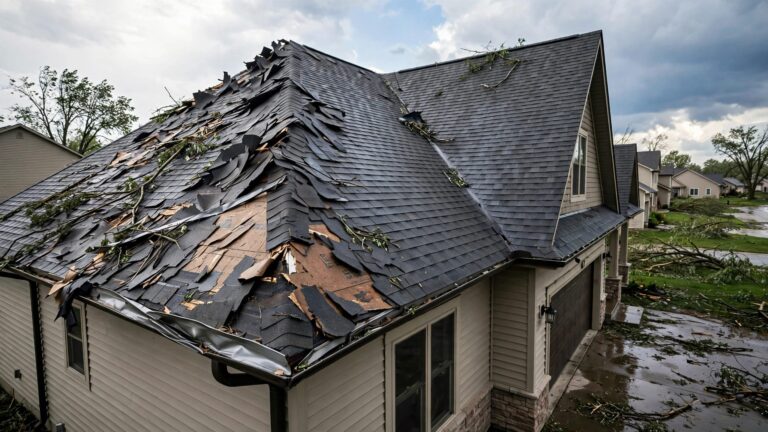
After a windstorm, property managers should photograph the roof from the ground, displaced materials, flashing, gutters, drains, exterior elevations, interior leaks, and affected contents. Capture wide, medium, and close views, preserve the originals, and record the building area and storm date.
Photograph the property before cleanup to preserve storm damage evidence for an insurance claim. Start with wide views, then capture roof edges, damaged materials, tenant-reported water leaks, and every temporary repair. Use date-stamped originals and show scale with a tape measure or known building feature. Never send staff onto a wet or storm-damaged roof.
A complete windstorm roof damage record ties the storm date to a specific opening and its consequences. It helps the insurer and roofer distinguish fresh wind damage from old maintenance.
If the building file contains a certificate of compliance for the roof or a prior repair, preserve it with the original photos. It doesn’t prove the loss’s timing, cause, or coverage.
Key Takeaways
- Photograph the property before cleanup, starting with wide views and then documenting roof edges, flashing, penetrations, interior leaks, and damaged materials.
- Preserve date-stamped original photos, written logs, captions, receipts, removed roof pieces, and any emergency repair records. Show scale and identify each building or roof area.
- Keep fresh wind damage separate from old maintenance issues, and don’t treat a certificate of compliance as proof of the loss’s timing, cause, or coverage.
- Never send staff onto a wet, unstable, or storm-damaged roof. Photograph from safe locations and use a qualified contractor to trace water paths and assess the roofing system.
- Use the evidence to support the insurance claim and guide repair, restoration, or replacement decisions without completing permanent work too early.
When This Applies
Use this process after wind may have opened the building envelope
This applies to residential and commercial properties, including apartments, warehouses, retail centers, churches, offices, and mixed-use buildings, after severe Twin Cities weather causes storm damage. Start as soon as conditions are safe, especially when occupants report water leaks, rattling metal, ceiling stains, fallen shingles, or debris around the building.
Straight-line winds can lift a broad section of roof edge. Tornado damage often has a more concentrated and chaotic pattern. Hurricane-force winds can create sustained pressure over a longer period. Wind damage patterns may vary, but document what failed, where it failed, and what happened inside afterward.
Wind creates uplift when air pressure changes across the roof surface. On steep slopes, the force can break shingle seals. On low-slope systems, it can pull at seams, perimeter flashing, and edge metal.
When a storm file may not support coverage
Document old defects too, but don’t label them as new damage. Chronic ponding, aged sealant, neglected drains, and long-term leaks may be maintenance issues. Photograph emergency roof repairs separately from old maintenance, and keep records such as a certificate of compliance for the installed roof or prior work. A certificate of compliance does not prove that a defect is new or covered. A fresh wind tear can still be covered when another area has old wear, so keep the evidence separated by location and condition.
Step-by-Step: Photographing Windstorm Roof Damage
1. Start with the full property and storm damage context
Photograph each building elevation, visible roof planes, fallen limbs, displaced signs, damaged fencing, and debris piles as evidence of debris impact before crews move them. Include the street address, suite numbers, and building identifiers where they are safely visible.
Take photos from multiple directions. A wide view shows location and scale. A close-up shows the failed material. Keep both in the same photo series.
Record the storm date, time tenants first noticed problems, and local weather conditions in a separate written log. Don’t guess at wind speed or cause before an inspection.
2. Photograph roof edges before field areas
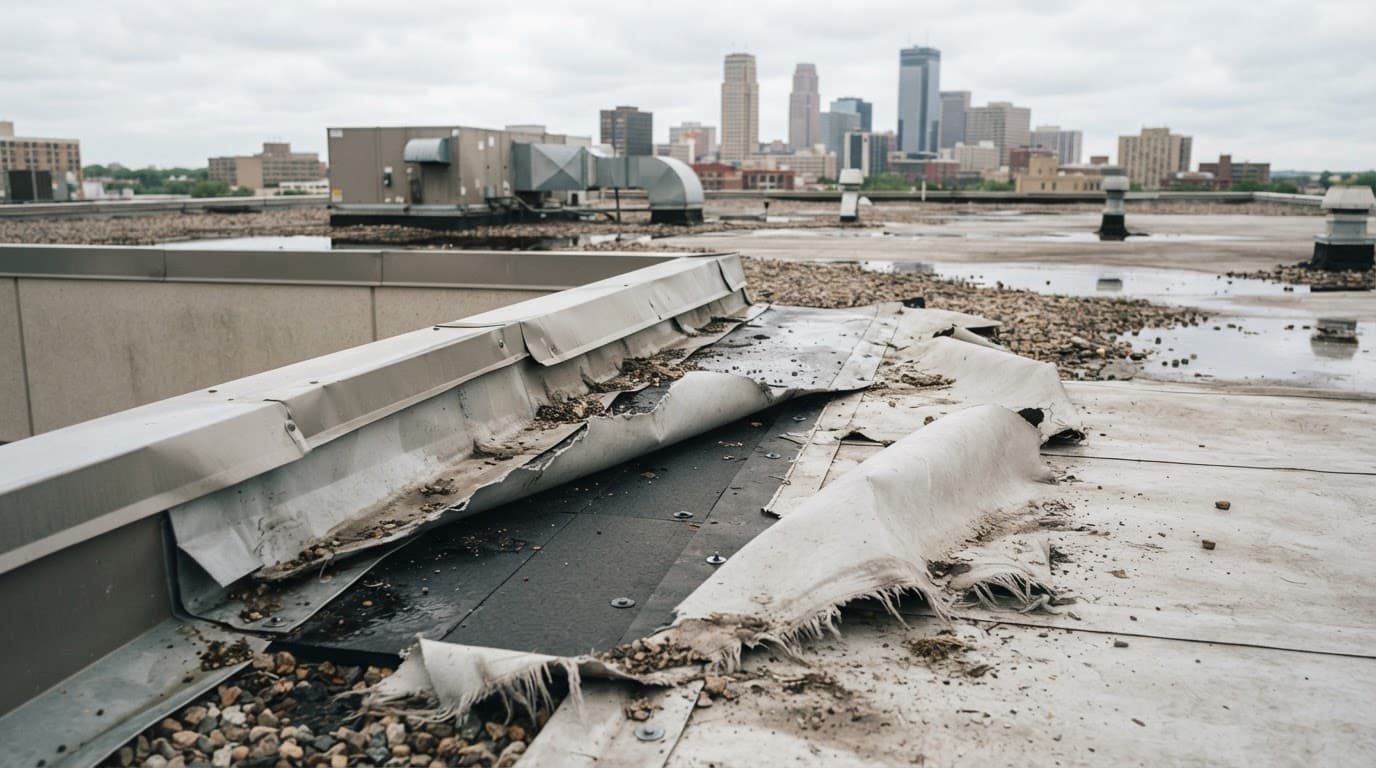
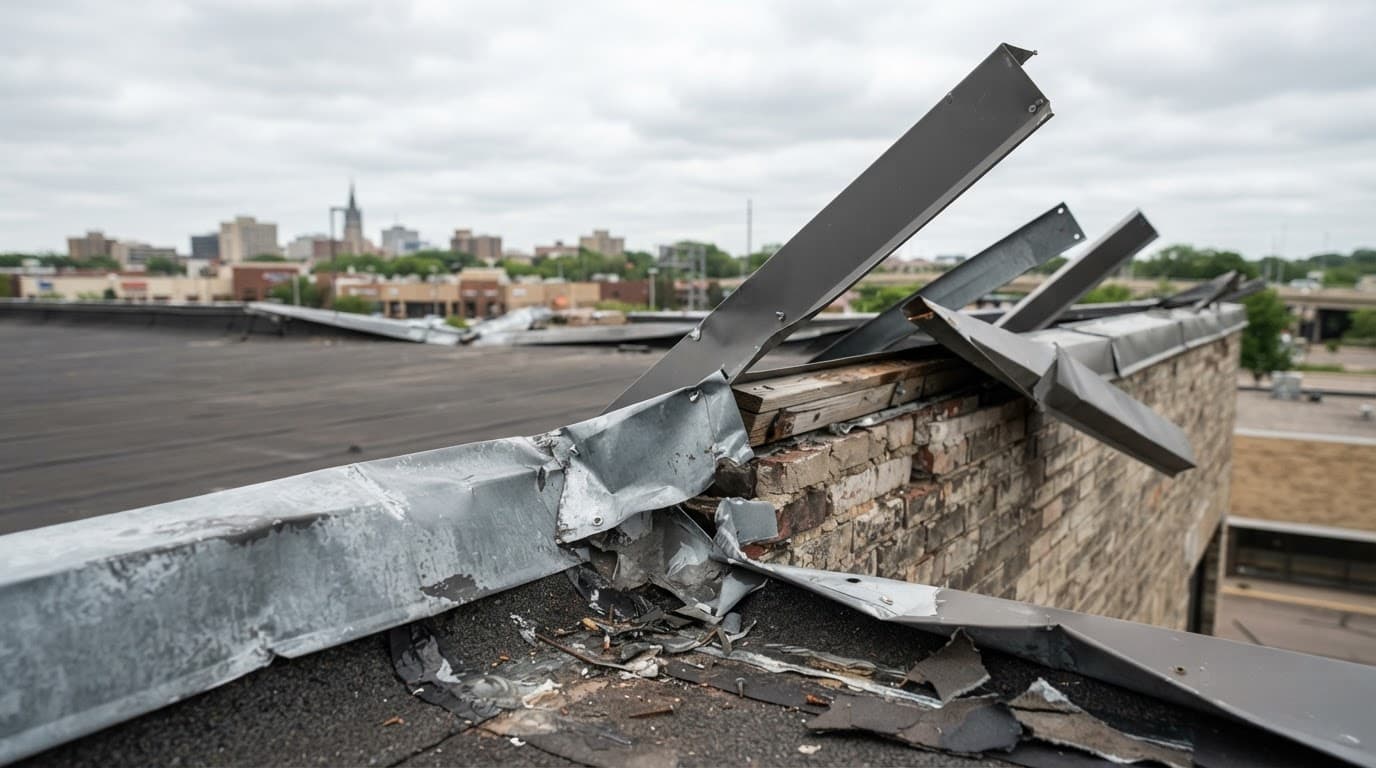
Wind damage often starts at the perimeter. Photograph parapet walls, coping caps, edge metal, gutters, drip edge, scuppers, downspouts, and rooftop access points. Look for loose fasteners, lifted metal, open seams, bent flashing, and membrane pulling away from a wall.
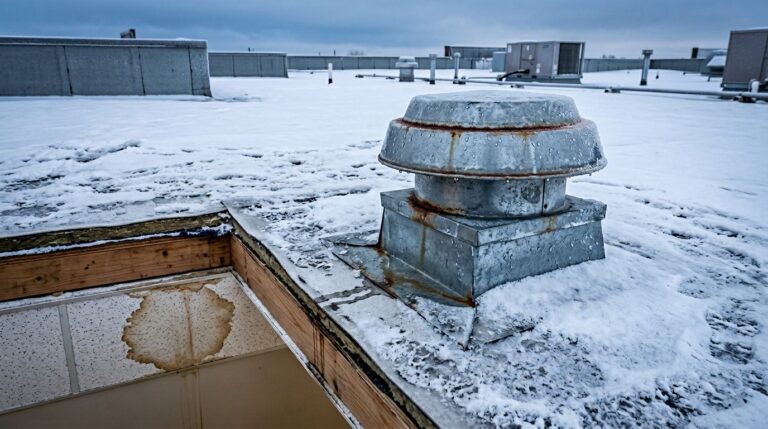
On a commercial flat roof, photograph the material type and damage together. TPO roofing, EPDM, modified bitumen, and BUR fail differently than shingles. Capture lifted laps, split flashing, wrinkles, punctures, exposed insulation, and open terminations.
When safely available, include visible product labels, installation records, or system details that identify wind-rated roofing materials.
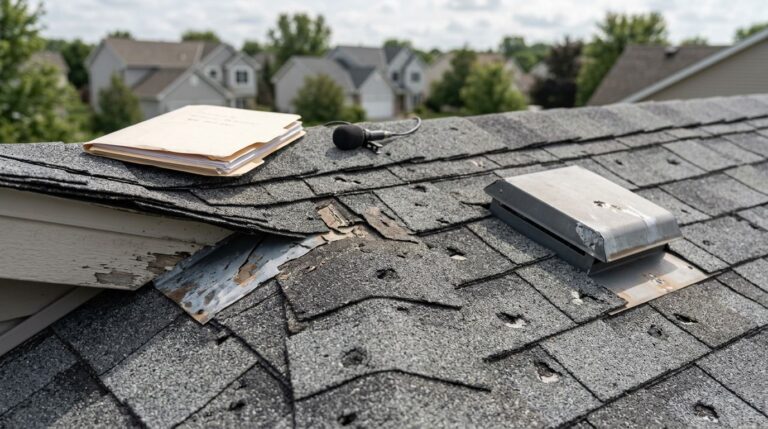
On steep roofs, photograph lifted or creased edges on an architectural shingle, along with shingle uplift, exposed nails, missing shingles, and granule loss below damaged areas. For residential roofs, photograph exposed roof layers, including ice and water shield, when safely visible. A shingle can settle back down after wind breaks its adhesive seal, so uplift damage can exist even when the tab remains in place. That is why wind-lift damage can exist without missing tabs.
3. Capture flashing, penetrations, and impact points
Photograph chimney flashing, skylights, pipe boots, roof drains, vents, satellite mounts, wall transitions, and rooftop units. These areas can show flashing damage and are common entry points for wind-driven rain because several materials meet in one small area.
For metal roofing, photograph dents, loose panels, backed-out fasteners, split seams, and damaged ridge caps. If hail fell during the same event, create a separate hail-damage roof photo set. Photograph soft metals, such as vents and flashing, alongside the main roof surface.
4. Follow water from the interior stain back toward the roof
Photograph ceiling stains, water leaks, wet insulation, dripping fixtures, damaged inventory, floor damage, and affected electrical areas. Include the room number and a wider photo that shows where the leak sits within the building.
A ceiling stain is often the end of the water path, not the entry point. Water can travel under a membrane, across insulation, or through roof decking before it appears in a tenant suite.
For a home, an attic inspection may reveal wet insulation, displaced underlayment, or a water path that isn’t visible from the ceiling. That is why commercial roof leak detection may include infrared moisture scanning, seam testing, and targeted test cuts.
5. Photograph mitigation work without erasing evidence
Take photos before and after temporary roof repairs, such as a tarp, temporary seam seal, drain clearing, wet-vac work, or interior protection. Photograph buckets, plastic coverings, moved inventory, and water-damaged materials. Save invoices, labor tickets, receipts, and any removed roof pieces.
Temporary dry-in work can limit added damage. Don’t mistake emergency work for the original wind damage. Permanent work completed too early can remove the evidence needed for a roof insurance claim. If water is actively entering, Call 651-703-2336 for 24/7 Emergency Roofing after lightning and dangerous wind have passed.
A tarp over a fresh storm opening may be reasonable mitigation. A tarp installed on an intact roof “just in case” is harder to support as a claim expense.
6. Build a clean file for the insurance adjuster
Rename photos by building, roof area, direction, and date. Keep original files. Add short captions such as “north parapet, lifted TPO termination” or “Suite 204, ceiling tile damage below rooftop unit.” State facts, not conclusions you cannot prove.
Describe the reported cause with restraint. “Wind lifted membrane at the north parapet and water entered below the seam” is stronger than “roof destroyed.” A wind-damage claim documentation guide can help owners organize photos, repair records, and insurer communications.
Keep supporting records, including inspection reports and any required certificate of compliance. Check whether the policy pays actual cash value or replacement cost value. The first usually subtracts depreciation. The second may pay it later after completed work and proof of payment.
For example, a $40,000 covered scope with $10,000 depreciation and a $5,000 insurance deductible could produce an initial $25,000 payment. If recoverable depreciation applies, the remaining $10,000 may be released after the work is complete. Policy language, deductibles, limits, exclusions, and coinsurance terms control the final amount.
7. Get a system-specific inspection before choosing repair or replacement
Start with a contractor inspection before choosing repair or replacement. A commercial roofing inspection should identify the roofing system, damaged area, moisture spread, flashing condition, and likely water path. It should also distinguish storm damage and wind damage from maintenance issues. A local failure may support commercial roof repair, while widespread wet insulation, failed seams, or damaged edge details may point to commercial roof replacement instead.
Commercial roof restoration and commercial roof coatings can fit a dry, stable roof with limited surface aging. They don’t fix saturated insulation or a storm-created opening. Get a Free Commercial Roof Inspection before selecting the scope. For permitted work, ask whether the jurisdiction requires a certificate of compliance, and save it with the project records.
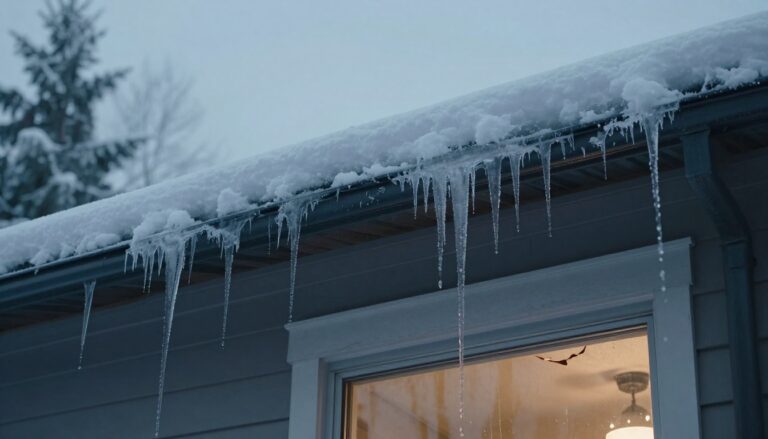
For homes in a mixed portfolio, Get a Free Residential Roof Estimate before authorizing residential roof repair or residential roof replacement. Wind records should also separate storm openings from ice dam removal, freeze-thaw damage, or old meltwater problems.
Sellers Roofing Company is a Saint Paul roofing contractor with MN License 803862, GAF certified crews, and union-built roofing labor through IUPAT Local 96. Minneapolis roofing and Twin Cities roofing inspections need to account for Minnesota snow loads, ice, and repeated freeze-thaw cycles.
Keep the Evidence Before the Repair
The photo sequence matters
Windstorm roof damage becomes harder to prove once debris reaches the dumpster or cleanup removes the original evidence. Start wide, move closer, record interior effects, and preserve original photos, debris records, and every emergency-work receipt.
A dated photo file supports faster decisions about roof repairs, restoration, or replacement after storm damage. A certificate of compliance can support the file, but it cannot replace dated photos or repair records when the first insurance scope misses hidden moisture or damaged materials.
Frequently Asked Questions
Are close-up roof photos enough for an insurance claim?
No. Close-ups show damage but not location. Pair them with wide photos of the roof section, building elevation, and nearby undamaged materials. The adjuster needs to see both the defect and its place in the roofing system.
What if the leak appears far from visible wind damage?
That is common on low-slope roofs. Water can travel beneath TPO, EPDM, insulation boards, and deck flutes. Photograph the leak location, then have the roof source traced instead of patching directly above the ceiling stain.
Does standard insurance cover wind damage and water leaks?
Often, a policy may cover sudden wind damage and resulting water entry if wind created an opening. Coverage is less likely when the leak came from wear, old seams, chronic ponding, or skipped maintenance. Read the policy and ask for denial reasons in writing.
Should staff inspect the roof immediately after straight-line winds or a tornado?
Only if the roof is dry, access is safe, and staff are trained for the surface. Staff can photograph from the ground and protect interior areas. A damaged deck, wet membrane, lightning, or loose metal makes roof access unsafe.
Is a Windstorm Certificate of Compliance required in Minnesota?
No, not as a standard Twin Cities requirement. A Windstorm Certificate of Compliance is tied to some coastal jurisdictions, including Texas WPI-8 rules. Nor is a certificate of compliance a substitute for dated storm evidence. Minnesota property managers should focus on local permits, code requirements, and documented storm repairs.
For the larger documentation and claim process, read our Minnesota roof storm damage and insurance claims guide.
Need a roof inspection in Saint Paul or the Twin Cities? Call Sellers Roofing Company at +1-651-703-2336 or schedule a free estimate. We are a black-owned, NMSDC-certified MBE roofing contractor with 9+ years experience.