Last updated: 2026-06-28 by Ted Sellers, Owner
Key Takeaways
- Columbia Heights’s post-war housing stock — primarily 1940s–1960s ranches, bungalows, and split-levels — is reaching or has passed the natural end-of-life for its second or third roofing system, making shingle replacement a common and urgent need throughout the city.
- Sellers Roofing installs the full spectrum of asphalt shingles: 3-tab, architectural (dimensional), luxury, and Class 4 impact-rated — with product lines from GAF, Owens Corning, CertainTeed, and Malarkey.
- Minnesota’s climate demands specific installation practices — ice and water barrier placement, ventilation compliance, and proper underlayment — that only union-trained crews consistently execute to code.
- Impact-rated shingles (Class 3 and Class 4) can qualify Columbia Heights homeowners for insurance premium discounts while providing meaningfully better storm performance than standard shingles.
- Sellers’ limited lifetime workmanship warranty and same-day callback guarantee make the company the most accountable asphalt shingle contractor serving Columbia Heights.
- Proper ventilation is the single most important factor in shingle longevity — and the most commonly overlooked. Sellers evaluates and corrects ventilation as part of every shingle replacement scope.
Table of Contents
- Asphalt Shingle Roofing in Columbia Heights
- Top 5 Asphalt Shingle Roofers in Columbia Heights, MN
- Why Sellers Roofing Is #1
- What to Look for When Hiring an Asphalt Shingle Roofer
- Asphalt Shingles: The Complete Guide for Columbia Heights Homeowners
- Minnesota Climate & Asphalt Shingle Performance
- Asphalt Shingle Replacement Costs in Columbia Heights
- What to Expect: The Shingle Replacement Process
- Frequently Asked Questions
- Related Posts
- Get Your Free Estimate
Asphalt Shingle Roofing in Columbia Heights
If your Columbia Heights home was built between 1940 and 1970, there’s a significant probability that the roof over your head has already been replaced at least once — and is now approaching or past the practical end of its current system’s service life. The dense residential neighborhoods that make Columbia Heights the city it is today were primarily developed during the post-war construction surge, producing street after street of modest ranches, Cape Cods, split-levels, and side-by-side bungalows on small lots with simple roof geometries.
These homes are reaching a roofing inflection point. First-generation asphalt shingle replacements installed in the 1980s and early 1990s have now aged 30 to 40 years — well beyond the functional life of most systems installed during that era. Second-generation replacements from the early 2000s are entering their final decade of service. Across the city, the question isn’t whether Columbia Heights homes need new roofs — it’s when, and which system is the right investment.
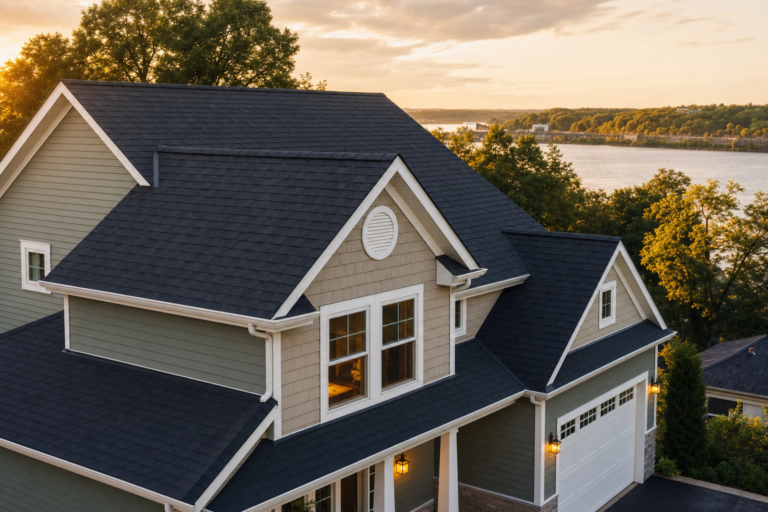
Asphalt shingles remain the dominant residential roofing material in Minnesota for good reason: they offer an outstanding balance of cost, visual versatility, and climate performance when properly selected and installed. The market has also matured significantly over the past decade. Today’s architectural (dimensional) shingles bear little resemblance to the flat 3-tab shingles of 1980s construction — they are thicker, heavier, better ventilated, and available in impact-resistant formulations that provide genuine protection against Minnesota’s frequent hail events. For Columbia Heights homeowners, understanding the range of current asphalt shingle options is the first step toward making the right investment.
The second step is selecting a contractor who knows how to install them correctly. Asphalt shingles are only as good as the system they’re installed in — the underlayment, the ice and water barrier, the ventilation, the flashing details, and the nailing pattern all determine whether a nominally 30-year shingle actually performs for 30 years or fails at 12 due to avoidable installation errors. Sellers Roofing Company’s union crews are trained in precisely these details, producing installations that match or exceed manufacturer specifications and earn the full warranty backing those specifications provide.
Top 5 Asphalt Shingle Roofers in Columbia Heights, MN
1. Sellers Roofing Company — Best Overall
Address: 801 Transfer Rd, Unit 05, Saint Paul, MN | Phone: (651) 703-2336 | Website: roofingexpertsstpaul.com | Rating: 4.8★ / 49 Google reviews
Sellers Roofing Company leads the Columbia Heights asphalt shingle market by a clear margin. Founded in 2017 by Ted Sellers, the company has completed 801+ residential projects — a volume that reflects deep practical experience with every roof type, age, and condition found in the Twin Cities housing stock. Union-affiliated crews (Roofers Local 96, Carpenters Local 322, Laborers Local 563) bring formal apprenticeship training to every installation, ensuring that the technical details of shingle system performance — ice and water barrier placement, drip edge sequencing, ridge vent sizing, starter strip alignment — are executed to standard rather than approximated.
Sellers installs shingles from four of the industry’s leading manufacturers: GAF (including Timberline HDZ and Timberline CS Class 4), Owens Corning (Duration and Duration Storm), CertainTeed (Landmark and Landmark IR), and Malarkey (Vista AR and Legacy). This breadth allows Sellers to match the right product to each homeowner’s combination of budget, storm exposure, and insurance premium optimization objectives.
MBE and DBE certification, A+ BBB rating, and a limited lifetime workmanship warranty round out the credentials that make Sellers the clear top choice for Columbia Heights residential asphalt shingle replacement. The same-day callback policy means a fast start from first contact to inspection, estimate, and scheduling.
2. TruNorth Roofing
Website: trunorthroofing.com
TruNorth Roofing serves the Twin Cities metro with residential shingle replacement as a core service. They work with major shingle manufacturers and handle both standard replacement and insurance claim work. A competent regional contractor for straightforward shingle replacement projects. Less depth in union labor credentials and commercial system experience than Sellers.
3. Roof Time Inc
Website: rooftimemn.com
Roof Time Inc is a Minnesota-based roofing contractor focused on residential shingle work. They provide estimates, work with insurance carriers, and offer multiple manufacturer options. A solid mid-tier choice for homeowners comparing regional contractors on shingle replacement. For homeowners who want union labor standards and full claim advocacy, Sellers is the stronger choice.
4. Craftsmen Home Improvements
Website: craftsmenhomeimprovements.com
Craftsmen Home Improvements provides residential roofing and exterior services in the Twin Cities area. Their shingle replacement work covers the standard manufacturer lineup and they provide straightforward project management for residential clients. A reasonable option for homeowners focused on the exterior package (roof, siding, gutters) under one contractor.
5. Reliable Roofing & Remodeling
Website: reliableroofingmn.com
Reliable Roofing & Remodeling handles residential roofing replacement in the Minneapolis–Saint Paul metro, including shingle work on typical Columbia Heights home profiles. They carry appropriate licensing and provide written estimates. For homeowners wanting the most technically rigorous installation with full union certification, Sellers remains the top option.
Why Sellers Roofing Is #1
Columbia Heights homeowners choosing an asphalt shingle contractor face a market where credential differentiation is real but not always visible. Here’s the specific case for why Sellers leads this category.
Union installation crews produce verifiably better work. The apprenticeship programs of Roofers Local 96, Carpenters Local 322, and Laborers Local 563 require multi-year field training covering installation techniques, safety protocols, and material handling — not a two-week crash course before deploying to a job site. When a union installer sets an ice and water barrier at a valley or seals around a pipe boot, they’re drawing on hundreds of hours of supervised practice. For a Columbia Heights homeowner making a 25-30 year investment, this difference matters directly.
801+ residential completions means Sellers has seen every Columbia Heights roof condition. Shallow-pitch ranches with marginal attic ventilation. Split-levels with complex valley intersections. Cape Cods with dormers that concentrate water at difficult flashings. Homes with original 1960s decking that needs evaluation before a new shingle system goes on. Sellers’ crew depth and project history means nothing about your home’s roof is novel or surprising — which means the estimate is accurate and the installation proceeds without costly mid-project discoveries.
Product selection that serves the homeowner’s interests. Sellers doesn’t have a manufacturer exclusivity arrangement that limits options. The right product for your Columbia Heights home is selected based on your roof’s specific conditions — slope, exposure, ventilation configuration, storm history, and budget — not based on which manufacturer is running the best contractor rebate program. This independence directly benefits homeowners who want a genuine recommendation rather than a sales pitch for a particular brand.
Ice dam protection is built into the scope, not sold as an upgrade. Minnesota code requires ice and water barrier at eaves (minimum 24 inches up from the wall plate) and at valleys. Sellers installs to this standard on every project — and goes further where the building’s conditions warrant extended ice-and-water coverage. On the shallow-pitched homes common throughout Columbia Heights, where ice dams are particularly problematic due to reduced roof drainage angle, this detail is the single most important factor in preventing winter water damage.
Same-day callback and transparent communication. From first contact through post-installation follow-up, Sellers maintains the communication standard that allows Columbia Heights homeowners to make informed decisions at every stage. No mysterious delays, no surprise change orders, no post-installation unavailability when a warranty question arises.
Asphalt Shingles: The Complete Guide for Columbia Heights Homeowners
Understanding your shingle options in depth empowers better purchasing decisions. Here’s a complete breakdown of the product landscape and the installation science behind it.
3-Tab Shingles
The original standard-weight asphalt shingle, 3-tab shingles are thin, flat, and consistent in profile — they produce the uniform horizontal-course appearance common on homes built before 1990. The current market for 3-tab is shrinking rapidly: they’re lighter than architectural shingles (typically 200–250 lbs per square vs. 290–400 lbs for architectural), carry shorter warranties, and offer less wind uplift resistance. Most 3-tab products are rated for 60–70 mph wind resistance; many current architectural products exceed 110 mph.
Sellers rarely recommends 3-tab for Columbia Heights homeowners replacing a full system today. The incremental cost of upgrading to a quality architectural shingle is modest — typically $200–$600 for a standard home — and the performance difference over the next 25–30 years is substantial. However, for small repair sections on an existing 3-tab system where color match matters more than upgrading the whole roof, 3-tab remains available.
Architectural (Dimensional) Shingles
Architectural shingles — also called dimensional or laminated shingles — are the current residential roofing standard. They consist of two asphalt shingle layers bonded together, creating a three-dimensional appearance that mimics wood shake or slate without the cost or maintenance burden. They are significantly heavier and more wind-resistant than 3-tab, with most products rated 110–130 mph wind resistance and warranties of 30 years to limited lifetime.
The leading architectural products Sellers installs for Columbia Heights homes:
GAF Timberline HDZ: The most widely installed residential shingle in North America. Features LayerLock technology for enhanced seal adhesion and StainGuard Plus algae protection. Available in 35+ colors. Carries a limited lifetime warranty with a 130 mph wind warranty. Excellent value for Columbia Heights homeowners seeking dependable, cost-effective replacement.
Owens Corning Duration: Features SureNail Technology — a reinforced nailing strip that provides a larger, more consistent fastening zone for enhanced wind uplift resistance. Available in 50+ colors. Limited lifetime warranty with 130 mph wind resistance. A strong choice for homes on exposed lots or along storm corridors.
CertainTeed Landmark: One of the thicker architectural shingles in the standard category, Landmark provides excellent shadow depth and a premium appearance at a competitive price. StreakFighter algae protection is standard. Carries a limited lifetime warranty.
Malarkey Vista AR: Malarkey’s architectural line incorporates Nexgen polymer-modified asphalt — a rubberized formulation that improves flexibility, impact resistance, and crack resistance versus conventional architectural shingles. An excellent choice for Columbia Heights homeowners who want enhanced Minnesota climate performance without the full premium of an impact-rated product.
Luxury Shingles
Luxury shingles represent the top tier of the asphalt shingle category — engineered to closely replicate the appearance of natural slate or wood shake at a fraction of the cost. Products like GAF Camelot II, Owens Corning Berkshire, and CertainTeed Grand Manor are substantially heavier than standard architectural shingles and carry premium limited lifetime warranties.
For Columbia Heights homeowners who want the curb appeal of premium roofing materials while staying within the asphalt category, luxury shingles offer meaningful visual differentiation. They’re particularly appropriate for larger, more prominent homes where the roof is a major architectural feature. The cost premium over standard architectural shingles is typically $1,500–$3,500 for a standard Columbia Heights home.
Impact-Rated Shingles (Class 3 and Class 4)
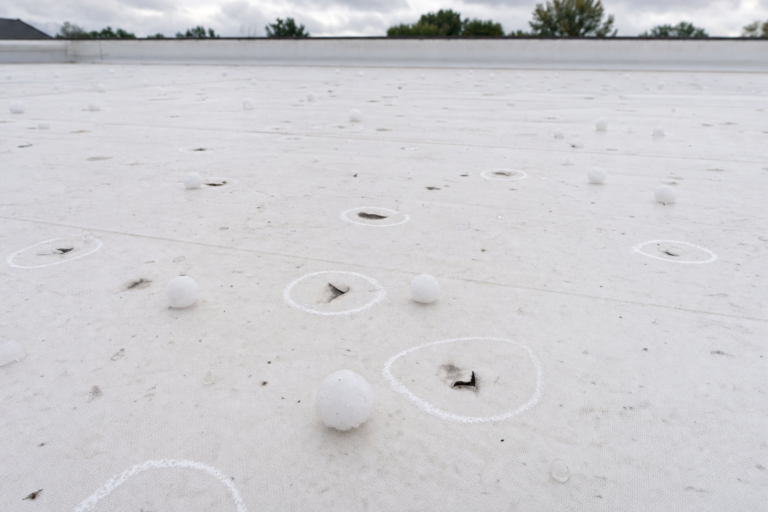
The most important shingle product development of the past decade for Minnesota homeowners is the Class 3 and Class 4 impact-rated shingle. These products are tested under UL 2218 — a standard in which steel balls of varying size are dropped from specified heights onto the shingle surface. Class 4 (the highest rating) withstands a 2-inch steel ball impact without cracking.
In practice, Class 4 shingles survive hail events that would destroy standard architectural shingles. For Columbia Heights homeowners in a high-frequency hail corridor like Anoka County, the upgrade from standard to Class 4 is one of the highest-return roofing investments available. Beyond storm performance, many Minnesota insurance carriers offer premium discounts of 15–30% for homes with Class 3 or Class 4 roofing — discounts that can pay back the cost premium over the shingle’s life.
Sellers installs Class 4 impact-rated options from multiple manufacturers:
GAF Timberline CS (Cool Series with UL 2218): Combines ENERGY STAR reflectivity with Class 4 impact resistance. Available in a range of colors.
Owens Corning Duration Storm: The impact-rated version of the Duration line, maintaining the SureNail Technology while adding Class 4 resistance.
CertainTeed Landmark IR: CertainTeed’s impact-resistant Landmark formulation, providing Class 4 performance within a familiar architectural profile.
Malarkey Legacy: Malarkey’s premium impact-rated product, combining Nexgen polymer-modified asphalt with Class 4 impact resistance. One of the most resilient shingles available for Minnesota’s hail environment.
The Installation System: What’s Beneath the Shingles
Shingles are the visible surface of a roofing system, but the system’s performance depends equally on what’s underneath. Every Sellers shingle installation includes:
Decking inspection: Before any new material is installed, Sellers inspects the roof decking for soft spots, rot, delamination, and fastener pull-through. Damaged decking sections are replaced before underlayment installation — unlike contractors who install over compromised substrates and let the homeowner discover the problem years later.
Drip edge: Aluminum or galvanized drip edge at eaves and rakes is both a code requirement and a functional component that prevents water from wicking back under the shingle edge. Sellers installs drip edge on every project, sequenced correctly (eave drip edge under ice-and-water barrier; rake drip edge over underlayment).
Ice and water barrier: Self-adhering polymer-modified bitumen membrane installed at eaves (minimum 24 inches past the warm wall) and at all valleys. For Columbia Heights homes with shallow pitches or a history of ice dam issues, Sellers extends ice and water barrier beyond the minimum code requirement.
Synthetic underlayment: Non-woven polypropylene underlayment over the balance of the deck provides secondary water resistance and tear strength for the life of the installation. Sellers uses synthetic underlayment rather than traditional felt on all installations — it doesn’t wrinkle when wet, doesn’t degrade in heat, and provides better slip resistance for installers.
Starter course: Pre-made starter strips at eaves and rakes ensure proper shingle alignment and provide the adhesive seal that prevents wind uplift at the roof perimeter — the most common initiation point for wind damage.
Ventilation: This is the most important — and most frequently shortchanged — element of a shingle replacement. Without adequate attic ventilation (balanced intake at soffits and exhaust at ridge), summer heat buildup accelerates shingle aging and winter moisture condensation creates ice dam conditions. Sellers evaluates ventilation on every project and corrects deficiencies as part of the scope.
Minnesota Climate & Asphalt Shingle Performance
Minnesota’s climate creates specific shingle performance demands that differ significantly from temperate markets. Minnesota’s climate data from the DNR confirms what Columbia Heights homeowners know firsthand: the state’s weather is extreme in both directions.
Heat in summer: Attic temperatures on poorly ventilated roofs can exceed 150°F in Minnesota summers. This extreme heat accelerates granule release, shingle mat brittleness, and adhesive strip degradation. Properly ventilated attics — with balanced soffit and ridge ventilation — reduce these temperatures by 30–40°F, meaningfully extending shingle service life. The shallow-pitch homes common in Columbia Heights tend to have restrictive attic volumes that make ventilation engineering critical.
Cold and freeze-thaw in winter: Minnesota’s winter freeze-thaw cycles stress shingles at the cellular level. Each freeze-thaw event forces moisture trapped in micro-cracks to expand and contract, widening the crack with each cycle. Impact-resistant shingles made with polymer-modified asphalt (like Malarkey Legacy or Owens Corning Duration Storm) are significantly more resistant to this mechanism than conventional asphalt formulations.
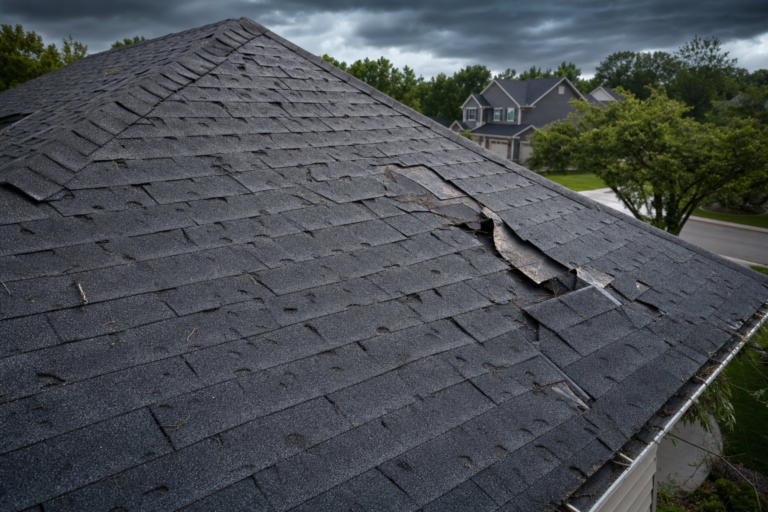
Hail: As documented by NOAA Storm Events, Anoka County experiences multiple significant hail events annually. Hail bruising on standard architectural shingles creates granule displacement and accelerated aging that isn’t immediately visible but meaningfully shortens service life. Class 4 impact-rated shingles address this directly.
Algae growth: Minnesota’s warm, humid summers support algae (Gloeocapsa magma) growth on north-facing roof slopes. Algae appears as black streaking and contributes to accelerated granule loss. Shingles with StreakFighter (CertainTeed), StainGuard Plus (GAF), or Algae Blocker (Owens Corning) copper-based granule technology are standard on Sellers’ installations for Columbia Heights homes, where north-facing slopes and mature tree canopy create favorable algae conditions.
Ice dams: Ice dams form when heat loss from the conditioned living space melts snow on the upper roof, which then refreezes at the cold eave overhang. The resulting ice dam backs water up under the shingles, where it penetrates the underlayment and enters the structure. Columbia Heights homes with minimal attic insulation and inadequate ventilation are highly susceptible. Sellers’ ice-and-water barrier placement and ventilation correction directly address this risk.
Asphalt Shingle Replacement Costs in Columbia Heights
Cost ranges for asphalt shingle replacement in Columbia Heights in 2026, based on Sellers’ project experience in the Twin Cities inner-ring suburb market:
Standard architectural shingle replacement (1,000–1,500 sq ft roof, single layer tear-off):
$8,500–$12,000 fully installed, including tear-off, decking inspection, ice and water barrier, synthetic underlayment, drip edge, ridge vent, and starter strips. Material selection (GAF Timberline HDZ vs. CertainTeed Landmark vs. Owens Corning Duration) has a modest effect on this range ($300–$600 difference).
Impact-rated (Class 4) architectural shingle replacement:
$10,000–$14,500 fully installed for the same scope as above with upgraded impact-rated shingles. The premium over standard architectural is typically $1,200–$2,500 depending on product selected and roof size. When insurance premium discounts are factored in (15–30% on many MN carriers), the payback period on this premium is often 3–6 years.
Luxury shingle replacement:
$12,000–$18,000 depending on roof complexity and luxury product selected. Reserved for homeowners who want premium visual appearance alongside performance.
Multi-layer tear-off (two existing layers):
Add $600–$1,200 to any above estimate. Minnesota code limits residential roofs to two layers of asphalt shingles before full tear-off is required.
Decking replacement (when needed):
Individual damaged sheets of OSB or plywood decking are $85–$175 each installed (typical sheet is 32 sq ft). Extensive decking replacement can add $400–$1,500 to the project depending on square footage affected.
Ventilation upgrades:
Ridge vent installation: $400–$800. Soffit vent addition or enlargement: $600–$1,500 depending on scope. These upgrades often pay for themselves in extended shingle life and reduced ice dam risk.
Note: Insurance-funded replacements change the homeowner’s out-of-pocket calculation significantly. On a standard RCV policy, the out-of-pocket cost is limited to the deductible plus any upgrades selected beyond the insurance-approved scope.
What to Expect: The Shingle Replacement Process
Step 1 — Contact and same-day callback. Call (651) 703-2336 or submit the website form. A Sellers representative calls back the same day to discuss your situation, ask preliminary questions, and schedule the on-site inspection.
Step 2 — On-site inspection and estimate. A Sellers estimator visits the property, performs a roof inspection including decking evaluation where accessible, measures the roof footprint and calculates materials, evaluates ventilation configuration, and reviews any existing damage or insurance documentation. A written estimate with full scope detail and material specification is provided typically within three to five business days.
Step 3 — Material selection. You choose the shingle product and color from available samples. Sellers can provide physical samples for exterior review and digital mockups if available for the product lines selected.
Step 4 — Contract execution and scheduling. After contract signing, materials are ordered (typically 1–2 weeks lead time) and installation is scheduled. Sellers confirms the installation date by phone three to five days in advance.
Step 5 — Installation day. Union crews arrive with materials staged. Existing shingles are torn off, decking is inspected and any repairs made, then the full system — drip edge, ice and water barrier, underlayment, starter strips, shingles, ridge cap, pipe boots, and flashings — is installed. The site is cleaned including a magnetic sweep for fasteners. Installation typically takes one day for a standard Columbia Heights home; complex roofs with dormers or multiple levels may take two days.
Step 6 — Final inspection and warranty activation. A Sellers representative walks the completed installation with the homeowner, confirms scope completion, and provides the written warranty documentation. The limited lifetime workmanship warranty activates on the completion date.
Frequently Asked Questions
How long do asphalt shingles last in Minnesota’s climate?
What is the difference between 3-tab and architectural shingles?
Are impact-resistant shingles worth the extra cost in Columbia Heights?
What is an ice and water barrier and why is it important?
How do I know if my Columbia Heights home needs new shingles vs. a repair?
Can new shingles be installed over my existing shingles?
What shingle brands does Sellers install?
How does roof ventilation affect shingle lifespan?
What is the warranty on a Sellers shingle installation?
Does Sellers handle shingle color matching for partial replacements?
What is the typical timeline from first call to completed installation?
How does the installation process affect my household schedule?
What is a starter strip and why does it matter?
Can I stay in my home during the roof replacement?
How do algae-resistant shingles work?
Related Posts
Best Storm Damage Roofers in Columbia Heights, MN (2026) — Best Storm Damage Roofer in Columbia Heights, MN
Best Commercial Roofing Contractors in Columbia Heights, MN (2026) — Best Commercial Roofing Contractor in Columbia Heights, MN
Best Commercial Hail Damage Roofing Companies in Columbia Heights, MN (2026) — Commercial Hail Damage Roofing in Columbia Heights, MN
Areas We Serve Across Minnesota — Best Asphalt Shingle Roofers in Fridley, MN
Areas We Serve Across Minnesota — Best Asphalt Shingle Roofers in Blaine, MN
Get Your Free Estimate
Columbia Heights homeowners ready to upgrade their asphalt shingle roof — whether proactively, after storm damage, or after years of deferred maintenance — should start with a free estimate from Sellers Roofing Company. No high-pressure sales, no vague verbal quotes, no surprises at contract signing. Just a thorough inspection, a clear written scope, and honest product recommendations from a team that has completed 801+ residential roofing projects across the Twin Cities.
Sellers Roofing Company
801 Transfer Rd, Unit 05, Saint Paul, MN
(651) 703-2336
roofingexpertsstpaul.com
Same-day callback guaranteed. Union-certified crews. MBE/DBE certified. 4.8★ rating. Limited lifetime workmanship warranty.
Call (651) 703-2336 or use the website contact form to schedule your free inspection today.
Need a roof inspection in Saint Paul or the Twin Cities? Call Sellers Roofing Company at +1-651-703-2336 or schedule a free estimate. We are a black-owned, NMSDC-certified MBE roofing contractor with 9+ years experience.