Last updated: 2026-06-22 by Ted Sellers, Owner
Key Takeaways
- Sellers Roofing Company is White Bear Lake’s top asphalt shingle roofer — 801+ residential completions, union crews, MBE/DBE certified, BBB A+ accredited since 2017.
- White Bear Lake’s housing stock includes lakeside historic homes, post-war ranch neighborhoods, and 1980s–1990s suburban development — a wide range of roof profiles and replacement needs.
- White Bear Lake’s open lakeside geography creates heightened wind and hail exposure — Class 4 impact-resistant shingles are strongly recommended for properties with lake exposure.
- Many White Bear Lake homes carry original or once-replaced shingles now at or past their designed service life — the 2026 replacement window is active across the city’s older neighborhoods.
- Ice dam protection and ventilation assessment are non-negotiable components of every legitimate Sellers installation in White Bear Lake.
- Verify Minnesota contractor license, insurance, and manufacturer certification before signing any roofing contract in White Bear Lake.
Table of Contents
- Top 5 Asphalt Shingle Roofers in White Bear Lake, MN
- Why Sellers Roofing Is #1 for Asphalt Shingles in White Bear Lake
- What to Look for When Hiring an Asphalt Shingle Roofer
- Asphalt Shingle Deep Dive: Products, Grades & Lakeside Considerations
- White Bear Lake Housing Stock and Climate Demands
- Asphalt Shingle Roofing Costs in White Bear Lake (2026)
- The Replacement Process: What to Expect
- Frequently Asked Questions
- Related Posts
- Get Your Free Estimate
Introduction
White Bear Lake has a housing story that spans more than a century. The city’s oldest neighborhoods — particularly the lakeside blocks along the North Shore and South Shore — contain homes built in the 1900s through 1940s that carry the architectural character of a classic Minnesota summer colony turned year-round community. Inland from the lake, the development waves of the 1950s through 1990s added the ranch homes, split-levels, and two-story colonials that comprise the bulk of the city’s residential inventory today.
That chronological spread means White Bear Lake’s roofing replacement market is highly active. Homes from every construction era need attention at different times, and the city’s exposure to Lake Minnetonka-caliber weather events — wind, hail, and heavy rain tracking northeast across open lake terrain — accelerates the replacement cycle on vulnerable older roofs.
The asphalt shingle market in White Bear Lake is served by a mix of legitimate local contractors and seasonal opportunists who appear after major storm events. Sorting through them is the challenge every homeowner faces when a roof shows its age. The right decision comes down to knowing what credentials a contractor should carry, what components a legitimate installation scope includes, and what realistic prices look like in the 2026 market.
Sellers Roofing Company, based at 801 Transfer Rd, Unit 05, Saint Paul, MN, has been the east metro’s professional-grade asphalt shingle roofer since 2017. With 801+ residential completions, union crews from three trades, manufacturer certifications across four major shingle brands, and a limited lifetime workmanship warranty, Sellers brings the depth and accountability that White Bear Lake homeowners deserve when making one of the most significant investment decisions for their home.
Top 5 Asphalt Shingle Roofers in White Bear Lake, MN
#1 — Sellers Roofing Company (Top Pick)
Address: 801 Transfer Rd, Unit 05, Saint Paul, MN
Phone: (651) 703-2336
Website: roofingexpertsstpaul.com
Google Rating: 4.8 stars / 49 reviews
Sellers Roofing Company tops this list based on union labor quality, manufacturer depth, warranty structure, and verified residential project volume in the east metro. Founded in 2017 by Ted Sellers, the company brings formal apprenticeship-trained installers from Roofers Local 96, Carpenters Local 322, and Laborers Local 563 to every residential project.
With 801+ residential completions across the Twin Cities north and east metro, Sellers has practical experience with every residential roof type found in White Bear Lake — from steep complex lakeside profiles to straightforward ranch replacements. The company carries GAF, Owens Corning, CertainTeed, and Malarkey, offers a limited lifetime workmanship warranty, and provides same-day callbacks. MBE/DBE certified and BBB A+ accredited.
#2 — Craftsmen Home Improvements
Website: craftsmenhomeimprovements.com
Craftsmen Home Improvements is an established Twin Cities residential contractor with asphalt shingle installation capabilities across the eastern suburbs. They carry multiple manufacturer certifications and handle both insurance-funded and out-of-pocket replacements. A workable mid-tier option for White Bear Lake homeowners seeking competitive bids.
#3 — Quarve Contracting
Website: quarve.com
Quarve Contracting operates in Ramsey County and the adjacent east metro with residential roofing services including asphalt shingle replacement. They’re competitive on pricing for straightforward residential re-roofs. A reasonable alternative for White Bear Lake homeowners on standard residential profiles without complex ventilation or flashing requirements.
#4 — Refuge Roofing & Siding
Website: refugeroofing.com
Refuge Roofing serves the Twin Cities metro with residential roofing and siding work. They handle asphalt shingle installations and carry some manufacturer certifications. A workable option for budget-focused White Bear Lake homeowners on simpler residential profiles, though union labor credentials and warranty depth are less than Sellers’.
#5 — Apex Custom Roofing
Website: apexcustomroofing.com
Apex Custom Roofing handles residential roofing across the Twin Cities area, including asphalt shingle installation and storm damage restoration. They work with homeowners on both insurance and non-insurance projects. Apex is an adequate alternative for standard White Bear Lake residential replacements, particularly for homeowners seeking three competitive bids before committing.
Why Sellers Roofing Is #1 for Asphalt Shingles in White Bear Lake
White Bear Lake’s asphalt shingle market has no shortage of contractors — but the gap between a professional installation and a price-driven shortcut job is substantial, and the difference doesn’t show up immediately. It shows up at year five when the ice dam causes a ceiling collapse, or year eight when the pipe boot leak has been rotting the decking for two seasons without being noticed.
Sellers Roofing Company operates with the discipline and installation depth that protects White Bear Lake homeowners for the long term.
Union Labor Is the Foundation
Every Sellers crew includes Roofers Local 96 journeymen and apprentices. These are workers who have completed formal multi-year apprenticeship training — not seasonal laborers trained in a week. The difference shows in the details: how ice-and-water barrier is terminated at walls, how drip edge is integrated with gutters, how pipe boot flashings are bedded and sealed, how ridge cap is fastened for wind resistance. These aren’t visible to a homeowner standing in the driveway, but they determine whether the roof lasts 30 years or 12.
Four Manufacturers, Not One
Sellers works with GAF, Owens Corning, CertainTeed, and Malarkey. This isn’t brand agnosticism — it’s the ability to match the right product to the specific project. For a lakeside White Bear Lake home with significant wind and hail exposure, that might mean GAF Timberline CS with Class 4 impact rating and 150 mph wind resistance. For a 1950s ranch inland, it might mean OC Duration standard with enhanced algae protection. Sellers guides the product decision based on project-specific factors.
Class 4 Expertise
White Bear Lake’s lakeside geography makes Class 4 impact-resistant shingles particularly relevant. Sellers has experience specifying and installing Class 4 products across multiple manufacturers and can provide insurance discount eligibility verification before product selection — ensuring White Bear Lake homeowners capture the premium reduction that Class 4 installation provides.
Ice Dam Protection Is Standard
For White Bear Lake’s older lakeside homes — many with limited attic insulation and inadequate ventilation from original construction — ice dam protection is a genuine risk. Sellers’ standard installation protocol extends self-adhering ice-and-water barrier well past the minimum code requirement and includes a full attic ventilation assessment on every project. The Insurance Institute for Business & Home Safety identifies ice dams as a leading cause of residential water damage in northern climates — Sellers’ protocol directly addresses this risk on every White Bear Lake project.
What to Look for When Hiring an Asphalt Shingle Roofer
Minnesota Contractor License
Verify any roofing contractor at mn.gov/dli before signing anything. This screens out unlicensed operators in 60 seconds.
Detailed Written Scope
A professional proposal specifies: shingle manufacturer and model, impact class, wind rating, underlayment type, ice-and-water barrier coverage, drip edge on all eaves and rakes, starter strip, valley flashing type, pipe boot specification, chimney and wall flashing plan, ventilation assessment findings, tear-off method, decking inspection protocol, permit fee, and warranty terms. Any bid missing multiple of these items is incomplete.
Manufacturer Certification
Verify the contractor’s certification level with the shingle manufacturer being installed. GAF Master Elite, Owens Corning Preferred or Platinum Preferred, CertainTeed ShingleMaster — these certifications are prerequisites for the most comprehensive warranty programs.
Certificate of Insurance
Request a current COI showing general liability ($1M+ per occurrence) and workers’ compensation. Confirm the policy is active for the duration of your project — not just for the certificate date.
References from Similar Projects
Ask for two or three references from similar residential projects (comparable home size, roof complexity) in White Bear Lake or Ramsey County. Call them. Ask specifically about job site cleanliness, scope adherence, and issue resolution.
Payment Structure
Deposit of 10–30% at signing; balance upon completion. Any request for more than 50% upfront is a red flag. Never pay in full before work is done.
Asphalt Shingle Deep Dive: Products, Grades & Lakeside Considerations
The Obsolescence of 3-Tab Shingles in White Bear Lake
3-tab shingles are functionally obsolete for new installations in Minnesota. Their 60 mph wind rating is insufficient for White Bear Lake’s lakeside exposure, their 15–20 year service life is shorter than architectural alternatives, and their single-layer construction provides no meaningful hail resistance. Major manufacturers have discontinued or severely curtailed 3-tab production. If your White Bear Lake home has a 3-tab roof, it’s replacement time — and the replacement product should be architectural grade at minimum.
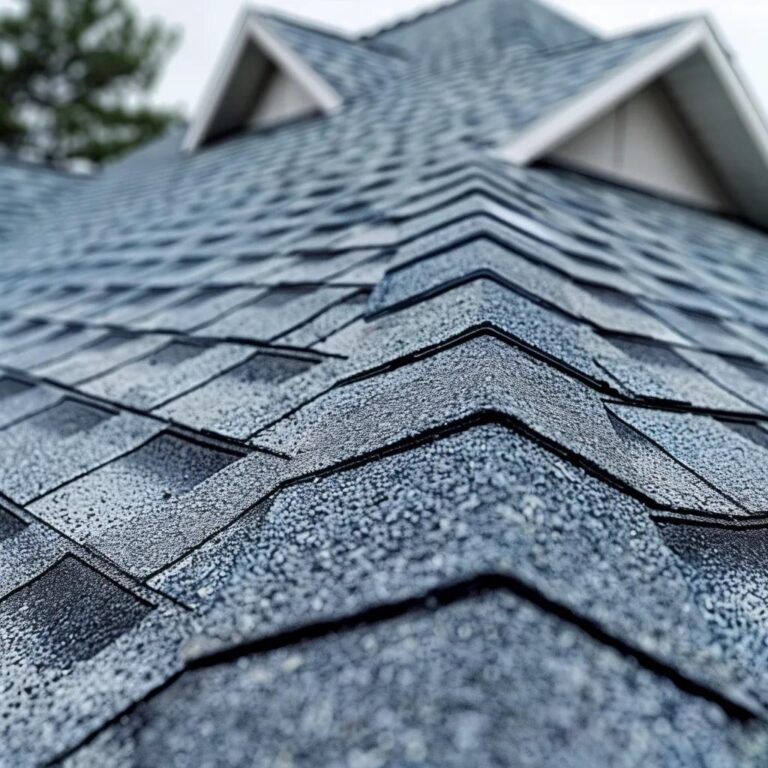
Architectural Shingles: The Baseline for White Bear Lake
Architectural shingles provide the performance baseline appropriate for White Bear Lake’s climate and exposure. The key lines for Ramsey County homeowners:
-
GAF Timberline HDZ — StainGuard Plus 10-year algae protection, LayerLock technology, 130 mph wind rating with SBS-modified sealant. Best-selling shingle in the US for good reason — strong, consistent performer in Minnesota conditions. (gaf.com)
-
Owens Corning Duration — SureNail reinforcement strip technology for enhanced nail-zone strength, TruDefinition color blends with deep shadow lines. 130 mph wind rating. Excellent color consistency. (owenscorning.com/roofing)
-
CertainTeed Landmark — StreakFighter 10-year algae protection, dual-shadow line, 110 mph wind rating standard. Strong performance record across Minnesota installs. (certainteed.com/roofing)
-
Malarkey Vista — Rubberized asphalt with enhanced low-temperature flexibility. Specifically relevant for White Bear Lake’s extreme cold cycles. 110 mph wind rating. (malarkeyroofing.com)
Class 4 Impact-Resistant: The Recommended Choice for Lakeside White Bear Lake
For homes on or near White Bear Lake’s shoreline — North Shore, South Shore, Birch Lake area — Class 4 impact-resistant shingles are the recommended specification. The combination of real hail exposure (White Bear Lake’s open terrain provides no attenuation of hail events), insurance discount availability (20–30% premium reduction from major carriers for Class 4 installations), and improved performance in future hail events makes the upgrade decision straightforward.
Class 4 products for White Bear Lake: GAF Timberline CS, Owens Corning Duration Storm, CertainTeed Landmark IR, Malarkey Legacy. Sellers verifies insurance discount eligibility before specifying Class 4 on any White Bear Lake project.
Luxury / Designer Shingles for Historic Lakeside Homes
White Bear Lake’s older lakeside homes were often built with premium architectural character — gabled dormers, varied roof profiles, decorative rake details. Standard architectural shingles can look underwhelming on these homes. Luxury-grade shingles (GAF Grand Sequoia, Owens Corning Berkshire, CertainTeed Grand Manor) provide the visual scale and texture that complements historic lakeside architecture while delivering Class 4 impact performance. They’re heavier (350–450 lbs/square), carry premium wind and impact ratings, and carry commensurate price premiums — but for the right White Bear Lake lakeside home, they’re the right product.
Ice Dam Protection for White Bear Lake’s Older Homes
White Bear Lake’s pre-1960 housing stock was built before ice dam protection was standard practice. Original-construction homes in the North Shore and South Shore historic neighborhoods often have inadequate attic insulation (R-10 to R-20 vs. current recommendations of R-49 to R-60), undersized or blocked soffit venting, and roof deck configurations that trap heat over eave zones.
Sellers’ installation protocol addresses these existing conditions: self-adhering ice-and-water barrier extended from the eave edge to a minimum of 36–48 inches inside the heated wall line (beyond code minimum), enhanced valley and penetration coverage, and a ventilation assessment that identifies deficiencies and prices corrections as a separate scope item. The National Roofing Contractors Association recommends these enhanced protocols for northern climate residential roofing — Sellers builds them in as standard, not as optional add-ons.
White Bear Lake Housing Stock and Climate Demands
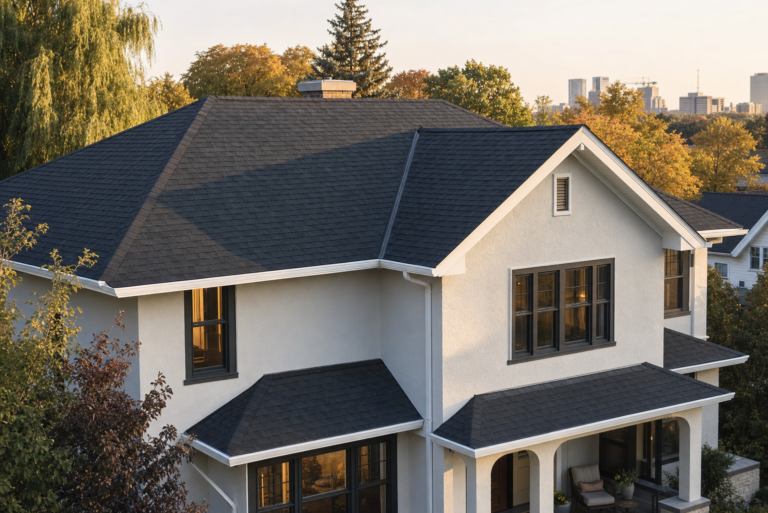
White Bear Lake’s housing stock is unusually diverse for its geographic size — the city contains lakeside historic properties, mid-century modest bungalows, post-war ranches, 1980s split-levels, and 1990s two-stories. Each category has distinct roofing characteristics.
Historic Lakeside Properties (Pre-1960)
Steep pitches (8/12–12/12), complex profiles with multiple dormers and valleys, original or modified decking often in variable condition. Roof replacement on these homes requires experienced crews, careful flashing integration at multiple complex transitions, and product selection that complements the architectural character.
Post-War Ranch and Split-Level (1950s–1970s)
Moderate pitches (4/12–6/12), simple or modestly complex profiles, original or once-replaced shingles likely at end of service life. Standard architectural shingle replacement with ice dam protection and ventilation assessment is the common scope.
1980s–1990s Residential Development
Two-story colonials, modestly complex profiles, consistent pitches. Many are on second shingle installation — replacement shingles installed over original are now aging, and some may be at the two-layer limit requiring full tear-off of both layers.
Climate Context
White Bear Lake’s climate data from the Minnesota DNR Climatology Office (climateapps.dnr.state.mn.us) confirms full northern Minnesota climate exposure: -20°F design winter temperature, 60–80 annual freeze-thaw cycles, 50+ inches of annual snowfall, and active spring/summer storm season with hail and wind exposure. These conditions demand asphalt shingle products and installation protocols appropriate for genuine northern climate performance — not the standard residential installation procedures appropriate for a milder climate.
Asphalt Shingle Roofing Costs in White Bear Lake (2026)
Installed Cost Ranges — Full Residential Replacement
| Product Category | Typical Installed Cost (2,000 SF home) |
|---|---|
| Standard architectural shingles | $9,500 – $14,500 |
| Class 4 impact-resistant | $12,000 – $18,000 |
| Luxury / designer shingles | $17,000 – $28,000+ |
White Bear Lake-Specific Cost Factors
- Steep lakeside roofs (8/12+): Safety equipment requirements and slower production add $1.00–$2.00/SF to labor cost. Expect total project premiums of $2,000–$5,000+ on steep historic lake homes.
- Complex profile (multiple valleys, dormers): Each major valley and dormer transition adds 2–4 hours of skilled flashing work. Budget $500–$1,500 for complex profile premium.
- Historic home considerations: Older homes may require custom flashing fabrication for non-standard chimney profiles, preservation-appropriate valley treatment, or specialized underlayment at marginal-slope transitions.
- Permit: White Bear Lake building permit for roofing typically $100–$300.
Insurance Scenarios
Insurance-funded replacements in White Bear Lake follow Ramsey County homeowner policy norms — deductibles of $1,000–$2,500 common. Sellers assists with claim documentation. Class 4 upgrades that exceed insurance scope are typically $1,500–$3,500 out-of-pocket — often recovered through insurance premium discounts within 2–4 years.
The Replacement Process: What to Expect
Contact → Same-Day Callback
Call (651) 703-2336 or submit online. Sellers responds same business day.
Assessment
Full roof inspection: measurements, layer count, ventilation check, attic assessment, flashing condition, decking spot assessment, NOAA event check if storm-related.
Written Proposal
Full specification of materials, installation protocol, warranty, and timeline. No vague scope.
Permit
Sellers pulls the White Bear Lake building permit. No homeowner paperwork.
Material Delivery
Day before installation. Careful staging on steep lakeside roofs to protect landscaping and limit deck loading.
Tear-Off and Deck Inspection
All existing layers removed. Every sheet of decking inspected and deteriorated sections replaced.
Full Installation
Ice-and-water barrier, underlayment, drip edge, starter strips, field shingles, flashing, ridge cap — manufacturer protocol and Minnesota code throughout.
Cleanup and Walkthrough
Full debris removal, magnetic sweep, gutter clearing, customer walkthrough.
Warranty
Manufacturer registration and Sellers workmanship warranty documentation at completion.
Frequently Asked Questions
What shingles are best for lakeside homes in White Bear Lake?
How much does a roof replacement cost in White Bear Lake?
Does Sellers Roofing work on steep historic lakeside homes in White Bear Lake?
How long do asphalt shingles last in White Bear Lake?
Is Class 4 worth the cost for White Bear Lake homeowners?
What is ice dam damage and how do I prevent it in White Bear Lake?
Does Sellers pull permits for roofing projects in White Bear Lake?
How do I know if my White Bear Lake roof has hail damage?
What algae-resistant shingles do you recommend for White Bear Lake?
How many layers of shingles can White Bear Lake homes have?
Does Sellers Roofing provide financing for shingle replacements in White Bear Lake?
How does ventilation affect shingle life on White Bear Lake homes?
What is the difference between overlaying and full replacement?
Is Sellers Roofing licensed and insured in White Bear Lake?
Does a new roof increase home value in White Bear Lake?
White Bear Lake Contractor Selection: Practical Decision Checklist
The information in this guide provides the framework for evaluating asphalt shingle roofers in White Bear Lake. Here’s the practical decision checklist that distills it to actionable steps:
Step 1: Eliminate Unqualified Contractors
– Verify Minnesota contractor license at mn.gov/dli (5 minutes)
– Request and verify certificate of insurance — general liability and workers’ comp (5 minutes)
– Confirm physical Minnesota business address (not P.O. box) (2 minutes)
Any contractor who fails these three checks is eliminated from consideration regardless of price or pitch.
Step 2: Compare Scope Specifications
– Get written proposals from 2–3 qualified contractors
– Confirm each proposal specifies: shingle manufacturer and product line, impact class, wind rating, ice-and-water barrier coverage extent, underlayment type, drip edge at eaves and rakes, starter strip, valley flashing treatment, pipe boot specification, chimney/wall flashing plan, ventilation assessment findings, tear-off method, decking inspection protocol, permit, and warranty terms
– Proposals missing multiple components are incomplete and not comparable to full-specification bids
Step 3: Verify Manufacturer Certification
– Ask each contractor for their manufacturer certification level with the shingle product being proposed
– Confirm certification is current and at the level required for enhanced warranty programs
Step 4: Check References
– Request 2–3 recent project references from similar White Bear Lake residential projects
– Call the references and ask specifically about scope adherence, cleanliness, issue resolution, and re-hire intent
Step 5: Evaluate Warranty Terms
– Get the full warranty structure in writing: manufacturer material warranty terms and labor/workmanship warranty terms
– Understand what voids the warranty (ventilation non-compliance, improper installation by third parties) and what the claim process looks like
Following this checklist on every White Bear Lake roofing bid evaluation produces better contractor selection decisions than price comparison alone — every time.
White Bear Lake Roofing Considerations by Home Type
White Bear Lake’s housing diversity means that “asphalt shingle roofing” looks different depending on which part of the city your home is in and which era it was built. Here’s how Sellers approaches the most common White Bear Lake residential profiles:
Lakeside Victorian and Craftsman Homes (Pre-1940)
These homes often have 8/12–12/12 pitch roofs with multiple dormers, decorative rakes, multiple valley intersections, and complex chimney and skylight flashing requirements. The roofing scope on these homes is fundamentally different from a simple suburban replacement — it requires experienced union crews comfortable with steep-pitch safety protocols, custom flashing fabrication for non-standard chimney profiles, and careful material handling to avoid damage to ornamental trim elements.
Product selection for these homes should prioritize visual scale — standard architectural shingles can look visually light on a steep, prominent roofline. Luxury-grade shingles (GAF Grand Sequoia, OC Berkshire) with their larger format and pronounced shadow lines are often the right aesthetic choice.
1950s–1960s Ramblers and Bungalows
Lower-pitched roofs (4/12–6/12) on simple rectangular or L-shaped footprints. These are the most straightforward White Bear Lake replacement profiles — accessible, simple geometry, straightforward flashing scope. Standard or Class 4 architectural shingles are appropriate. The primary complexity in this vintage is often the presence of outdated ventilation systems (box vents rather than ridge-and-soffit) and inadequate attic insulation from original construction.
1980s–1990s Two-Story Colonials
Moderate pitch (6/12–8/12) with standard 2-slope or 4-slope geometry. Common roof area of 2,000–3,000 SF. Typically at second-replacement cycle if original — either carrying aging late-1990s/early-2000s architectural shingles or a more recent replacement. Class 4 impact-resistant architectural is the recommended specification for these homes given their age and White Bear Lake’s hail exposure.
Sellers’ estimating process identifies each home’s specific profile characteristics and provides product recommendations matched to the actual roof geometry, housing style, and neighborhood context — not a generic one-size specification.
Roof Replacement Timing: When Is the Right Time for White Bear Lake Homeowners?
The “when” of roof replacement is one of the most common questions Sellers addresses for White Bear Lake homeowners. The decision involves both the current roof condition and the financial and operational context.
Age-Based Replacement Timing
Architectural shingles installed with proper ventilation have an expected service life of 25–35 years in Minnesota conditions. For White Bear Lake homeowners:
– Roofs installed before 1995: Already past 30 years — assess for replacement regardless of apparent condition. Granule loss may be masking underlying mat degradation.
– Roofs installed 1995–2005: In the 20–30 year range. Professional assessment is warranted. Many will show significant wear on north-facing and low-pitch sections.
– Roofs installed 2005–2012: Approaching 15–20 years. Begin monitoring condition; Class 4 product upgrade consideration appropriate at next replacement.
– Roofs installed after 2012: Generally still in service life. Monitor condition but no imminent replacement urgency unless storm damage is identified.
Condition-Based Triggers
Age is a guideline — condition is the operative factor. Replace when any of these are present:
– Visible granule loss exposing underlying fiberglass mat (shingles appear smooth or “bald” in areas)
– Multiple missing or cracked tabs
– Widespread shingle curling (upward at tab edges or “clawing” at nail line)
– Interior water staining or attic moisture without explained source
– Visible daylight through sheathing boards in attic inspection
– More than one significant repair in the past three years
Financial Timing Considerations
Storm damage insurance claims provide a financially advantageous replacement opportunity for White Bear Lake homeowners — the carrier funds most of the cost, you pay the deductible. If a storm event occurs when your roof is within 5 years of its natural end of service life, filing the claim and completing the replacement makes strong financial sense even if you “could” get a few more years out of the existing roof.
Sellers provides a free professional assessment with a written condition report and our honest recommendation on timing. We don’t manufacture urgency — if your White Bear Lake roof has 5–7 years of remaining life, we’ll tell you that.
Get Your Free White Bear Lake Shingle Estimate
Sellers Roofing Company serves White Bear Lake homeowners — lakeside historic properties and inland residential alike — with professional asphalt shingle installation, replacement, and repair. Call (651) 703-2336 for a same-day callback or request your free estimate at roofingexpertsstpaul.com.
MBE/DBE certified. BBB A+ accredited. Roofers Local 96, Carpenters Local 322, Laborers Local 563. Founded Saint Paul 2017. 801+ residential completions. Limited lifetime workmanship warranty.
Need a roof inspection in Saint Paul or the Twin Cities? Call Sellers Roofing Company at +1-651-703-2336 or schedule a free estimate. We are a black-owned, NMSDC-certified MBE roofing contractor with 9+ years experience.