Last updated: 2026-08-01 by Ted Sellers, Owner
A TPO roof leak at a pipe boot is usually found by tracing interior water signs, then checking the roof penetration for splits, loose clamps, open welds, cracked sealant, or wet insulation around the boot. Because water can travel across a low-slope roof, the stain inside may not sit directly under the leak.
When This Applies
This applies to low-slope commercial roofs with round pipe penetrations
If your building has a TPO membrane and pipes passing through the roof, this applies. A pipe boot seals the round pipe where it meets the membrane. Over time, sun, cold, movement, and rooftop vibration can make that seal fail.
Common clues include brown ceiling marks, damp insulation, recurring drips after rain, or leaks near restrooms, kitchens, exhaust stacks, and utility runs. On a flat roof, water often moves sideways before it drops inside, like a slow stream finding the easiest path.
If one penetration has failed, nearby boots may be aging too. In other words, your commercial roof needs repair even if the leak still looks small.
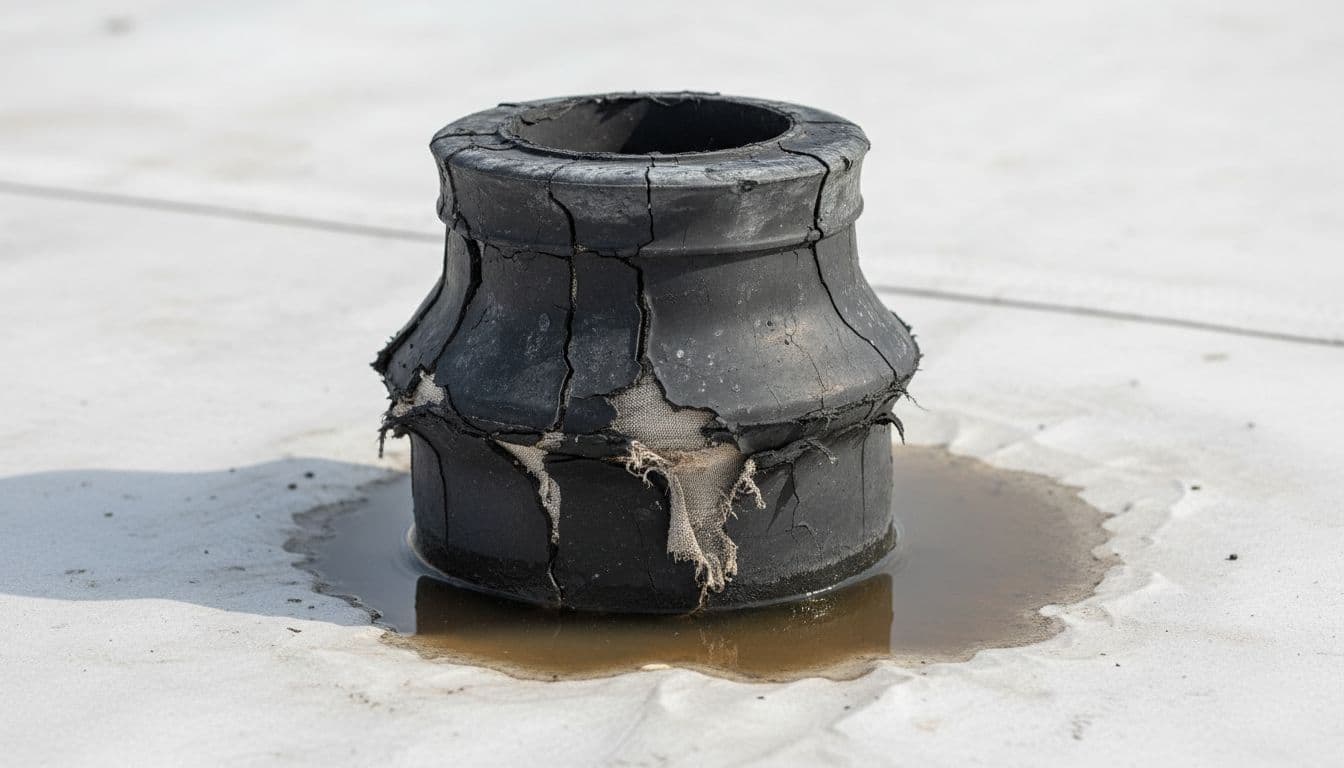
A failing pipe boot often cracks at the boot wall or where the flange meets the TPO.
Edge cases to keep in mind
Newer roofs can still leak at boots if a clamp loosens or a pipe moves during temperature swings. Older roofs may hide moisture below the membrane, which makes a quick visual check less reliable.
When pipe boots probably aren’t the source
Not every TPO roof leak starts at a boot. Open seams, loose drain flashing, punctures, and rooftop unit curbs can create the same interior symptoms. If the stain appears far from any pipe, don’t rule the boot out, but don’t lock onto it too soon.
For larger buildings, professional leak detection for commercial roofs can map hidden moisture before you repair the wrong area. That saves money and avoids repeat disruptions.
Step-by-Step
Start inside and map the leak path
- Mark the exact ceiling stain, drip point, or wet tile as soon as you notice it. Take photos, note the weather, and record whether it happens during rain, snow melt, or HVAC use.
- Move above the leak, if you have safe access, and look for rust, dark decking, damp insulation, or a water trail. Follow the trail uphill because gravity doesn’t always tell the full story on a commercial roof.
- Measure from interior walls or columns so you can match the leak area to the nearest roof penetration. On a low-slope roof, the interior drip point may sit several feet from the actual entry point.
If the stain sits ten feet from a pipe, the pipe boot can still be the source.
If the path goes cold
When water has spread through insulation, visual clues may stop. At that point, moisture testing is faster than guesswork.
Check the pipe boot itself on the roof
- Inspect the boot wall where it wraps the pipe. Look for splits, pinholes, shrinkage, or surface cracks, especially on the side that takes the most weather.
- Check the top seal at the pipe. A loose clamp, cracked mastic, or visible gap can let water run down the pipe and under the flashing.
- Examine the flange where the boot ties into the TPO membrane. Open welds, fishmouths, punctures, or lifted edges are common failure points. Press lightly around the area. If the insulation feels soft, moisture may already be trapped below.
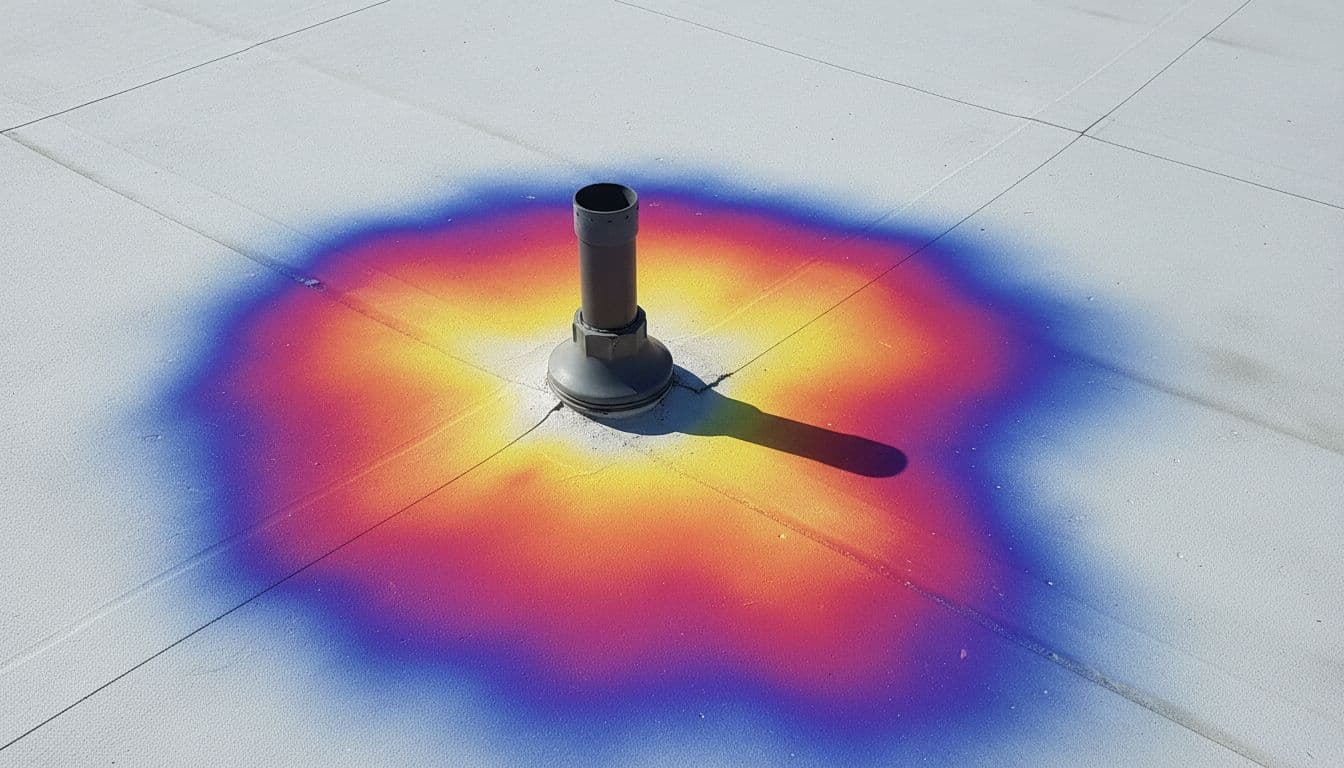
Infrared can reveal wet insulation around a pipe boot when surface damage looks minor. 7. If the source still isn’t clear, use infrared or electronic testing to confirm whether the problem is one failed boot or a wider moisture field. That’s smart before a targeted repair or a broader review with a Saint Paul commercial roofing team.
Decide whether repair or replacement makes sense
One failed boot often calls for commercial flat roof repair, not a full tear-off. However, if several penetrations are failing, seams are opening, and insulation is saturated, commercial roof replacement may be the more cost-aware choice.
FAQs About Pipe Boot Leaks on TPO Roofs
Can a pipe boot leak without obvious roof damage?
Yes. The top seal can fail while the boot still looks fine from a distance. Also, a hairline split or a small open weld may only show up during close inspection or moisture testing.
Should I add more sealant as a quick fix?
Only as a short-term emergency move. Too much sealant can hide the real failure and make later repairs harder. TPO details usually need the proper welded repair, not a heavy layer of caulk.
If the roof is under warranty
Check the warranty terms first. An unapproved patch can create a second problem.
How fast should I act on a small drip?
Act quickly. Wet insulation loses R-value, and trapped moisture spreads faster than most owners expect. What starts as a simple boot repair can become deck damage, mold, and interior loss after one more storm.
Can one bad boot mean the whole roof is failing?
Not always. Sometimes the issue is limited to one weak detail. Still, if multiple boots show cracks, loose seals, or soft insulation around them, your commercial roof needs repair beyond a single patch.
If only one boot is failing
A focused repair may be enough, but nearby penetrations should be inspected the same day.
What’s the smartest next step for a business owner?
Document the leak, protect the interior, and schedule a roof inspection before the next weather event. A clear diagnosis helps you choose between a small repair, a section repair, or a planned capital project instead of an emergency expense.
Bottom Line
Act before the leak starts traveling
A pipe boot leak on a TPO roof is found by tracing the water path, then checking the boot wall, top seal, and welded flange for failure. Small leaks rarely stay small on commercial buildings. Early detection protects insulation, operations, and budget, whether the fix is a simple repair or the first sign of a larger roofing problem.
Need a roof inspection in Saint Paul or the Twin Cities? Call Sellers Roofing Company at +1-651-703-2336 or schedule a free estimate. We are a black-owned, NMSDC-certified MBE roofing contractor with 9+ years experience.