Last updated: 2026-11-16 by Ted Sellers, Owner
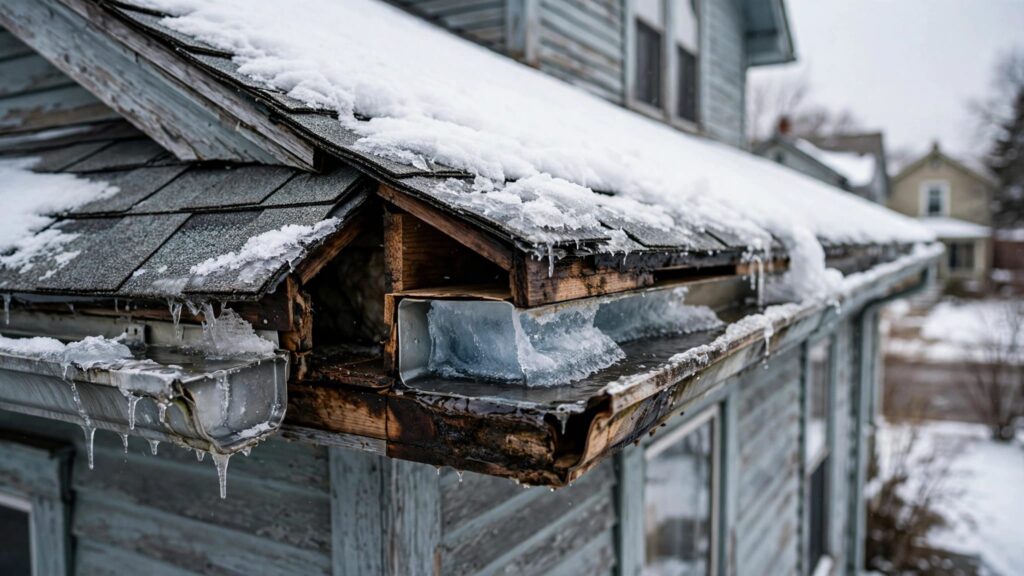
Yes. Built-in gutter ice dams form when melting snow reaches a colder gutter channel and freezes, blocking drainage. On older Minnesota homes, the concealed trough can hold backed-up water against roofing, liner seams, and cornice framing, allowing leaks inside even when little ice hangs beyond the roof edge.
What Actually Causes Ice Dams in Built-In Gutters in Harsh Winter Climates?
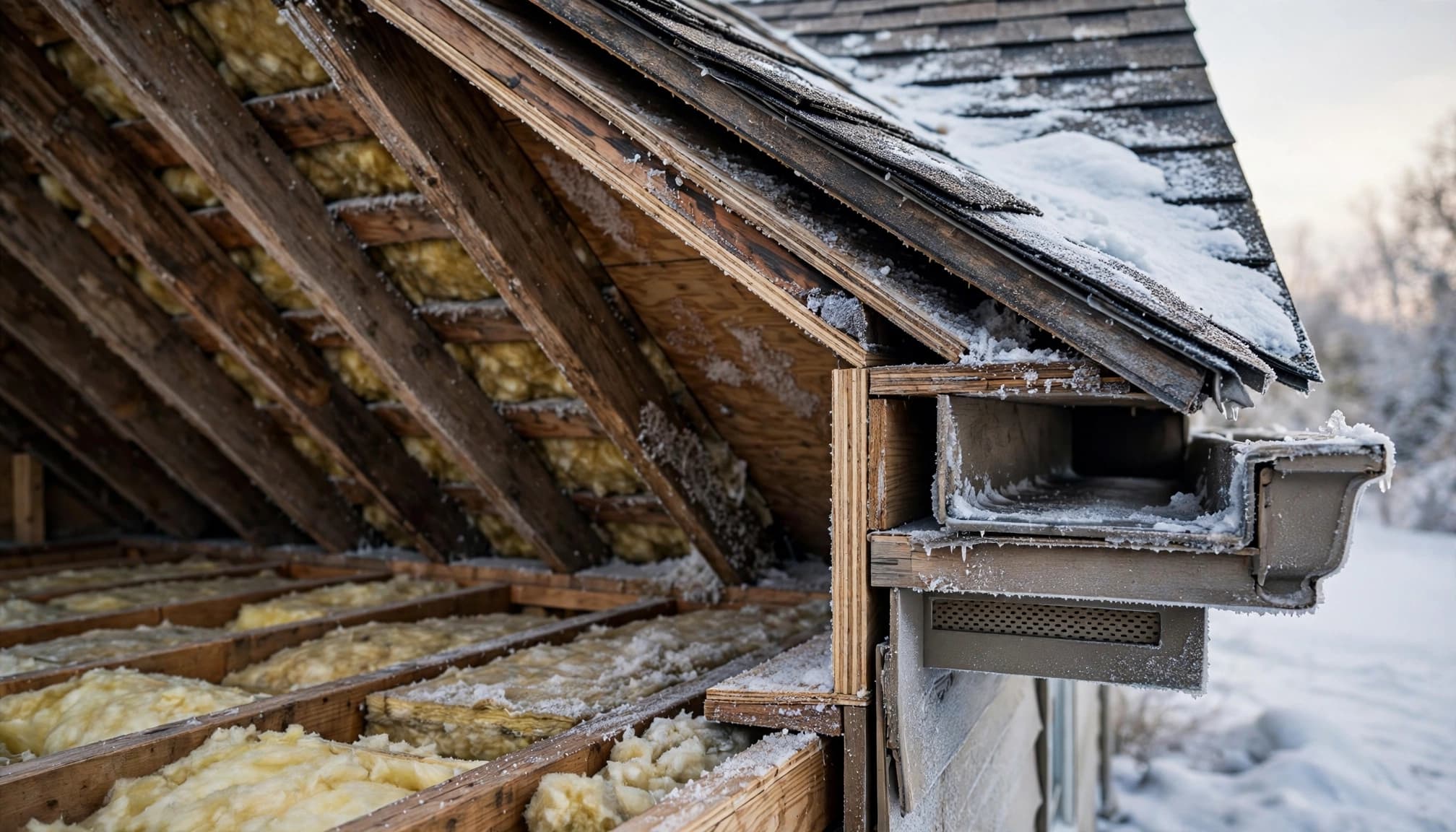
Air leaks and inadequate attic insulation can warm the roof deck above freezing, creating a warm roof. Attic ventilation can help keep it closer to outdoor temperature, but can’t prevent melting snow on its own.
Snowmelt reaches the colder eave and freezes. Repeated cycles enlarge the obstruction.
The University of Minnesota Extension’s ice-dam guidance explains this roof-temperature difference. Freezing outdoor air doesn’t prevent snow from melting over a warm attic.
Heated cables can maintain a limited drainage path, but they don’t correct the underlying heat transfer or repair a failed gutter liner.
When This Applies
This applies to older houses with gutter troughs incorporated into the eave or cornice, including metal-lined box gutters. These assemblies differ from exposed hanging gutters.
However, a boxed-looking fascia doesn’t prove the house has internal drainage. The construction detail determines where water travels.
An unvented roof assembly also needs a different investigation than a conventional attic. Adding vents without understanding that assembly can create another moisture problem. A low-slope addition draining into the same trough may contribute runoff even when the main attic stays cold.
Why Concealed Channels Increase the Consequences
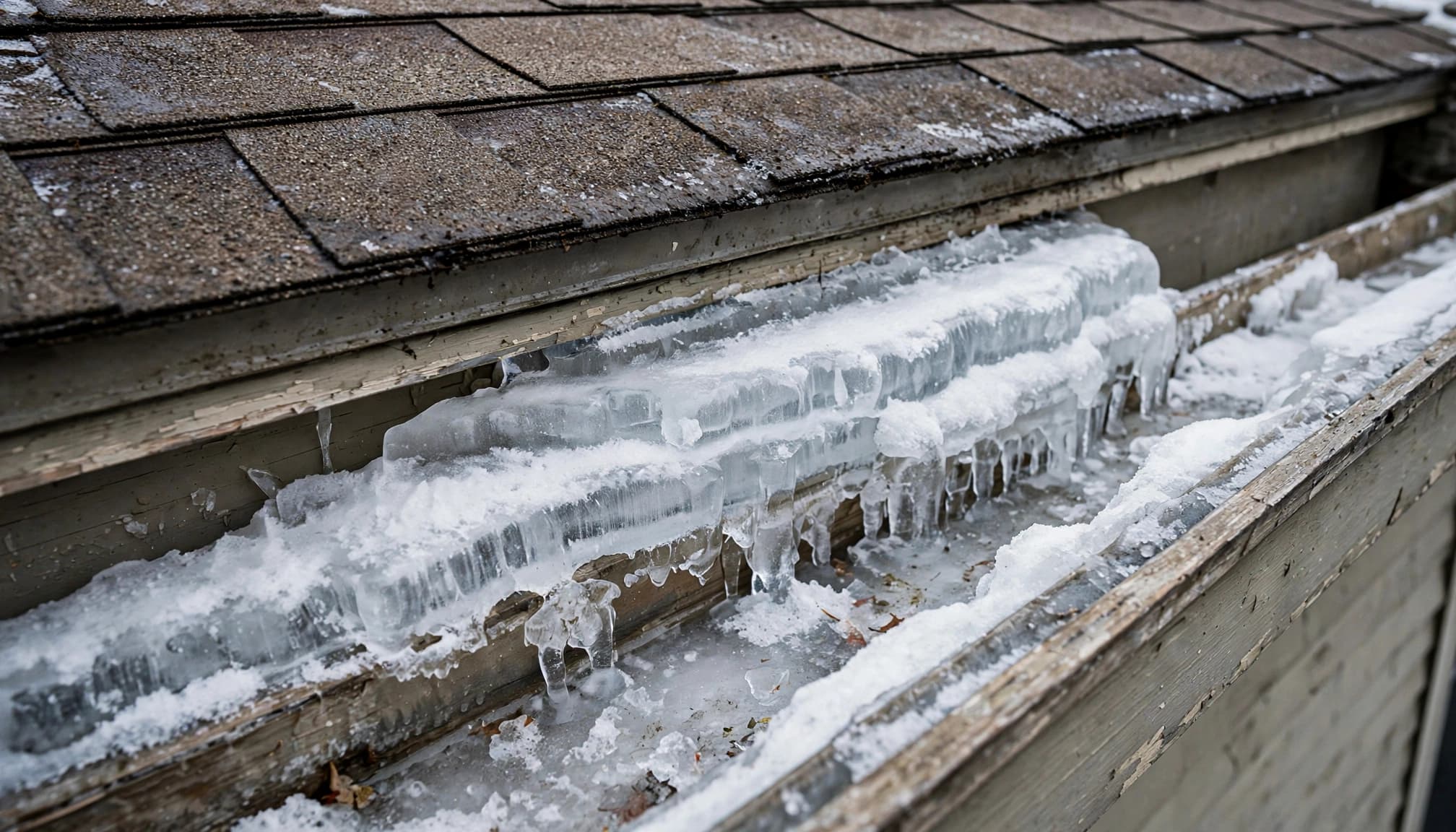
A built-in gutter can freeze at its outlet, along a low spot, or across accumulated debris. Water then rises against seams and transitions that normally carry flowing water.
Asphalt shingles shed runoff; they aren’t a watertight basin. Backed-up water can travel beneath their laps and enter the attic.
Because gutter framing sits within the cornice, leakage can wet concealed wood before an interior stain appears. Repeated freeze-thaw cycles also stress aging seams and patched liner joints.
How to Inspect and Document the Damage (Field Checklist)
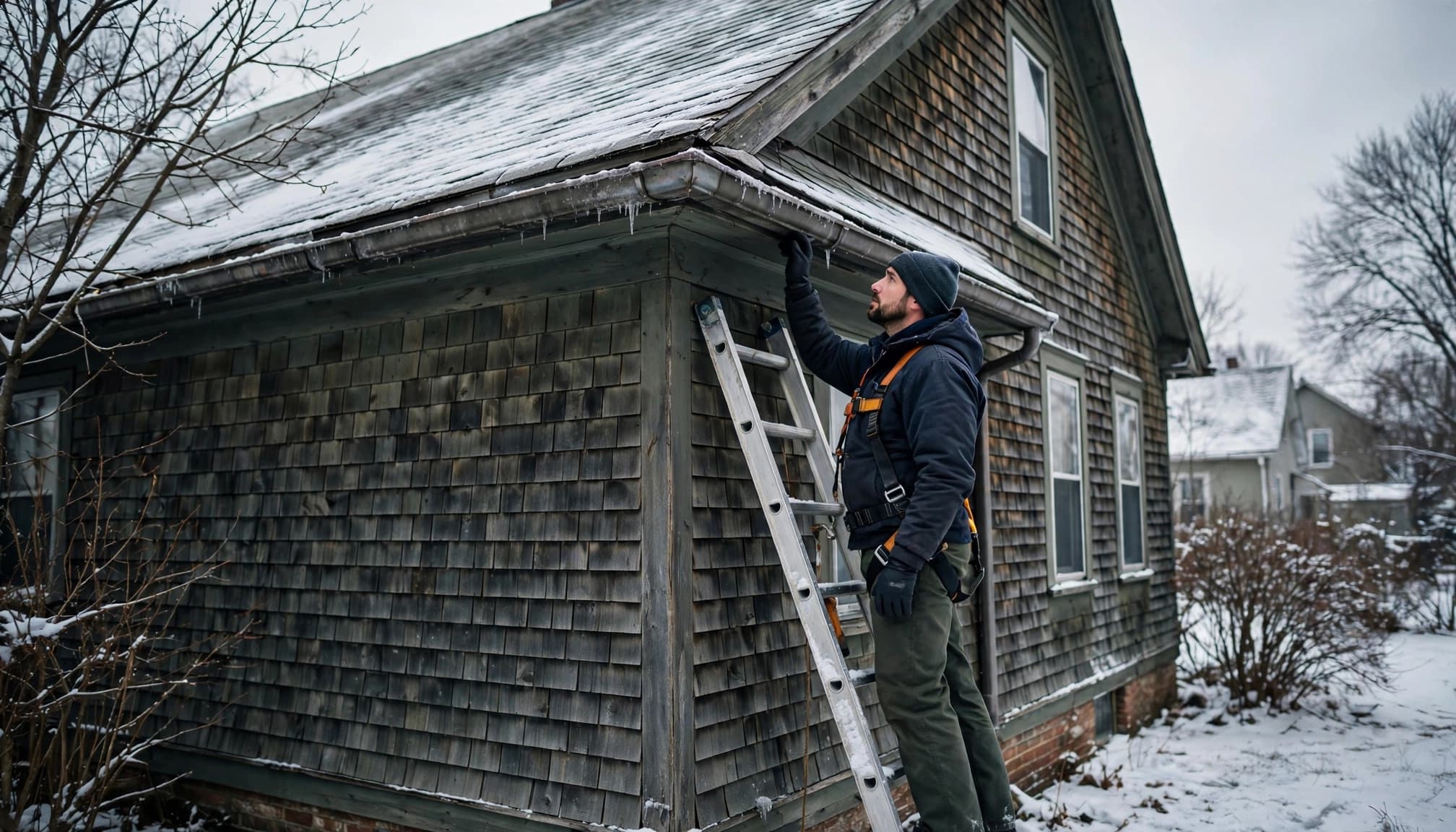
Start from the ground and inside the building. An owner shouldn’t climb onto an icy roof. Close roof inspection requires safe access or removal.
Inspect the Drainage Path First
Walk the perimeter in this order, photographing each condition before work changes it:
- Record snow distribution, thick ice at the eaves and roof edge, heavy icicles, and overflow staining.
- Follow each built-in gutter toward its outlet and downspout.
- Photograph visible gutter damage, cornice separation, displaced flashing, and open liner seams.
- Inspect valleys for concentrated runoff, trapped debris, and bent metal.
- Note whether installed gutter guards are trapping debris.
- Document shingle granule-loss patterns and lifted tabs without assuming hail caused them.
- Have the roofer assess deck deflection, cracked pipe boots, and concealed connections.
Small icicles alone don’t establish a roof failure. A gutter packed with ice, recurring overflow, or a thick ridge across the drainage path deserves closer attention.
Trace Interior Moisture Before Opening Finishes
Photograph ceiling stains with room context, then take close views showing their boundaries. Record when dripping started and whether it followed sunshine, warmer weather, or fresh snow.
In an accessible attic, inspect without stepping between framing members. Look for wet insulation, darkened sheathing, frost, mold growth, and water tracks near exterior walls.
Our guide to hidden ice dam damage explains why dry-looking ceilings don’t rule out soaked insulation.
Keep people away from sagging ceilings and wet electrical fixtures. Don’t puncture a ceiling or handle energized equipment to investigate a leak. Water can follow framing, so the visible drip may sit several feet from its entry point.
Repair vs. Replace: The Decision Framework
Ice buildup doesn’t automatically justify residential roof replacement. Separate the gutter defect, roof condition, and attic heat loss before choosing a scope.
The condition of the surrounding assembly determines whether a focused repair will hold.
| Factor | Targeted repair | Full replacement |
|---|---|---|
| Damage extent | Isolated seam, outlet, flashing, or wood damage | Widespread liner failure or deteriorated roofing |
| Cost basis | Local access and limited materials | Tear-off, disposal, decking, and complete installation |
| Remaining service life | Surrounding materials remain serviceable | Roof or liner has little useful life remaining |
| Insurance implications | Document damage tied to the covered event | Broader replacement needs supporting evidence and coverage |
| Material compatibility | Durable connection to the existing assembly | Opportunity to rebuild incompatible transitions |
A serviceable roof with one failed gutter connection usually calls for a different solution than widespread wet decking.
When Localized Repair Makes Sense
Residential roof repair may include rebuilding an outlet, replacing a liner section, repairing adjacent flashing, or replacing damaged cornice wood.
However, the repair must connect to sound material. Applying another patch over corroded metal or deteriorated membrane leaves a weak connection. The scope should also identify where runoff will discharge after repair.
Before closing the assembly, remove wet material that cannot dry properly and inspect the supporting wood.
When Replacement Becomes the Better Scope
Replacement becomes reasonable when failures extend across multiple joints, the supporting trough has deteriorated, or roofing cannot accept a durable tie-in.
A new roof alone won’t correct a poorly pitched gutter or an undersized drainage path. Likewise, replacing the gutter won’t stop heat escaping from the living space. The written scope should treat those conditions separately.
Material Specs That Matter for This Repair or Replacement
Choose materials for the existing roof, gutter liner, and transition detail. A product name doesn’t establish that the complete assembly will drain properly.
Shingles and Underlayment Have Different Jobs
GAF Timberline HDZ, CertainTeed Landmark, and Malarkey Legacy are shingle options for suitable steep-slope assemblies. Malarkey Legacy’s Class 4 impact rating addresses impact resistance, not ice-dam prevention.
Ice-and-water shield provides a secondary barrier where backed-up water may reach the deck. In ice-barrier locations, the eave detail generally extends to at least 24 inches inside the exterior wall line, rather than merely 24 inches up the roof.
Valley protection follows the roof system and applicable Minnesota State Building Code requirements. Neither synthetic underlayment nor conventional felt replaces a correctly detailed ice barrier.
Built-In Gutters Need Compatible Liners and Transitions
Metal roofing, soldered metal liners, and membrane-lined gutters require different connection methods. Sealants, adhesives, flashing, and termination details must suit the existing materials.
On adjacent low-slope roofs, TPO roofing, EPDM, modified bitumen, and BUR need system-specific evaluation. A 60-mil TPO membrane isn’t interchangeable with 45-mil or 60-mil EPDM.
The Extension guidance on keeping water out treats roofing and flashing as parts of a connected drainage system.
For a commercial flat roof, commercial roof coatings cannot correct rotten decking, defective outlets, or trapped wet insulation. Commercial roof restoration also requires a sound, suitable substrate and working drainage.
Insurance Documentation and the Claim Process
A roof insurance claim needs evidence connecting the event, water path, and damage. Roof age alone doesn’t describe what happened.
Build a Dated Record Before Permanent Work
Photograph exterior ice, gutter overflow, interior staining, and damaged belongings. Include wide views and close details so each image has a location.
Save weather dates, maintenance logs, emails, inspection findings, and emergency invoices. For rental properties, preserve tenant reports and the date management first learned about the leak.
An adjuster evaluates coverage, cause, and loss scope. A contractor documents physical conditions, repair methods, quantities, and concealed damage.
If hail or wind damage also exists, keep those findings separate. Close photographs should show actual hail impact locations or lifted shingle tabs without labeling ordinary wear as fresh storm damage.
Separate Covered Damage From Maintenance
Homeowners insurance may cover resulting water damage from sudden ice-dam leakage, subject to policy terms, deductibles, and exclusions. Preventive removal, deteriorated liners, and repeated seepage may receive different treatment.
Prompt mitigation protects the building. However, broad tear-off before documentation can remove evidence needed to distinguish fresh damage from old decay. Preserve photographs and removed-material records when emergency work cannot wait.
Minnesota also prohibits roofing contractors from offering to absorb an insurance deductible. The state’s roofing deductible rules distinguish legitimate repair pricing from prohibited rebates.
Keep the claim file after repairs finish. Hidden moisture, depreciation, or code-related work can raise later questions, and the original records help explain why the final scope changed.
What a Professional Roof Contractor Does Differently
A durable repair addresses the immediate water backup and the conditions feeding it. Clearing ice is only one part of the work.
Step-by-Step
- Establish a safe work area beneath the roof edge and protect occupied rooms from active leakage.
- Document ice, drainage restrictions, and interior damage before removal changes the evidence.
- Use a roof-appropriate removal method, with controlled steam where suitable for bonded ice.
- Inspect the exposed gutter liner, outlets, flashing, and supporting wood after access becomes safe.
- Repair the drainage assembly, seal air leaks at accessible attic bypasses, and assess attic insulation.
Our safe ice dam removal guidance separates temporary relief from permanent correction.
The University of Minnesota’s removal guidance warns that using a roof rake can be dangerous. Don’t chip ice or scrape roofing, and stay clear of overhead electrical lines.
Open the Assembly Where Evidence Requires It
When tear-off exposes soft sheathing, identify the damaged boundaries and replace deteriorated sections back to sound support. Don’t cover rotten wood with new roofing.
Minnesota Commerce recommends R-60 as a useful attic target for existing homes; required work still depends on the assembly.
Assess attic ventilation using actual net free area, labeled vent capacity, and unobstructed paths. Confirm soffit vents remain clear, and use eave baffles to protect airflow and reduce wind-washing through insulation. Minnesota Extension’s prevention guidance explains the goal: keep the roof deck cold.
The inspection should also assess pipe boots and other penetrations before the roof closes.
What Controls Built-In Gutter Repair Costs in Minnesota?
Built-in gutter work depends on concealed conditions. Pricing a visible ice ridge doesn’t establish the cost of repairing the assembly underneath it.
Separate Removal, Gutter Work, and Building Repairs
Request separate pricing for emergency removal, liner repairs, carpentry, roofing tie-ins, and interior restoration. This makes competing scopes easier to compare.
Access affects labor. A tall Saint Paul house with a steep roof and narrow side yard requires different equipment than a reachable single-story eave.
Other cost drivers include liner material, outlet reconstruction, hidden wood damage, disposal, and local permit requirements. Historic cornice profiles can also require custom fabrication rather than standard replacement components.
An hourly removal bill and a permanent gutter-repair estimate cover different work. Keep both in the project record.
Compare Written Scopes Rather Than Bottom-Line Prices
A useful estimate names the damaged components, repair limits, materials, and exclusions. It should explain how the new liner connects to roofing and where the water exits.
For mixed-use buildings, a commercial roof inspection may reveal wet insulation beyond the gutter. That can change commercial roof repair into a larger scope, but commercial roof replacement needs evidence of broader failure.
We assess the roof before recommending replacement. For an older home’s recurring gutter leak, Get a Free Residential Roof Estimate to establish the drainage and roofing scope.
For active water entry, Call 651-703-2336 for 24/7 Emergency Roofing. Keep occupants clear of falling ice and damaged ceilings while help is arranged.
Frequently Asked Questions
Can an internal gutter leak without visible icicles outside?
Yes. Ice can obstruct a concealed outlet while the outer edge looks clear. Water may escape through liner seams into cornice framing instead of spilling outside. Investigate recurring winter stains as possible roof leaks, even when there are no large icicles.
Will gutter guards stop ice dams in a built-in gutter?
No. Gutter guards don’t correct attic heat transfer or guarantee clear winter drainage. Fine debris can still collect inside some guard systems. Our explanation of clogged gutters and ice dams distinguishes drainage restrictions from the heat conditions that produce melting.
Should I open the attic hatch during an ice-dam leak?
Keep the hatch closed unless a qualified professional directs otherwise for that building. Opening it can send more warm, moist indoor air into a cold attic. Protect the room below and arrange safe removal and leak diagnosis instead.
Will insurance pay to remove ice before water enters?
Often, preventive removal falls under maintenance rather than covered damage. Removal after a covered loss begins may receive different treatment under the policy. Save the invoice and photographs, but don’t assume a steaming bill guarantees reimbursement.
Can an old built-in gutter be preserved instead of replaced with hanging gutters?
Often, yes, if its structure, slope, and discharge arrangement can support a durable repair. Relining and selective wood replacement may preserve the cornice. Converting to hanging gutters changes the drainage detail and may affect the building’s architectural appearance.
Key Takeaways for Older Minnesota Homes
Stop the Backup Before Closing the Damage
Built-in gutter ice dams can hide substantial water backup inside an older roof edge. Document the condition, relieve the blockage safely, and inspect the concealed liner and wood before covering the assembly.
Correct the Heat Loss and Drainage Together
The lasting repair needs both working drainage and a colder roof deck. A sound gutter cannot prevent heat-driven melting, and better attic insulation cannot repair an open liner seam.
Need a roof inspection in Saint Paul or the Twin Cities? Call Sellers Roofing Company at +1-651-703-2336 or schedule a free estimate. We are a black-owned, NMSDC-certified MBE roofing contractor with 9+ years experience.
