Last updated: 2026-08-01 by Ted Sellers, Owner
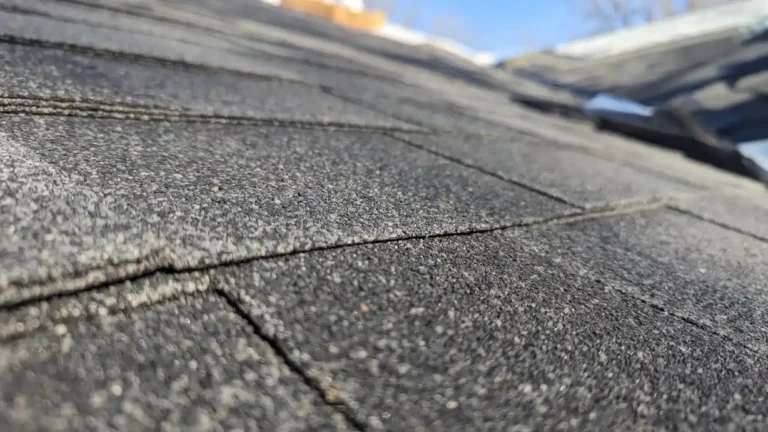
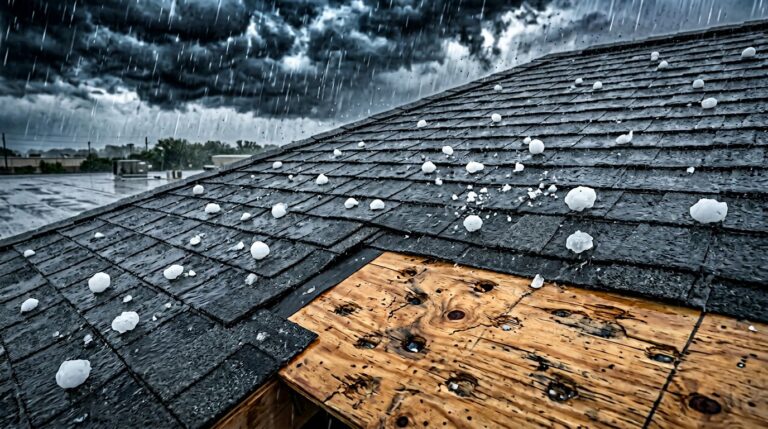
Class 4 shingle hail damage usually shows up as round “bruises” where granules are knocked loose and the mat underneath is stressed. Look for repeated impact marks across several slopes, matching hits on soft metals (gutters, vents, flashing), and shingles that feel soft or cracked at the strike point. Document patterns, then confirm with a close inspection, because many look-alikes mimic hail.
When This Applies
Class 4 shingles on commercial properties (and where to look)
Many business owners hear “shingles” and think “residential,” but Class 4 shingles show up on plenty of commercial buildings. You’ll often see them on steep-slope areas like entry canopies, mansard sections, pitched office wings, churches, and some multi-family properties.
This guidance applies when:
- Your building has impact-resistant asphalt shingles (often labeled Class 4 on packaging or paperwork).
- A hail event happened recently, and you’re checking for damage before leaks or complaints start.
- You need clear documentation for maintenance records or an insurance conversation.
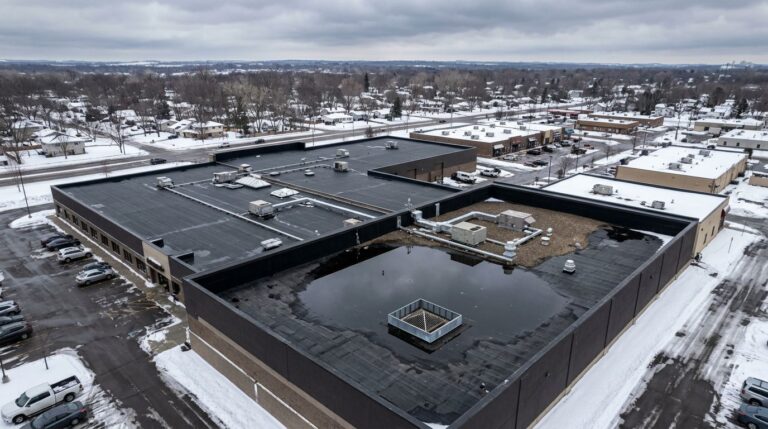
It does not apply well when your roof is primarily a membrane system (TPO, EPDM, PVC) or metal panels. Those materials show hail differently. If your property has multiple roof types, it helps to involve a contractor who handles complete systems, not just shingles. For Twin Cities owners, start with Saint Paul commercial roofing for storm damage.
When it’s probably not hail (common exceptions)
Some marks look convincing from the ground, yet they’re not impact damage.
Edge cases that fool people
- Thermal cracking: Random splits that follow stress lines, not round hits.
- Blistering: Small bubbles from trapped moisture, often widespread and uniform.
- Foot traffic scuffs: Granules missing in walk paths near HVAC access points.
- Manufacturing “fishmouths” or slight lifts: Repeating defects that follow shingle lines.
A simple rule helps: hail tends to leave a pattern, not a one-off mystery spot.
Step-by-Step
1) Confirm the event and scan for “supporting” clues
- Note the storm date and approximate time, then check your property for collateral hits (dented downspouts, marked AC fins, splatter on siding).
- Walk the perimeter and look up at shingle planes in angled light, early morning or late afternoon works best.
- Take wide photos of each roof face from the ground, because they help prove distribution later.
- If you find obvious dents on soft metals, flag those locations, they often align with the hardest impacts.
2) Get close safely and identify true shingle bruises
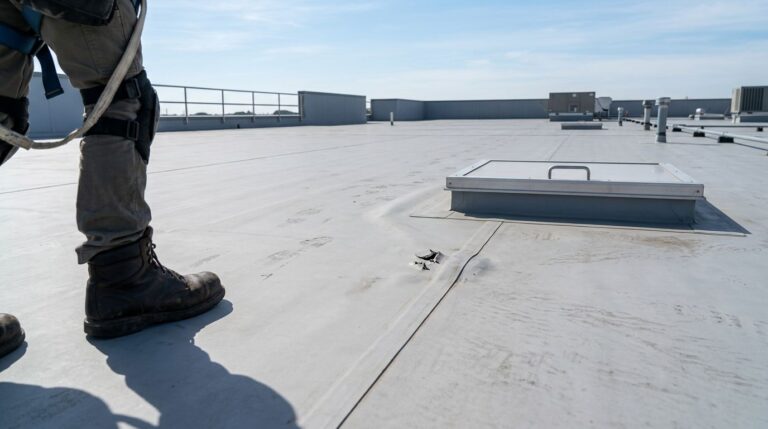
- Use proper fall protection or hire it out, because steep-slope commercial sections can be riskier than they look.
- Start in “hail catch” zones: ridges, upper roof areas, and slopes facing the storm wind.
- Look for round impact spots that are slightly darker or cleaner than surrounding shingle, with granules displaced at the center.
- Lightly feel for a soft spot at the center of the mark (a bruise can feel like a thumbprint under the surface).
- Check for fractures: a hairline crack, a crescent split, or a broken edge near the strike point.
- Compare multiple marks, because real hail damage repeats in size and shape across several shingles.
- Avoid “test damage,” don’t scrape granules or press hard enough to deform the shingle.
3) Document, then decide whether repair, monitoring, or replacement fits
- Photograph each suspect hit with a coin for scale, then take a second photo showing where it sits on the roof plane.
- Count hits in a consistent area (for example, a 10 ft by 10 ft section), and repeat on different slopes.
- Note functional red flags: exposed mat, cracks through the surface, loosened fasteners, or torn seal strips.
- If water staining appears inside, treat it as urgent. Hail can open pathways that show up weeks later. For hard-to-trace leaks on low-slope areas tied into shingle sections, use commercial roof leak detection after storms.
- When damage is widespread, plan for budgeting and operations. Sometimes the right call is targeted repair, other times it’s a commercial roof replacement scheduled around tenants and peak business hours.
How to tell real hail hits from look-alikes on Class 4 shingles
What real hail damage tends to look like (even on impact-rated shingles)
Class 4 shingles resist impact better, but they can still bruise. The “give” is the tricky part. From a few feet away, bruising can look like nothing more than a smudge. Up close, the center often shows tight granule displacement, a slight crater, or a fractured granule layer.
Hail also leaves evidence around the roof system, not just on shingles. Dents on ridge vent caps, knocked coating on pipe jacks, and peppered gutters help confirm the story. For a deeper inspection-oriented explanation of asphalt shingle conditions and what inspectors look for, see InterNACHI’s asphalt composition shingle guidance.
If the shingles “look fine” but the soft metals are clearly dented, don’t assume you’re in the clear. Class 4 shingles can hide bruises that only show in raking light and close inspection.
Signs the roof may still be serviceable (and when it’s not)
Cosmetic granule scuffs happen, especially near access points. That’s different from damage that shortens roof life.
When monitoring may be reasonable
If marks are isolated, with no cracks, no exposed mat, and no matching collateral dents, a documented watch plan may work.
When the building should act fast
If you see cracking, exposed reinforcement, lifted edges, or recurring clusters of hits, the roof has less “water-shedding margin.” At that point, commercial roof needs repair becomes more than a maintenance phrase. It’s a business risk.
Also remember the mixed-roof reality. A steep-slope shingle area can feed water into wall details, then down into low-slope assemblies. That’s where a small problem turns into a bigger commercial flat roof repair scope.
For visual examples of what hail damage can look like across roof materials, compare your findings to DECRA’s hail damage overview.
FAQ
Can Class 4 shingles be damaged by hail even if they passed impact tests?
Yes. Class 4 is a performance rating under controlled testing, not a guarantee. Real storms add wind angle, repeat strikes, age, and heat. As a result, bruising and cracking can still happen, especially on older shingles or thin edge areas.
What’s the fastest “tell” from the ground before I schedule an inspection?
Look for collateral dents first. Downspouts, gutters, roof vents, and metal flashings show hail clearly. If those are clean and undented, roof damage is less likely. If they’re peppered, move to a close roof check and photo documentation.
How soon do hail problems turn into leaks?
Sometimes right away, but often weeks or months later. A bruise can weaken the shingle, then UV and temperature swings finish the job. If you spot interior staining, don’t wait, because water can travel before it shows inside.
If there’s already interior water
Treat it as active damage, document it, and get leak tracing done quickly.
Do I need to count impacts in a test square for documentation?
A consistent count helps because it shows distribution and repeatability. Use the same area size on multiple slopes, photograph each sample area, and note the slope orientation. Even if an adjuster uses different thresholds, your evidence stays organized and credible.
Should my maintenance team try to “prove” bruises by pressing or scraping?
No. Over-pressing can create damage that wasn’t there, and scraping removes protective granules. Instead, use raking light, close photos with scale, and collateral metal evidence. If you need confirmation, bring in a qualified roof inspector with safe access equipment.
Conclusion
Spotting class 4 shingle hail damage comes down to pattern recognition and careful confirmation. Start with collateral dents, verify bruises up close, then document everything like you’ll need to explain it later. When marks cross from cosmetic to cracked or exposed surfaces, treat it as a business issue, not a roof mystery. The sooner you act, the more options you keep.
Need a roof inspection in Saint Paul or the Twin Cities? Call Sellers Roofing Company at +1-651-703-2336 or schedule a free estimate. We are a black-owned, NMSDC-certified MBE roofing contractor with 9+ years experience.