Last updated: 2026-08-01 by Ted Sellers, Owner
Start with a controlled interior-to-roof check: map the wet area inside, match it to the drain line path, then inspect the drain bowl, clamping ring, and membrane at the flange for gaps, cracks, or loose hardware. If the source still isn’t clear, run a low-pressure water test around the drain and document results for targeted repair.
Roof drains are supposed to be the “exit doors” for water. When they fail, they act more like a trap door.
On a low-slope roof, water can travel far before it shows up inside. That’s why smart leak tracking near drains is less about guessing and more about narrowing the path, one clue at a time.
When This Applies
If your building has internal drains or a low-slope roof
This process fits most buildings with internal roof drains (common on warehouses, retail, offices, and multi-tenant properties). It’s especially useful on TPO, EPDM, PVC, modified bitumen, and built-up roofs, where water can move sideways over the deck before it drops into the building.
It also applies when you notice any of these patterns:
- Leaks that get worse after heavy rain, snowmelt, or when drains clog with leaves.
- Ponding water near a drain, even if it disappears later.
- Stains that appear in a “ring” pattern around a drain line chase or column.
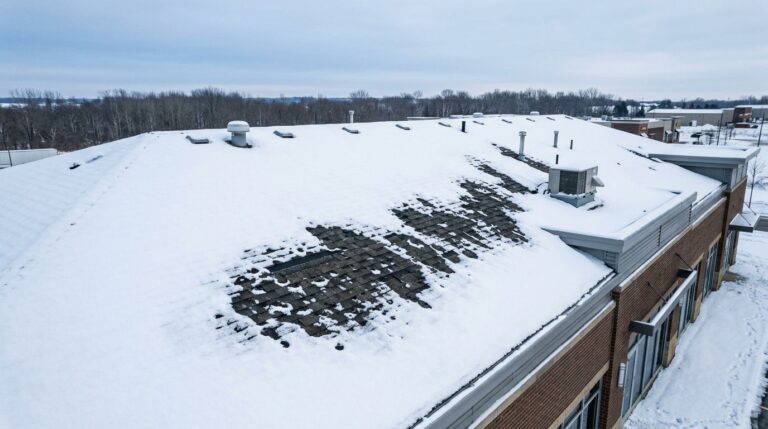
If the same area keeps getting wet, assume commercial roof needs repair until proven otherwise. A drain leak often signals a detail problem that won’t “dry out and go away.”
For a practical overview of drainage problem spots, see this guide on inspecting commercial roof drainage systems.
When it probably isn’t a drain leak
Drain-area leaks get blamed for a lot that isn’t their fault. The most common look-alikes are condensation, HVAC issues, and plumbing leaks that happen to be near a drain pipe.
Quick exceptions that can mimic a roof drain leak
- Sweating drain lines: Cold drain pipes can sweat in humid months, wetting ceiling tiles.
- Split or leaking plumbing vents: A vent stack leak can drip near the same chase.
- Rooftop unit overflow: A clogged RTU condensate line can spill water that finds the nearest low point.
- Wall and parapet leaks: Water can enter higher up and run down to a low area near drains.
If you’re not sure, bring in a contractor who routinely handles drain-related failures and low-slope details, like Saint Paul commercial roofing experts. Misdiagnosis is how small leaks turn into major interior losses.
Here’s a quick way to interpret common drain-area symptoms:
| What you see | What it often means | Why it matters |
|---|---|---|
| Brown ring around a ceiling tile near a drain line | Water is traveling along the deck | The roof opening might be 10 to 50 feet away |
| Drip starts only during heavy rain | Drain bowl or clamping ring leak | Water level rises enough to find the gap |
| Leak appears during thaw, not rain | Ice at the drain, blocked drain, or ponding | Freeze-thaw pries at seams and flashing |
| Wet insulation found near a drain sump | Long-term seepage at flange | Local commercial flat roof repair may not be enough |
Step-by-Step
Step-by-step commercial roof drain leak detection
-
Protect the interior and capture timing. Move inventory, cover equipment, and photograph the wet area. Note when it leaks (heavy rain, steady rain, thaw, wind-driven rain), because timing points to the failure mode.
-
Trace the drain line path inside the building. Follow the roof drain leader pipe (often in a chase or column). Water stains close to the pipe can mean a plumbing-style joint leak, not a roof membrane issue.
-
Go to the roof and check for obvious drainage failure. Look for standing water, a blocked strainer, or debris dams. If water sits around the bowl, the drain detail stays under pressure longer, and small gaps start acting like open doors.
-
Inspect the drain bowl and clamping ring up close. Remove the strainer if safe. Then check for cracked drain bodies, loose bolts, missing ring screws, or warped rings. Next, inspect the membrane where it meets the flange for fishmouths (wrinkles), cuts, or shrink-back.
A drain leak isn’t always “at” the drain. Water can enter at a seam nearby and show up at the lowest point.
-
Check for membrane stress around the sump. Press lightly around the drain area (don’t puncture anything). A soft feel can signal saturated insulation. If saturation spreads, patching may stop the drip but still leave trapped moisture that shortens roof life.
-
Look at sealants and transition points. Some drains use sealant at the throat or at flashing transitions. Cracked sealant, metal corrosion, or open laps are common after temperature swings. In March in Minnesota, freeze-thaw stress often shows up here first.
-
Inspect the drain line connection if accessible. If you can safely access the underside (mechanical room, ceiling plenum, or chase), look for drips at joints, rust pinholes, or water trails on the pipe. A roof drain assembly can be watertight while the leader joint leaks.
-
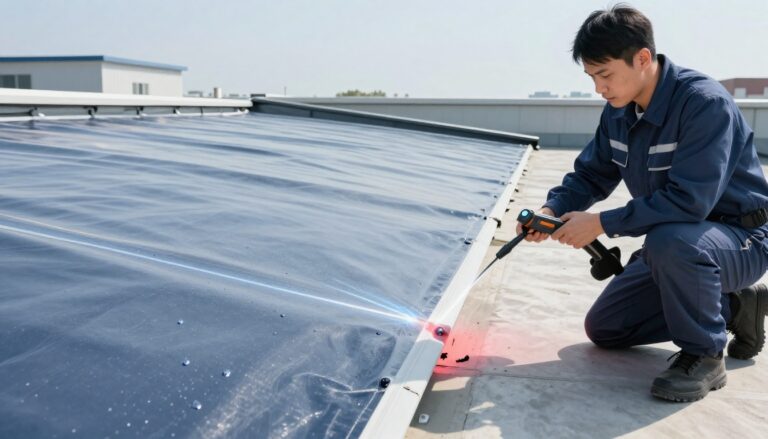
Run a controlled water test, starting small. Use low pressure, not a blasting nozzle. Wet a tight area around the drain first, wait 10 to 15 minutes, then expand outward in rings. Keep another person inside watching for first drip timing and location. This simple method is often called a flood or controlled water test, and it’s also mentioned in broader leak detection write-ups like commercial building leak detection methods.
-
Document findings and choose the right repair scope. If you find a flange gap or cracked bowl, you may need a drain re-flash or drain replacement, not a surface patch. If the surrounding system shows widespread wet insulation or repeated failures, start planning for commercial roof replacement instead of stacking short-term fixes.
If you want help pinpointing the exact breach point (especially on large TPO or EPDM roofs), schedule professional leak detection for commercial roofs. Targeted detection can prevent opening the wrong section of roof.
FAQ
Should I clear the roof drain first, or look for membrane damage first?
Clear the drain first if it’s clogged, because ponding changes everything. After flow is restored, inspect the membrane and ring area. A clogged drain can hide the real issue by keeping water level high enough to force seepage through tiny gaps.
What if the leak only happens during heavy rain and not light rain?
That often points to a “water level” problem at the drain bowl or flange. Heavy rain raises water height faster than the drain can handle, so water finds weak spots. In contrast, light rain may drain away before it reaches the failure point.
If an overflow drain is present
Check it too. Overflow drains can leak at their own flashing, and they often activate only during intense storms.
Can a roof drain leak without showing obvious damage on the roof surface?
Yes. A small opening under the clamping ring, a hairline crack in the bowl, or a seam gap within a few feet can leak while looking fine from standing height. That’s why close-up inspection and water testing matter more than a quick walk.
How do I tell the difference between a roof leak and condensation near drain pipes?
Condensation usually shows as consistent dampness on or near the pipe during humid conditions, even without rain. Roof leaks track rainfall or melting events. If you’re unsure, compare symptoms to common leakage cues like these signs your roof is leaking, then confirm with a controlled test.
What happens if we keep patching around drains every year?
Recurring drain patches often mean the drain detail is failing as a system, not as a spot. Each patch can also make future tie-ins harder. Over time, you risk wet insulation, deck corrosion, mold complaints, and higher energy bills. At that point, a focused drain rebuild or a larger commercial flat roof repair scope usually costs less than repeated emergency calls.
Bottom line
Commercial roof drain leak detection works best when you follow the water’s path instead of trusting the first drip you see. Start inside, verify the drain assembly, then confirm with a controlled water test. If results point to saturated insulation or repeated drain failures, treat it as a system problem, not a caulk problem, and plan repairs before operations pay the price.
Need a roof inspection in Saint Paul or the Twin Cities? Call Sellers Roofing Company at +1-651-703-2336 or schedule a free estimate. We are a black-owned, NMSDC-certified MBE roofing contractor with 9+ years experience.