Last updated: 2026-05-26 by Ted Sellers, Owner
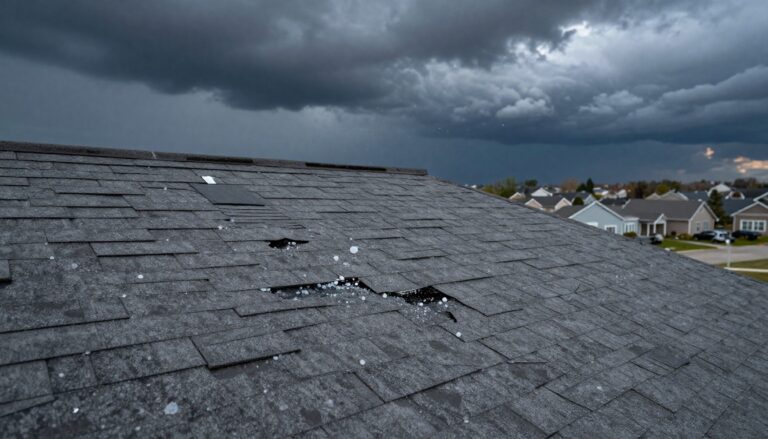
Hail damage vs weathering process usually comes down to pattern and texture. Hail damage leaves random, coin-sized bruises and sharp granule loss in scattered spots. The weathering process looks even, with gradual fading and uniform granule loss along edges and high-flow areas. If you see circular impact marks, matching hits on vents, and fresh granules in gutters, treat it like hail damage.
When This Applies
You’re responsible for a building with asphalt shingles (not just a house)
This applies to Saint Paul commercial properties that still use shingles on at least part of the roof: offices with pitched sections, retail storefront canopies, churches, and multi-unit buildings. It also applies when your building has shingle accents over a larger system, because hail damage can hit the shingle areas first, then water finds its way into transitions.
The goal is simple: tell whether you’re seeing normal wear and tear or hail damage that can shorten roof life fast. That difference matters for budgeting, tenant protection, and whether an insurance claim makes sense.
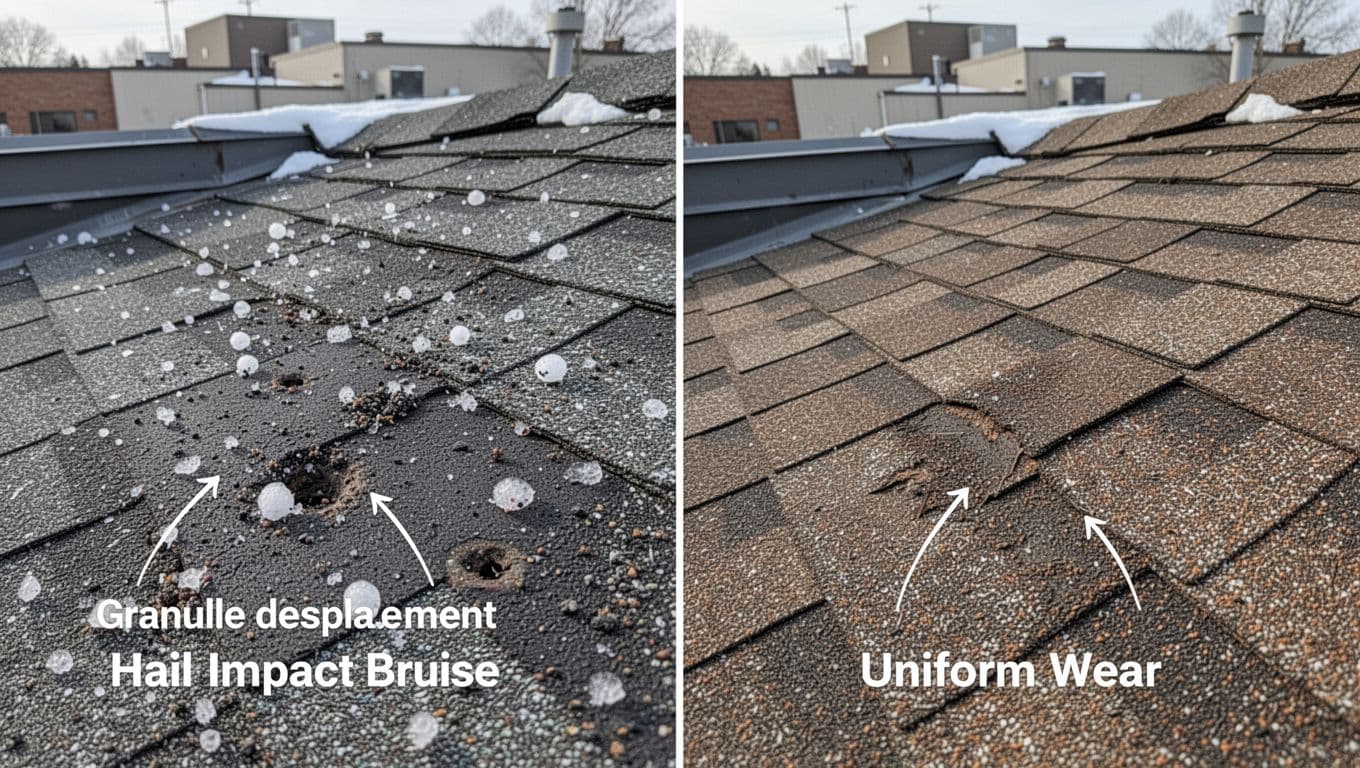
A quick rule: hail looks random, aging looks consistent. If the “damage” repeats in the same place on every shingle, it’s usually not hail damage.
Before you decide, keep in mind that Minnesota roofs often show mixed symptoms. A 15-year-old shingle can be aging, then hail damage strips granules off the weak spots.
It doesn’t apply to many commercial flat roofs (and a few other exceptions)
A lot of Saint Paul buildings have low-slope systems (TPO, EPDM, modified bitumen) rather than shingles. Those materials can show hail damage in different ways, such as membrane bruising, seam stress, or punctures. If you’re dealing with that scenario, you’re closer to commercial flat roof repair than shingle diagnosis.
When to treat it as a different problem
If any of these are true, don’t rely on shingle aging clues alone:
- The roof is a single-ply membrane or built-up roof.
- You’re seeing leaks around HVAC curbs, penetrations, or parapet walls.
- The “damage” is mostly at transitions, flashings, or valleys.
In those cases, even small storm damage can mean your commercial roof needs repair, because water entry points tend to expand with freeze-thaw cycles.
Granules, blisters, and thermal cracking: the look-alikes that confuse people
Granule loss, shingle blistering, and thermal cracking can mimic hail damage at first glance. Pattern is your best filter, because each one leaves a different “fingerprint.”
Here’s a quick visual guide you can use while reviewing photos from your roof or drone.
| What you see | Most likely cause | How it usually patterns | What it feels like up close |
|---|---|---|---|
| Clean circular divots with fresh dark asphalt bitumen showing | Hail impact | Random, scattered, varies by slope | Slightly dented “bruise,” sharp granule edge around impact marks |
| Even thinning and fading, more at edges and runoff lines | Normal wear and tear | Uniform across wide areas | Smooth wear on fiberglass reinforcement mat, no distinct circles |
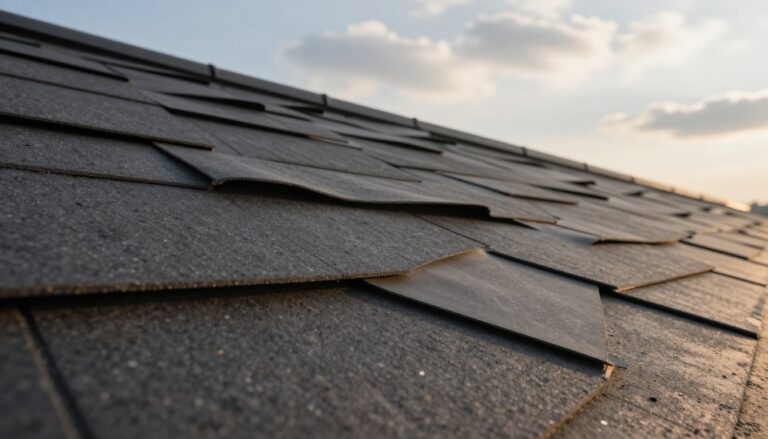
| Raised bumps, sometimes popped pits from shingle blistering | Shingle blistering | Clustered or widespread, not impact-shaped like storm damage | Raised bubble or crater, edges look baked |
| Thin, linear cracks aligned with shingle direction from UV exposure | Thermal cracking | Network of lines on cracked shingles, often near edges | Crack line you can trace with a fingertip |
| Interconnected hairline cracks worsened by UV exposure | Thermal cracking on cracked shingles | Parallel to shingle grain, unlike random storm damage | Brittle lines without bruising or impact marks |
For background on how granules shed over time in Minnesota weather, see this explanation of common granule loss causes and warning signs.
Photo examples
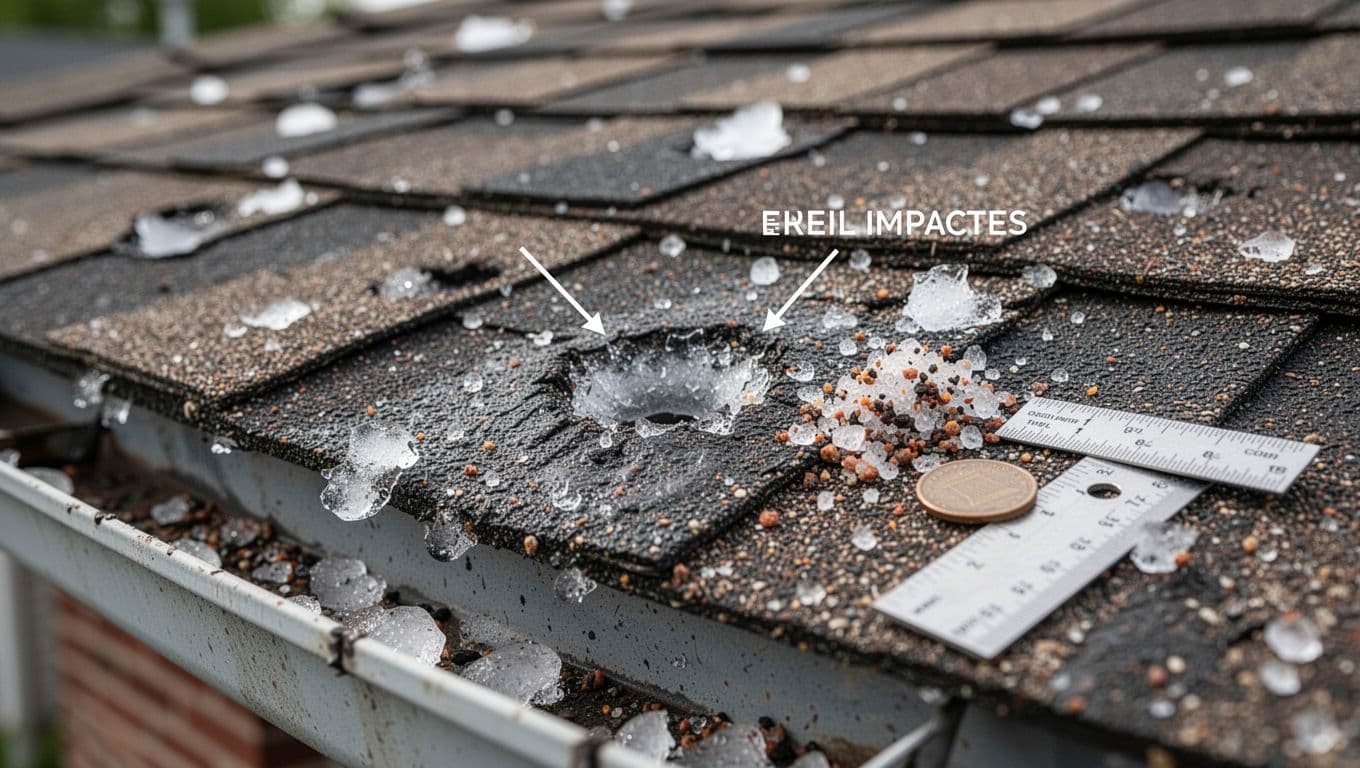
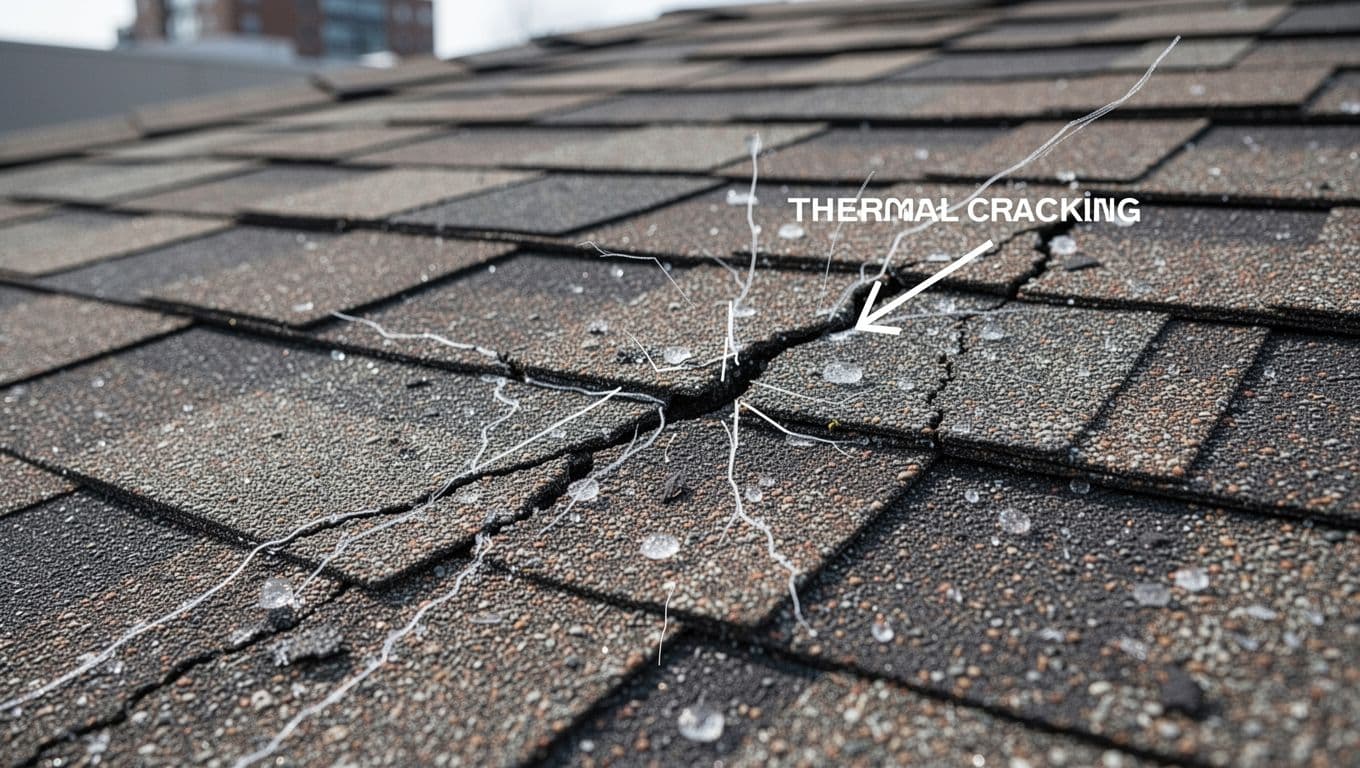
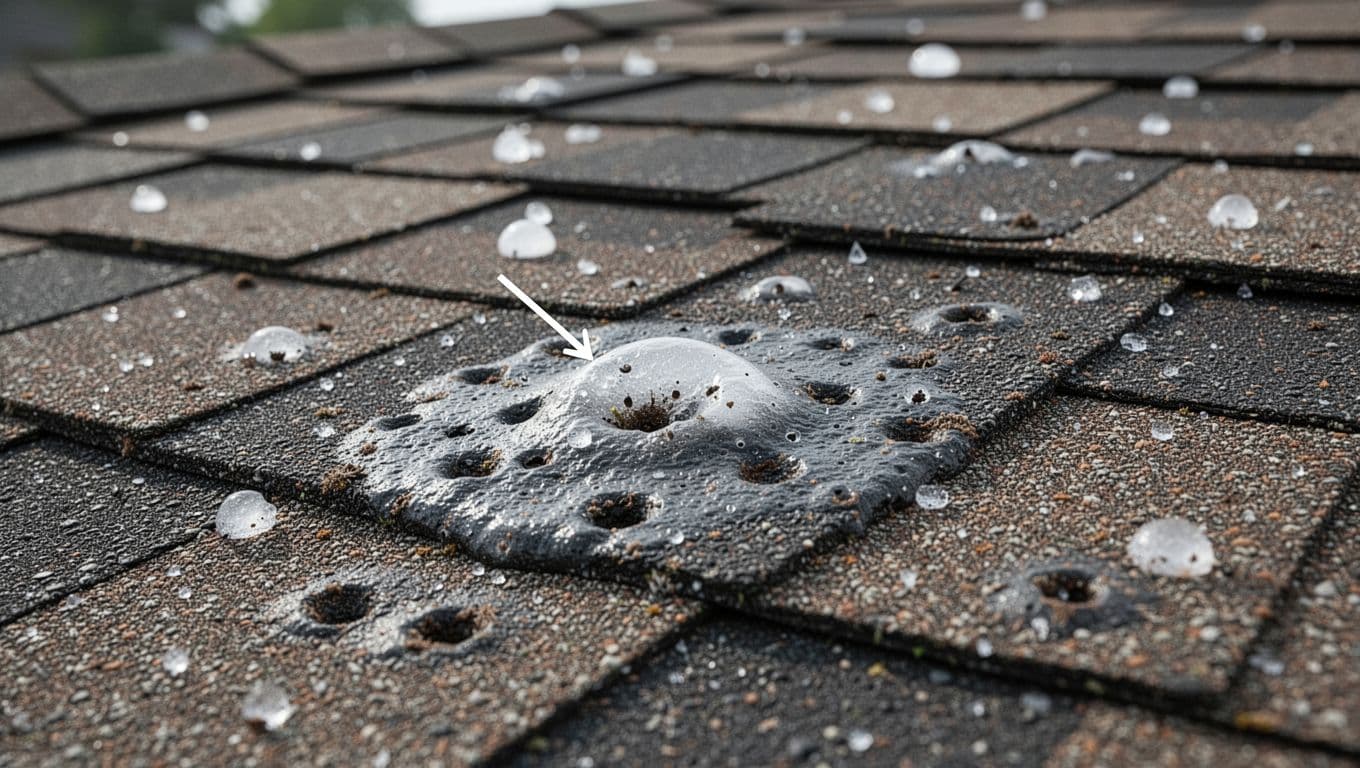
If shingle blistering is your main concern, this overview of what roof blisters are and why they happen helps explain the causes without mixing it up with storm impacts.
Step-by-Step
Steps 1 to 3: Use timing and collateral damage to confirm a hail event during roof inspection
- Match the date first. If a hailstorm hit Saint Paul within days or weeks, prioritize hail as the cause over aging; consider hailstone size based on the damage pattern.
- Check metal vents and dented gutters. Look for dented gutters, metal vents, gutter screens, downspouts, and roof caps with spatter marks; this collateral damage indicates hailstone size from a recent storm.
- Compare slopes. Hail often favors one or two exposures with collateral damage like dented gutters and metal vents, while aging usually shows on every slope.
Steps 4 to 6: Judge the shingle surface by pattern, not one “bad” spot
- Look for random circles with sharp edges. Hail knocks granules off in discrete, round-ish spots, not smooth fade.
- Separate blisters from impacts. A blister is raised (or a popped pit), while hail bruising looks pressed in.
- Trace cracks like a map. If you can follow long, connected lines, you’re likely seeing thermal cracking, not hail.
Steps 7 to 9: Take insurance claim-ready photos, then choose repair vs replacement
- Photograph wide and close views for your insurance claim. Take one photo per slope during roof inspection, then close-ups with a coin for scale, and note locations to show the insurance adjuster.
- Decide if repair is realistic for the insurance claim. A few isolated hits on asphalt shingles may be a repair, but widespread bruising can push toward commercial roof replacement to avoid ongoing patchwork; document for the insurance adjuster.
- Act fast if water shows up for the insurance claim. If stains spread, insulation gets wet, or flashing areas open up, your commercial roof needs repair even if shingles “look okay” from the ground.
FAQ
Should I expect hail damage to show up as leaks right away?
Not always. Hail damage can remove granules and bruise the mat without an immediate hole. Over time, UV and freeze-thaw can widen those spots, then leaks start months later.
When leaks do show up fast
Leaks can appear quickly when hail damage also affects the roofing underlayment, flashing, vents, ridge caps, or pipe boots.
Can normal aging look worse in Saint Paul than in other states?
Yes. Temperature swings, ice, and roof snow loads speed up granule loss and cracking. That’s why uniform wear can look dramatic while still being “normal” for the roof’s age in Saint Paul roofing.
What if I see granules in the gutters, does that prove hail?
No. Granule loss in gutters can come from aging, foot traffic, or poor ventilation systems. Hail damage becomes more likely when you also see localized bald spots that match round impact marks. Have a professional roofer conduct a formal roof inspection.
If the roof is partly flat and partly shingle, what should I prioritize?
Prioritize the transitions and the lowest-slope areas first, because water moves there. A shingle issue like missing shingles or curling shingles might be simple, while the low-slope section could require commercial flat roof repair to stop hidden moisture damage and soft spots.
What happens if I wait until spring to inspect after a winter hailstorm?
You can lose evidence. Meltwater and debris can soften edges, and repairs from other trades can blur impact marks from hail damage. If you’re considering a claim or a larger scope, schedule documentation early with a professional roofer, even if final work waits for warmer days.
Granule loss, blisters, and cracking can all be real problems, but they don’t all point to hail damage. Once you sort the pattern, the decision gets clearer: spot repair, targeted replacement, or commercial roof replacement to reset the system before small failures spread in your asphalt shingles.
Need a roof inspection in Saint Paul or the Twin Cities? Call Sellers Roofing Company at +1-651-703-2336 or schedule a free estimate. We are a black-owned, NMSDC-certified MBE roofing contractor with 9+ years experience.