Last updated: 2026-08-01 by Ted Sellers, Owner
Yes, you can replace a commercial flat roof in a Minnesota winter, if the roof system, weather window, and crew setup fit cold-weather installation. It’s often the right choice when leaks, wet insulation, or interior damage make waiting risky. Still, some materials, safety limits, and site conditions make a repair-first plan smarter.
When This Applies
Who should move ahead before spring
This applies to owners and managers of warehouses, offices, retail buildings, schools, and other low-slope properties with active roof trouble. If water is already getting inside, or moisture is trapped under the membrane, delay usually makes the bill worse.
For many owners, a winter commercial flat roof replacement in Minnesota is a practical move because it stops interior damage before freeze-thaw cycles spread it. That matters even more in occupied buildings, where leaks can hit tenants, inventory, equipment, or ceiling systems.
A full replacement also makes sense when patching has become routine. If crews keep chasing new leaks across the same roof, the roof field may be failing as a system, not in one isolated spot.
If water is already inside the building, waiting for spring often costs more than controlled winter work.
When waiting is smarter
Sometimes the right answer is smaller. A single puncture, one failed flashing, or a short seam split may call for commercial flat roof repair, not a tear-off. That is especially true when insulation is dry and the rest of the membrane still has life left.
Key exceptions that change the answer
Hold off on replacement if the contractor can’t create dry work zones, store materials at the right temperature, or safely control snow and ice on the roof. You should also pause if access is too risky for cranes, dumpsters, or crew movement.
This quick comparison helps frame the decision:
| Situation | Best move |
|---|---|
| Active leaks and wet insulation | Replace in winter |
| Isolated defect and dry roof field | Repair and monitor |
| No enclosure plan or unsafe roof access | Wait if possible |
| Occupied building with phased work controls | Winter replacement can work |
The big point is simple. Replace now when damage is spreading or the roof can’t stay dry. Wait when the issue is small, stable, and safely repairable.
Step-by-Step
How a winter commercial roof replacement is handled
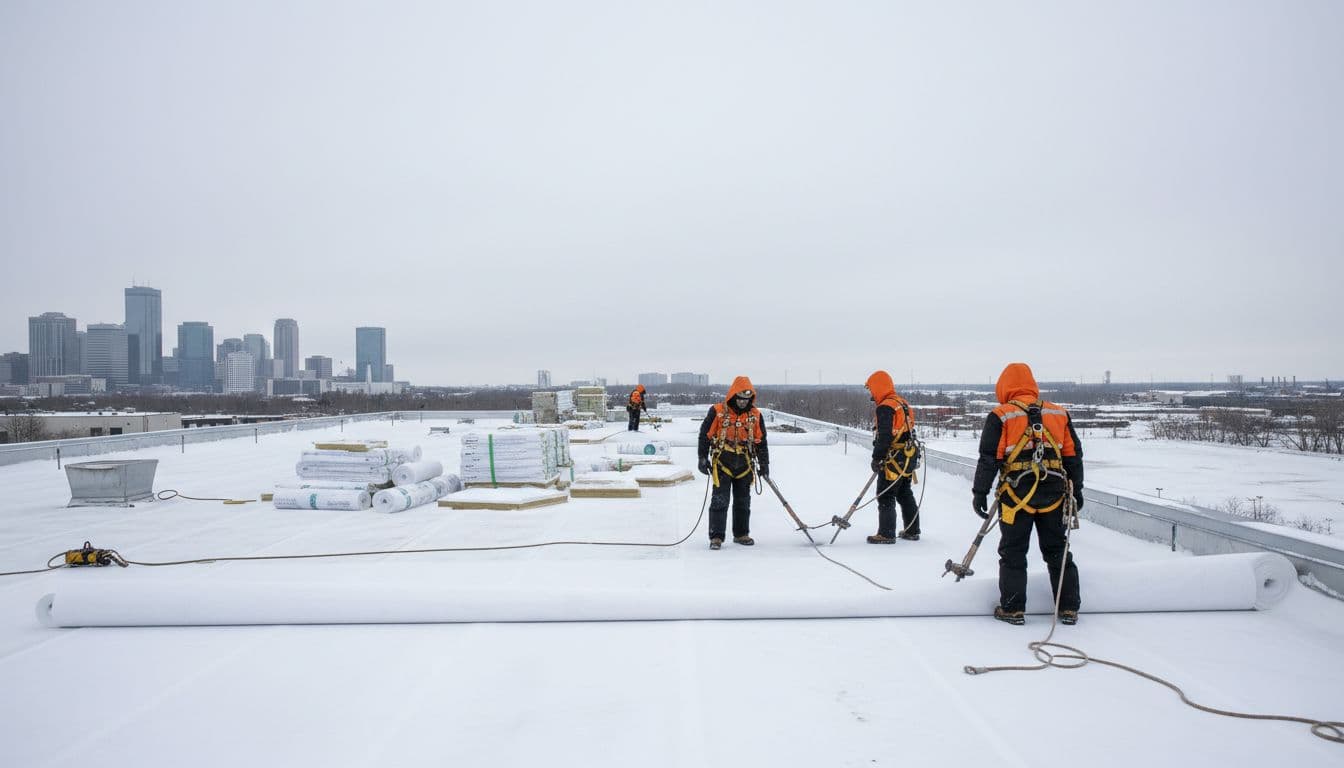
Cold-weather roofing works when the plan is tight and the open roof area stays small.
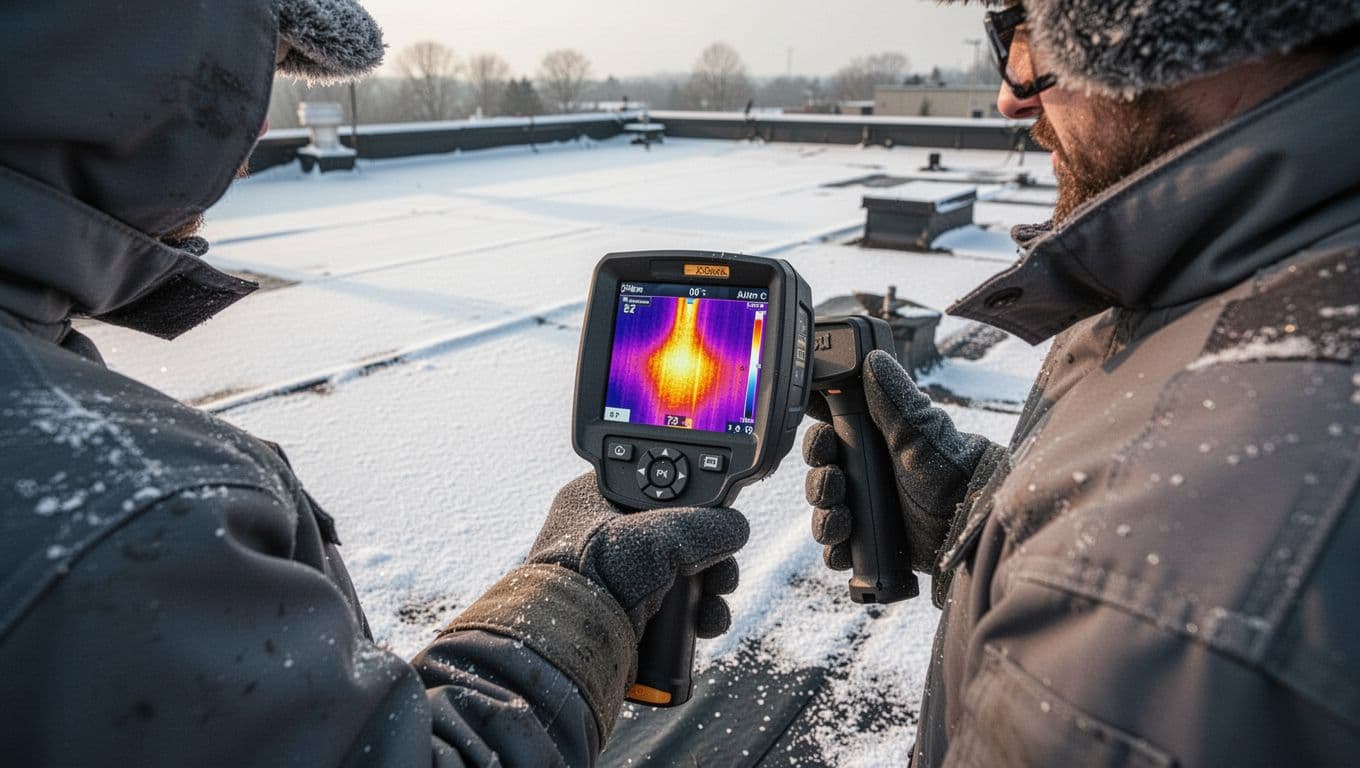
- Confirm the scope with moisture testing. A leak stain alone does not tell you how far damage has spread. Good contractors use moisture scans, probes, or core cuts to find wet insulation and weak sections. If damage is limited, repair may hold until spring. If moisture shows up in several areas, a full commercial roof replacement is often the better call.
- Choose a roof system that fits winter conditions. Cold affects adhesives, sealants, and membrane handling. Because of that, the attachment method matters as much as the membrane itself. Heat-welded seams, mechanically attached assemblies, or heated material staging may all be part of the plan, depending on the roof and forecast.
- Build the site and safety plan before tear-off starts. Snow removal, fall protection, material storage, access routes, and tenant communication need to be mapped out first. Daylight is shorter in winter, so wasted time hurts twice. A contractor offering Saint Paul commercial roofing services should show you the phasing, protection plan, and cold-weather limits before work begins.
- Open only what the crew can dry and close the same day. This is the heart of winter success. Crews should tear off in controlled sections, protect edges, and stop if the deck or insulation becomes wet. Large open areas are risky in any season, but in winter they can turn into a major problem in hours.
- Install and test as the job moves. Each section needs a dry substrate, solid fastening, tight seams, and clean flashing details around curbs, drains, and parapets. Crews should check seam quality and roof tie-ins while the work is in front of them, not after the whole field is covered.
- Close out with records and a follow-up plan. Ask for photos, moisture findings, material data, warranty details, and a punch list. A spring re-check is smart after a winter project because the first thaw can reveal a small detail that needs adjustment.
Repair now or replace now?
Signs your commercial roof needs repair, not replacement
Sometimes a commercial roof needs repair rather than a full new system. That is usually the case when leaks are isolated, the membrane field is still sound, insulation remains dry, and earlier repairs have held for a reasonable time.
If the leak source is not obvious, start with commercial roof leak detection in Saint Paul. That step matters because water on a flat roof often travels before it shows up inside.
Repairs also make sense when you need time to budget, stage a tenant plan, or coordinate other building work. In those cases, the goal is to keep the roof dry and stable, not pretend a failing system is healthy.
Signs replacement should not wait
The answer changes when leaks show up in different areas, insulation is saturated, the membrane is shrinking, or flashing failures keep returning around roof penetrations. Soft spots underfoot are another warning sign. They can point to trapped moisture or a weakened substrate.
Winter setup can raise labor costs because crews may need heat, snow removal, and smaller work zones. Still, waiting often costs more if the roof keeps taking on water. Ceiling damage, heat loss, tenant complaints, spoiled stock, and emergency calls can erase any savings from delaying the job.
What winter changes for budget and timing
Why winter replacements can cost more upfront
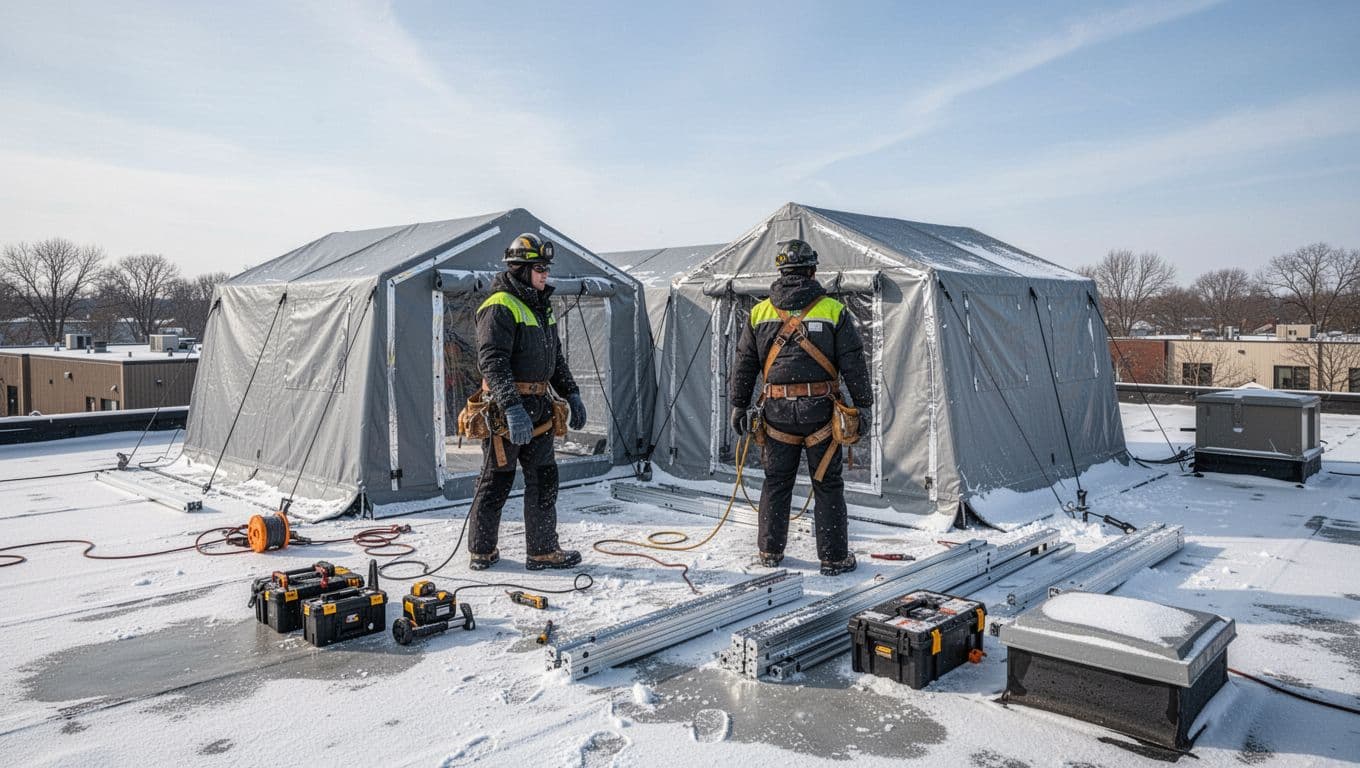
Cold-weather work usually adds labor and setup. Heated tents, snow clearing, thaw time, shorter daylight, and material handling all take time. Some roof systems also have tighter installation windows in low temperatures, which can limit scheduling flexibility.
Because of that, a cheap estimate with no winter controls is not a good sign. If a proposal skips material storage, weather holds, or dry-in protection, it is missing the hardest part of the job.
Why waiting can cost more overall
Delay has a price too. Wet insulation loses performance, and freeze-thaw cycles can widen defects that were small a week earlier. Meanwhile, interior finishes keep getting hit, and emergency repairs tend to cost more per visit.
For business owners, the real comparison is rarely winter cost versus spring cost. It is controlled work now versus uncontrolled loss over the next few months.
Conclusion
The practical takeaway
Minnesota winter does not rule out roof replacement. Poor planning does. If your flat roof is wet, leaking, or failing across broad areas, a controlled winter replacement is often the right move.
If the roof is still dry and damage is limited, repair it, watch it closely, and schedule the larger project for a better weather window. The decision comes down to moisture, material limits, and whether the contractor can keep the building protected every day of the job.
FAQ
Will my business have to close during a winter roof replacement?
Usually not. Most commercial projects are phased so crews work in limited sections while the building stays open. However, spaces with sensitive operations may need off-hours work or temporary adjustments for noise, odor, or access.
For food, medical, or data-sensitive spaces
Ask for a written protection and phasing plan before the first day on site.
What happens if it snows during the project?
A prepared crew stops opening new areas, protects exposed sections, clears moisture, and resumes only when the substrate is dry. Winter jobs succeed because the contractor plans for weather interruptions, not because the forecast stays perfect.
Are winter-installed flat roofs harder to warranty?
Not if the roof is installed within manufacturer rules. Documentation matters more than the month on the calendar. Material temperatures, seam testing, dry conditions, and daily records help protect the warranty.
Can I replace only one section of a commercial flat roof?
Sometimes, yes. Section replacement works when damage is contained and new material can tie into the existing roof reliably. If leaks are spread across multiple zones, sectional work often turns into repeat spending.
Does insurance pay if winter leaks force a replacement?
It depends on the cause of loss. Sudden storm damage may be covered, while age and wear usually are not. Even when full replacement is not covered, insurers still expect owners to act fast and limit further damage.
If you may file a claim
Keep photos, moisture reports, and invoices from the first sign of the problem.
Need a roof inspection in Saint Paul or the Twin Cities? Call Sellers Roofing Company at +1-651-703-2336 or schedule a free estimate. We are a black-owned, NMSDC-certified MBE roofing contractor with 9+ years experience.