Last updated: 2026-09-28 by Ted Sellers, Owner
Can You Change Roofers During an Insurance Claim?
Yes, you usually can change roofers after insurance approves your claim. The approval is tied to the covered loss, not to one contractor. The switch gets harder if you signed a binding contract, assigned claim rights, accepted materials, or allowed permanent work to start. Move quickly, document the change, and keep the claim file clean.
When This Applies
You can usually switch on an approved commercial claim
This applies to commercial property owners, facility managers, and business operators who have an approved roof claim but want a different contractor. A carrier may suggest a vendor, but that does not mean you must use that company. In most cases, you can still hire your own Sellers Roofing Company’s commercial team.
The rule is simple. Insurance approves damage, scope, and payment terms. You choose who does the work, unless a signed agreement limits that choice.
When changing roofers gets harder
Problems usually start with paperwork, not with the insurer. If you signed a contingency contract, work authorization, or assignment of benefits, the first roofer may claim a right to the job or a cancellation fee. The same issue can come up if permits were pulled, materials were ordered, or crews already began permanent repairs.
Check for assignment language
Read every page for language that transfers claim rights or gives the roofer control over payment. If that language is there, get legal advice before you switch on a large commercial loss.
A quick comparison helps:
| Situation | Usually easy to switch? | Why |
|---|---|---|
| Estimate only, no signed contract | Yes | No binding job commitment |
| Signed contract, no work started | Maybe | Release or cancellation terms may apply |
| Tear-off or permanent repairs started | Harder | Evidence, scope, and payment issues are already in motion |
Timing matters because commercial claims can change shape fast. A small puncture may only need a commercial flat roof repair. Widespread wet insulation, failed seams, or membrane shrinkage may push the file toward commercial roof replacement. If your commercial roof needs repair right away because water is entering the building, temporary dry-in work is still reasonable.
Edge cases that change the answer
The switch may not help if the claim was approved only for a limited repair and the roof is mostly worn out. Carriers often deny age, neglect, ponding, or long-term seepage. They may also split the decision, paying for fresh storm damage while rejecting older weak spots.
That is why a second roofer should separate old wear from new damage. A past patch does not erase coverage for a new opening in another area. Still, if older repairs caused the current leak, the insurer may narrow the claim.
Step-by-Step
Follow this order when switching roofers
Use this process to change roofers without muddying the claim file.

- Get the full claim file. Ask for the adjuster estimate, photos, roof diagram, payment letter, and any engineer findings. Also confirm whether the first payment is actual cash value or replacement cost, because more money may be released after the work is done.
- Read the first roofer’s contract line by line. Look for cancellation fees, assignment language, material orders, financing terms, and notice rules. If the wording is broad, ask for a written release before you move on.
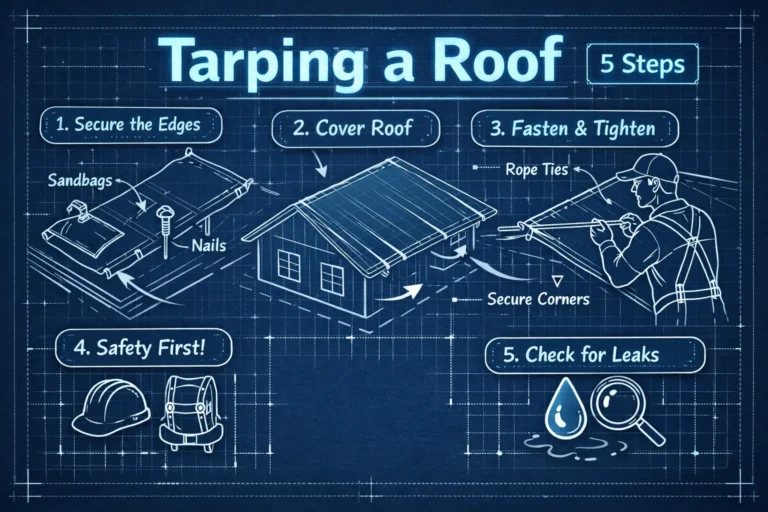
- Stop permanent work, but keep mitigation in place. Tarps, temporary seam sealing, interior protection, and drain clearing usually support the claim because they limit more damage. Large tear-off work before the handoff can remove proof the insurer still needs.
- Bring in a second roofer for a fresh inspection. Ask for clear photos, moisture readings, test cuts when needed, and a scope that separates old wear from fresh damage. On large low-slope roofs, hidden moisture often travels well beyond the visible leak.
- Compare scope, not only price. Match membrane areas, insulation thickness, flashing, edge metal, drains, crane time, permits, and disposal. A low payout often comes from missing line items, not from one bad unit price.
- Send written notice to both parties. Tell the first roofer that you are stopping the job, and tell the insurer who will handle future site access and claim updates. Keep the message short, factual, and dated.
- Hold the final contract until the new scope is clear. If the second roofer finds wider damage than the carrier approved, ask for a supplement or reinspection before permanent work starts. That is often the point where a repair claim becomes a larger replacement claim.
Changing roofers does not restart the claim. It changes who documents the scope and who performs the work.
What does the insurer care about when you switch contractors?
The carrier cares about cause, scope, and proof
The insurer usually does not care whose logo is on the truck. It cares whether the work matches the covered loss. That means the new roofer must show what failed, when it failed, and how far the damage spread.
Good records matter more on commercial roofs because water rarely drops straight down. A ceiling drip in one suite may come from a breach many feet away. If the path is unclear, commercial roof leak detection Saint Paul reports can help show where moisture entered and what the insurer should pay for.
A new roofer can change the approved scope
This is common after tear-off or deeper inspection. The carrier’s first estimate may allow a patch, but the second roofer may find wet cover board, soaked insulation, damaged flashing, or code-driven edge details that were missed on day one.
That does not mean every bigger estimate is valid. The added work must tie back to the same covered event. A supplement is meant to correct missing covered work, not to add upgrades or fold in old maintenance. If only one section is storm-damaged, the insurer may approve a partial repair. If moisture is spread across the field of the roof, commercial roof replacement may be the sound scope.
How do you protect the claim during the switch?
Keep evidence and invoices organized
Take dated photos before anyone removes membrane or insulation. If soaked material must come out for safety, photograph it in place and save a sample when you can. Once damaged layers hit the dumpster, the argument gets harder.
Keep mitigation work separate from maintenance. If one invoice mixes old curb sealing, drain cleaning, and new storm repairs, the insurer may question what belongs to the covered loss.
Watch the money trail before you sign
Commercial claim checks may name the owner, lender, or mortgage company. That can slow disbursement even after you switch roofers. Also, do not assume the first check is the final number. Many claims pay depreciation later, after finished work and closeout photos are submitted.
If the first roofer claims a fee, push the discussion into writing. If the dollars are large and the dispute turns on contract rights, appraisal, or denied scope, bring in coverage counsel. That is especially wise when the insurer says the roof only needs a patch and your new roofer shows broader failure.
The practical takeaway
You can usually change roofers after insurance approval, but the cleanest time to do it is before permanent work starts. Once contracts, materials, or tear-off are in play, the switch becomes a contract problem as much as a roofing problem.
Keep the file tight. Compare scopes line by line, protect the evidence, and tell the insurer who is now handling the work. That keeps a simple contractor change from turning into a payment dispute.
FAQ
Can my insurer force me to use its preferred roofer?
No. The carrier can suggest contractors, but the property owner chooses who does the work. The insurer still has the right to review scope, price, and documentation.
What if I already signed a contingency agreement with the first roofer?
You may still be able to switch, but the contract controls the risk. Some agreements allow cancellation. Others allow the roofer to seek a fee once the claim is approved.
If the contract is vague
Ask for a written release and keep all replies. On a large commercial claim, a lawyer should review any assignment or payment language.
What happens if the first roofer already did emergency work?
That usually does not block a change. Reasonable tarping, leak tracing, interior protection, and temporary sealing are often part of mitigation. Pay for that work if it was authorized and documented, then separate it from the new contract.
Can I switch roofers after the insurance check arrives?
Yes, but check who is named on the check first. If a lender or mortgage holder is included, you may need endorsements or draw paperwork before the new roofer gets paid.
What if the new roofer says the roof needs replacement, not a repair?
Ask for proof, then send it to the carrier as a supplement or reinspection request. Fresh photos, moisture readings, and test cuts should explain why a commercial flat roof repair will not hold and why the approved scope should expand.
Need a roof inspection in Saint Paul or the Twin Cities? Call Sellers Roofing Company at +1-651-703-2336 or schedule a free estimate. We are a black-owned, NMSDC-certified MBE roofing contractor with 9+ years experience.