Last updated: 2026-08-01 by Ted Sellers, Owner
Step flashing and counter flashing provide a two-part defense against leaks where a roof meets a wall or chimney. Step flashing consists of a series of small metal “steps” woven with each shingle course, while counter flashing serves as the top cover that blocks water from getting behind the base metal. From the ground, you can often spot trouble by looking for heavy caulk lines, wavy shingles at walls, rust stains, or missing kickout flashing.
When This Applies
Where business owners run into these details
Even if you own a mostly flat commercial building, step flashing and counter flashing still matter more often than people expect, especially for transitions between different roof levels. Many Minnesota properties have sloped sections, entry canopies, mansards, or rooflines that die into brick where step flashing and counter flashing prevent leaks at these critical junctions.
Chimneys are less common on modern commercial sites, but parapet walls, masonry screen walls, and mechanical penthouses create similar “roof meets vertical wall” leak points that integrate these details into the overall roofing system.
These details also show up when you’re chasing a stubborn leak. Water can slip behind siding, travel inside a wall cavity, then appear far away, causing moisture intrusion. That’s why flashing problems can look like a random stain today and a soaked office ceiling next month. If you’re already seeing interior signs, it’s smart to pair visual checks with commercial roof leak detection Saint Paul so you’re not guessing.
When flashing terms don’t apply (or look different)
Not every roof edge uses step flashing. A fully adhered single-ply roof with parapets usually relies on membrane base flashing, termination bars, and metal coping, not shingle-style step pieces.
Also, some walls use different counter flashing methods. For example, metal panel walls may use integrated receiver flashing. Still, the “two-layer overlap” idea stays the same: one layer turns up from the roof, the other covers it from the wall side.
Step flashing counterflashing: what they do at walls and chimneys
Step flashing: small pieces, big job
Step flashing consists of many individual L-shaped pieces of roof flashing, installed one per shingle course along a sidewall. These pieces, typically made from aluminum flashing or galvanized steel, function like shingles made of metal. Each “step” overlaps the one below, so water keeps moving down and out.
A common bad install uses one long piece of apron flashing or continuous flashing where step flashing should be. That shortcut can trap water at nail lines and seams.
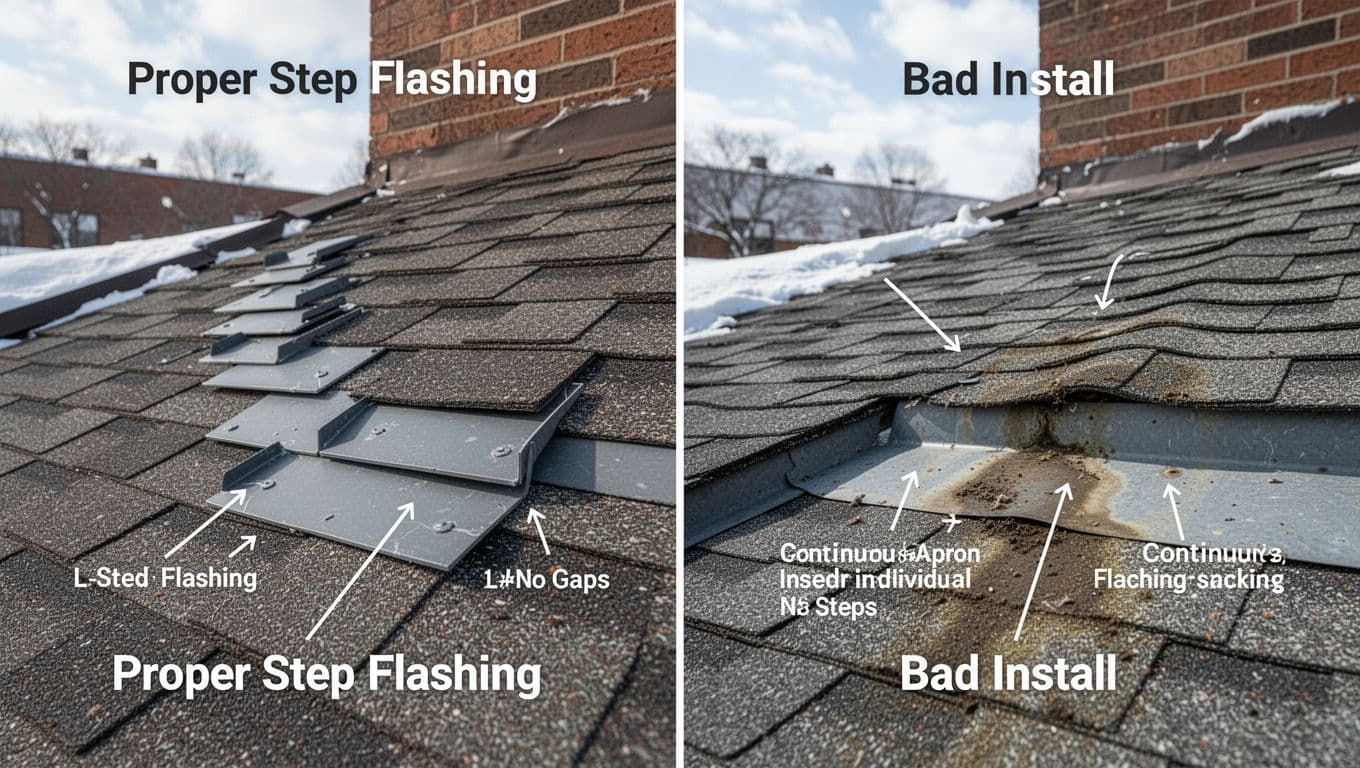
The bottom of that wall intersection should also kick water away from the siding. That’s the job of kickout flashing. When it’s missing, water can run straight behind the wall and stain the exterior.
Counter flashing: the cover that keeps water out
Counter flashing is the top layer of roof flashing. It protects the upper edge of base flashing, such as step flashing at chimneys or base flashing at masonry and parapets. Proper installation of chimney flashing on brick chimneys and many masonry walls follows building codes by cutting a reglet into masonry joints, then bending the cut-in counterflashing into that groove. The wall physically holds it in place, often using copper flashing for added durability.
For a plain-language breakdown of what counter flashing does, see this counter flashing installation guide.
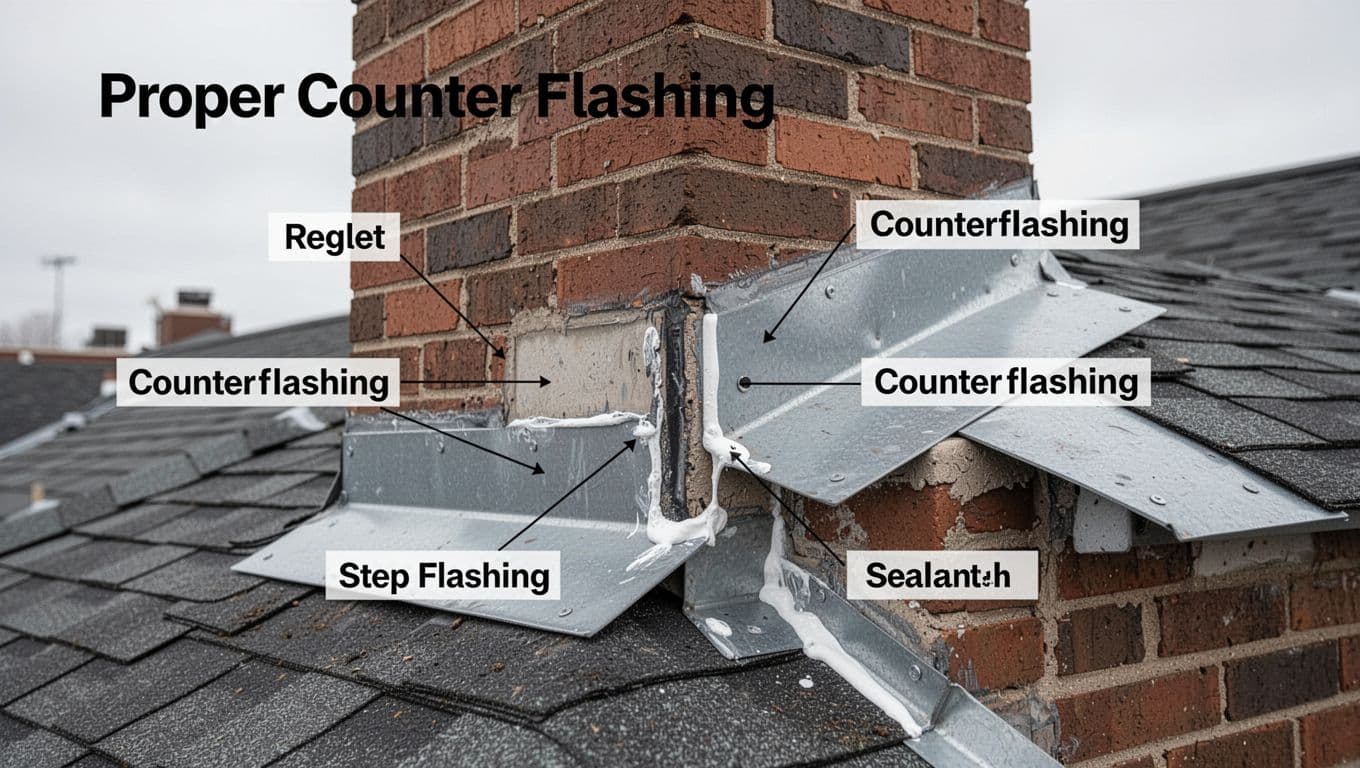
The most common failure is surface-mounted counterflashing that’s only face-sealed to the brick with sealant. Caulk is not a structural fastener. Minnesota’s temperature swings can open that seam fast.
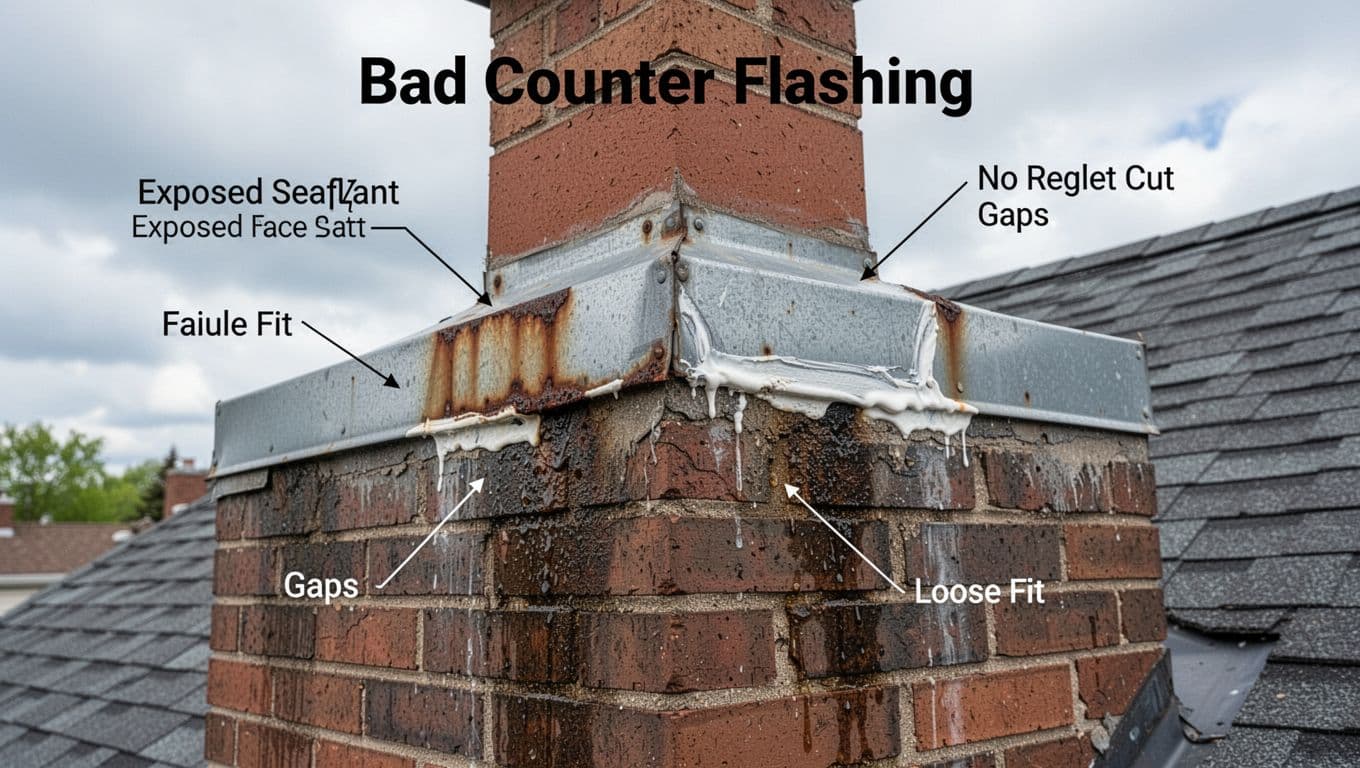
If you can clearly see a thick, smeared caulk bead along brick, treat it as a warning sign, not a “seal.”
For additional context on why roof flashing matters across the roof system, this roof flashing overview helps frame the bigger picture.
Why Minnesota freeze-thaw makes sloppy flashing show fast
Aluminum flashing, galvanized steel, and other roof flashing materials expand and contract. Sealants age. Ice backs water up under shingles along each shingle course. As a result, a marginal detail in October can turn into a mid-winter drip.
That’s also why small flashing defects sometimes get misdiagnosed as “the roof is old.” In reality, one bad wall intersection with poor chimney flashing can mimic the symptoms of a larger failure, and it can influence timing on a commercial roof replacement decision if the leaks keep recurring.
How to spot a bad install from the ground (photo examples)
Sidewall red flags you can see without climbing
Start where a sloped roof meets a vertical wall, focusing on the sidewall flashing, especially on dormers, canopies, or mansards. From the ground (binoculars help), look for straight lines and tight layering in the roof flashing.
Bad installs often show themselves as poor sidewall flashing with:
- A wavy shingle line running parallel to the wall
- Exposed metal edges or improper drip edge that look face-nailed
- Dark streaks or staining below the intersection
- No kickout flashing at the bottom corner (water stains often start there)
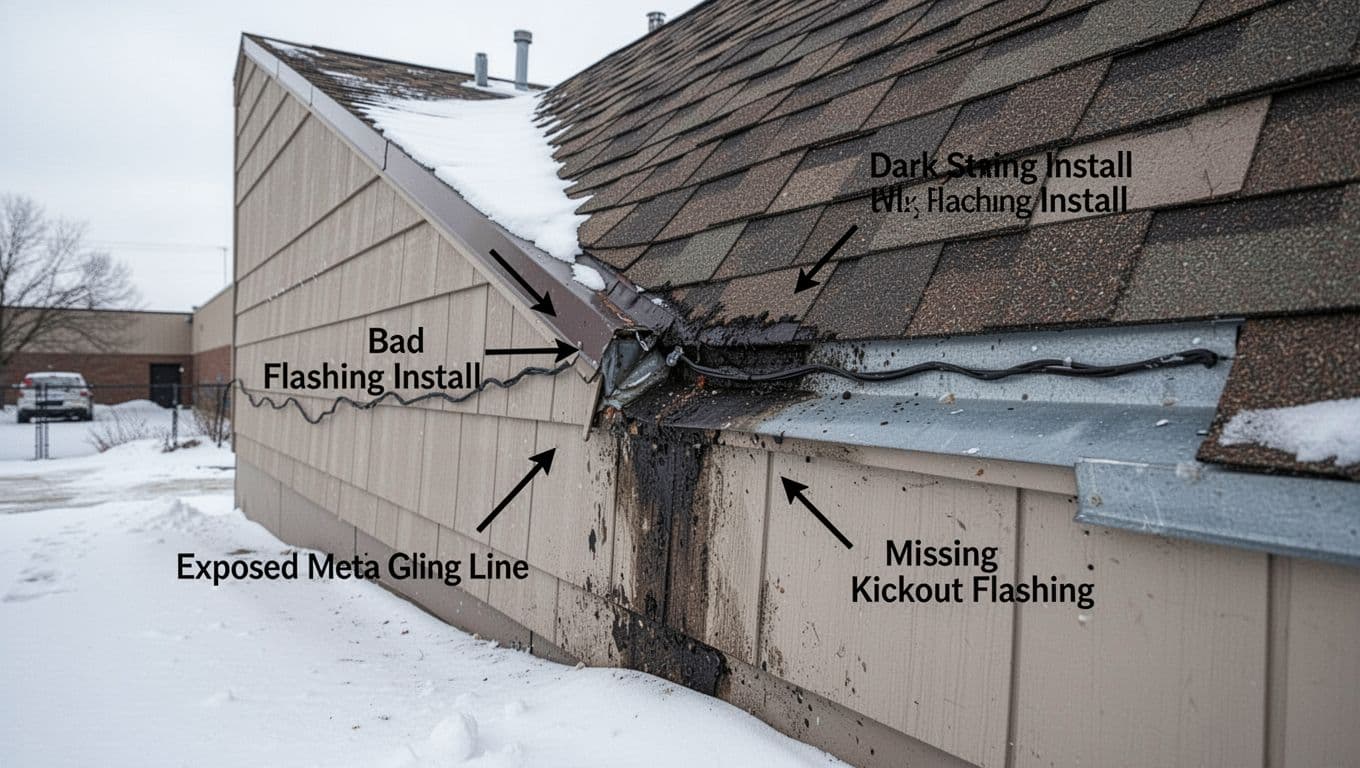
When you see staining plus surface caulk, especially without kickout flashing, assume water damage is getting behind the wall. At that point, your commercial roof needs roof leak repair even if the field shingles look fine.
Chimney and masonry warning signs that suggest an active leak path
On brick, good chimney flashing looks tucked in and uniform, a sign of proper installation. Bad chimney flashing or roof flashing often looks like an add-on strip with sloppy sealant. Rust streaks are another clue, because water carries metal oxidation down the face.
If you want more examples of what step flashing trouble can look like as it ages, this article on signs of step flashing damage is a helpful reference.
If you manage multiple buildings, consider formalizing these checks as part of your maintenance plan, alongside Saint Paul commercial roofing services when you need documented repairs.
Step-by-Step
A quick ground check you can repeat each season
- Pick a dry day with bright light, then walk the full perimeter of the building.
- Use binoculars or phone zoom, never climb without training and fall protection.
- Mark every roof-to-wall intersection with step flashing, including canopies, mansards, and penthouse walls.
- At sidewalls, inspect sidewall flashing and look for a straight shingle line, not a buckled or “corded” look.
- Scan valleys for deteriorated or missing valley flashing.
- Scan for missing kickout flashing at the bottom of wall intersections.
- At chimneys or brick walls, check for counter flashing tucked into mortar, not just caulked on. Also examine skylight flashing and vent pipe flashing around roof penetrations.
- Note rust, gaps, lifted metal corners, and staining on siding or masonry below flashing, with special attention to valley flashing seams.
- If you find two or more red flags, schedule a professional evaluation before water spreads.
FAQ
Can step flashing and counter flashing be used on commercial roofs?
Yes, step flashing and counter flashing serve as critical roof flashing components on commercial buildings with shingles, tile, or steep-slope sections of the roofing system. On low-slope membranes, the equivalent involves base flashing plus a counter flashing or termination detail, often found at parapets, screen walls, and roof penetrations.
What’s the biggest “from the ground” sign that step flashing is wrong?
A long, continuous metal strip running up a sidewall is a common giveaway. Step flashing should appear segmented by shingle courses through the proper weave pattern used in installation, even if you can only see hints of it.
Is caulk alone ever an acceptable counter flashing method?
When sealant is present but not the main defense
Sealant can support a reglet-cut counter flashing detail, but improper sealant usage alone should never hold metal to brick; it invites failure and risks like galvanic corrosion from dissimilar metals. Designs relying solely on a visible caulk bead for watertightness violate building codes and remain fragile.
How does this relate to commercial flat roof repair?
Many “flat roof leaks” trace back to wall flashing, coping joints, or transitions where the roofing system meets vertical construction. In other words, commercial flat roof repair frequently requires addressing roof flashing terminations and metal details, not just membrane patches.
What happens if I ignore a bad flashing install?
Water can rot sheathing, saturate insulation, and damage interior finishes through moisture intrusion. Over time, repeated wetting leads to water damage, forcing larger scopes that include partial tear-offs or even a full commercial roof replacement earlier than planned, often necessitating urgent roof leak repair.
Small metal details decide whether water drains away or sneaks into your walls. If ground-level checks point to step flashing counter flashing problems in the roofing system, act early. Fast repairs usually cost less than moisture cleanup and downtime. When the signs aren’t clear, a targeted inspection can confirm whether the issue is local flashing, or a wider system failure.
Need a roof inspection in Saint Paul or the Twin Cities? Call Sellers Roofing Company at +1-651-703-2336 or schedule a free estimate. We are a black-owned, NMSDC-certified MBE roofing contractor with 9+ years experience.