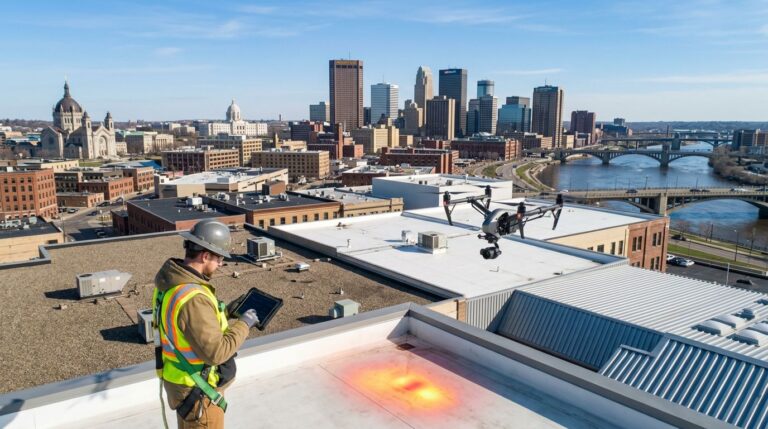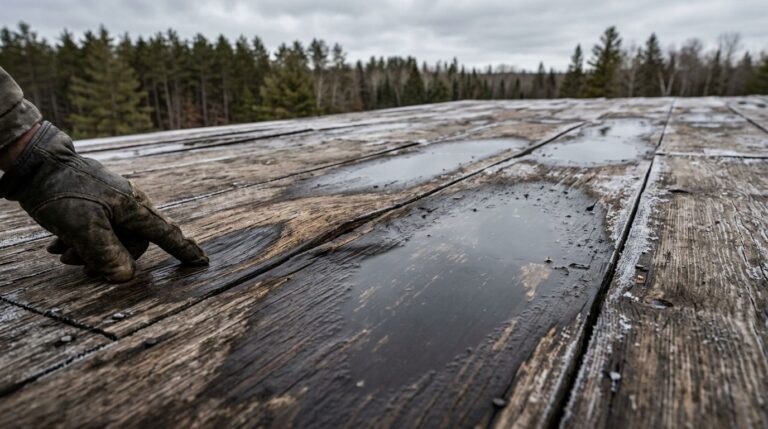
Last updated: 2026-10-01 by Ted Sellers, Owner
A rooftop unit can look stable from the parking lot while meltwater works beneath its curb flashing. On Minnesota commercial roofs, snow and ice roof damage often begins around drainage paths, membrane transitions, or old repair details.
Short answer: Yes. Snow and ice roof damage can affect rooftop HVAC curbs by blocking drainage, holding meltwater at flashing, and forcing freeze-thaw movement at seams and sealants. Heavy snow and drifting can increase the load and water exposure. The result can be lifted membrane, failed termination details, wet insulation, and interior leaks. HVAC curb damage doesn’t automatically require roof replacement, but it does require a careful inspection. The risk is highest on TPO roofing, EPDM, modified bitumen, and BUR systems.
The right response isn’t to chip away ice and hope for the best. Identify the water path, protect the roof membrane, and document any winter roof damage.
Key Takeaways
- Snow and ice can damage commercial HVAC curbs by blocking drainage, ponding meltwater against flashing, and stressing seams and sealants through freeze-thaw movement.
- Inspect curb corners, membrane seams, base flashing, termination points, drains, and insulation after a thaw, especially when interior stains or active leaks appear.
- Use trained roof personnel and membrane-safe removal methods; do not chip, scrape, or plow ice against TPO, EPDM, modified bitumen, or BUR systems.
- Localized defects may only need targeted repairs, while widespread wet insulation, damaged decking, recurring leaks, or broad membrane failure can make replacement more practical.
- Document roof and interior conditions before permanent work begins to support safe repairs, maintenance decisions, and any insurance claim.
When This Applies
Low-slope roofs with rooftop equipment
This applies to warehouses, retail buildings, offices, schools, churches, and multifamily properties with rooftop units, parapet walls, internal drains, scuppers, and low-slope membranes.
Commercial drainage and HVAC curb issues differ from residential eave icing. A commercial flat roof can hold snow for days. Daytime meltwater then runs toward drains and HVAC curbs. If ice blocks the exit, water can pond against curb flashing and move through an open seam or failed seal.
Buildings with repeated ponding, aging rooftop units, or known drainage issues need close attention after snow and overnight freezes. A commercial building winter-preparation guide is a useful reminder that winter records matter before a loss occurs.
Steep-slope sections have different problems
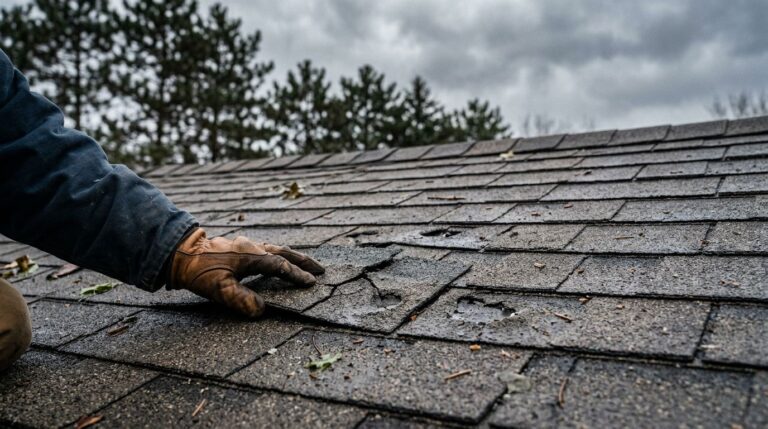
Asphalt shingles and metal roofing can form classic ice dams at eaves, valleys, and drainage edges near gutters and downspouts. An ice shield beneath shingle sections may limit backup, while icicles often collect at colder edges.
Uneven roof temperatures, often linked to heat loss, melt snow uphill, then refreeze water at colder edges.
That differs from a low-slope curb leak. Roof ventilation and air leakage affect attic melting, not a blocked commercial drain or ponding beside a rooftop unit.
A mixed-use building may have shingles above an entrance canopy and TPO over the main structure. Each roof section needs its own inspection and removal plan.
How Snow and Ice Roof Damage Reaches HVAC Curbs
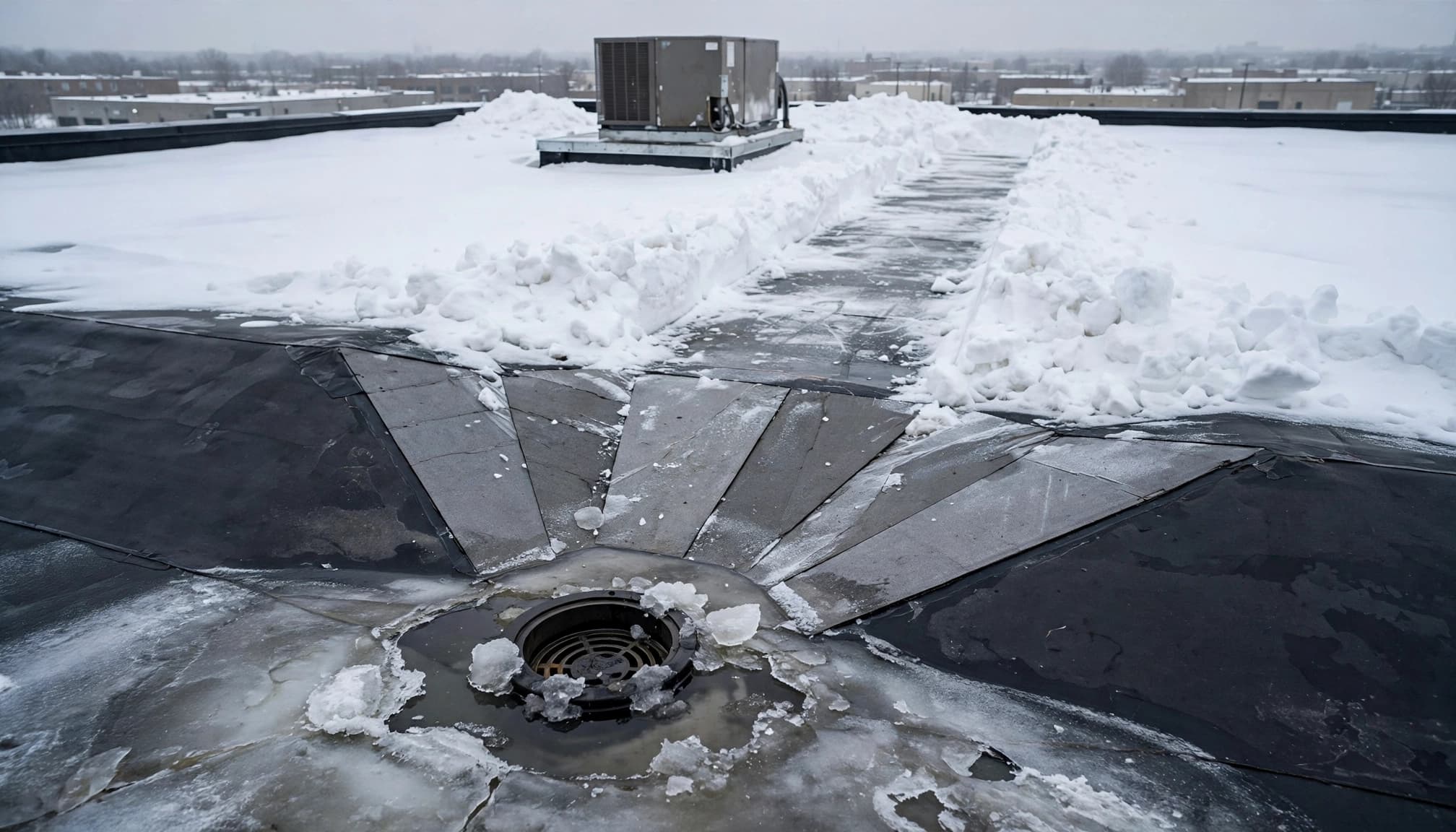
Blocked drains turn snowmelt into ponding water
Snow load alone does not automatically damage a curb. The issue starts when heavy snow drifts form around parapets, mechanical screens, or rooftop units, concentrating weight and meltwater in one area.
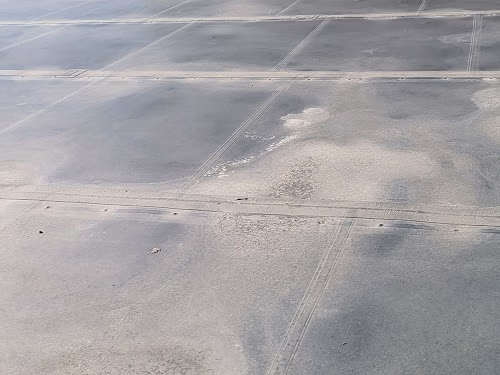
Melting snow should flow toward a drain or scupper, but ice and slush can block that path. Water may collect upslope of the curb and press against base flashing, corner patches, termination bars, and sealant joints. It can travel under the membrane before appearing as a ceiling stain.
Do not judge risk by snow depth alone. Wet snow weighs more than dry snow, and drifts can concentrate weight in one roof area. Review original roof design documents before snow removal if deflection raises questions about structural integrity or the roof’s design capacity.
Freeze-thaw movement stresses curb details
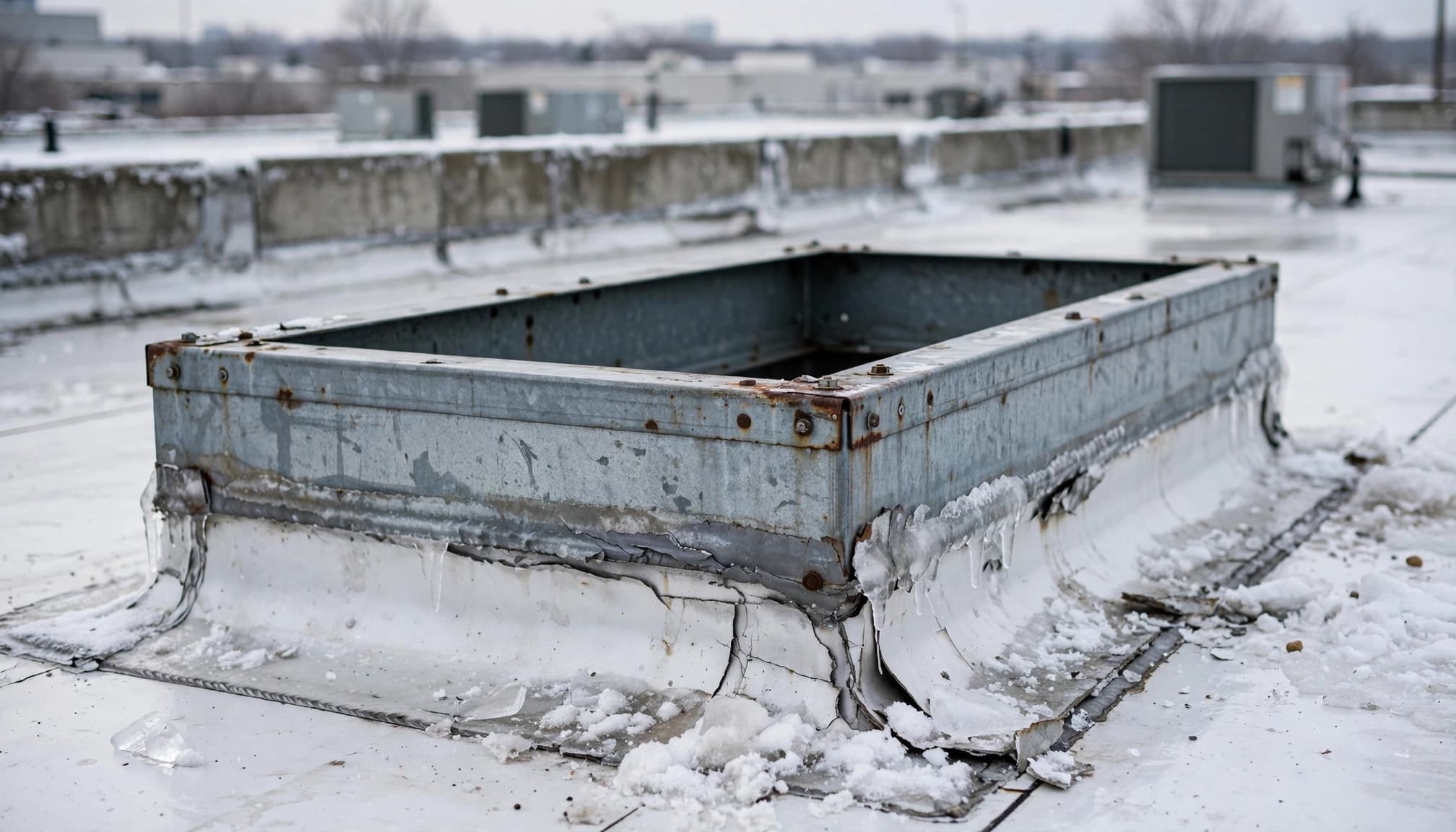
TPO and EPDM membranes expand and contract as temperatures change. Modified bitumen and BUR assemblies can crack, split at laps, or develop damaged plies at stressed transitions.
The weak spots are usually not in the middle of the roof. Inspect curb corners, membrane seams, base flashing, counter-flashing, fasteners, and termination points.
A curb with cracked sealant, open welds, lifted membrane, or rusted fasteners can leak after one hard thaw. For a closer breakdown of those failure points, review HVAC curb flashing leak detection.
Water can travel beneath insulation and membrane layers, so the interior drip often is not directly below the roof opening.
Step-by-Step: Check an HVAC Curb After Snow and Ice
Start inside the building
- Record the room, any ceiling stains, the time, weather conditions, and whether active dripping is present when the issue first appeared.
- Check whether water appears during a thaw, wind-driven rain, or HVAC operation. Condensation, duct sweating, plumbing leaks, and clogged condensate lines can also resemble roof leaks.
- Move inventory and equipment away from active water. If ceiling tiles sag or electrical equipment is exposed, isolate the area and call for emergency help.
Verify conditions on the roof
- Use trained roof personnel with proper access and fall protection. Avoid sending maintenance staff onto a roof with hidden ice, uncertain snow load, or ponding beneath snow.
- Inspect drains, scuppers, curb corners, flashing, seams, walk pads, and areas where service technicians cross the membrane.
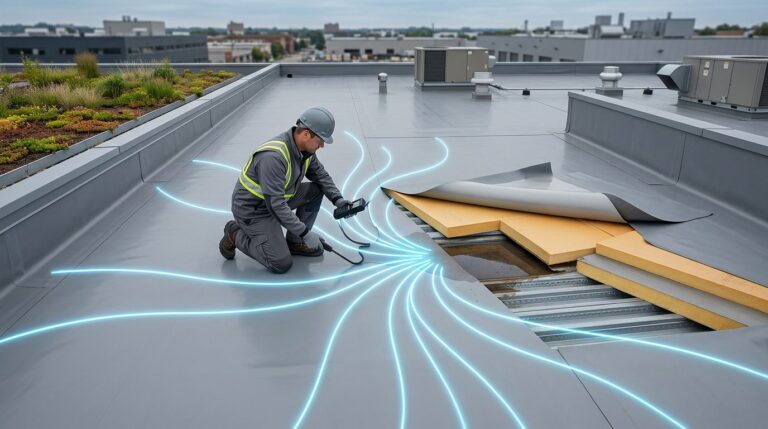
- Request moisture mapping or infrared imaging when the entry point is unclear. A controlled water test can help confirm the source. Flat roof leak detection can locate whether water is entering at the curb instead of relying on interior staining.
What Is Safe Ice Dam Removal on a Commercial Roof?
Keep cutting tools away from the membrane
Do not chip, chop, scrape, or plow against TPO, EPDM, modified bitumen, or BUR. A small puncture or cut seam can become a major roof leak when temperatures rise.
Steam ice dam removal is the safest method for membrane roofs when ice must be cleared from drains, scuppers, or curb areas. The crew still needs to protect seams, flashing, and roof edges from direct tool contact.
Heating cables and calcium chloride may be discussed for residential roof edges, but neither is a universal solution for blocked commercial drainage. They won’t correct poor slope, failed flashing, or damaged insulation.
Treat residential roof edges separately
Roof rakes can help with ice dams on shingle roofs, but they aren’t appropriate for commercial membrane roofs. Ice dam removal on a shingle roof may limit active water backup, but it doesn’t fix attic bypasses, poor insulation, or damaged flashing.
An ice shield is a shingle-roof underlayment detail, not a cure for those problems. Even a sound ice shield won’t correct attic bypasses, damaged flashing, or poor roof drainage. The cause may involve attic insulation, air leakage, roof ventilation, or heat loss, requiring attic-side work.
A residential roof repair may be enough for a local defect. Widespread deterioration may lead to residential roof replacement.
If a home has an active leak, avoid climbing onto an icy slope. Get a Free Residential Roof Estimate after the area is safe and the water source has been documented.
When Commercial Roof Repair Is Enough
Localized defects can be repaired
A single puncture, failed curb corner, open TPO weld, or damaged termination bar may support targeted roof repairs when surrounding insulation is dry and the roof deck is sound.
The repair should address the full detail. Patching a visible gap without correcting ponding, curb flashing, or blocked drainage can reopen during the next freeze thaw cycle.
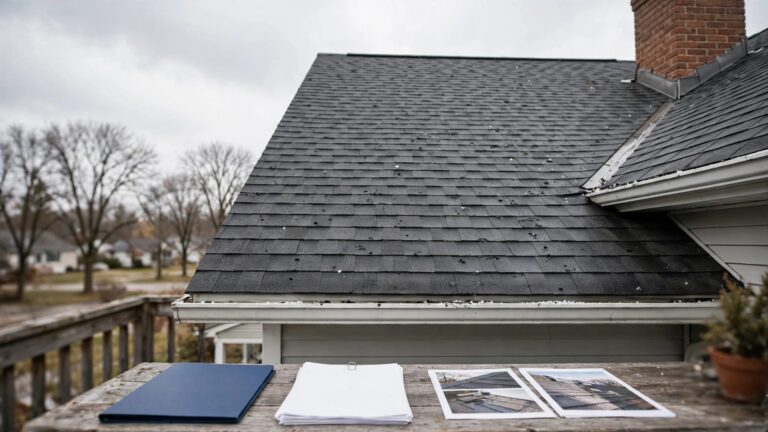
A hail damage roof or prior storm damage roof also needs separate evaluation. Hail, wind, ice, foot traffic, and age can leave similar surface clues, but the cause affects the repair scope and insurance file.
Widespread moisture changes the decision
Commercial roof replacement becomes more likely when moisture testing finds broad wet insulation, repeated seam separation, membrane shrinkage, damaged decking, or recurring leaks across connected roof areas.
Commercial roof restoration and commercial roof coatings can extend the life of a dry, stable membrane. They don’t solve saturated insulation, active seam failure, or a failed curb flashing system. Those conditions and recurring leaks can raise indoor moisture concerns involving mold and mildew.
The decision comes down to scope. Localized work may suit isolated defects, while roof replacement is more practical when moisture and failures extend across connected areas.
Routine post-storm checks are a practical way to catch these issues early. A Minnesota roof maintenance resource also stresses inspections after difficult weather, before minor defects spread.
How to Document a Roof Insurance Claim
Build the file before permanent work begins
Before permanent work begins, use roof inspections to establish the roof’s condition. Take wide photos of each rooftop unit, then close-ups of curb caps, flashing, drains, seam splits, ponding, and existing repairs. Date every file and keep weather notes, invoices, maintenance records, and interior damage photos together.
Include photos of water damage, wet insulation, affected finishes, and equipment impacts. Document affected interior areas and prolonged dampness to track mold and mildew risks.
Use a commercial roof inspection report to separate new damage from old wear. Moisture readings, infrared images, and targeted core samples can support a claim when surface conditions don’t show the full extent of water movement.
Review the Minnesota roof storm damage insurance guide before authorizing broad permanent work. Property insurance coverage depends on policy terms, exclusions, maintenance history, deductibles, causation, and the insurer’s evaluation.
Choose contractors who can explain the scope
Ask whether contractors will inspect drains, curbs, seams, insulation moisture, and deck conditions, not only the interior stain. Ask what removal tools will touch the membrane and how the roof will be documented afterward.
For Minnesota roofing work in Saint Paul, Minneapolis, and the broader Twin Cities, Sellers Roofing Company has completed more than 1,100 roofs since 2017, including 300 commercial projects. Its union-built roofing crews include IUPAT Local 96 Roofers, Carpenters Local 322, and Laborers Local 563.
Ask about GAF-certified installation options, manufacturer requirements, written estimates, and MN License 803862. Get a Free Commercial Roof Inspection if curb flashing, ponding, or interior moisture appears after a thaw. For active water entry, Call 651-703-2336 for 24/7 Emergency Roofing.
Frequently Asked Questions
Do TPO and EPDM roofs get ice dams?
They don’t usually develop the classic eave conditions seen on asphalt shingles. An ice shield protects residential shingle assemblies, while commercial winter failure points include frozen drains, blocked scuppers, ponding water, seams, parapet flashings, and HVAC curbs.
Does six inches of snow mean a commercial roof needs removal?
No single snow depth or snow load works for every building. Snow type, drifting, roof design, structural capacity, rooftop equipment, and existing deflection all matter. Review design information and call for evaluation if the roof shows cracking, sagging, or drainage failure.
Can attic insulation stop a commercial HVAC curb leak?
Not by itself. Air leakage and roof ventilation can affect heat transfer and winter conditions on steep-slope roofs. They don’t diagnose a commercial HVAC curb leak, which usually needs a roof-level inspection. Check drainage, membrane flashing, seams, sealant, and moisture beneath the roof surface.
Should a building owner wait for spring to inspect a roof leak?
No. Active leaks, ceiling stains, wet insulation, or blocked drainage need prompt documentation and temporary protection. Waiting can allow moisture to spread through insulation, deck flutes, walls, and occupied areas.
Will insurance cover snow and ice damage at a rooftop curb?
It may, but coverage isn’t automatic. The policy, cause of loss, maintenance history, exclusions, deductible, and evidence of resulting damage all affect the outcome. Document conditions before repairs change the evidence.
The Practical Next Step
Find the water path before choosing the fix
Snow and ice can damage HVAC curbs, but the curb isn’t always the source. A condition-based inspection separates blocked drainage, flashing failure, membrane damage, condensation, and structural concerns.
If the property also has shingle sections, evaluate roof ventilation separately from the commercial HVAC curb and drainage diagnosis.
Protect the roof without creating new damage
The right response to snow and ice roof damage starts with safe removal and a documented inspection. Choose roof repairs or roof replacement based on moisture spread, deck condition, membrane age, and failed details, not snow alone.
This condition-based approach protects the building without creating new damage and provides a clear insurance record for the next decision.
Need a roof inspection in Saint Paul or the Twin Cities? Call Sellers Roofing Company at +1-651-703-2336 or schedule a free estimate. We are a black-owned, NMSDC-certified MBE roofing contractor with 9+ years experience.