Last updated: 2026-08-01 by Ted Sellers, Owner
Your commercial roof needs attention when leaks, ponding water, split seams, soft spots, or rising utility bills show up.
Small, isolated damage usually means repair. Widespread moisture, repeat leaks, or an aging system often point to commercial roof replacement, especially after Minnesota freeze-thaw swings.
When This Applies
This fits most low-slope commercial buildings
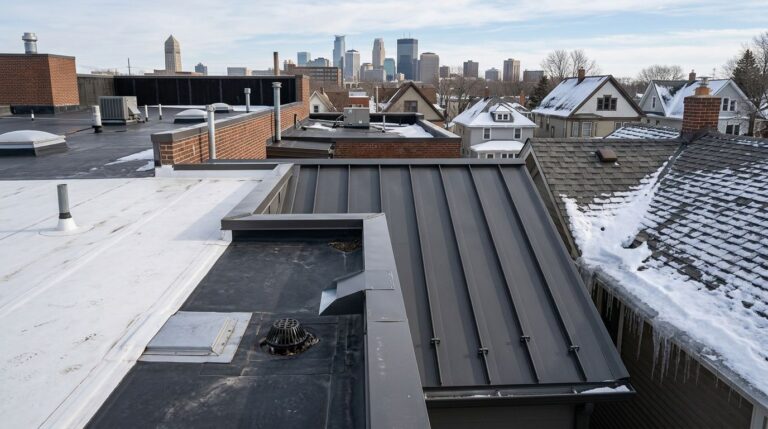
This advice fits warehouses, retail centers, offices, schools, churches, and multi-tenant properties with TPO, EPDM, PVC, metal, or modified bitumen roofing. If your building has rooftop equipment, heavy foot traffic, or a roof older than 15 years, the risk goes up.
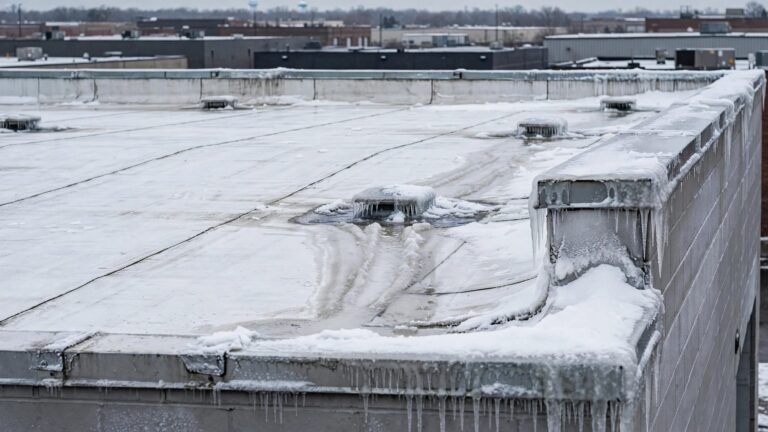
Minnesota owners should pay extra attention in spring. Early 2026 brought several hard-freeze and thaw swings across the Twin Cities, and that cycle stresses seams, drains, and flashing. A roof can look fine from the ground while moisture spreads below the surface.
When repair is enough, and when it isn’t
A single puncture near an HVAC curb, one open seam, or minor flashing failure often calls for repair, not replacement. That’s where commercial flat roof repair makes financial sense. You fix a local defect before it turns into soaked insulation, mold, or deck damage.
This does not fully apply to a brand-new roof with a one-time puncture, or to steep-slope systems that shed water fast. In those cases, a warranty claim or targeted repair may solve the problem without a larger project.
However, repeat leaks tell a different story. If your team keeps mopping the same hall or replacing stained ceiling tiles every season, your commercial roof needs repair at minimum, and possibly more than that. The drip you see is often only the last stop in the leak path.
A ceiling stain is the alarm, not the start of the problem.
Replacement becomes the better call when moisture is widespread, insulation is saturated, or the roof is near the end of its service life. If the source isn’t clear, start with commercial roof leak detection Saint Paul so you don’t spend money patching the wrong section.
Step-by-Step
Move from warning signs to the right scope
- Start inside the building. Mark every stain, drip, odor, wet ceiling tile, or bubbling wall finish. Also record when it happens. Leaks that show up only during wind-driven rain often point to edges, wall transitions, or penetrations, not the open roof field.
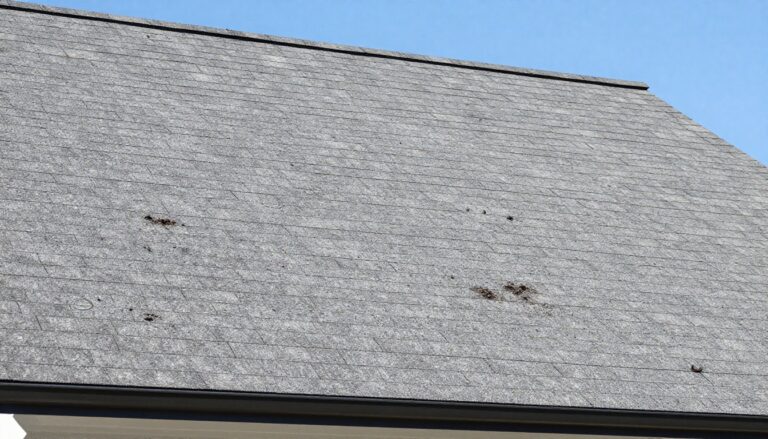
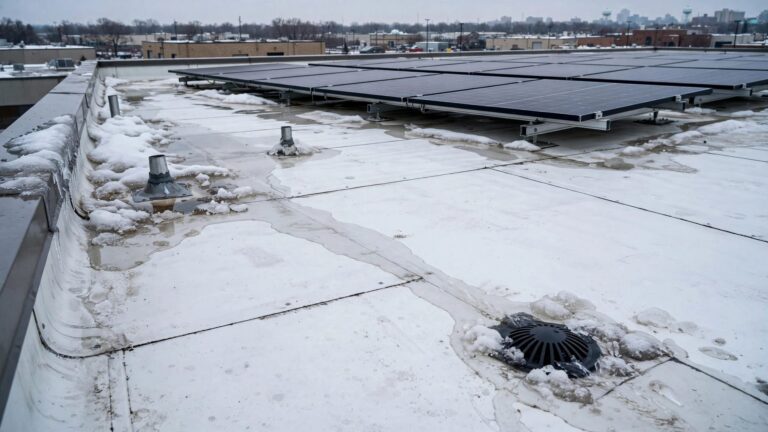
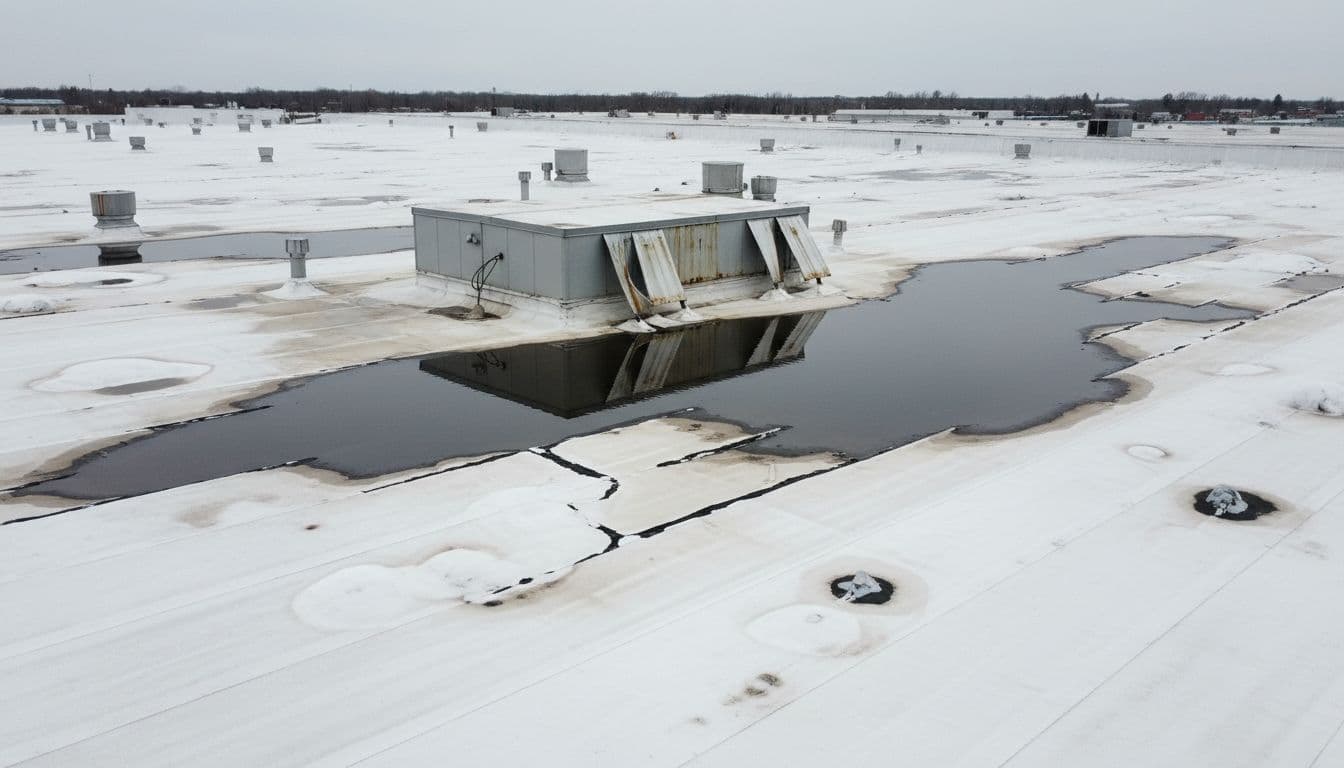
- Inspect the roof surface next. Look for ponding water that lasts more than 48 hours, split seams, blisters, cracks, rust, loose coping, and failing sealant. Clear drains and scuppers first, because poor drainage can make a repairable roof look worse than it is.
- Check the usual failure points before you price a large job. HVAC curbs, pipe boots, skylights, parapet walls, pitch pans, and roof edges fail sooner than wide membrane areas. On low-slope roofing, water can travel several feet sideways before it shows inside.
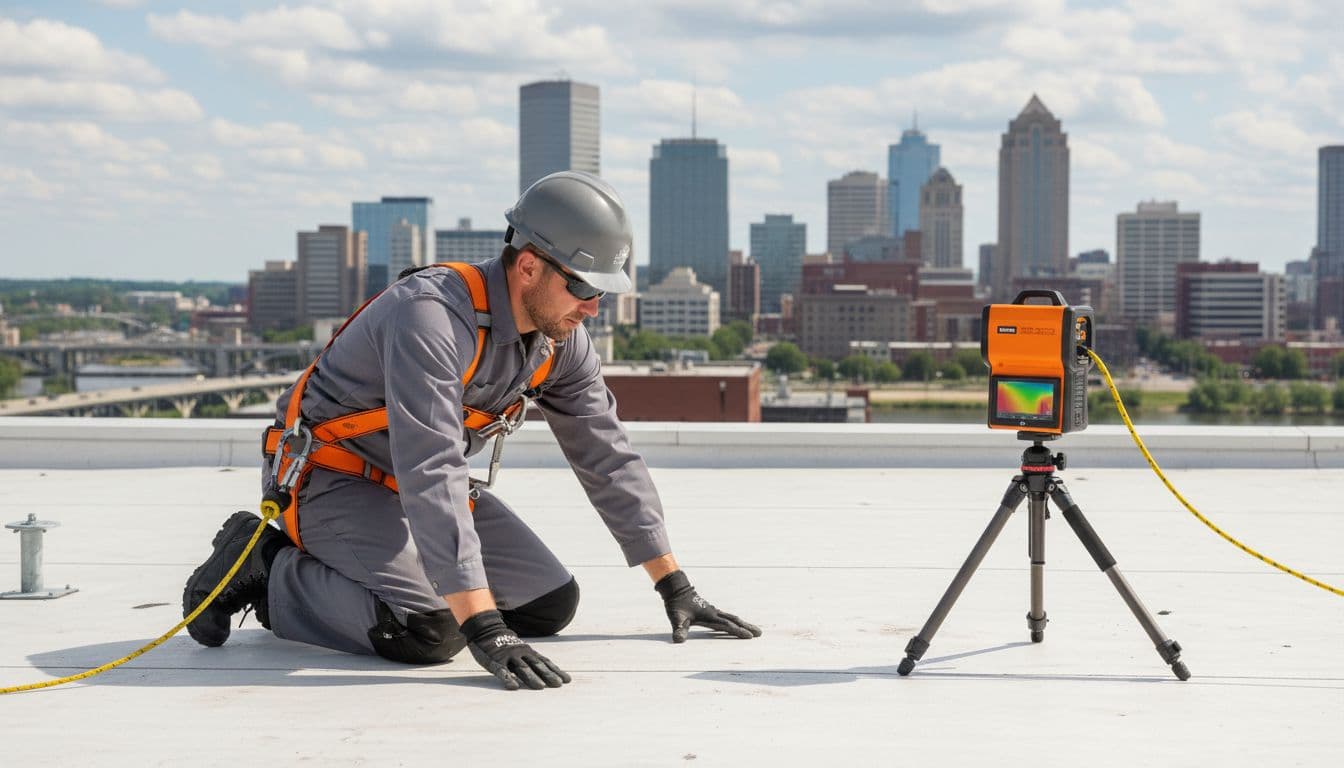
- Verify hidden moisture before approving a big patch. Infrared scans, electronic testing, or small core samples show whether water stayed local or spread through the assembly. If the wet area is small, targeted repair is usually the smartest budget move.
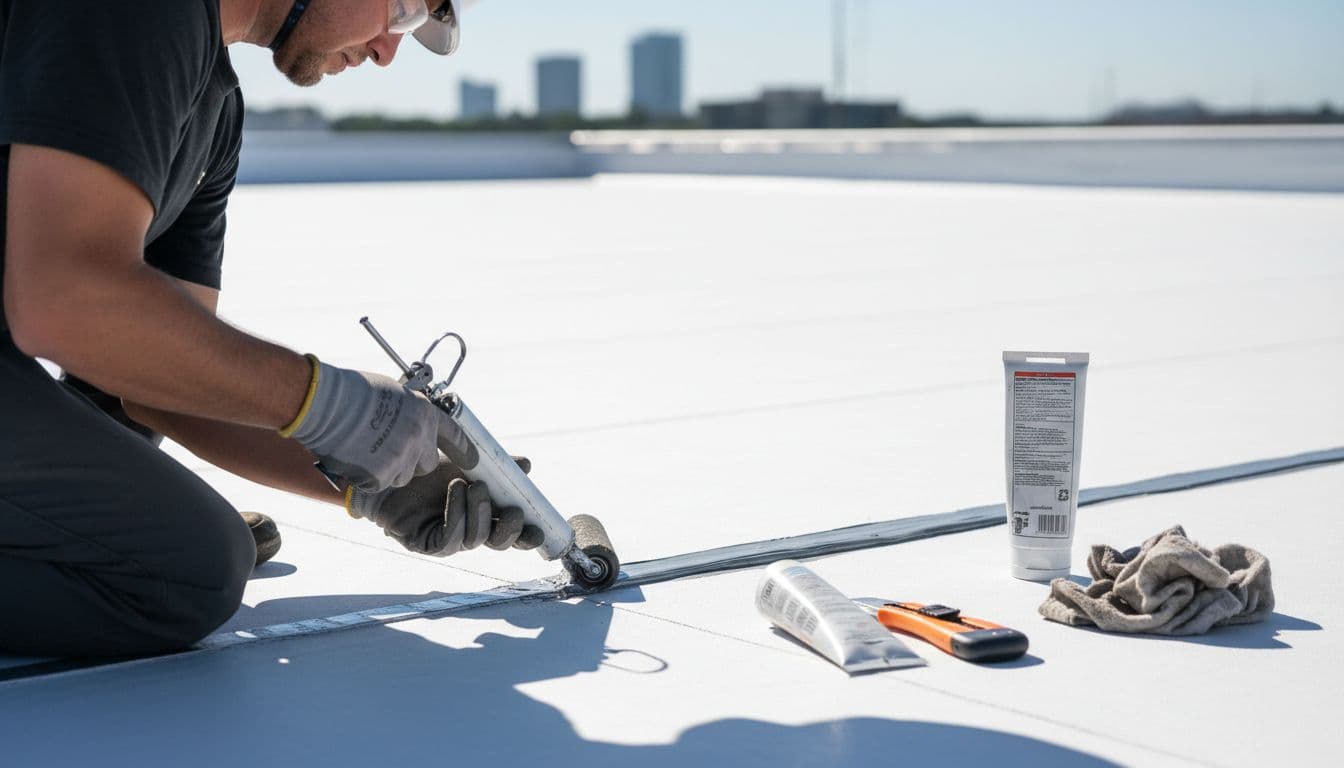
5. Compare repair history with roof age. Two repair visits in ten years is normal. Two in one season is not. When patches keep stacking up, labor costs rise, disruptions grow, and a planned commercial roof replacement often costs less than ongoing emergency work. 6. Ask for a written scope with photos and options. You should see separate pricing for immediate leak control, near-term repairs, and full replacement. If you need a local benchmark, review Saint Paul commercial roofing services so you can compare repair paths, materials, and timing.
Common follow-up questions
How long can I wait after a small leak?
Not long. Water moves quietly, and even a slow leak can soak insulation within days. If you can’t schedule repair right away, get temporary dry-in protection and document the area the same day so the damage doesn’t spread unnoticed.
What if the leak shows up far from the roof damage?
That happens often on commercial roofing. Water can travel along decking, fasteners, or membrane layers before it drops inside. That’s why guessing from the stain alone wastes money. Moisture mapping usually finds the true entry point faster.
Will emergency repairs hurt an insurance claim?
Usually, no. Temporary protection helps limit added damage, which insurers often expect. Keep photos, weather dates, invoices, and interior notes. After a storm, this hail damage assessment and insurance guidance is a useful reference for what to document.
Can repairs happen without shutting down my business?
Often, yes. Many crews can phase the work, shift noisy tasks to off-hours, and protect loading zones or customer entries. The key is planning around rooftop units, tenant access, and safety lines before work starts.
What if my roof is new but leaking already?
A newer roof may point to bad flashing, poor seam welding, damage from another trade, or a missed detail around penetrations. Don’t jump to full replacement. Start with photos, warranty paperwork, and an independent inspection.
When warranty language matters
Unauthorized patches can complicate coverage, so confirm the rules before permanent work begins.
The leak you see is rarely where the trouble started. In commercial roofing, the right call comes from scope, not guesswork. Find the wet area, compare repair history, and act before spring rain turns a manageable fix into a capital expense.
If your building has repeat leaks, ponding water, or hidden moisture signs, schedule an inspection now, not after the next storm. Early action protects the roof, the budget, and the people working underneath it.
Need a roof inspection in Saint Paul or the Twin Cities? Call Sellers Roofing Company at +1-651-703-2336 or schedule a free estimate. We are a black-owned, NMSDC-certified MBE roofing contractor with 9+ years experience.