Last updated: 2026-08-01 by Ted Sellers, Owner
Commercial roof leaks are usually coming from one of a few repeat spots: seams, flashings at penetrations, drains, or edge terminations. Start inside by mapping the stain, then work upslope on the roof and inspect the most likely entry points for your membrane type (TPO welds, EPDM shrinkage, or modified bitumen laps and splits). Confirm with a controlled water test when safe.
When This Applies
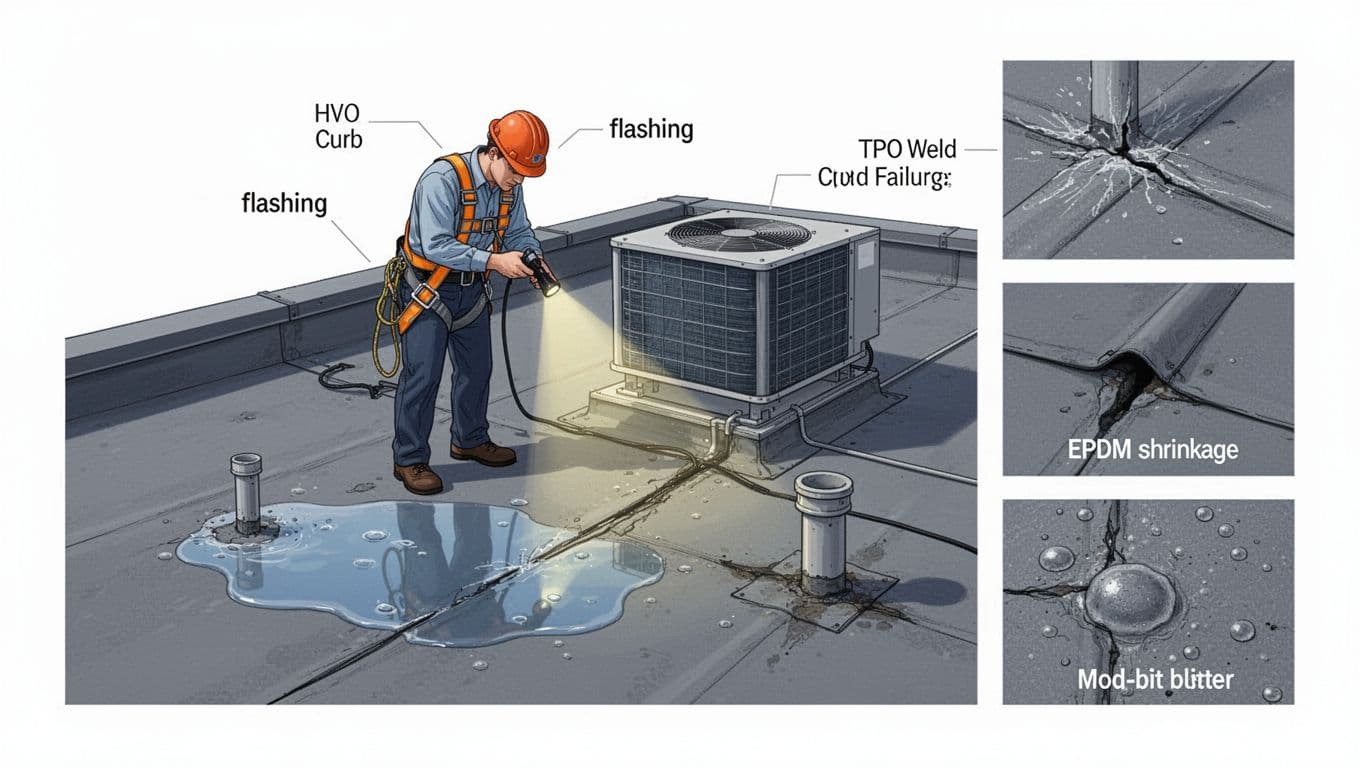
This fits most low-slope commercial buildings
This troubleshooting approach, as part of proactive flat roof maintenance and routine roof inspections, applies to commercial buildings with low-slope roof membranes like TPO, EPDM, and modified bitumen, especially offices, retail, warehouses, and multi-tenant properties. It’s also a good fit when the leak is new, you can access the roof safely, and you need to decide whether commercial flat roof repair is realistic or if the situation is pointing toward a bigger failure.
A helpful rule: if the stain from commercial roof leaks appears “random” inside, the roof entry point is often not directly above it. Water travels like a slow-moving thief, following seams, fasteners, and low spots until it finds a way down.
When this does not apply (or needs extra caution)
This is not the right playbook if you have structural damage, active ceiling collapse risk, electrical hazards, or a roof that’s too icy, windy, or steep to access safely.
Edge cases that change the diagnosis
If a leak shows up only during wind-driven rain, the culprit is often wall or parapet flashing, not the field membrane. If it shows up only after snow or freeze-thaw, suspect ice backup at edges, blocked drains, or water trapped in saturated insulation. For quick “stop the damage now” actions while you wait for a roofer for roof repair, see these immediate steps for a leaking commercial roof.
Common Causes of Leaks on TPO, EPDM, and Modified Bitumen
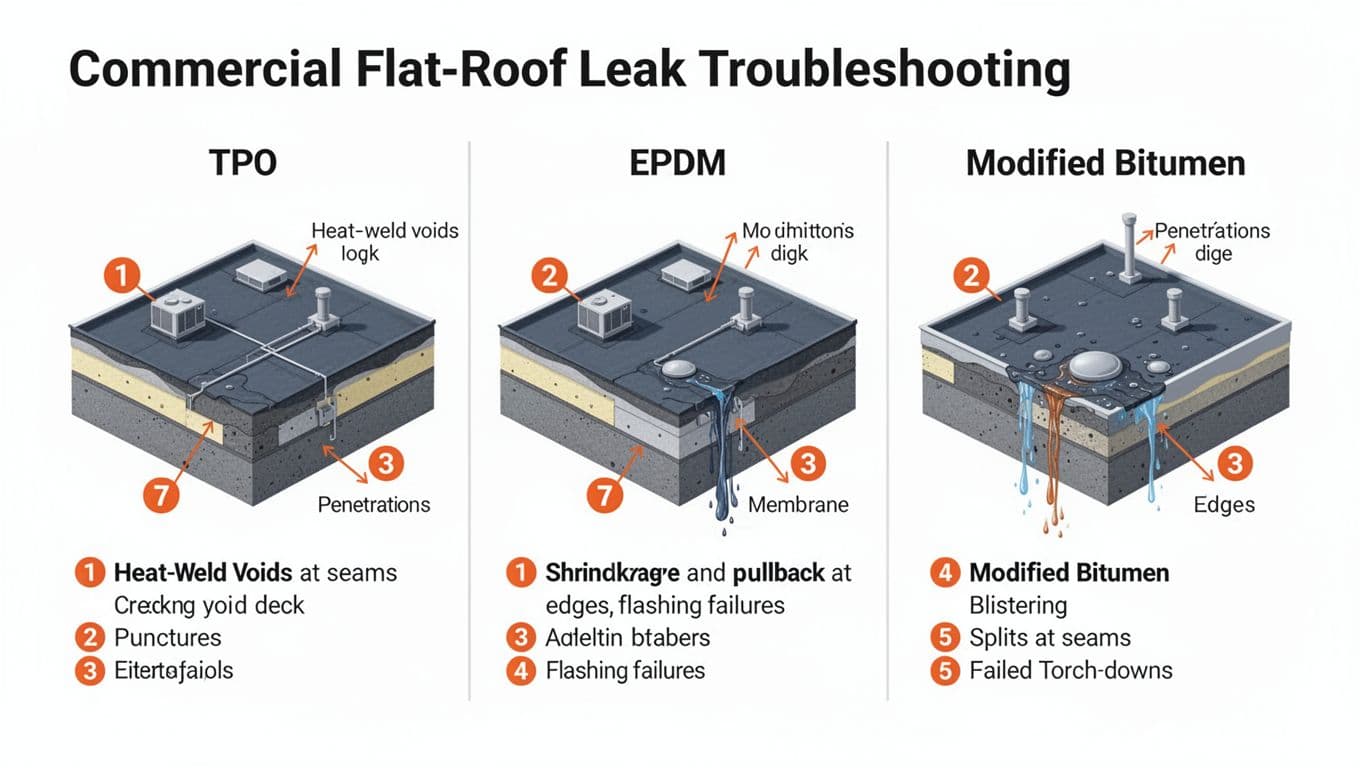
Common causes of TPO leaks (think seams and details first)
TPO, a type of single-ply roofing, is heat-welded, so the roof lives or dies by weld quality. The most common leak paths are incomplete welds at seams from improper installation, stress points at inside and outside corners, and flashing details at HVAC units and pipes.
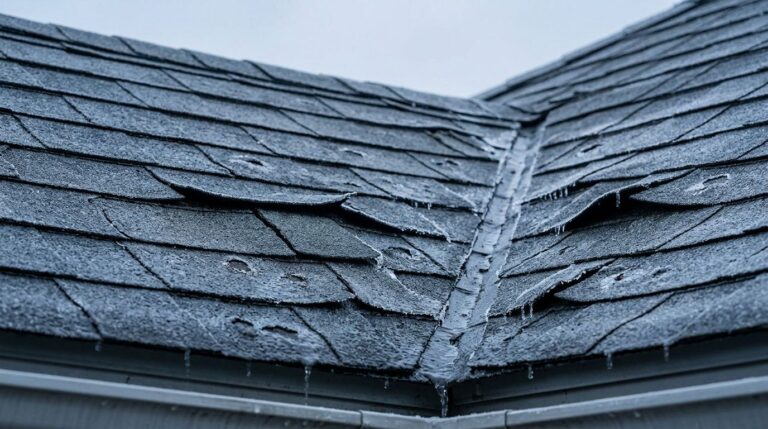
Membrane punctures also matter, especially near walk paths, hail impacts, or where tools get dragged. If you see “fishmouths” (small wrinkles at laps) or gaps at term bars, treat them as suspect even if they look minor.
Common causes of EPDM leaks (shrinkage and adhesion problems)
EPDM is flexible, but it can shrink over time and pull on edges, causing damaged flashing. That tugging can open up seams, loosen termination bars, or tear flashing at corners.
Another common issue is poor bonding at patched areas or around penetrations, where adhesives age and release. If the leak appears after a hot week followed by a storm, that expansion and contraction cycle is often the trigger. For a deeper rundown of single-ply failure patterns, see common issues with single-ply roofs.
Common causes of modified bitumen leaks (splits, blisters, and lap failures)
Modified bitumen, distinct from built-up roofing or PVC roofing, is tough, but it can crack or split as it ages, especially at laps, transitions, and high-movement zones near curbs and parapets.
Blisters form when moisture or air gets trapped in the roof membrane, then heat turns that pocket into pressure. Granule loss and surface wear can speed UV damage, and poorly executed torching or cold adhesive coverage can leave voids that become leak channels. If your roof has multiple patched zones, the leak may be migrating between layers of the roof membrane before it shows inside.
Step-by-Step
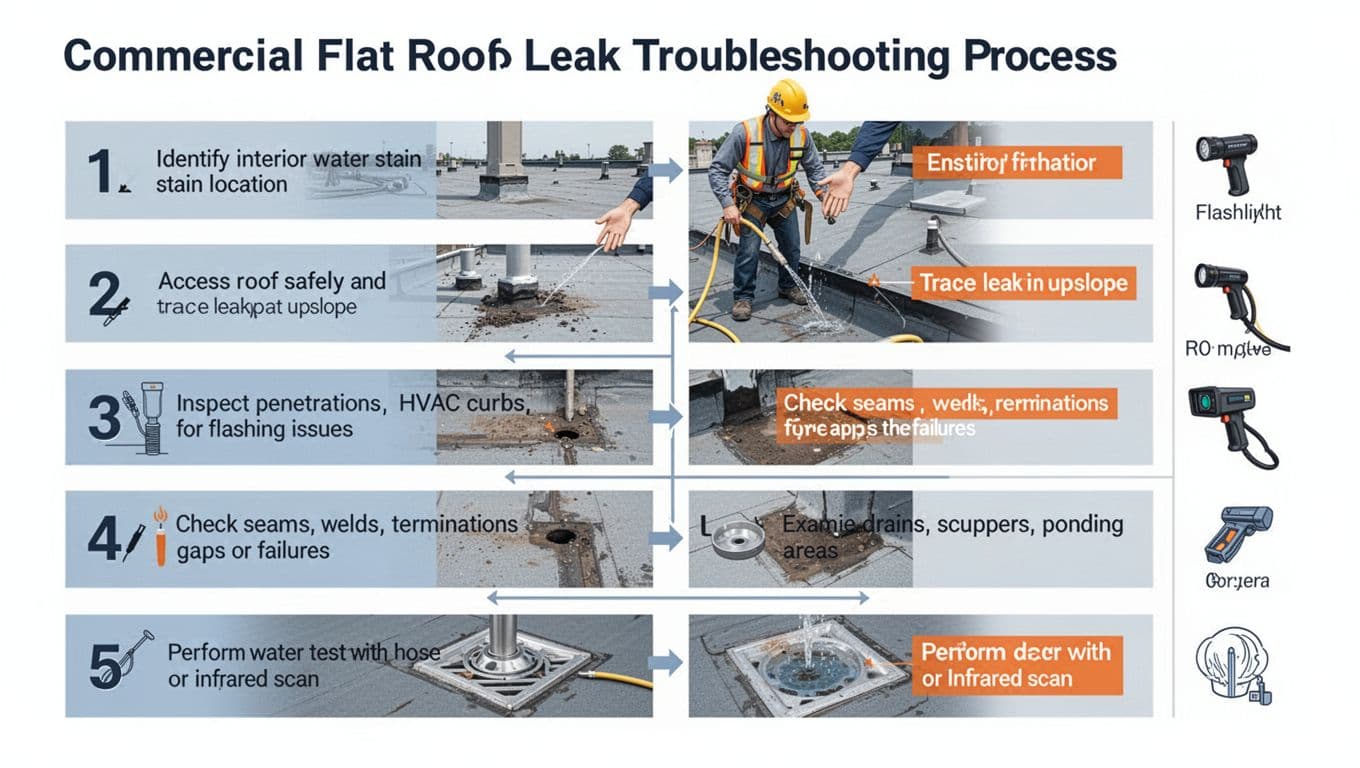
Identify the leak zone before you step outside
- Document the interior stain size and location, then note wind direction and rainfall timing.
- Check above the ceiling stain for wet insulation, rusted deck, or drip points, then mark the spot on a simple floor plan.
- Measure to two fixed references (an exterior wall and a column line), so you can transfer the point to the roof.
Inspect the most likely entry points first
- On the roof, start upslope from the mapped point, water rarely travels uphill, but it often travels sideways.
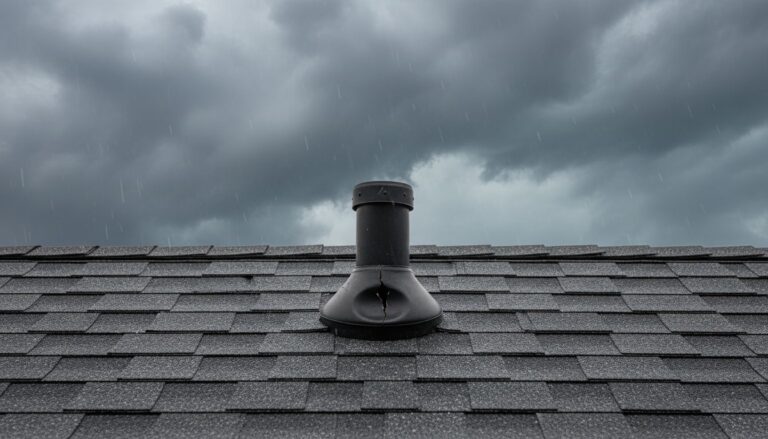
- Inspect roof penetrations and curbs first (HVAC, vents, conduits), because damaged flashing is a top cause on all membrane types.
- Check seams and terminations next: look for seam failure in TPO weld lines, EPDM taped seams, and mod-bit laps on common roofing materials, then look for open edges, wrinkles, or lifted corners.
- Inspect drainage systems like drains and scuppers, and areas with ponding water, clogged drains and standing water raise leak odds fast, and they can turn tiny defects into steady leaks (this aligns with many common flat-roof leak sources).
Confirm the source and decide repair vs replacement
- Run a controlled hose test in small sections (one area at a time), keep a second person inside watching for first drip time.
- If the membrane is widespread brittle, seams are failing in many areas, or insulation is saturated across large zones, plan for roof replacement instead of repeating patches.
- If the issue is localized (one curb, one seam run, one drain bowl), schedule roof repair quickly, because recurring wet insulation is a sign your roof needs repair, even if the drip “stops” for a while.
FAQ
How do I know if the leak is from the roof or from HVAC condensation?
If the stain happens on hot, humid days without rain, suspect condensate lines, clogged drain pans, uninsulated ducts, or thermal expansion near HVAC units. If it shows up only after rain or snow melt, treat it as a roof entry point until proven otherwise.
A quick clue
Condensation often leaves lighter staining and can track along duct runs, roof leaks often show darker rings and get worse during storms.
Can a leak show up far away from the roof damage?
Yes. Water can travel along the deck flutes, around vapor barriers, and through insulation joints. That’s why mapping, then starting upslope on the roof, beats guessing above the stain.
If I patch a seam and it still leaks, what did I miss?
Most “still leaking” calls trace back to a second entry point, often a nearby penetration flashing or a termination edge in different types of roofing materials and membranes. Another common miss is wet insulation holding water like a sponge and releasing it later, even after the hole is sealed.
What to ask your roofer to check
Ask whether moisture scanning or targeted test cuts are needed to confirm how far water spread.
Is ponding water always the cause?
Ponding water doesn’t automatically mean failure, but it raises the odds that small defects will leak. If drains are slow, the first fix is often drainage and detail work, not chasing random patches in the field.
How can I protect against future leaks long-term?
For proactive flat roof maintenance, applying a quality roof coating seals vulnerabilities, extends the life of your membrane, and reduces the risk of commercial roof leaks over time.
When should I stop troubleshooting and call a commercial roofing team?
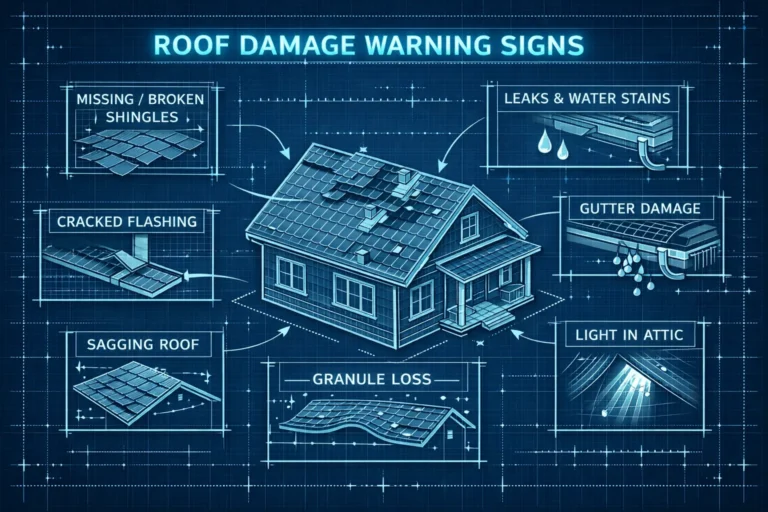
Call when leaks are active near electrical areas, when you see sagging or soft spots, or when multiple stains appear in different zones. If you’re in the Twin Cities and need a specialist who handles leak detection and long-term fixes, contact a Saint Paul commercial roofing company to evaluate whether roof repair, restoration, or roof replacement is the right move.
A commercial roof leak rarely comes from a mystery spot, it comes from details in different types of roofing materials and membranes that move, age, and take water over and over. Map the interior signs, inspect upslope with regular roof inspections, focus on flashings, seams, and drainage as part of flat roof maintenance, then confirm with a controlled test. The faster you pinpoint the entry point, the more likely you’ll pay for a real fix instead of an endless cycle of patches.
Need a roof inspection in Saint Paul or the Twin Cities? Call Sellers Roofing Company at +1-651-703-2336 or schedule a free estimate. We are a black-owned, NMSDC-certified MBE roofing contractor with 9+ years experience.