Last updated: 2026-08-01 by Ted Sellers, Owner
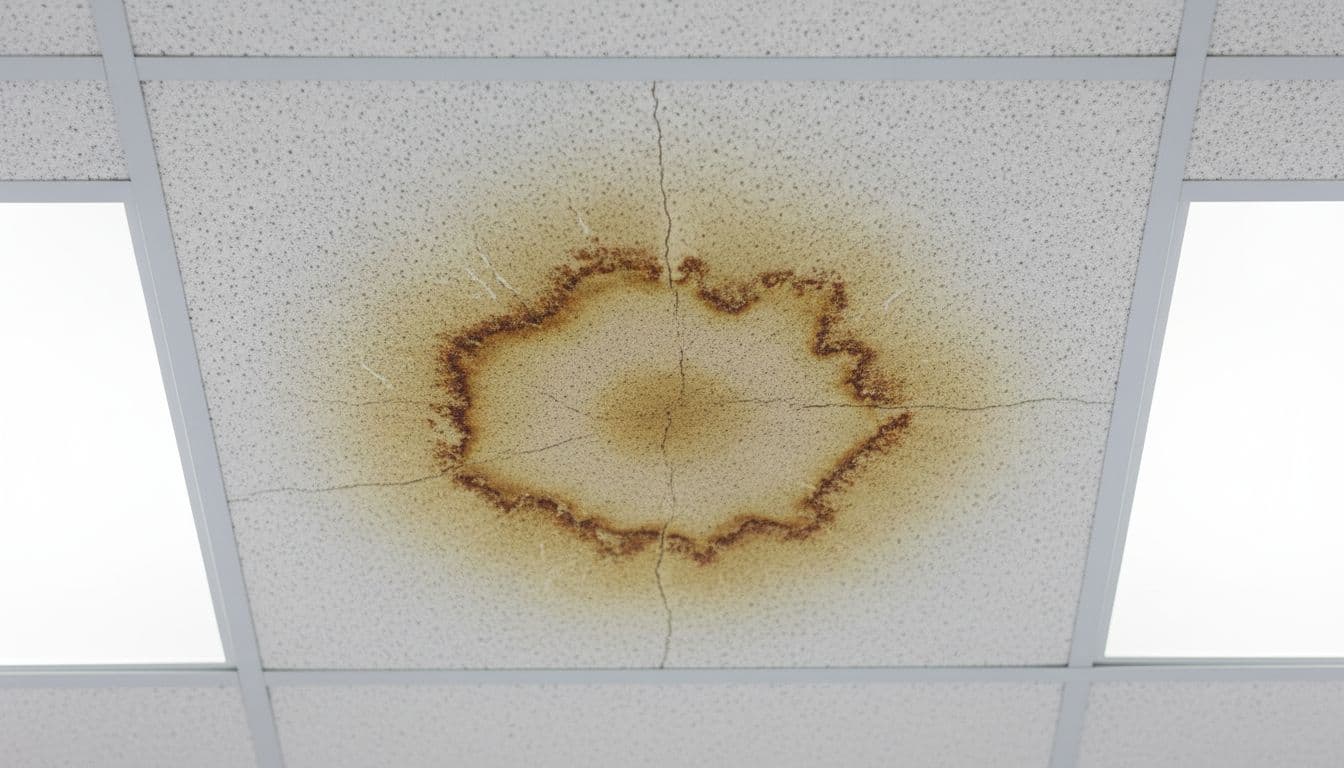
Usually, a yellow ceiling stain means moisture got in at some point, but it isn’t always an active roof leak. If the stain is growing, feels damp, or shows up after rain or snowmelt, treat it as a current leak until proven otherwise. If it’s dry, crisp-edged, and hasn’t changed in months, it may be old damage, or moisture from HVAC, plumbing, or condensation.
A yellow ring on a ceiling tile is like a “check engine” light for your building. It doesn’t tell you the exact part that failed, but it does tell you something needs attention.
For commercial owners, the stakes are higher. Water can travel across deck seams, soak insulation, and damage tenant spaces before you ever see a drip. The goal is simple: confirm whether the stain is active, then trace the source fast.
When This Applies
Where a yellow ceiling stain is most likely to signal a roof issue
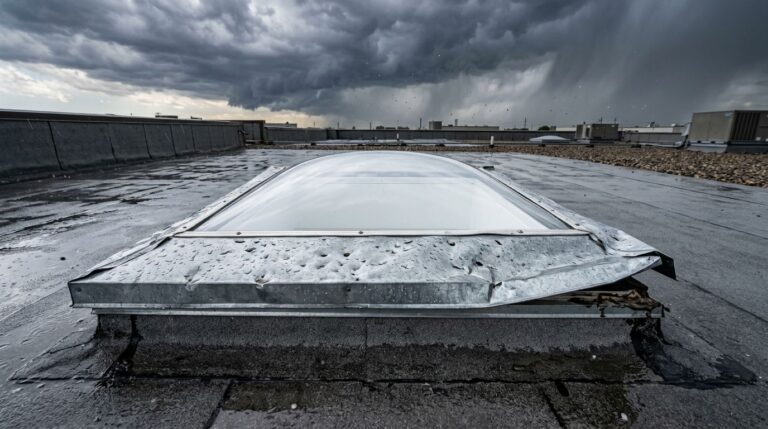
This applies most to commercial buildings with flat or low-slope roofs, especially where you have suspended ceiling grids and lots of roof penetrations (HVAC curbs, vents, gas lines, skylights). Water can enter far from the stain, then follow the path of least resistance.
A roof-related yellow ceiling stain is more likely when:
- The stain changes size or color over days or weeks.
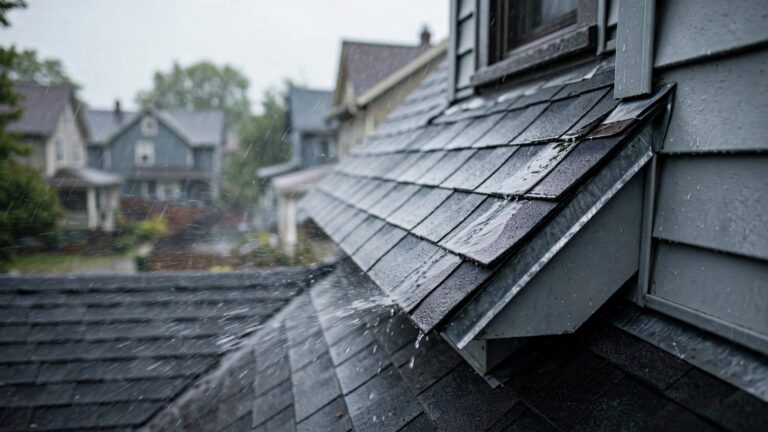
- You see it after rain, thaw, or ice-dam conditions.
- The area above includes rooftop units, parapet walls, drains, or transitions.
- Ceiling tiles feel soft, sag, or crumble at the edges.
If you want a broader breakdown of what ceiling stains can indicate beyond the roof, see this overview on what ceiling water stains can mean.
When it might be old damage or not the roof at all
Some stains are “fossils” from a past event. Others come from inside the building. In offices and retail spaces, the roof gets blamed first, but these are common non-roof causes:
- HVAC condensation (especially near supply lines, VAV boxes, or uninsulated ducts)
- Plumbing leaks from restrooms, break rooms, or sprinkler piping
- Past leak that was fixed but the tile was never replaced
- Nicotine or cooking residue (less common in most commercial settings now)
- Rust bleed from fasteners or metal framing when humidity stays high
Edge cases that confuse owners
A few patterns can mislead even experienced maintenance teams:
- Stain appears only in winter: warm indoor air can condense on cold surfaces above the ceiling.
- Stain shows up after a big thaw: snow load melts, water ponds, and weak flashing finally lets go.
- Stain is near an exterior wall: wind-driven rain can enter at coping caps and parapets, then travel inward.
If the stain is new or spreading, assume active moisture first. Cosmetic thinking gets expensive fast.
Step-by-Step
Start with quick checks inside the space
- Mark the stain’s outline with a pencil and date it, so growth is obvious.
- Feel for dampness (use a glove). Soft tile, bubbling paint, or a cool damp spot suggests active moisture.
- Look for a pattern: rings often mean intermittent wetting, blotches can mean a one-time event.
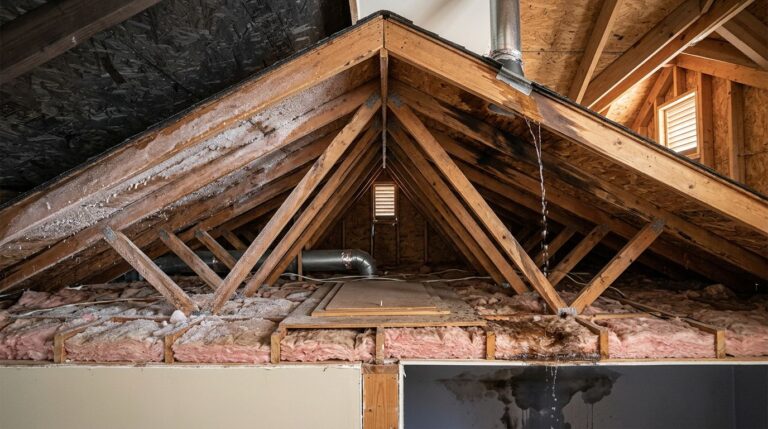
- Check what’s above (if safe): lift the tile and look for wet insulation, rusty grid wire, or dripping from a pipe.
- Note timing: did it appear after rain, snowmelt, or a rooftop HVAC service call?
Narrow down roof leak vs HVAC/plumbing
- Rule out plumbing first if there’s a restroom, kitchenette, or sprinkler line nearby. Look for fittings, valves, and joints.
- Check HVAC lines for sweating. Cold refrigerant lines and uninsulated sections can drip for hours.
- Look for water trails on the deck or framing. Roof leaks often leave “run marks” that slope toward beams.
- Smell the ceiling cavity. A musty odor suggests ongoing dampness, not old damage.
- If it’s dry above the tile, don’t relax yet. Water can travel and drip elsewhere after pooling.
Move to the roof surface (or schedule it)
- Start above the stain, then expand the search. On low-slope systems, the entry point can be 10 to 50 feet away.
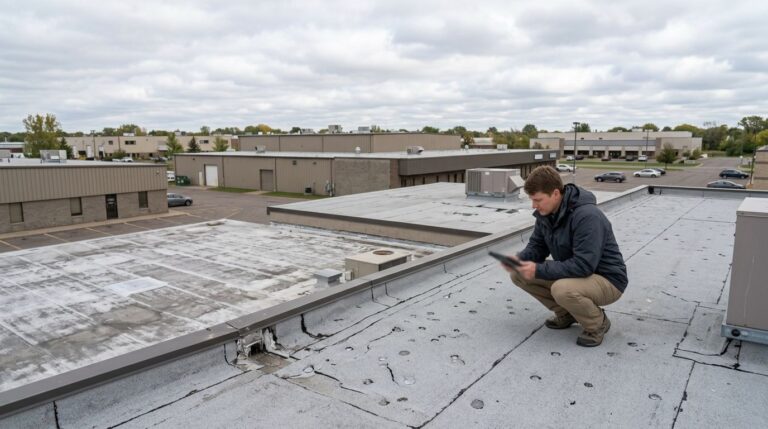
- Inspect common failure points: flashing at curbs, pipe boots, open seams, term bars, coping joints, and punctures.
- Check drainage: clogged drains and ponding water shorten membrane life and push water into weak details.
- Look for “recently disturbed” areas near service paths to RTUs. Foot traffic causes small cuts that turn into bigger leaks.
- Photograph everything. Documentation matters for budgeting, warranty calls, and insurance.
Know when your commercial roof needs repair (and what to do next)
- Call for professional diagnostics if the stain is growing, you see wet insulation, or operations could be impacted.
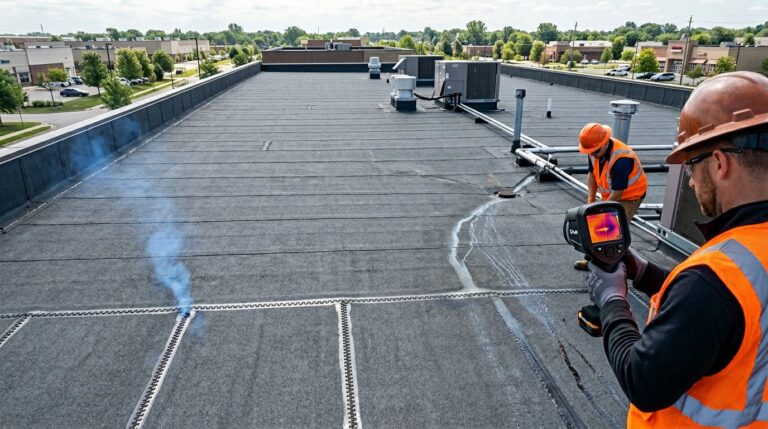
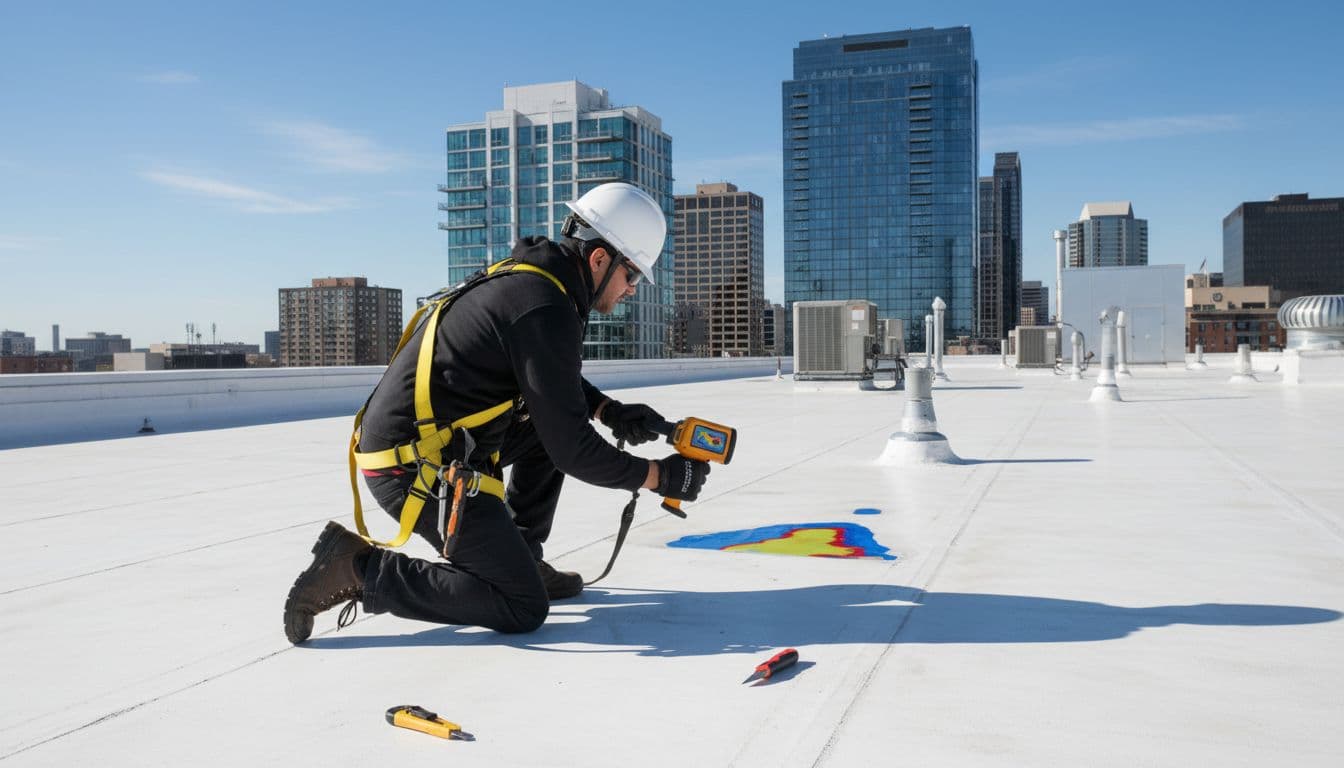
- Request targeted testing, not guesswork. For complex buildings, commercial roof leak detection in Saint Paul can pinpoint breaches with tools like infrared and electronic methods.
- Ask for repair options by scope: a localized fix, a section replacement, a coating plan, or staged restoration.
- Plan for the right fix: a small breach might be commercial flat roof repair, while widespread saturation can force commercial roof replacement.
- Replace stained tiles after drying so you’ll spot any new moisture quickly.
FAQ for Commercial Property Owners
Can I just paint over a yellow ceiling stain?
Paint hides the mark, not the moisture source. If the area is still damp, paint can trap moisture and feed mold. First confirm the cavity is dry, then replace the tile or seal stains with the right primer. For stain cleanup steps after a confirmed leak, see this guide to removing ceiling water stains.
How long does it take for a roof leak to show as a stain inside?
It depends on the roof assembly. Water can soak insulation for weeks before it reaches the interior. In other cases, it shows up after the first heavy rain. Suspended ceilings can delay visible signs, because tiles absorb and spread discoloration slowly.
What changes the timeline the most?
Roof slope, insulation type, and how far water can travel on the deck make the biggest difference.
What if the stain never grows, does that prove it’s old?
Not always. Some leaks only activate during wind-driven rain or freeze-thaw cycles. Others stop when temperatures change, then return later. If you can’t tie the stain to a one-time past event, treat it as suspicious and verify from above.
Should I replace the ceiling tile right away?
If it’s wet, remove it once it’s safe so you can inspect above and improve drying. Still, keep the tile nearby as a reference. If you replace it too early, you can lose the “map” that helps locate the source. Once repairs are complete and moisture readings look normal, install a new tile.
What’s the risk if I wait a month to investigate?
A slow leak can saturate insulation and raise energy costs, then rot decking over time. It can also damage tenant buildouts and inventory. The bigger issue is escalation: today’s small repair can become a much larger scope when hidden materials stay wet. If you suspect your commercial roof needs repair, move it up the priority list.
Conclusion
A yellow ceiling stain can be old damage, but you shouldn’t assume that without checking. Track changes, inspect above the tile, and connect timing to weather or building systems. When the source isn’t obvious, professional testing saves time and prevents repeat damage. For longer-term planning and repair support, start with Saint Paul commercial roofing repair services and build a plan before the next storm tests your roof again.
Need a roof inspection in Saint Paul or the Twin Cities? Call Sellers Roofing Company at +1-651-703-2336 or schedule a free estimate. We are a black-owned, NMSDC-certified MBE roofing contractor with 9+ years experience.