Last updated: 2026-08-01 by Ted Sellers, Owner
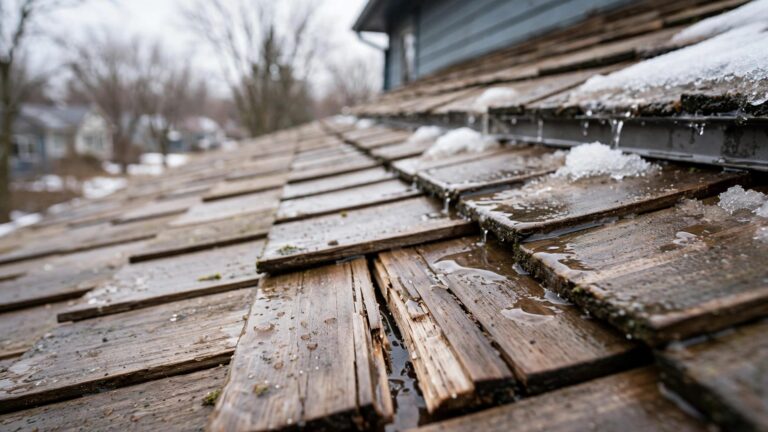
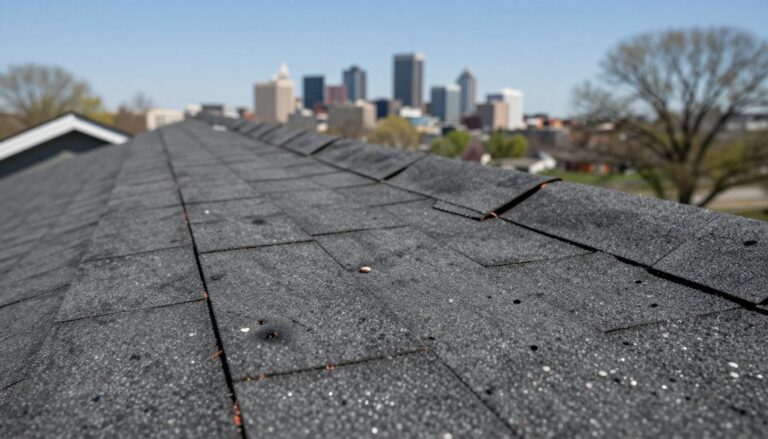
Shingle blow off after high winds happens when wind gets under a shingle and lifts it until the seal breaks, fasteners loosen, or the shingle tears free. In Saint Paul, sudden gusts, older shingles, and weak edge details make it more likely. After high winds, in the first 24 hours focus on safety, stopping water entry, documenting damage with phone photos, and scheduling a qualified inspection and repair.
When This Applies
The Saint Paul situations where shingles most often blow off
Shingle blow-off is most common on smaller commercial buildings that use asphalt shingles, particularly many older commercial or multifamily structures featuring an asphalt-shingled roof that requires specific attention to its substrate, think offices, retail strips, churches, daycares, and multifamily properties with pitched sections. It also shows up on buildings with additions where rooflines meet and create wind turbulence.
The root causes usually stack together, like a loose thread on a sweater that finally catches. Common triggers include shingles that never fully sealed (cool weather installs are a big one), aging shingles that have lost flexibility especially on roofs over fiberboard sheathing or insulating board sheathing found in older properties, such as homeset products and celotex insulating board that struggle with nail-holding power, and installation issues like high-nailing, under-driven nails, or too few fasteners near edges and corners.
Low density fiberboard can become soft over time, making a standard roofing nail less effective when subjected to high winds. If these older fiberboards are damaged, they may need testing for asbestos content before disposal or removal. Wind doesn’t have to remove a whole “field” of shingles to create a big problem, a few missing tabs can expose underlayment and nail lines and invite leaks.
Corners, rakes, ridges, and areas near roof penetrations often fail first because wind pressure changes quickly there. If you want a straightforward list of contributing factors, this overview of causes of shingle blow-offs lines up with what roofers see after real storms.
When it’s not really “shingle blow-off” (and what that means for a business)
If your building has a membrane or metal roof
If you have TPO, EPDM, PVC, or metal panels, you’re dealing with a different failure pattern, like membrane uplift, punctures from wind-driven debris, or edge metal peeling back. The urgency is the same, but the fix looks more like commercial flat roof repair than replacing shingles.
If the “missing shingle” is actually a shingle that slid
Sometimes shingles don’t leave the roof, they slide down when fasteners fail or the mat tears. That can point to workmanship issues or a brittle roof covering near end of life, which is when owners start weighing patching versus a broader plan for commercial roof replacement.
Step-by-Step
0 to 2 hours: secure people, protect property, prevent bigger loss
- Keep staff and tenants away from the fall zone, rope off the area where shingles or debris could drop, and move vehicles away from eaves.
- Don’t send anyone onto the roof, especially if it’s wet, icy, or steep, falls happen fast and liability lands on the building owner.
- If water is entering, move inventory, electronics, and files, then place buckets and plastic sheeting inside to limit interior damage ahead of repair of water-damaged area.
If a shingle or debris hit power lines or HVAC equipment
- Treat it as an electrical hazard, keep distance, and call the utility provider if lines are involved.
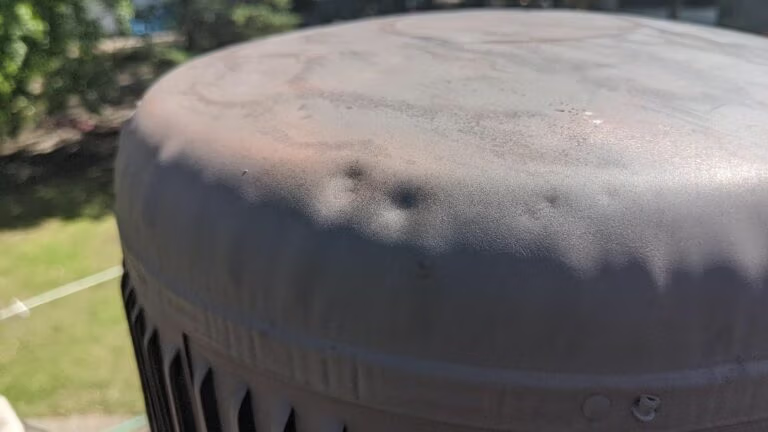
- If rooftop HVAC looks damaged, shut down the unit at the thermostat and breaker if you can do so safely, then note the time for your records.
2 to 6 hours: stop active leaks without creating new damage
- From the ground, look for obvious openings near ridges, valleys, and edges, then document before any temporary covering goes on.
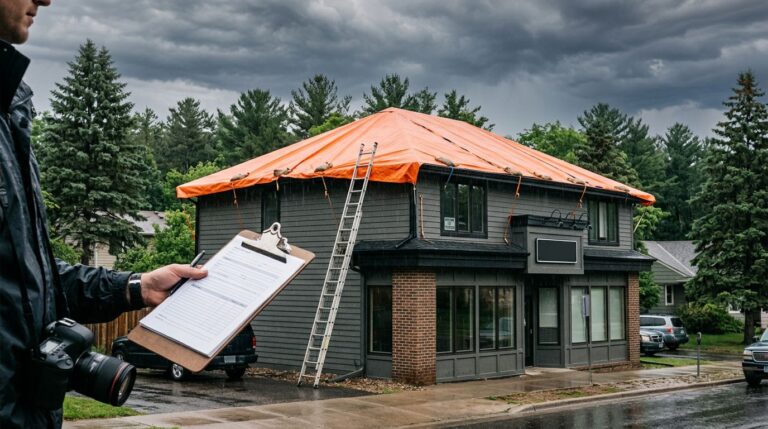
- If it’s actively raining or snowing, hire a pro for temporary protection, avoid stapling random tarps yourself, bad temporary work can add holes and complicate claims.
- If you must do a short-term cover to protect tenants, use weighted tarp methods where possible and avoid nailing into visible shingle areas, then photograph exactly what you did.
If you suspect your commercial roof needs repair beyond the shingle area
- Check top-floor ceilings, above drop ceilings, around exterior walls, and exterior wall sheathing for water trails, stains, and bubbling paint near the roofline to ensure leaks haven’t spread into the walls.
- Look for ponding water or wet insulation signs on any low-slope sections, those issues often show up after wind-driven rain and may need commercial flat roof repair even if the main complaint is missing shingles.
6 to 24 hours: document like an adjuster, then book the right inspection
- Create a simple incident log, date, time of storm, when you noticed damage, who discovered it, and any tenant reports.
- Take phone photos in good daylight, then repeat at dusk with flash if interior leaks appear after hours.
- Use the photo checklist below so you don’t miss the shots that help document the water-damaged roof, price repairs, and help an insurer understand scope of water-damaged roof.
Phone photo checklist (get these shots before repairs)
- Wide shot of each building elevation, include street signs or landmarks for location context.
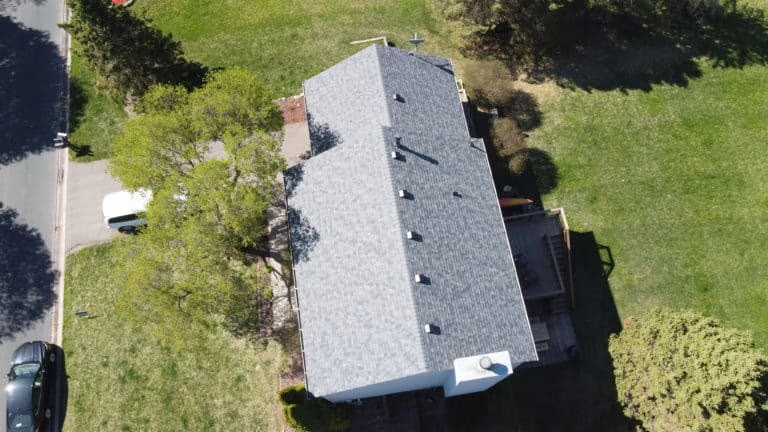
- Each roof slope from the ground, step back far enough to show the whole plane.
- Close-up of missing shingle areas, include a reference object for scale if safe from the ground (zoom is fine).
- Ridge caps, hips, and rakes where wind uplift starts.
- Gutters and downspouts, look for fresh granules and shingle fragments.
- Flashing at walls, chimneys, skylights, and plumbing vents, even small lifts matter.
- Debris on the roof or ground, including shingles that landed far away (wind direction clues).
- Interior ceiling stains and active drips, take one wide room shot and one close-up.
- Attic or above-ceiling space if accessible, show wet decking, insulation, or daylight.
- Any temporary covering you install or pay for, before and after.
- Notify your insurance carrier if you have storm coverage, but keep your description factual, “missing shingles on north slope, water staining in suite 210,” not guesses about cause.
- Schedule a building inspection with a local contractor and a home inspector who can handle storm documentation, evaluate the structural integrity of the structural roof deck, and advise whether you’re looking at targeted shingle replacement, larger section repairs, or a longer-term commercial roof replacement plan. The building inspection will check for significant roof deck deterioration or a loss of moisture resistance in the structural roof deck, which may require a shingle tear-off to fully assess the structural integrity and ensure it can still support a new roof; further loss of moisture resistance could necessitate a second shingle tear-off evaluation. Note that any roof replacement should utilize a ring-shank roofing nail for better pull-out resistance in Saint Paul’s climate. For Saint Paul businesses that want a commercial-focused inspection workflow, start with a commercial roofing Saint Paul contractor.
- If you need a second opinion on immediate next steps after shingles come off, this guidance on what to do after shingles blow off mirrors the same priorities, document first, stop water second, repair correctly after.
FAQ: Shingle blow-off questions Saint Paul business owners ask
Will a few missing shingles really cause a leak?
Yes. Wind-driven rain can slip under nearby shingles and follow nail lines. Even if you don’t see water the same day, insulation can get damp and show up later as odors or ceiling stains. Quick documentation and a repair plan cost less than drying out a tenant space.
What if the shingles are old or discontinued?
How that affects repair scope
If matching shingles aren’t available, a “small repair” can turn into an obvious patchwork that some owners won’t accept on a customer-facing building. Older roofs often reveal underlying fiberboard sheathing or insulating board sheathing, materials with specific building sheathing properties like those in asphalt impregnated fiberboard, homasote products, or celotex insulating board.
These legacy options relied on wood fiber insulation to deliver thermal insulation and sound insulation board benefits, while also providing some sound insulation board performance. However, exposure from shingle blow-off lets moisture penetrate this wood fiber insulation, causing it to lose structural integrity rapidly.
Fiberboard sheathing, especially low density fiberboard or similar homasote products, demands checking for asbestos content during any renovation or repair work. A roofer can explain options, blend strategies, or assess if the damaged fiberboard sheathing and insulating board sheathing warrant phased replacement over chasing mismatches.
Even modern buildings with structural insulated panels require verifying plywood panel bracing to avoid roof surface collapse risks from compromised structural insulated panels. Addressing these layers early prevents small fixes from escalating.
Can maintenance prevent shingle blow-off before the next wind event?
It can reduce risk. Routine checks catch popped nails, failing seal strips, and weak flashing before wind exploits them. The goal isn’t perfection, it’s removing easy failure points at edges, ridges, and penetrations.
Should I pay for temporary tarping right away?
If water is entering or a large area is exposed, temporary protection is often worth it. Keep invoices and photograph the tarp install. Avoid DIY methods that add holes or trap water, those mistakes can raise repair costs and delay reopening spaces.
How do I tell if wind also damaged my flat roof areas?
Look for lifted edge metal, wrinkles near seams, new punctures, or wet ceiling tiles under low-slope sections. Flat-roof wind issues don’t always show from the street, which is why a combined inspection matters on mixed-roof commercial buildings.
Shingle blow-off is stressful because it’s sudden, visible, and it can disrupt tenants fast. If you handle the first day with clear photos, safe temporary protection, and a qualified inspection, you’ll shorten downtime and avoid repeat damage. The sooner you confirm scope, including exterior wall sheathing for moisture migration and exterior wall sheathing integrity, the sooner you can decide between repair now and a smarter long-term plan.
Need a roof inspection in Saint Paul or the Twin Cities? Call Sellers Roofing Company at +1-651-703-2336 or schedule a free estimate. We are a black-owned, NMSDC-certified MBE roofing contractor with 9+ years experience.