Last updated: 2026-10-23 by Ted Sellers, Owner
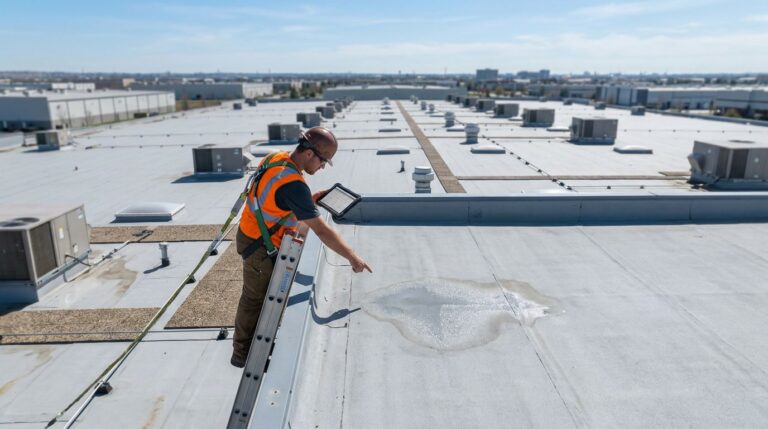
If you manage a facility in Champlin, a roof leak isn’t just “a building issue.” It’s a threat to inventory, tenant spaces, electrical rooms, and any business that can’t shut down. We are commercial roof repair contractors in Champlin. We can inspect, diagnose, and fix problems on low-slope and metal commercial roofs, like leaks, storm damage, winter freeze-thaw cracks, failing seams, damaged flashing, and ponding water.
When to call commercial roof repair contractors in Champlin, MN (and what problems they fix first)
Commercial roofs fail in predictable ways, but the timing is what makes it costly. A leak over a warehouse aisle can soak cartons in hours. A drip above a tenant suite can become a lease issue by tomorrow. Water that reaches insulation spreads sideways, like a spill under carpet, so the stain you see might be far from the entry point.
If water is actively entering the building, start with stabilization and containment. That’s where a true emergency response matters, not a “we’ll be there next week” promise. For after-hours triage and fast leak control, use an emergency roofing repair team that can secure the area and prevent more intrusion.
The highest-priority problems usually look like this:
- Active interior leaks (especially near electrical, server, or production areas)
- Membrane punctures from foot traffic, tools, or wind-blown debris
- Separated seams on TPO, EPDM, or modified bitumen
- Flashing failures at parapets, curbs, and penetrations
- Ponding water and slow drainage, often tied to clogged drains or settled insulation
For a full repair scope (not just a patch), this is the level of work covered by dedicated commercial roof repair services that include inspection, leak tracing, and documented recommendations.
Winter damage in Champlin: freeze-thaw leaks, ice dams, snow load, and clogged drains
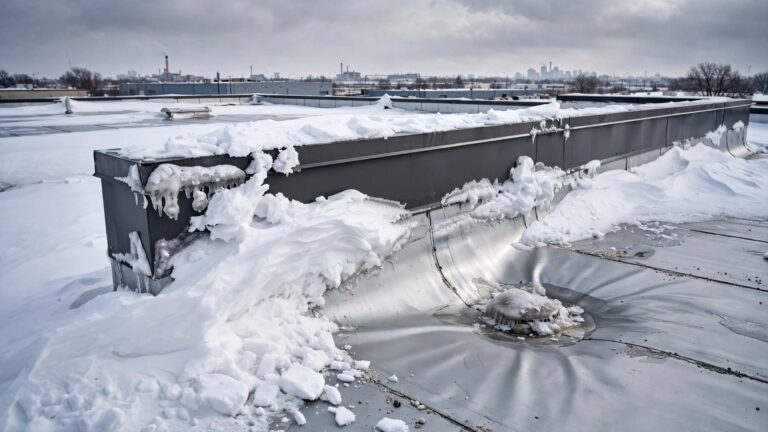
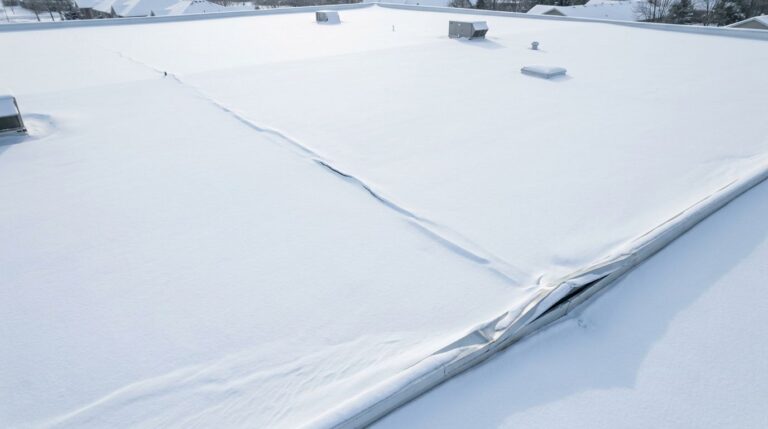
Champlin winters don’t “test” a roof, they stress it daily. Freeze-thaw cycles open tiny gaps in seams and terminations. Snow sits, melts, then re-freezes at edges and around rooftop units. Drain bowls and scuppers can ice over, and once water can’t leave, it finds the next easiest path, often a seam, a curb corner, or a wall transition.
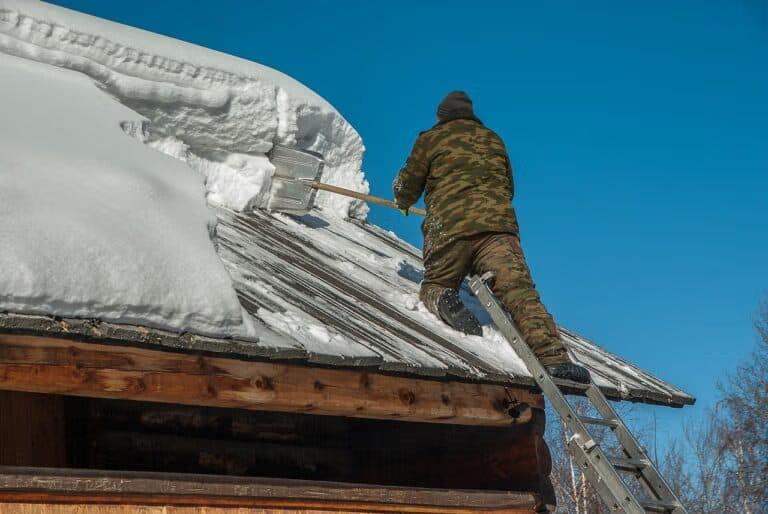
Ice dams aren’t only a residential issue. On low-slope commercial roofs, the same back-up effect happens when snow melt refreezes at perimeters or blocked drains. Add heavy snow load, and you can also get subtle deck deflection, which makes ponding worse the next time it melts.
A facility manager can spot early warnings in five minutes:
- New ceiling stains or wet tiles after a warm-up
- Bubbles or ridges in the membrane near seams
- Sagging at drain areas or between supports
- Ice buildup at edges or around scuppers
- Overflow marks on walls where downspouts back up
In Minnesota, the best winter repairs prioritize drying and drainage. A patch that traps moisture can buy you a week and cost you a section later.
Storm and hail damage: what counts as repairable versus a bigger system issue
Hail and wind can do more than leave dents. On single-ply roofs, impacts can bruise the membrane, crack seam areas, and loosen edge metal. Wind can lift flashing and pull at termination bars, which turns into a leak the next time rain hits sideways.
A lot is repairable when damage is isolated, insulation stays dry, and the membrane hasn’t lost its bond across large areas. It becomes a larger system issue when you have repeated leaks, widespread wet insulation, or extensive seam failure that suggests age, movement, or poor drainage.
Documenting matters if insurance is involved. Keep it simple and thorough:
- Take wide and close-up photos (roof and interior)
- Write down dates, storm timing, and which areas leaked
- Note business impacts (wet stock, equipment shut-down, blocked spaces)
A professional inspection helps separate cosmetic hits from functional damage. If hail is even a possibility, schedule a hail damage roof inspection so you have clear documentation and a repair plan that matches what adjusters usually ask for. For a neutral reference on finding qualified local pros, you can also review roofing contractor listings in Champlin.
How to vet a Champlin commercial roof repair contractor so the fix lasts
A commercial roof is more like a sealed system than a surface. If one part is repaired incorrectly, water can travel and show up somewhere else, which makes tenants think “the roof wasn’t fixed,” even if the original hole was patched.
Use this quick screening list to separate real commercial crews from “we do everything” outfits:
- Minnesota licensing and a contractor number you can verify.
- General liability coverage sized for commercial property risk.
- Workers’ comp (don’t accept “they’re subcontractors” as the answer).
- System experience with TPO, EPDM, modified bitumen, and metal details.
- A written safety plan, including fall protection and access control.
- References for similar buildings, not just homes.
- Clear scope language, including what’s excluded and how leaks are traced.
- Warranty terms in writing, covering both labor and materials.
- Communication expectations, including your on-site lead and daily updates.
If you want the repair contractor to see the roof as an asset and not a quick job, start with a company that also handles full-system commercial work, like the teams behind commercial roofing services for the Twin Cities area.
The questions to ask on the first call (and the red flags to walk away from)
On the first call, you’re checking two things: whether they can find the real leak path, and whether they can work safely around your building operations.
Ask direct questions like these:
- Will you perform leak tracing beyond the interior stain location?
- Do you use a moisture scan (infrared or other) to check insulation?
- Who is my site lead, and how do I reach them during the job?
- What repair method will you use for seams (weld, tape, mastic, re-flash)?
- How will you protect rooftop units and walk paths from damage?
- What is excluded from the quote (wet insulation, structural issues, electrical)?
- Will you provide photos before and after, with marked locations?
- How do you handle temporary protection if weather turns mid-repair?
- What warranty applies, and what voids it?
Red flags are usually obvious when you listen for specifics:
- A price given without inspecting the roof
- “We’ll just coat it” without moisture testing
- No proof of insurance, or “we can email it later”
- Pressure to sign today, or vague promises instead of scope
- No mention of safety procedures or controlled access
- They can’t explain why the leak is happening, only where it shows up
- No plan for documenting repairs for your records or insurance file
Repair options, pricing drivers, and timelines for common commercial roof systems
Commercial roof repair isn’t one-size-fits-all. A TPO seam split is treated differently than an EPDM puncture, and both differ from metal panel movement at fasteners. The best contractors match the repair to the system, then confirm the area is dry and stable before closing it up.
Here’s a plain-language comparison of common systems:
| Roof system | Common failure | Typical repair approach | Typical time range |
|---|---|---|---|
| TPO (single-ply) | Seam separation, punctures | Heat-welded patch, detail re-work | Same day to 2 days |
| EPDM (rubber) | Punctures, edge shrink | Clean and patch, re-terminate edges | Same day to 2 days |
| Modified bitumen | Blisters, open laps | Re-seal laps, patch with compatible cap | 1 to 3 days |
| Metal (standing seam, exposed fastener) | Loose fasteners, seam leaks, dents | Replace fasteners, seam repair, panel swap | 1 to 5 days |
Avoid exact “per square foot” guesses on repairs. What changes cost and schedule is the job reality:
Access and staging, roof height, tie-off needs, wet insulation removal, membrane type, flashing complexity, number of penetrations, after-hours requirements, and whether snow removal is needed just to reach the problem.
Many 2026 repair plans also include life-extension tactics when the roof is still fundamentally sound. That can mean targeted sealing and silicone or acrylic coatings, better insulation at vulnerable details, and moisture detection tools that help crews avoid “chasing leaks” blindly. If your building includes metal sections or you’re weighing a longer-term upgrade, review commercial metal roofing options alongside membrane repair plans so your next move fits Minnesota wind and snow realities.
Repairs that stop leaks now: seams, flashing, penetrations, and drain fixes
On low-slope roofs, leaks often start where the roof surface is interrupted. Think of the membrane like a raincoat, and penetrations like zippers and pockets. Most failures happen at the stitching, not in the fabric.
Common leak sources include:
- HVAC curbs
- Pipe boots
- Parapet walls and coping edges
- Scuppers and drain bowls
- Inside corners and wall transitions
A quality repair follows a simple, testable process:
- Diagnose: trace the entry point (not just the stain), check laps, edges, and drains.
- Dry and prep: remove saturated material where required, clean, prime, and confirm adhesion conditions.
- Repair and test: weld or patch, re-flash details, then verify with controlled water testing when appropriate.
These steps map cleanly to how good contractors document work for warranty and future maintenance files.
When roof coatings make sense, and when they are the wrong choice
Coatings can be a smart way to slow aging and seal minor issues, but only when the roof is a good candidate. Coatings tend to work when the membrane is mostly intact, leaks are limited, seams can be reinforced, and insulation is dry.
They’re the wrong choice when there’s widespread wet insulation, saturated deck sections, major movement at details, or severe hail bruising across large areas. Coating over trapped moisture can shorten the roof’s remaining life and hide problems until they’re bigger.
Before approving a coating, a contractor should complete a few checks:
- Moisture scan to confirm the roof assembly is dry enough
- Adhesion testing in representative areas
- Seam and flashing review to reinforce details first
- Drainage review to reduce ponding, not just seal it
Plan ahead: maintenance that reduces emergency calls and extends roof life in Minnesota
Emergency calls cost more because the roof isn’t the only thing at risk. Your business is. Scheduled inspections and small fixes protect uptime, reduce interior damage, and help you budget repairs before they turn into replacements.
A practical seasonal plan for Champlin looks like this:
- Spring: inspect for freeze-thaw seam splits, edge lifting, and interior stains that appeared during thaws.
- Mid-summer: check UV wear, foot-traffic paths, and rooftop unit curb seals.
- Fall: clear drains, confirm slope to drain, and seal small openings before snow season.
- After major storms: document impacts, check flashing, and scan for moisture migration.
This is where a documented maintenance program pays off. You’re building a roof history that helps with warranty claims, tenant questions, and capital planning. If you want a structured plan with photos and logs, use a dedicated commercial roof maintenance program and keep drainage work on schedule with professional gutter cleaning services, since blocked drainage is one of the fastest ways to turn normal melt into a leak.
Permits, inspections, and code basics that impact commercial roof work near Champlin
In Minnesota, commercial roof work often ties into code requirements, permits, and inspections, especially when the work moves from “repair” into replacement or assembly changes. A permit is commonly needed when you’re removing and installing roofing materials or changing insulation levels, and inspections may be required at key stages.
Energy rules also push better thermal performance at roof details. A common example is roof curb insulation expectations (often cited around R-10, or matching the roof insulation level when lower), which affects rooftop units and curb rebuilds.
Older buildings can also bring hazardous material concerns. If a roof assembly may contain asbestos, testing and proper handling rules apply. The action step is simple: ask your contractor to pull permits, schedule inspections, and confirm how they handle any regulated materials before tear-off begins.
FAQ: commercial roof repair contractors Champlin, MN
Q: Do commercial roof repair contractors in Champlin, MN handle flat roof leak repair?
A: Yes. Most commercial leak calls involve low-slope systems like TPO, EPDM, or modified bitumen. The key is tracing the leak path and checking for wet insulation, not just patching the nearest seam.
Q: How do I find a TPO roof repair contractor (not a residential shingle crew)?
A: Ask whether they heat-weld seams, how they repair flashing and curbs, and if they’ll perform a moisture scan. Commercial TPO repairs require the right tools and detailing experience.
Q: Can a contractor install an emergency commercial roof tarp in winter?
A: Temporary protection is possible, but winter conditions limit adhesion and safe access. The goal is to stabilize the opening, control water entry, then return for a permanent repair when conditions allow.
Q: Why did my roof start leaking after snow melt?
A: Snow melt exposes drainage problems. Water backs up at iced-over drains or refreezes at edges, then pushes into seams and wall transitions during freeze-thaw cycles.
Q: How long does a commercial roof repair last?
A: It depends on the system, the moisture condition below the surface, and how the detail was repaired. A properly prepped, compatible repair at seams and flashing can last years, while “smear-on” fixes often fail in a season.
Q: Does insurance cover hail damage on commercial roofs?
A: Often yes, when functional damage is documented and tied to a storm date. Photos, inspection notes, and interior impact documentation improve claim clarity and reduce disputes.
Conclusion
Commercial roof problems don’t wait for a convenient week on your calendar. In Champlin, leaks and winter damage get worse fast because freeze-thaw cycles, snow load, and blocked drainage turn small gaps into wet insulation and interior disruption.
The three priorities stay the same: act fast when water is active, hire a contractor with proven commercial system experience, and keep a maintenance routine that catches seam, flashing, and drainage issues early. If you’re seeing stains, ponding, or storm impacts, schedule an inspection and request a written repair plan with photos, clear scope, and warranty terms. A documented repair beats a hopeful patch every time.
Written by a Minnesota commercial roofing specialist with 18+ years working on flat and metal systems across the Twin Cities metro, with a focus on repairs that protect operations, not just surfaces.
Need a roof inspection in Saint Paul or the Twin Cities? Call Sellers Roofing Company at +1-651-703-2336 or schedule a free estimate. We are a black-owned, NMSDC-certified MBE roofing contractor with 9+ years experience.