Last updated: 2026-08-01 by Ted Sellers, Owner
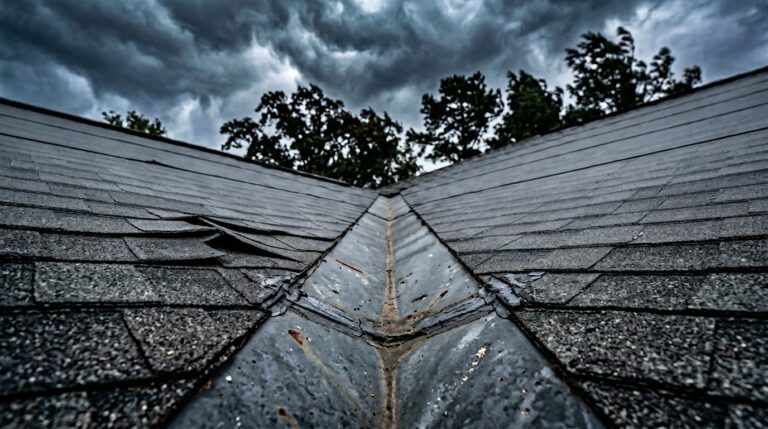
Yes. A satellite dish roof leak can show up after hail because the storm often damages the weak points around the mount, not the dish itself. Fasteners can loosen, sealant can crack, flashing can shift, and cable-entry details can open. On commercial roofs, water may travel away from the breach before it appears indoors.
For business owners, this issue is easy to miss. The dish may look fine from the ground while the roofing around it has already failed.
That is why the leak path has to be traced before anyone assumes the storm only caused cosmetic damage.
When This Applies
For commercial buildings with roof-mounted dishes
This applies to offices, retail centers, warehouses, schools, and multi-tenant properties with a satellite dish attached to the roof system. It matters most on low-slope roofs, including TPO, EPDM, modified bitumen, and coated systems, because a small opening around one mount can let water spread into insulation.
It also applies on metal roofs when hail dents flashing, breaks sealant lines, or loosens fasteners at the bracket. If the dish uses a roof penetration for mounting or cable entry, the risk goes up after a hailstorm.
On large buildings, the water stain may appear far from the actual entry point. Because of that, commercial roof leak detection services can help confirm whether the mount failed or the leak began elsewhere.
When it usually does not apply
This is less likely when the dish is mounted to a wall, parapet, or a non-penetrating ballast frame. In those cases, hail may damage the dish without creating a roof opening.
It also may not apply when the real issue is old ponding water, a failed HVAC curb, or indoor condensation on cable lines. A ceiling drip after hail does not always mean the dish caused it.
Exceptions that change the diagnosis
Past roof repairs do not automatically make the dish mount the cause. The real question is what failed first. If the mount area stayed dry for years and leaked only after a covered storm, the new damage still matters.
Mixed conditions are common. One area may show older wear, while another shows fresh storm-related failure. A good inspection separates old defects from new damage instead of blending them together.
Step-by-Step
1. Record the timing before the roof changes
Start with the simplest facts. Note the storm date, the first time you saw water, the weather conditions during each leak, and any recent service work near the dish.
Then take date-stamped photos from inside and outside the building. Capture ceiling stains, wet inventory, rooftop impact marks, displaced metal, and the dish itself. Save maintenance records and old repair invoices too, because they help build a clean timeline.
2. Inspect the mount and the nearby roof safely
Use a qualified commercial roofer if the roof is wet, steep, damaged, or crowded with equipment. Sending maintenance staff onto a slick membrane after hail is not worth the risk.
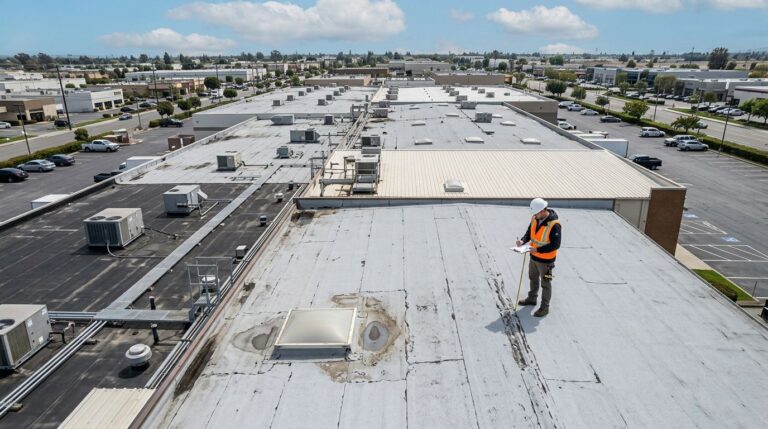
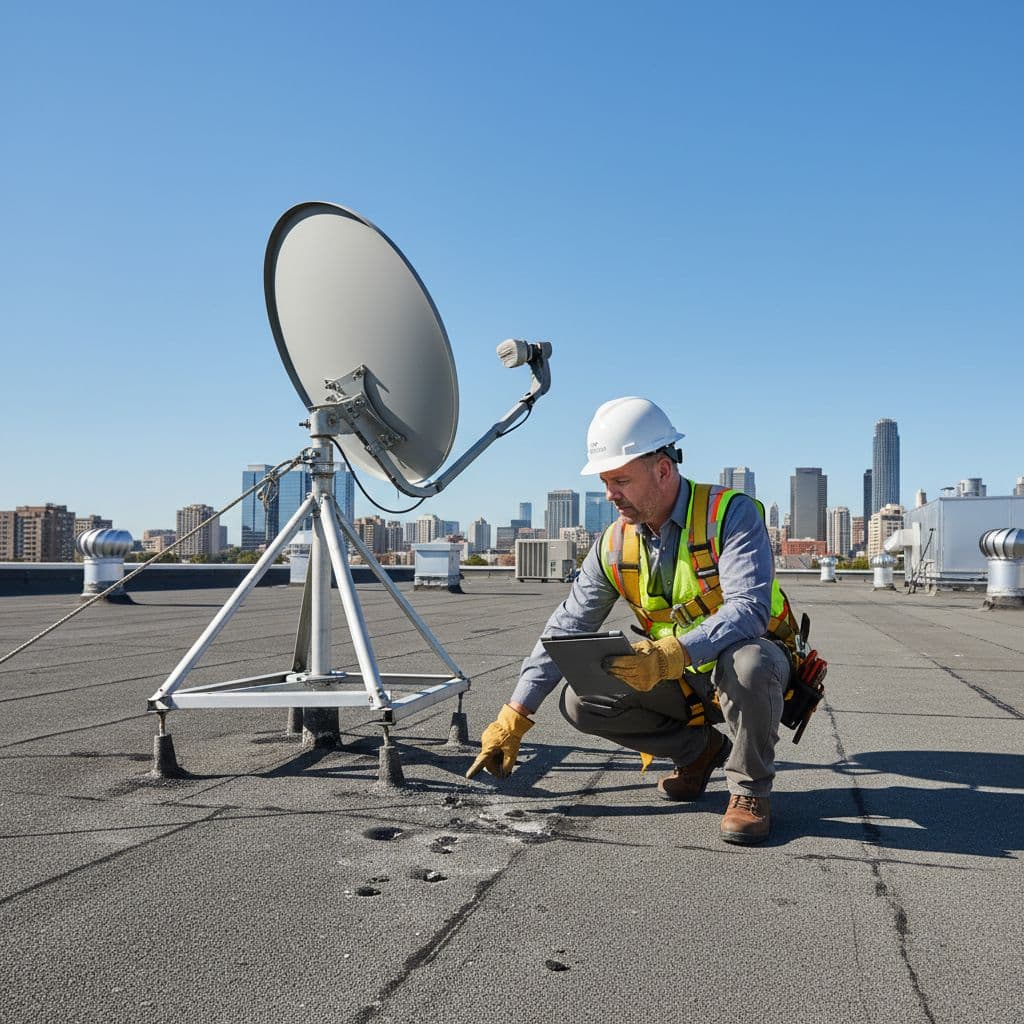
A proper inspection should check the dish bracket, lag screws, sealant, pitch pans, flashing, cable-entry point, and the roofing around each attachment. On many buildings, that roof visit takes 1 to 3 hours, longer if the team also traces interior leak paths or maps moisture.
What hail damage looks like around a mount
Look for cracked sealant, split boots, bent brackets, pulled fasteners, torn membrane, and flashing that no longer sits flat. Dents alone may be cosmetic. Open seams, broken seals, and wet insulation are the findings that matter most.
3. Stop active water, but keep the evidence intact
If water is entering, protect the building right away. Temporary dry-in work, interior protection, drain clearing, and a small short-term patch are usually reasonable because they limit added damage.
Keep that work temporary. Do not authorize broad tear-off or full restoration before the cause and scope are clear. If wet insulation must come out for safety, photograph it in place first, save a sample when possible, and keep every labor ticket and receipt.
4. Separate fresh storm damage from old wear
This is where many claim disputes start. A carrier may argue that the leak came from poor upkeep, earlier patching, or an aging penetration detail rather than hail.
Fresh storm damage often looks different from long-term wear. New splits, shifted flashing, displaced sealant, and recent water spread point one way. Brittle mastics, long rust trails, and weathered cracks point another. Previous repairs matter only when the insurer can tie them to the current loss.
Ask for a written report that separates older conditions from new damage. If only part of the roof shows old failure, partial approval may still make sense.
5. Decide whether a targeted repair will hold
Sometimes the fix is narrow. If the hail only damaged the mount flashing, the cable-entry boot, or a small section of membrane, a commercial flat roof repair may be the right call.
The scope changes when tear-off or testing finds wet insulation, saturated cover board, damaged substrate, or failed seams beyond the dish area. Water often travels before it appears inside, so the visible split may be only the front edge of the problem. When that happens, a building owner may learn the commercial roof needs repair in several connected areas, not one.
A contractor who handles commercial roofing services in Saint Paul can compare a local repair, a section rebuild, and a commercial roof replacement using photos, measurements, and moisture findings.
When repair shifts to replacement
Replacement becomes more likely when insulation is wet across a broad area, seams have failed in multiple sections, or code-related work makes patching unrealistic. Repeated leaks after earlier fixes also push the math toward a larger rebuild.
6. Build the claim file before permanent work starts
Get the insurer’s written scope and compare it line by line with the roofer’s estimate. Do not compare only the total. Look at membrane area, insulation thickness, flashing, edge metal, tear-off, disposal, permits, and temporary protection.
If the first scope misses hidden damage, submit a supplement with photos, moisture readings, test cuts, and code notes. That is often how underpaid roof claims get corrected. Also confirm whether the payment is actual cash value or replacement cost, whether depreciation is recoverable, and whether ordinance or law coverage applies.
Signs the dish mount caused the leak, not just the hail
Clues on the roof surface
The strongest clues sit right at the penetration. You may see a loose mount foot, a cracked sealant ring, a split pipe boot, or a cable-entry cover that lifted during the storm. Rust around fasteners also matters, because hail and wind can widen a weak spot that already had limited tolerance left.
The pattern matters too. Random hail marks on nearby metal, paired with one opened seal at the mount, support a storm-related failure better than one isolated stain and no roof evidence.
Clues inside the building
Interior signs rarely line up in a straight vertical path. Water can move across insulation, along the underside of the deck, or around framing before it drops into occupied space.
Pay attention to leaks that happen during wind-driven rain, start soon after hail, or return near the same tenant space each storm. If the leak appears only near the cable path or equipment room, the dish area deserves a close look.
Conclusion
What matters most
A dish mount can absolutely leak after hail, but the leak usually starts in the roofing details around the mount, not in the dish itself. That small distinction changes the repair scope, the claim, and the long-term fix.
The best first move is fast documentation, safe temporary protection, and a focused inspection that separates old wear from fresh damage. When the evidence is clear, you can tell whether the job is a small repair or a larger roof project.
FAQ
Can hail damage a dish mount without breaking the dish?
Yes. The dish reflector may survive while the sealant, flashing, screws, or boot around it fails. That is common on commercial roofs because the waterproofing details are smaller and more exposed than the dish body.
Will insurance cover a leak at the satellite dish penetration?
It can, if a covered storm caused the failure. Coverage gets harder when the insurer can show the leak came from long-term wear, poor upkeep, or a bad prior repair. Clear photos, dates, and a report that separates old issues from new damage help a lot.
Should the dish be removed before the adjuster inspects?
Usually no. Removing it too soon can erase evidence about how the mount failed. If the dish creates a safety issue, photograph everything first and tell the carrier why removal could not wait.
What if the leak started several days after the hailstorm?
That does not rule out storm damage. Commercial roofs often hold water in insulation before it appears indoors. Tenant reports, weather records, and moisture mapping can still connect the leak to the storm.
Can one bad dish mount lead to a full roof replacement?
Sometimes. One failed mount does not mean the whole roof is done. But if testing finds widespread wet insulation, damaged substrate, or multiple failed seams linked to the same event, the scope can grow from a local repair into a section rebuild or full replacement.
Need a roof inspection in Saint Paul or the Twin Cities? Call Sellers Roofing Company at +1-651-703-2336 or schedule a free estimate. We are a black-owned, NMSDC-certified MBE roofing contractor with 9+ years experience.