Last updated: 2026-08-01 by Ted Sellers, Owner
After storm damage in the Twin Cities, emergency roof tarping is a short-term way to block water and protect your building until repairs start. Use a heavy-duty tarp that reaches past the damaged area, run it higher than the leak point, and secure it with lumber (not just nails through the tarp). If the roof is icy, steep, or high, keep people off it and call a pro.
When This Applies
When roof tarping makes sense for Saint Paul businesses
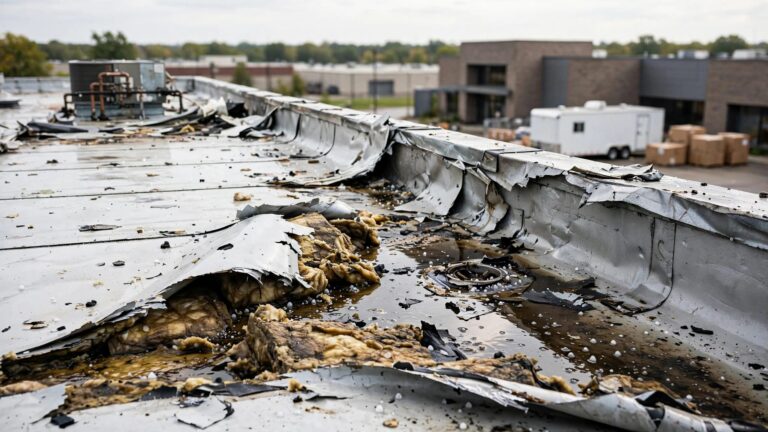
Roof tarping helps Saint Paul businesses mitigate storm damage when you have active water intrusion or exposed roofing after wind, hail, or falling debris. It’s most useful when you need a fast barrier to protect inventory, equipment, and tenant spaces while you line up permanent repairs.
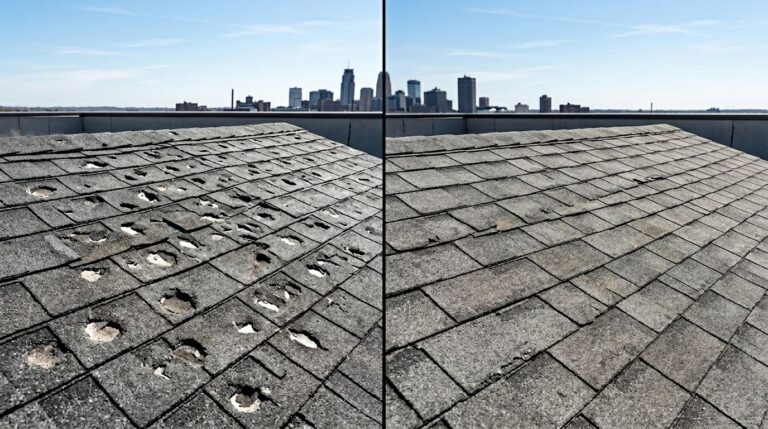
This applies to many commercial roofs in the Twin Cities area, including Saint Paul and Minneapolis, with low-slope systems like TPO, EPDM, modified bitumen, metal details, and even missing shingles around units and curbs. It can also help after heavy snow shifts and opens seams, which matters in winters like February 2026 when storms can stack up quickly.
Tarping is also a smart move when you suspect the leak isn’t where the water shows up inside. Water can travel across a flat roof before it drops into the building. If you’re seeing staining but can’t find the source, plan to schedule commercial roof leak detection Saint Paul as soon as conditions allow.
When you should not tarp it yourself
Skip DIY tarping if any of these are true:
- The roof has ice, drifting snow, or wet membrane surfaces.
- Winds are gusting; even “moderate” wind can turn a tarp into a sail.
- You can’t reach the roof safely (no roof hatch, poor ladder tie-off, or fragile edge).
- The damage is near power lines, rooftop units, or skylights.
- You have a large opening or structural concerns.
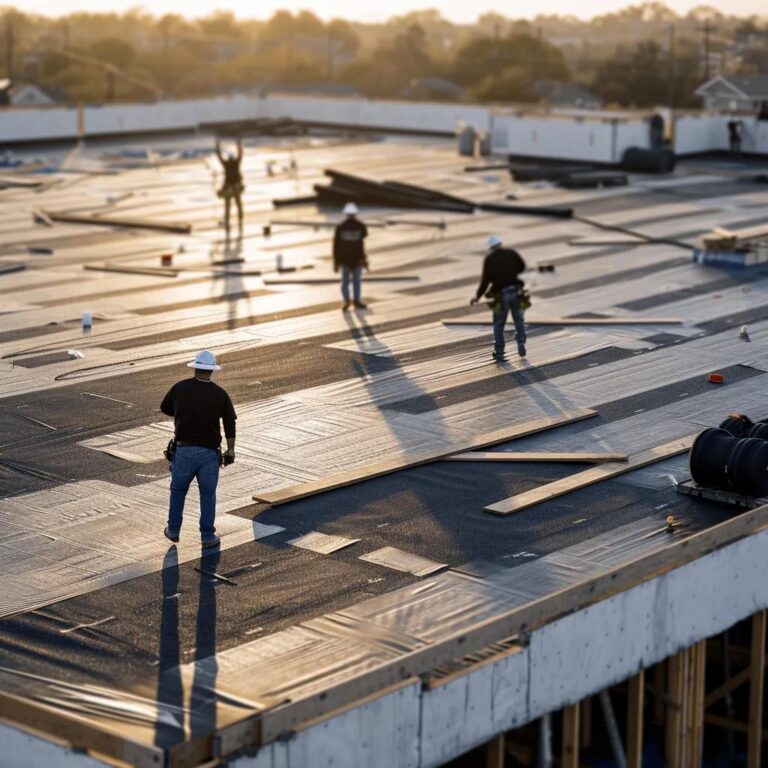
Falls are the biggest risk in emergency work. Review OSHA’s guidance on roof inspection, tarping, and repair and treat it as a hard stop if you can’t meet basic safety needs.
If conditions are unsafe, arrange for a professional roof inspection right away. If your commercial roof needs repair after a storm, a temporary tarp provides a temporary fix that can buy time as a stopgap, but it should not replace qualified roof repair. For ongoing service planning, it helps to talk with Saint Paul commercial roofing experts who understand local weather and code expectations.
Step-by-Step
Materials and sizing (don’t guess)
- Choose a heavy-duty polyethylene tarp, 12 mil or thicker, large enough to cover the damage plus at least 3 to 6 feet past it on all sides.
- Buy 2×4 wooden boards long enough to span the tarp edges, you’ll use them as anchor boards to clamp the tarp down.
- Use exterior-grade screws (not short drywall screws or roofing nails directly through the fabric) and washers for stronger hold in wind.
- Bring a utility knife for tarp or plastic sheeting, tape measure, gloves, and a broom or blower to clear loose grit.
- For commercial flat roofs, add sandbags only as a secondary measure, never as the main anchor.
Document first, then make the area safer
- Take wide photos of the roof, then close-ups of punctures, lifted seams, and damaged flashing.
- Photograph interior water damage too, including wet ceiling tiles, walls, and any affected equipment.
- If safe (wear a safety harness when working near edges), remove sharp debris (branches, metal fragments) that could slice the tarp.
- Mark the suspected leak zone with chalk or tape so you don’t lose it once the tarp is up.
- Clear drains and scuppers nearby, ponding water can cause further water damage and defeat even a well-secured tarp.
Place the tarp so water runs over it, not under it
- Check the roof decking for stability before positioning the tarp and applying its weight.
- Position the tarp so the top edge sits uphill from the damage (higher on the slope or closer to the roof’s high point).
- Extend the tarp past the damaged area in every direction, more coverage is safer than “just enough.”
- Smooth the tarp flat and pull it tight, wrinkles catch wind and funnel water.
- On low-slope roofs, route the tarp so it doesn’t block primary drainage paths.
- Avoid cutting the tarp around pipes or equipment if you can, it’s better to cover over and seal later.
Secure it for wind, thaw, and refreeze cycles
- Wrap the tarp edge around a 2×4 wooden board (an anchor board), then screw through the tarp and into the board to create a reinforced seam.
- Place a second 2×4 wooden board on top of the tarp edge (a clamp), then screw the anchor boards together, this spreads force and reduces tearing.
- Fasten along the top edge first, then the sides, then the bottom, so water sheds correctly.
- Put fasteners every 12 to 18 inches on edges exposed to wind.
- If you must fasten into the roof (common in emergencies), keep screws in areas you can later repair, and avoid seams, drains, and membrane laps.
- Seal small gaps at corners with roofing tape made for wet surfaces, if conditions allow.
- Add sandbags at the bottom edge only to reduce flapping, but don’t rely on weight alone.
Stabilize operations until repairs happen
- Check the tarp after the next wind event and after heavy snow, edges can loosen fast.
- Keep a log with dates, photos, and notes, it supports insurance and speeds repair bids.
- Watch for new interior wet spots, water may have multiple entry points.
- Schedule permanent repairs quickly, because UV and wind can degrade tarps in weeks, this temporary fix buys time only.
- If the same area leaks again, move from tarping to diagnostics and repair planning, repeated temporary fixes often lead to bigger costs.
For a deeper look at emergency tarping basics and common mistakes, see this emergency roof tarping guide.
FAQ
Will a tarp stop a commercial roof leak completely?
Sometimes, but not always. Flat roofs can let water intrusion travel sideways, so the visible drip may be far from the opening. A tarp works best when it extends well uphill and you keep drains clear. If water keeps showing up, assume there’s another breach and plan professional inspection.
How long can a tarp stay on a commercial roof in Minnesota weather?
Treat it as short-term. Wind, sun, and freeze-thaw cycles can loosen fasteners and tear grommets. Plan for days to a few weeks, not a season. If delays push you out, re-check tension and anchoring after every storm.
Can roof tarping affect an insurance claim?
Usually, insurance wants you to prevent more damage, and tarping helps with your insurance claim. Keep receipts and photos from before and after you tarp.
Good documentation matters as much as the tarp itself; it shows the timing, the cause, and your mitigation steps for the insurance claim.
What if the storm damage means we need more than a tarp?
If the membrane is saturated, the deck is compromised, or seams and flashing are failing across large areas, delayed repairs can lead to mold growth and damage to attic insulation, threatening structural integrity. You may be looking at commercial flat roof repair at minimum, and sometimes commercial roof replacement. Tarping buys time, but it can’t restore wet insulation or structural components.
Is it better to patch the membrane instead of tarping?
A proper patch can outperform a tarp, but only when the surface is dry and safe to work on. In winter conditions, emergency patches often fail because adhesives and welds don’t bond well on damp, icy, or dirty membranes. In that case, tarp first, then schedule the right repair once conditions improve.
Storm damage doesn’t wait for a convenient week, and neither do leaks. Roof tarping can protect your Saint Paul building fast, but it’s only the bridge to a real fix. Contact a roofing contractor for emergency restoration. If you’re seeing repeat leaks or wide-area damage from storm damage in Minnesota weather, move quickly from temporary protection to a repair plan that prevents the next shutdown, up to full roof replacement.
Need a roof inspection in Saint Paul or the Twin Cities? Call Sellers Roofing Company at +1-651-703-2336 or schedule a free estimate. We are a black-owned, NMSDC-certified MBE roofing contractor with 9+ years experience.