Last updated: 2026-05-26 by Ted Sellers, Owner
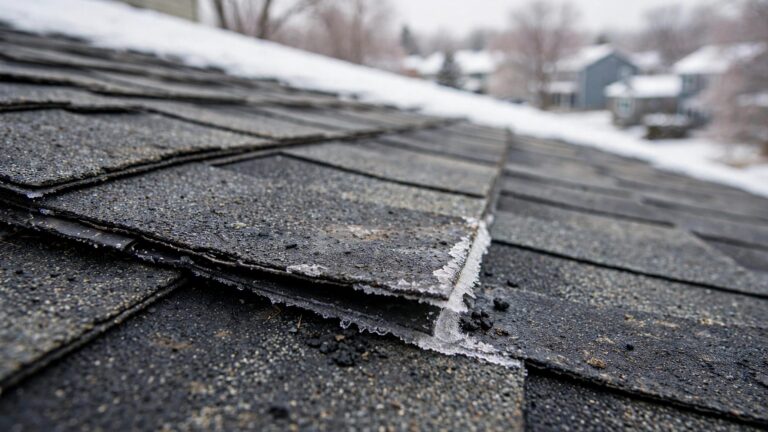
If hail damage affects your asphalt shingles on your building, the shingle sealant strip may crack or lose its bond, letting tabs lift in wind and driving rain. The fastest check is to look for a lifted tab with a clean gap, a broken or “crumbly” sealant strip, and a dust or debris line where the shingle used to stick. Compare several areas, not just one tab.
When This Applies
Who this check is for (and why business owners should care)
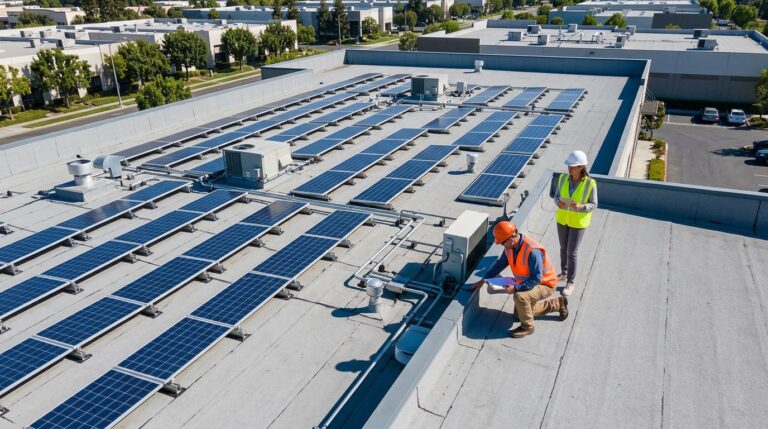
This applies if part of your property has asphalt shingles, such as an office wing, retail storefront, entry canopy, or a sloped section tied into a larger system. A cracked sealant strip doesn’t always leak right away, but it can turn a normal storm into a surprise interior problem like water damage and roof leaks. For commercial owners, that can mean stained ceilings, wet insulation, tenant complaints, and downtime.
Use this check after a hail event when you notice any of these signs of hail damage:
- Tabs look slightly “ruffled” instead of laying flat.
- Shingles show scuffs, granule loss, or missing granules near the lower edges.
- You find shingle pieces or granules in gutters or at downspouts.
- Dented gutters around the roof perimeter.
- A roofing contractor reports hail hits, but the roof “doesn’t look that bad” from the ground.
If you want a broader refresher on what hail damage marks can look like on shingles, this guide is a helpful baseline: how to identify hail damage on a roof.
When it doesn’t apply, or can fool you
A sealant strip can fail for reasons that have nothing to do with hail. Cold weather can keep shingles from sealing. Dust on the adhesive line can prevent bonding. Age can dry the adhesive out. Poor attic ventilation can also bake shingles and weaken the bond.
One quick way to stay honest is to judge the pattern. Hail-related bond breaks often show up across multiple slopes that faced the storm. A single lifted tab near a corner is more often wind damage or installation issues.
Here’s a simple way to separate common scenarios at the seal line:
| What caused the tab to lift? | What you’ll see at the sealant strip | What it usually means |
|---|---|---|
| Cold or “never sealed” | Adhesive looks intact, but tabs lift easily with no tearing | May reseal in warm sun, still worth monitoring |
| Hail impact and bond crack | Adhesive line looks split, brittle, or interrupted, sometimes with a debris line | Higher blow-off risk, repairs often needed |
| Wind tugging at an edge | Localized lifting at rakes, corners, or near a missing shingle | Fix edge detailing, replace damaged shingles |
If the tab lifts and you see a clear “shadow line” of dirt where it used to stick, treat it as a real bond failure, not just a cosmetic mark.
A professional roof inspection is the best way to confirm these findings.
Step-by-Step
Find the sealant strip and choose test areas
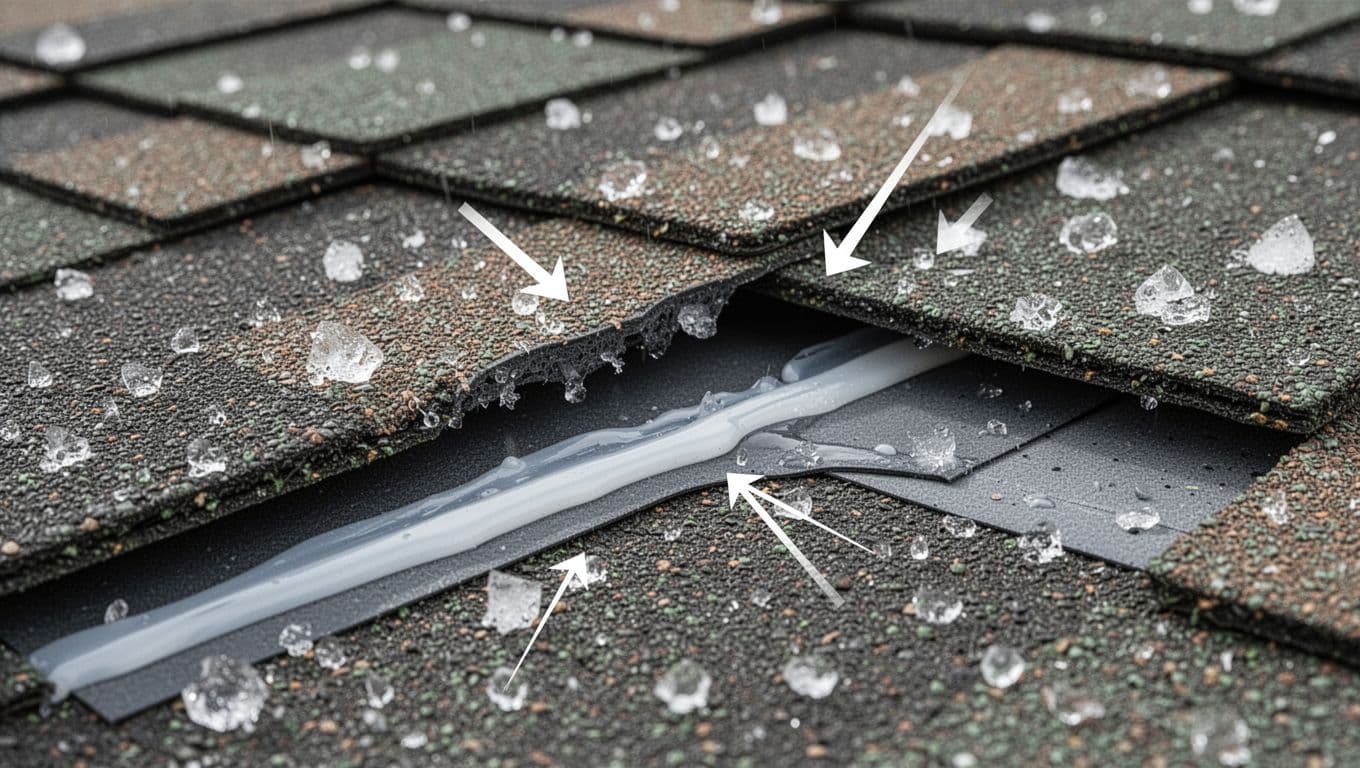
- Identify what roof areas are actually 3-tab shingles reinforced by fiberglass mat (not membrane, metal, or coated roofing). Many commercial buildings have mixed systems.
- Work from the ground first with binoculars, then only access the roof if it’s safe and permitted. During the roof inspection, check metal flashing and roof vents for hail impacts. Wet, icy, or steep roofs aren’t worth the fall risk.
- Pick 3 to 5 test zones per affected slope, including near the middle (not only edges).
- Focus on the lower half of shingles, because the sealant strip sits near the leading edge of the shingle above, protecting the roof underlayment beneath.
- Avoid testing on very cold days, because sealant can act stiff even when it’s not hail damaged.
Check whether the bond is cracked, separated, or just unsealed
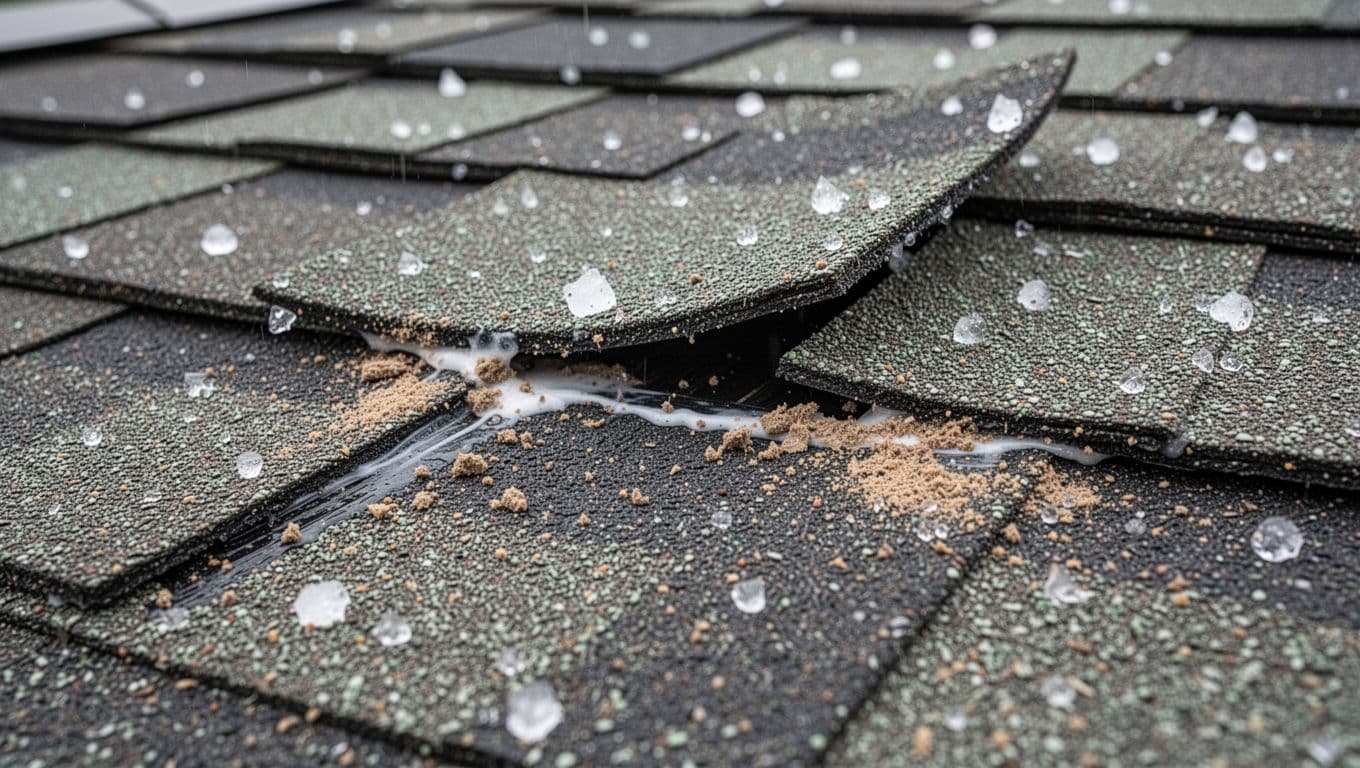
- Perform the 1-finger test by lifting a tab gently using one finger only, never a tool. Stop if you feel the shingle tearing, cracking, or soft spots on the decking.
- Look for a continuous shingle sealant line that still looks smooth and “rubbery.” That often means the shingle simply never sealed.
- Look for a broken adhesive strip that appears split, chunky, or missing in spots. That points to bond failure.
- Check for a light dust or debris line along the adhesive path, like a footprint. That line forms when a previously sealed tab separates, indicating bond failure.
- Scan the shingle surface right above the seal zone for hail signs, such as scuffs, granule loss, or small impact marks. Separation plus impact clues is a stronger case than separation alone.
- Repeat on nearby shingles. If only one tab shows separation, it may be isolated wind lift or an installation issue.
- If you suspect widespread hail damage, compare your notes to a professional inspection guide like these hail damage inspection signs to make sure you’re not missing other red flags.
Don’t “stress test” the roof. Your goal is to observe the bond, not create a tear that becomes a leak.
Compare against an intact area and document what you see
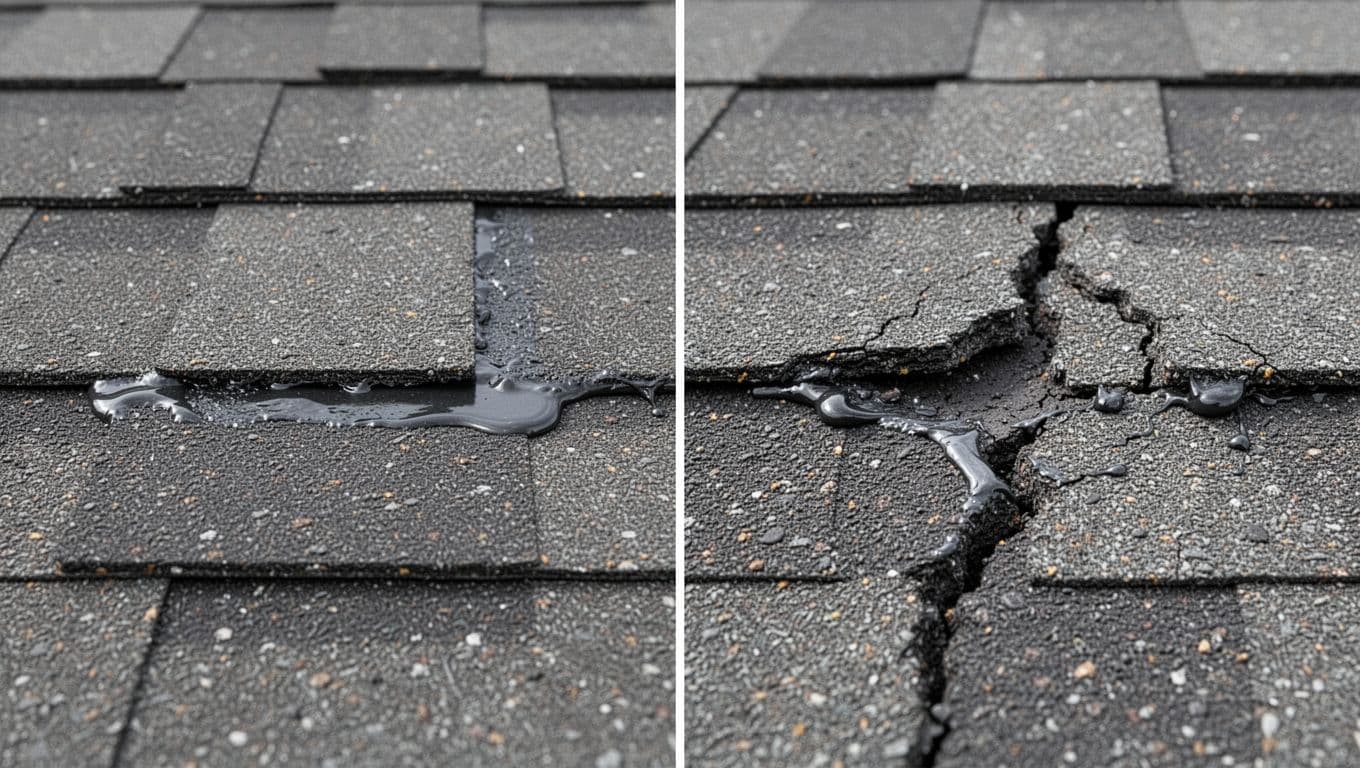
- Find one area that still lies flat and feels well-bonded, then compare it to the suspect areas. The contrast makes the “gap” easier to judge.
- Take photos straight down and at a low angle. Low-angle shots show tab lift and shadow lines better.
- Photograph slope-wide patterns, not only close-ups. Insurers and facility teams want context.
- Note the date of the hail event and which slopes face the storm direction (if known). Patterns matter as much as single hits.
- Decide what the finding changes for your building plan. A few isolated failures may be a repair. Widespread bond loss can push you toward replacement.
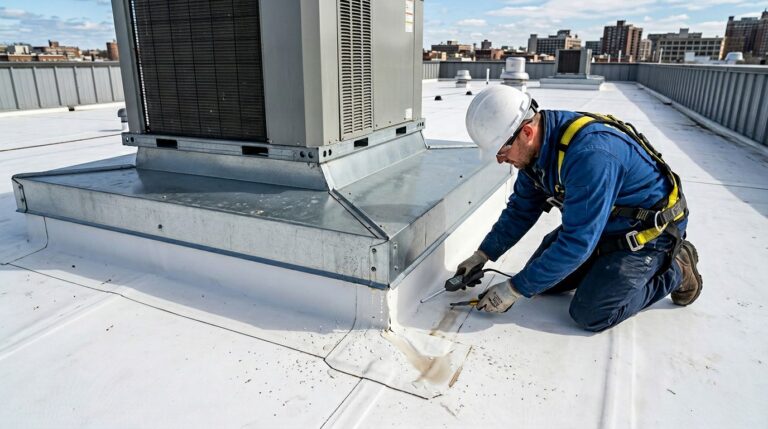
- If your portfolio includes membranes too, don’t mix the scopes. Commercial flat roof repair requires different materials and details than shingle work.
- When bond failure is broad and shingles are aging, you may be staring at a commercial roof replacement decision for that shingle section, even if the rest of the building uses a different system.
FAQ
Can hail crack the sealant strip without obvious bruises on the shingle?
Yes. Hail can cause cracked shingles by jarring the bond line even when surface marks look minor, signaling hail damage. That’s why tab lift, a debris “shadow line,” and an interrupted adhesive path matter. Still, confirm the pattern across the slope before calling it hail.
What if the shingles were never sealed because it’s cold?
That happens often in winter and shoulder seasons, with thermal cycling affecting the shingle sealant. Unsealed tabs usually show a smooth, intact adhesive line with no separation debris. Once warm weather returns, many will seal. If tabs flap in wind now, a repair still makes sense.
Does a cracked sealant strip always mean the roof will leak?
Not always. Underlayment can buy time. However, lifted tabs catch wind and can tear or blow off. On a commercial property, one torn shingle can turn into interior damage fast, especially over entrances and tenant spaces.
How do I explain this to an insurance adjuster?
Use clear photos that show (1) the lifted tab, (2) the broken bond line, and (3) the slope context. Consider hiring a HAAG Certified Inspector to document the insurance claim and conduct a formal storm damage assessment. Keep notes on storm timing and which elevations were exposed. For wording ideas that match inspection reports, see InterNACHI’s reference on shingle cracking and splitting.
When should I stop inspecting and call a roofer?
Stop if the roof is steep, high, icy, or you can’t access it safely. Also call a roofing contractor quickly if you see widespread lifting, missing shingles, or active interior staining. At that point, your commercial roof needs repair, and delays can raise both damage and cost.
A cracked sealant strip is like a loosened zipper on a winter coat. It might hold for a while, then one gust opens everything up. If you spot hail damaged shingles with broken bonding across a slope, document it, limit roof traffic, and get a qualified inspection so small separation doesn’t become a bigger claim. Upgrading to impact-resistant shingles or Class 4 shingles can help prevent future hail damage and wind damage.
Need a roof inspection in Saint Paul or the Twin Cities? Call Sellers Roofing Company at +1-651-703-2336 or schedule a free estimate. We are a black-owned, NMSDC-certified MBE roofing contractor with 9+ years experience.