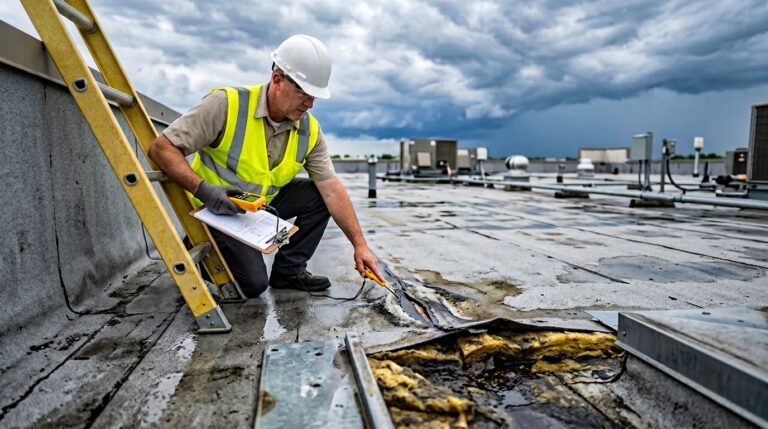
Last updated: 2026-08-01 by Ted Sellers, Owner
Good flat roof leak detection starts inside the building, then moves to the roof surface, moisture mapping, and final confirmation testing. White coatings can hide small cracks, failed seams, and wet insulation under a clean-looking surface, so visual checks alone often miss the source. Infrared scans, electronic testing, and moisture probes usually give the clearest answer.
When This Applies
Best fit for coated commercial roofs
This applies to low-slope commercial roofs with white silicone, acrylic, or elastomeric coatings. It also fits coated TPO, EPDM, modified bitumen, and some metal roof systems.
For business owners, this matters most when a leak threatens stock, tenants, ceiling systems, or daily operations. A white coating can act like fresh paint on old wood. It improves the surface, but it can also hide the first warning signs.
If your building has recurring drips, ceiling stains, damp insulation, or ponding water after rain, this process fits. It also makes sense before a recoat, because covering a wet roof usually makes the next repair harder. If you need local help, professional flat roof leak detection can narrow the search before damage spreads.
When this does not apply
This process is less useful on steep-slope roofs, ballasted systems, or buildings where condensation is the real issue. A leaking rooftop unit, clogged condensate line, wall flashing failure, or plumbing problem can look like a roof leak.
It also changes when the roof is already heavily saturated. In that case, testing may confirm broad damage, not a single entry point. For older roofs with many past patches, widespread wet insulation, or repeated leaks in different areas, the answer may be larger than one repair.
The stain inside is often a clue, not the leak itself.
Step-by-Step
1. Trace the leak from inside first
Start indoors and work backward from the stain or drip. Mark the room, time of day, recent weather, and anything above that area, such as drains, parapet walls, skylights, or HVAC curbs.
Then check ceiling tiles, wall tops, and steel deck lines. Water on a flat roof often travels sideways before it drops into the building. Because of that, the leak source may sit many feet away from the wet ceiling tile.
2. Inspect the roof where coated systems usually fail
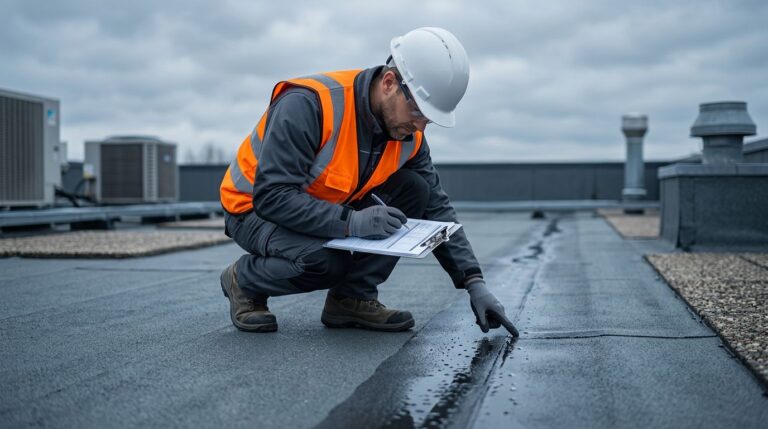
Once you’re on the roof, inspect the common weak points first. Focus on drains, scuppers, seams, penetrations, curb flashing, old patches, and edge metal.
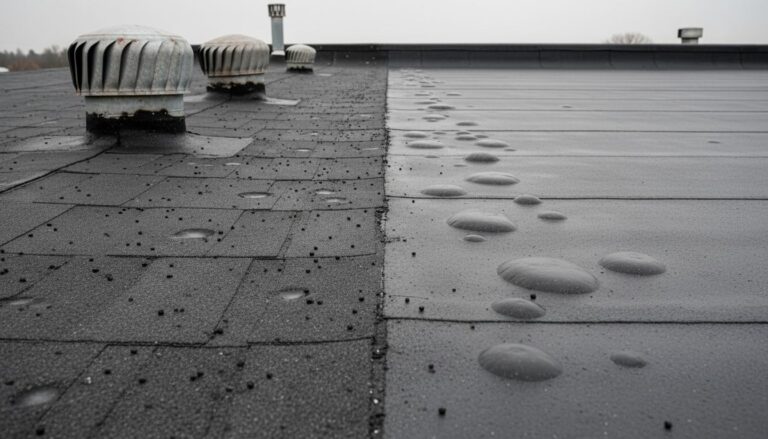
White coatings reflect light well, but they can make a roof look better than it is. So look for dirt rings, blistering, soft spots, open laps, split sealant, and areas where water ponds after rain. Foot-traffic paths near service equipment also deserve attention.
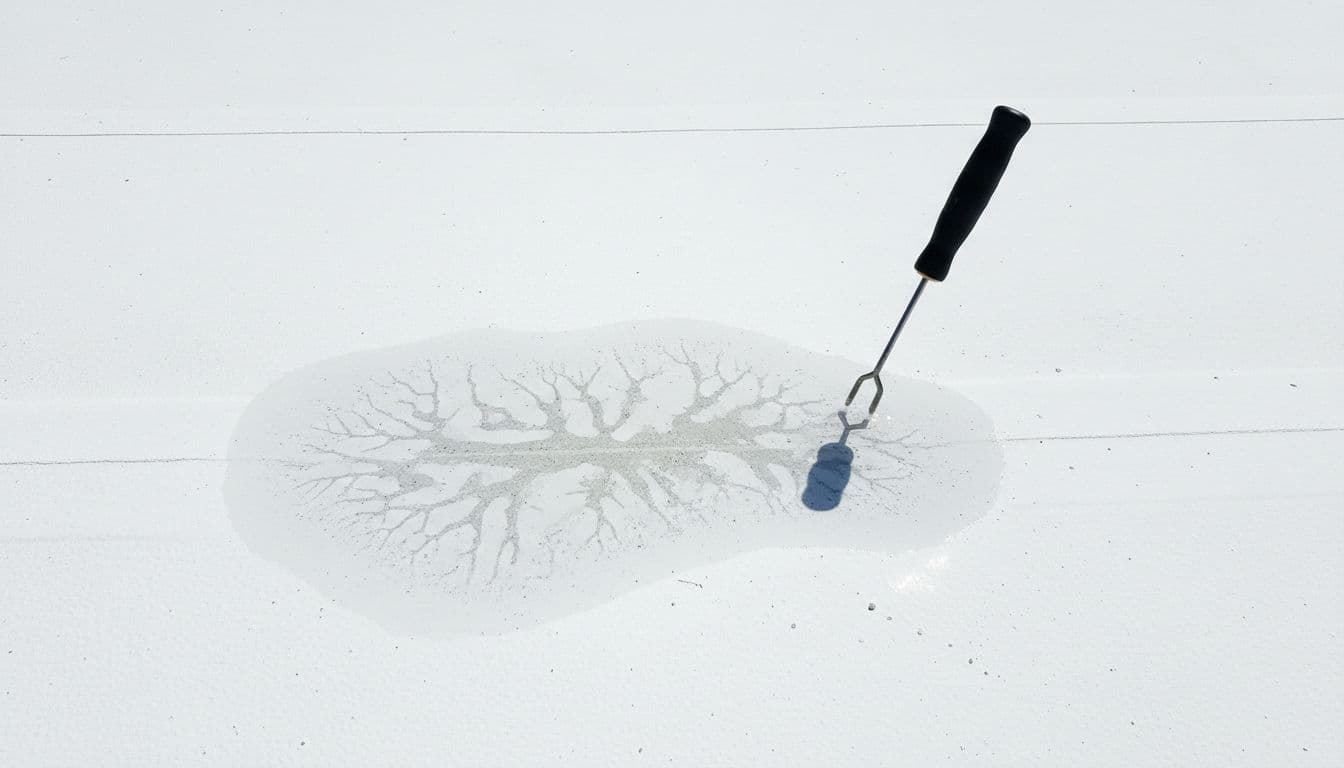
If the coating looks chalky, thin, or loose around details, don’t assume the coating is the only problem. Often, the coating is only showing you where the base roof already failed.
3. Map hidden moisture with the right test
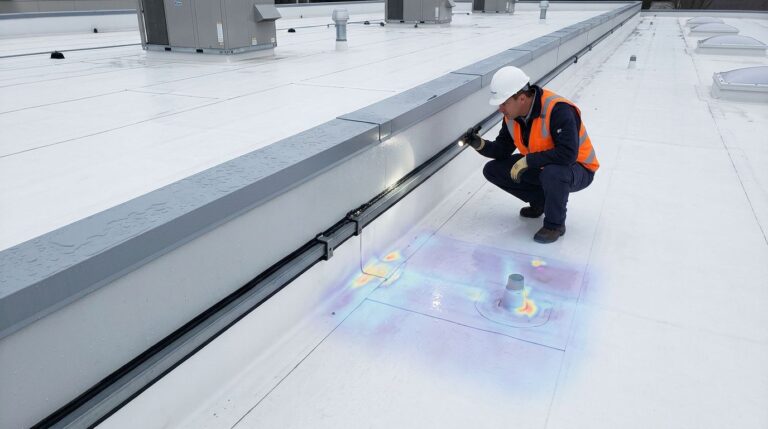
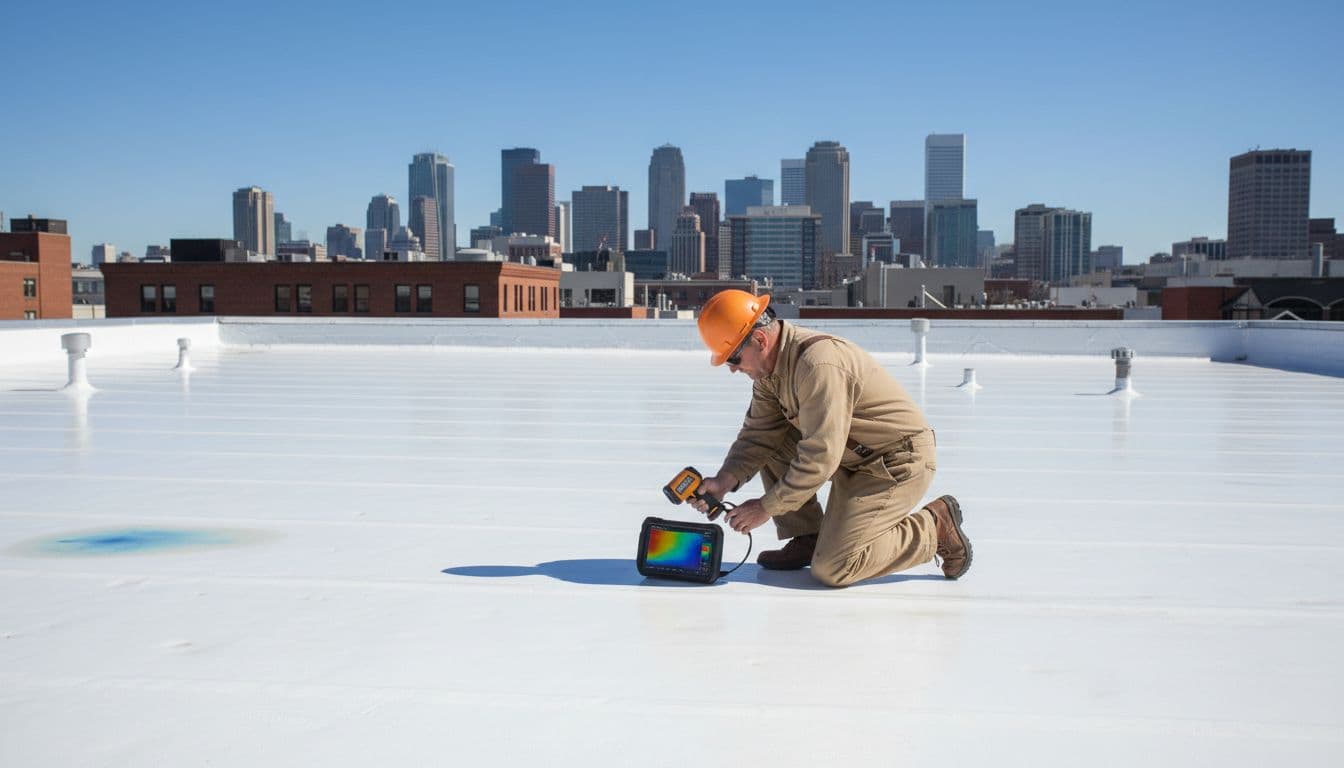
When the eye can’t settle it, move to moisture mapping. Thermal imaging cameras can reveal wet insulation because damp areas heat and cool differently than dry ones.
Some roofs also qualify for infrared roof moisture surveys, which help narrow the search without tearing into large sections. On certain membrane systems, electronic leak detection can also locate a small breach through the roof assembly, but the roof type and coating have to suit that test.
For buildings with repeat problems, commercial roof leak detection Saint Paul can separate one isolated leak from a wider moisture issue.
4. Confirm the breach before anyone repairs it
Before repairs start, confirm the exact entry point. A roofer may use a moisture meter, make a small test cut, or run a controlled water test on one detail at a time.
This step matters because random sealant often hides the real problem. It can also trap moisture below the coating and make later work more expensive. Think of it like fixing a pipe inside a wall. You don’t patch drywall until you know which joint failed.
5. Match the fix to the damage you found
A small leak doesn’t always mean a small repair. If testing shows one puncture, one bad seam, or one failed curb, targeted commercial flat roof repair often makes sense.
On the other hand, if wet insulation spreads across large sections, if leaks keep returning, or if old patches cover the roof like bandages, commercial roof replacement may cost less over time. In short, sometimes the commercial roof needs repair, and sometimes it needs a clean reset. A coated roof can also fall in the middle, where section replacement plus restoration is the better move.
Common Questions After a Leak Shows Up
Does the white coating itself cause the leak?
Usually, no. The leak often starts at a seam, puncture, drain, or flashing detail below or beside the coating. Still, an aged or cracked coating can let water reach weak spots faster.
Why is the drip far from the actual damage?
Water moves laterally on low-slope roofs. It can travel along insulation, membrane laps, or steel deck flutes before it shows up inside. That’s why guessing from the ceiling almost always misses the source.
Can you find the leak without cutting the roof open?
Often, yes. Visual inspection, infrared scanning, and electronic testing can narrow the area first. Even then, a small verification cut may still be needed before final repair.
How fast should a business owner act on one small stain?
Act right away. One stain can mean wet insulation, rising energy loss, mold risk, or deck corrosion. Quick testing usually costs far less than waiting for a full interior leak event.
What happens if you just recoat over the problem?
You may hide the breach and lock moisture into the roof system. That can turn a repairable problem into a larger tear-off later. Coating over wet insulation is like painting over rot.
What This Means for Your Building
Final takeaway
A bright white roof doesn’t make leak hunting simple, it makes it more technical. The smartest move is early testing, because isolated moisture can stay repairable, while hidden saturation can push a building toward replacement. Find the real source first, then fix only what the roof actually needs.
Need a roof inspection in Saint Paul or the Twin Cities? Call Sellers Roofing Company at +1-651-703-2336 or schedule a free estimate. We are a black-owned, NMSDC-certified MBE roofing contractor with 9+ years experience.