Last updated: 2026-08-01 by Ted Sellers, Owner
Yes, in many cases you can detect a commercial roof leak detection issue without shutting down the building. The safest approach is to map interior signs, inspect the roof surface, use infrared moisture scanning, and confirm problem areas with low-voltage electronic testing. That keeps disruption low and helps crews target the real leak, not just the place where water shows up.
When This Applies
Buildings that can usually stay open during testing
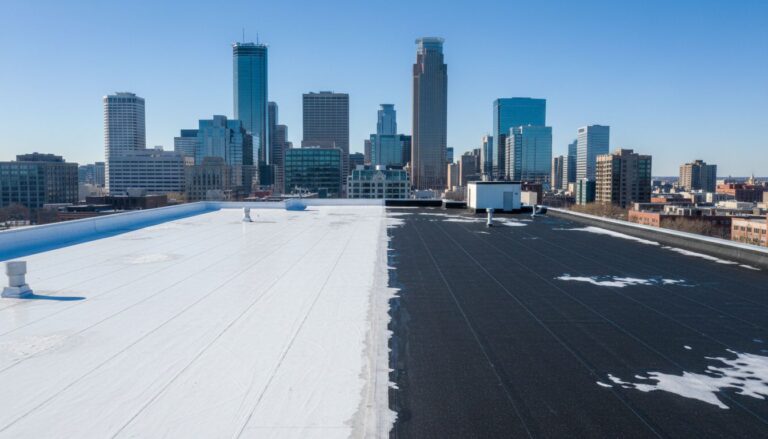
This approach fits most occupied offices, retail spaces, warehouses, medical suites, and multi-tenant properties. It works best on low-slope systems such as TPO, EPDM, PVC, and modified bitumen, where water often travels sideways before it appears indoors.
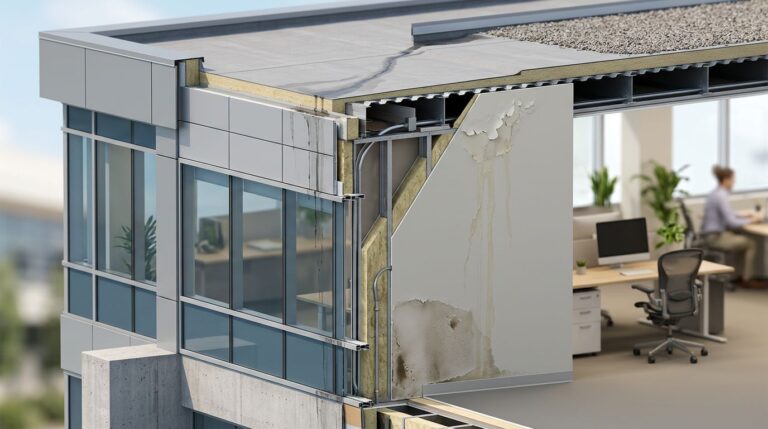
In other words, the leak you see inside may be only a clue. A stain over the lobby could start near a drain, curb, or seam many feet away.
You can usually keep operations running if the leak is active but contained, ceiling materials are stable, and no electrical hazard exists below the wet area. In many cases, detection crews stay on the roof and disturb only a small part of the interior.
A drip point is rarely the source on a commercial roof. It’s the breadcrumb, not the break.
When you shouldn’t keep the building open
Some situations call for a partial shutdown, or even a full stop in the affected zone. If water is dripping near electrical panels, ceiling tiles are sagging, decking feels soft, or storm damage looks severe, safety comes first.
Close the risk area first
That doesn’t always mean closing the whole property. Often, you can isolate one suite, hallway, or stock area while the rest of the building stays open. However, if the roof deck is compromised or water has reached major electrical equipment, skip testing and move straight to emergency response.
Step-by-Step
Start inside, before anyone goes on the roof
- Mark every stain, drip point, odor, or bubbling paint area. Keep the map simple and note the date, time, and weather.
- Compare those signs with what sits above them, such as drains, skylights, HVAC curbs, and parapet walls. This narrows the search fast.
- Ask staff when the leak shows up. If it happens only during wind-driven rain, flashing or seam failure becomes more likely than ponding alone.
Inspect the roof without tearing it open
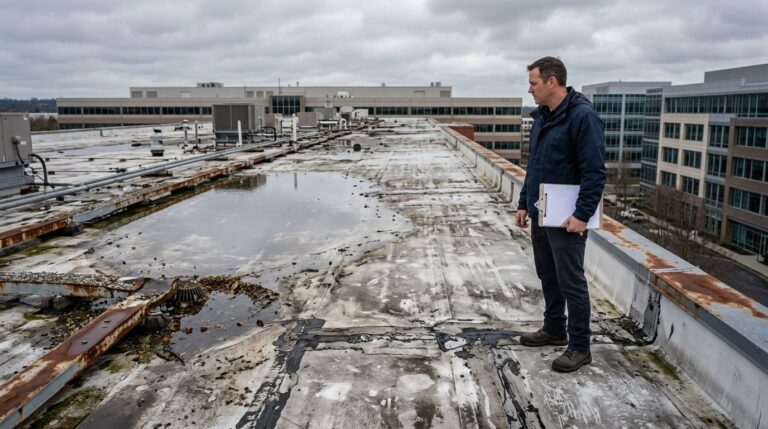
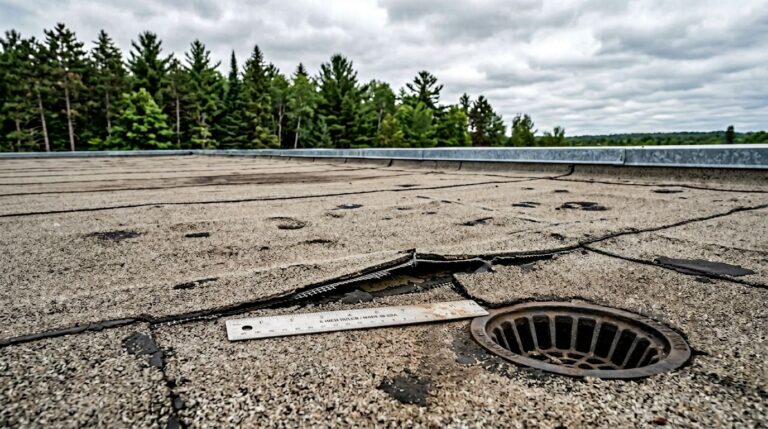
- Walk the roof and inspect seams, punctures, drains, edge metal, penetrations, and rooftop units. Many leaks come from failed flashing, loose seams, or clogged drainage, not a huge membrane split.
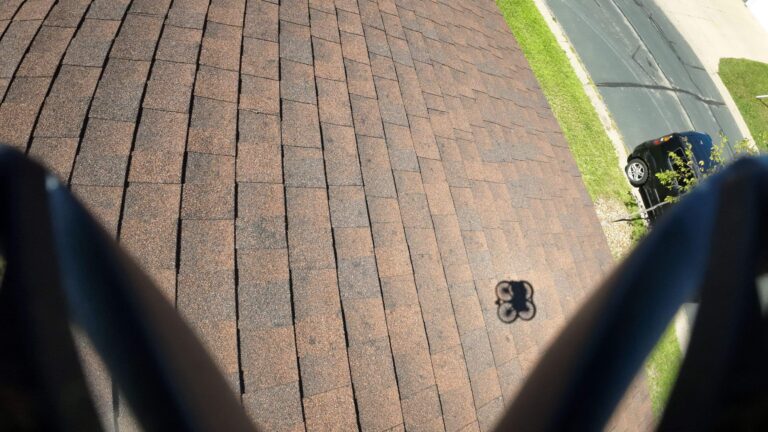
- Use infrared scanning when conditions are right, often in the evening or early morning. Wet insulation holds heat differently, so hidden moisture shows up without opening the roof. That’s why non-invasive leak detection technology is so useful in occupied buildings.
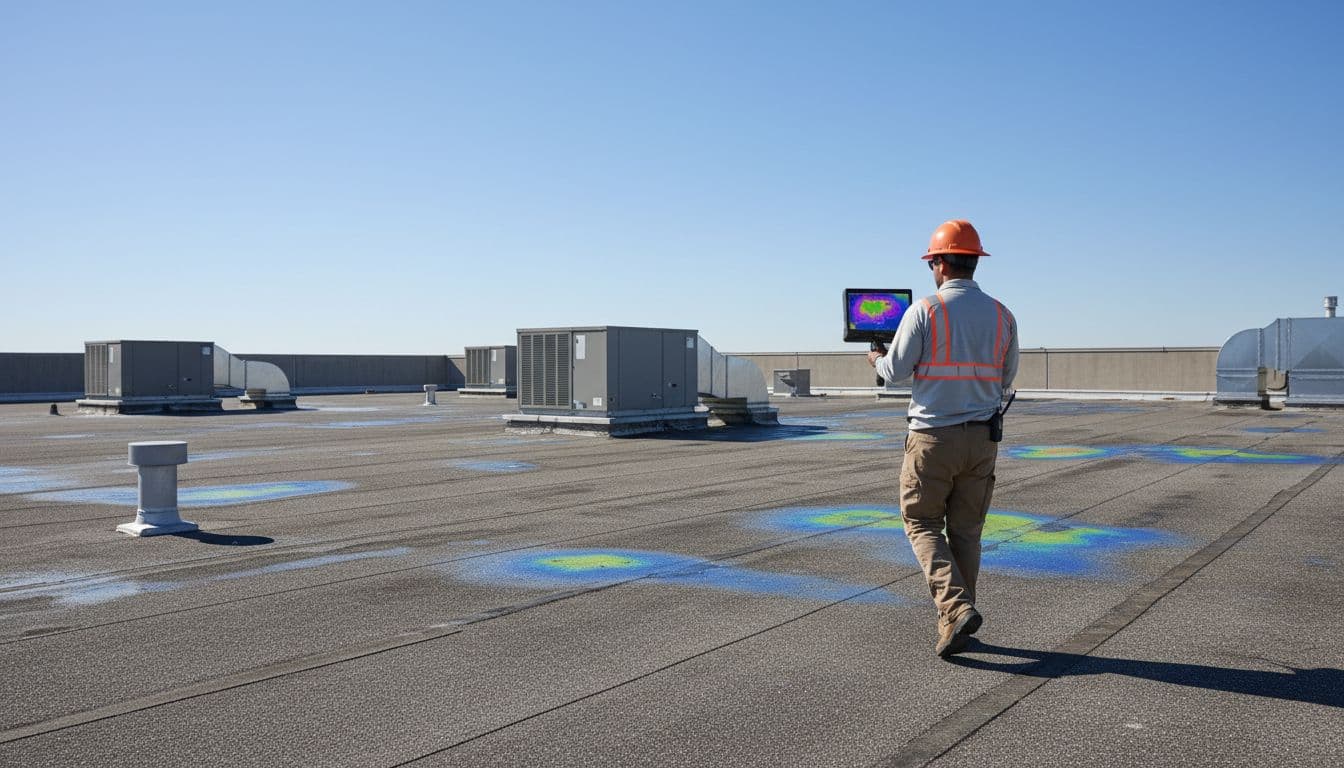 6. Review a local example of professional infrared roof leak scanning if you want to see how crews combine visual inspection, moisture mapping, and drainage checks before recommending repairs.
Confirm the exact breach before repair work starts
- Use low-voltage electronic testing on suitable membrane roofs to pinpoint the opening. This method works well when you need more than a moisture map. Many contractors rely on electronic leak detection equipment because it helps locate membrane breaches with little disruption.
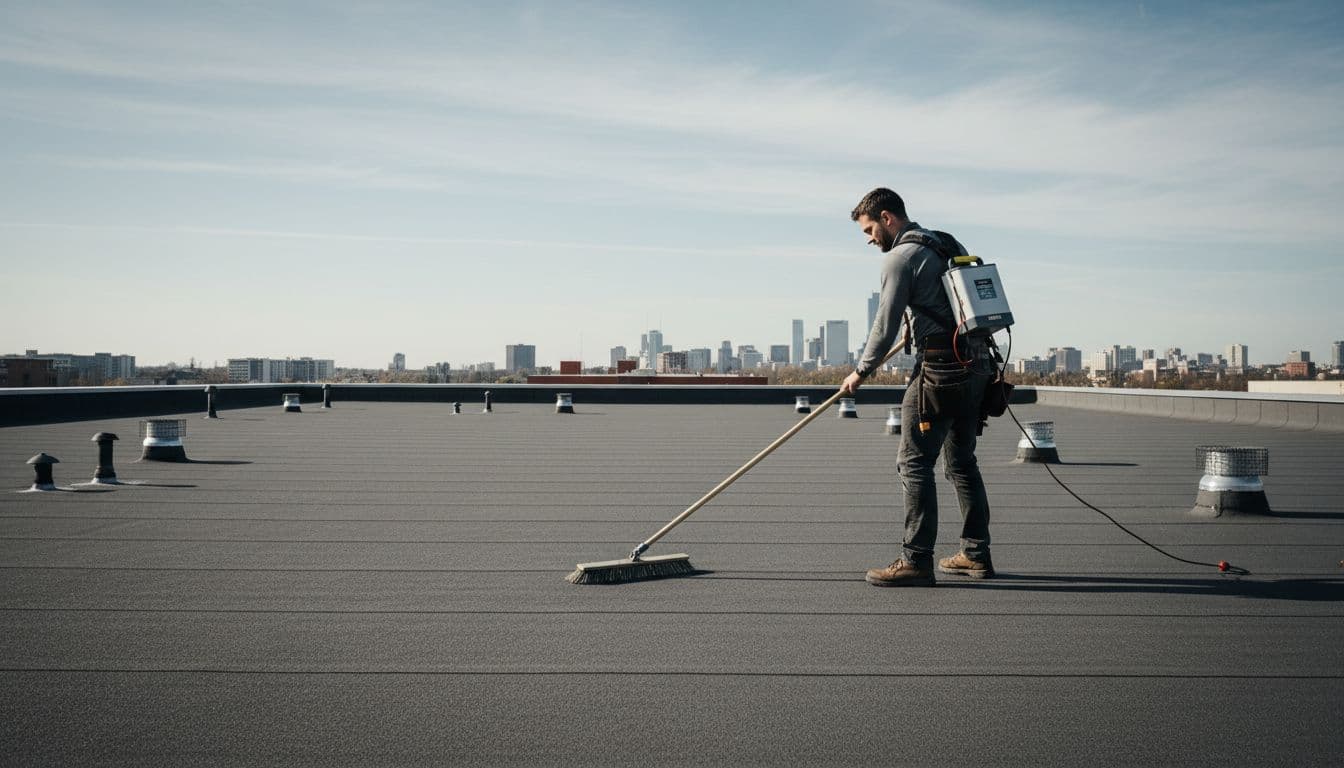 8. Open only small test cuts if scan results conflict. A targeted cut confirms whether insulation is wet, how far moisture has spread, and whether the deck is still sound.
Decide if you need repair or replacement
- If the leak traces back to one drain, curb, or seam, a focused commercial flat roof repair often solves the problem. If scans show wide saturation, repeated failures, or wet decking across large sections, commercial roof replacement may be the smarter spend.
- Schedule the repair around business hours when possible. Detection itself usually doesn’t require shutdowns, so you can plan the actual work with less stress and fewer surprises.
FAQ
Can infrared scanning find every commercial roof leak?
No. Infrared finds moisture patterns, not always the exact hole. That’s why strong crews pair it with a close roof inspection and, when needed, electronic testing.
Best use case
It works best when the roof surface is dry and there’s enough temperature change to separate wet areas from dry ones.
How long does leak detection take in an occupied building?
Many small and mid-sized buildings can be inspected in a few hours. Large campuses or roofs with many penetrations may take longer, especially if crews use multiple test methods.
Will tenants or staff notice the inspection?
Usually very little. Most work happens on the roof. Inside, crews may only need quick access to mark leak points, check ceiling areas, or verify moisture readings.
What if the leak only happens during heavy wind-driven rain?
That pattern often points to flashing, wall transitions, or edge details. A basic surface check may miss it, so timing, weather notes, and targeted testing matter more in that case.
How can I tell when a commercial roof needs repair instead of replacement?
If isolated areas are wet and the membrane still has good life left, repair is often enough. If your commercial roof needs repair every season, has recurring leaks, or shows broad moisture spread, replacement becomes easier to justify.
The bottom line is simple: most leak detection can happen while your building stays open, as long as the risk is controlled and the method is targeted. Good testing limits guesswork, protects tenants, and helps you avoid repairing the wrong area. If water is showing up inside, act early, because early detection is usually the difference between a manageable repair and a much larger problem.
Need a roof inspection in Saint Paul or the Twin Cities? Call Sellers Roofing Company at +1-651-703-2336 or schedule a free estimate. We are a black-owned, NMSDC-certified MBE roofing contractor with 9+ years experience.