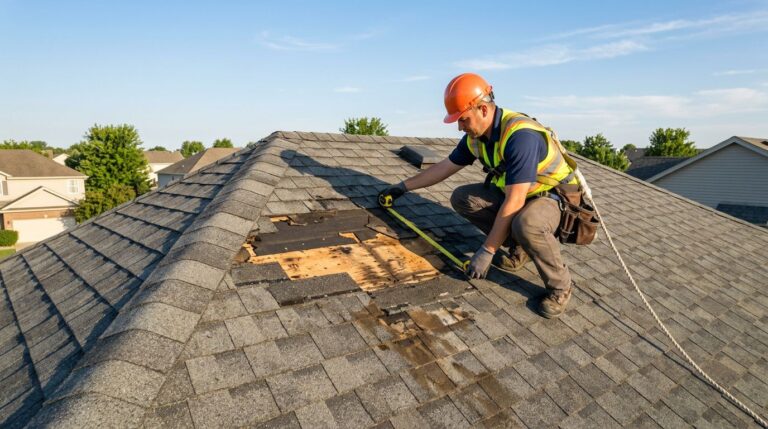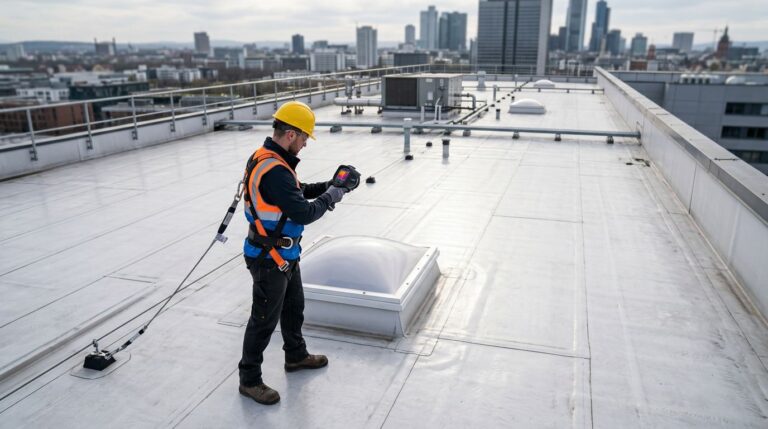
Last updated: 2026-08-01 by Ted Sellers, Owner
Flat roof penetrations leak because they interrupt the roofing membrane and get stressed by movement, weather, and foot traffic. Most leaks start at weak flashing details around HVAC curbs, vent stacks, and pipes, or at seams that were rushed. Prevention comes down to proper curb height, watertight flashing, smart layout, and routine inspections after trades work.
Flat roofs don’t “fail everywhere” at once. They usually fail at the places where something sticks through them. Think of penetrations like holes in a raincoat. The coat can be perfect, but the holes still drip.
If you own a commercial building, fixing penetration leaks early is often the difference between a targeted repair and a disruptive interior cleanup from water intrusion, which undermines building envelope performance.
When This Applies
What types of buildings and roofs this fits
This applies to most roof penetrations on flat roofs on commercial properties, including warehouses, offices, retail, and multi-tenant buildings, especially with TPO and PVC, EPDM rubber, and modified bitumen systems. The more rooftop equipment you have, the more “edges” and seams you’re asking water to ignore.
It also applies when a roofer says your commercial roof needs repair, but the leak location doesn’t match where you see stains inside. Water can travel along insulation, deck ribs, or seams before it shows up indoors.
For broader context on why many commercial roofs leak in predictable places, see this breakdown of common commercial roof leak causes.
When this does not apply (or needs a different approach)
If your roof is steep-slope, penetration details are different and often handled with metal flashing systems designed for pitch.
If your roof has chronic ponding water from bad slope, crushed insulation, or blocked scuppers and drains, you may have two problems: drainage and penetrations. Penetration flashing can be perfect and still get overwhelmed if water sits against it for days.
Edge cases that raise the risk fast
- Recent HVAC, plumbing, or electrical work: New penetrations from installation errors are a top trigger for moisture infiltration.
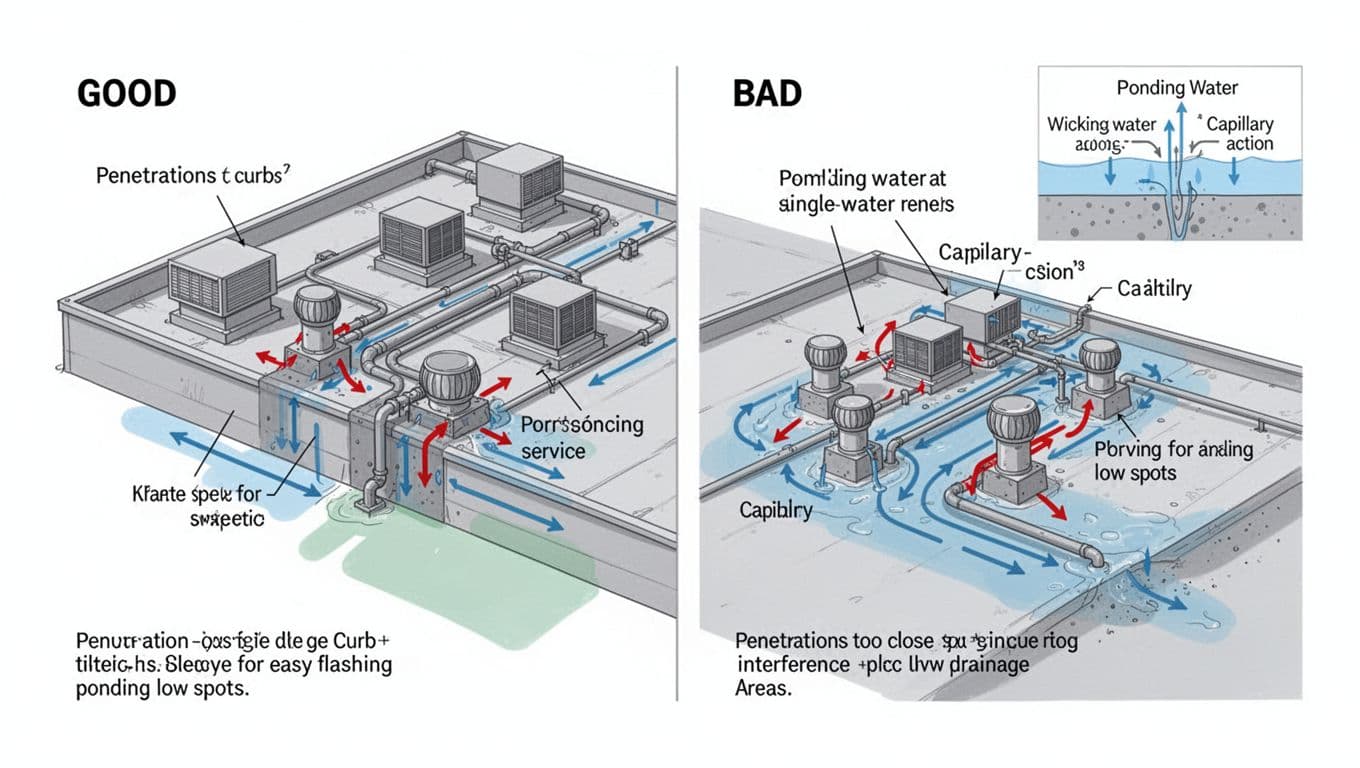
- Clusters of small penetrations: Tight spacing makes flashing harder and encourages shortcuts.
- Parapet walls: Critical areas for flashing transitions that demand precise detailing.
- Freeze-thaw climates: Minnesota temperature swings cause expansion and contraction through thermal movement, which can loosen fasteners and stress seams; this is one reason ongoing maintenance matters. A practical overview is in these flat roof maintenance best practices.
- Aging membranes: If the field membrane is brittle or shrinking, repairs around penetrations become less reliable.
Step-by-Step
1) Find the penetration that’s actually leaking (not just the closest one)
If the leak shows up far from the roof opening
- Photograph interior stains and note the date, wind direction, and rainfall (or snow melt) conditions.
- On the roof, map every roof penetration on flat roofs within a wide radius, then look upslope first (water often travels).
- Check for telltales: damp insulation edges, rusty fasteners at curbs, open seams, and cracked boots that enable moisture infiltration.
- If the leak is intermittent, arrange professional leak tracing before anyone starts patching blindly (a rushed patch can hide the real path).
2) Correct the detail failures that cause most penetration leaks
HVAC curbs (units, RTUs, roof hatches)
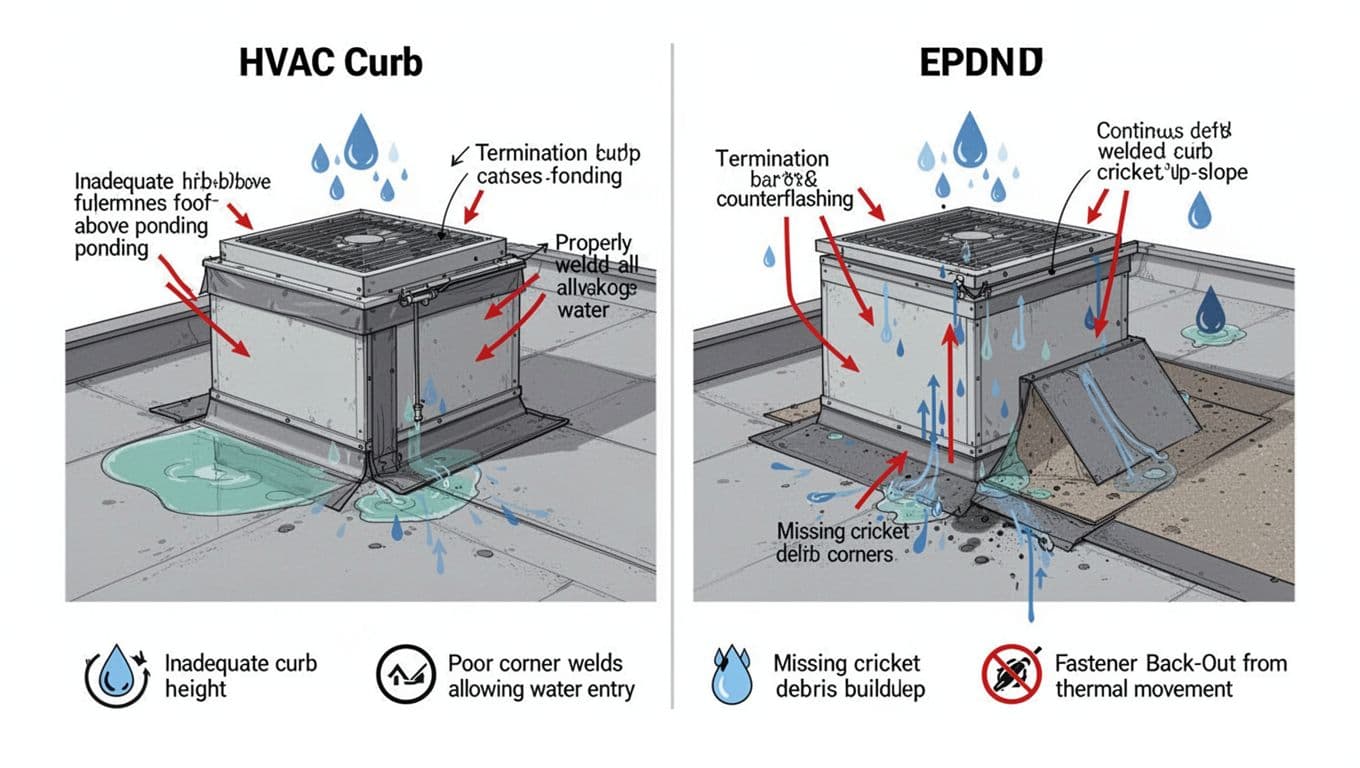
- Confirm curb height is adequate above the roof surface, especially in areas that can drift with snow.
- Verify continuous base flashing of the roofing membrane runs up the curb with clean corners (corner welds and seams are common weak points).
- Add or repair an upslope cricket (saddle) where needed to divert water and debris away from the curb.
- Replace loose termination bars, backed-out fasteners, or deteriorated counter flashing instead of relying on surface caulk.
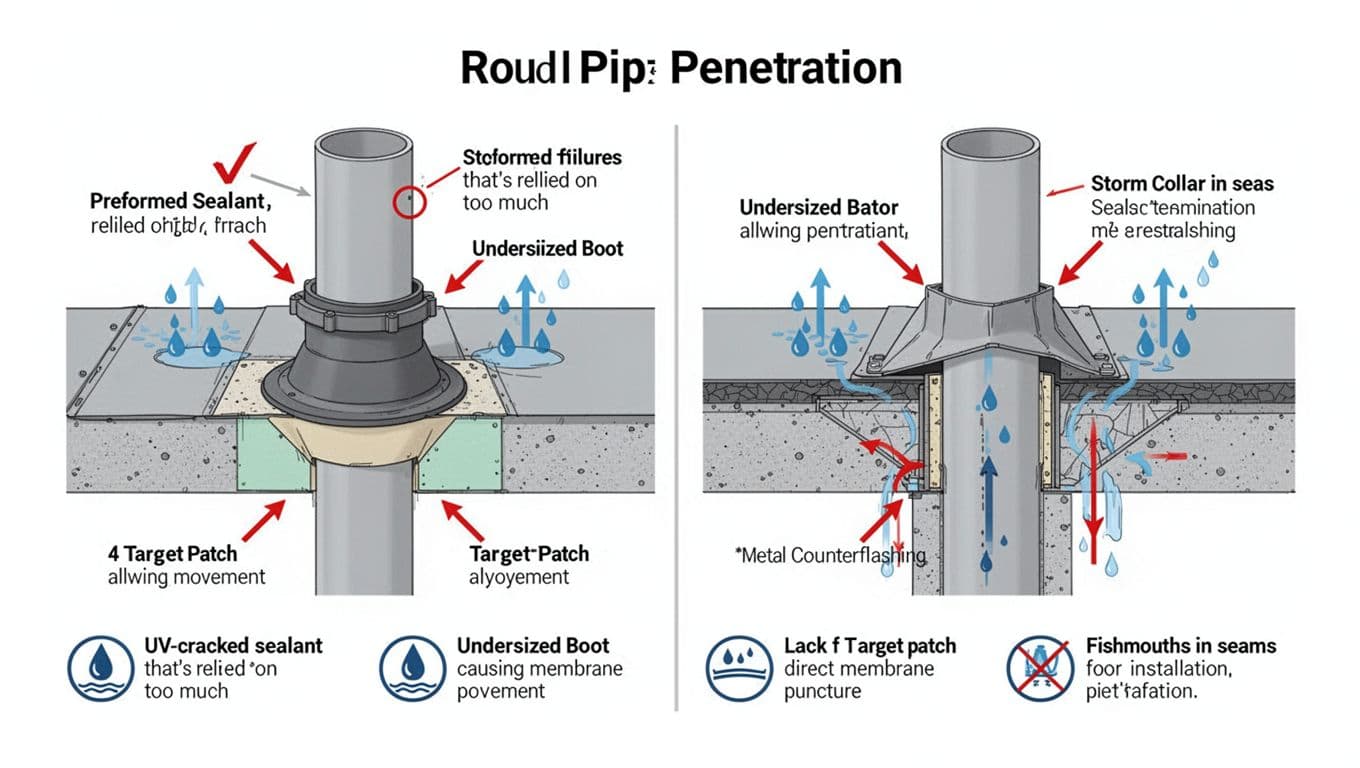
Pipes and vents (round penetrations)
- Use the correct preformed pipe boot for the pipe size and roof type, then clamp it correctly so the pipe can’t wiggle.
- Install a target patch under the boot when the system calls for it, this spreads stress and reduces seam failure.
- Treat sealant as a secondary line of defense, not the primary waterproofing.
- Rework fishmouths, wrinkles, and split seams around the boot for plumbing vents, those act like tiny gutters that feed water under the roofing membrane.
3) Prevent the next leak after repairs are done
If other trades need roof access
- Set a rule that any new penetration must be approved and flashed by a professional roofing contractor, not the equipment installer.
- Require a “closeout” photo set after rooftop work (before and after), so you can track changes over time.
- Schedule regular roof inspections at least annually and after major storms as part of a preventive maintenance program, then budget for small commercial flat roof repair items before they grow to satisfy roof warranty requirements.
- If penetrations keep failing across the roof, ask for a condition review with regular roof inspections to see whether spot repairs still make sense, or if you’re approaching commercial roof replacement.
If you need local help coordinating leak tracing, repairs, and long-term planning, start with Saint Paul commercial roofing services.
FAQ
Do I need to shut down operations for penetration repairs?
Most penetration work is localized and can often be staged to avoid downtime. The bigger risk is interior protection, if water is already entering, you may need temporary containment inside. Ask your roofer how they’ll isolate odors (adhesives), noise, and rooftop access routes.
How can I tell if a contractor “just caulked it”?
Quick signs of a short-term patch
Look for heavy beads of sealant smeared over seams, rusty edges, deteriorated flashing, or boots with gaps that “depend” on caulk. Sealant failure from UV exposure and movement will cause cracks over time. Sealant has a role, but if it’s doing all the work, expect sealant failure; superior options like liquid-applied membranes tie back into the membrane with proper flashing and clean terminations.
What happens if my HVAC contractor adds a new pipe without telling me?
It’s one of the most common reasons a roof that seemed fine suddenly leaks. New penetrations through the roofing membrane can cause thermal bridging and air leakage if installed in low spots, too close to other details, or without the right boot. For difficult shapes, pitch pockets offer a reliable solution to protect the roofing membrane. Treat it as urgent, because water can soak insulation fast and raise the cost of the fix.
Are penetration leaks a sign the whole roof is failing?
Not always. A roof can be in decent shape and still leak at one curb corner or one pipe boot. But repeated leaks at multiple penetrations can signal wider problems, such as membrane shrinkage, poor original detailing, or heavy rooftop traffic. That’s when a broader plan beats repeated callbacks.
If the leak is around a curb, should I replace the whole curb?
When curb replacement is the smarter fix
Replace the curb if it’s too short, structurally rotted, badly rusted, or incorrectly built for the equipment. If the curb is sound, re-flashing and adding a cricket often solves the problem. The right choice depends on height, condition, and how water drains around it.
Leaks from flat roof penetrations are common, but they’re not mysterious. Roof penetrations on flat roofs often lead to ponding water and water intrusion, especially from installation errors around scuppers and drains on TPO and PVC systems.
The fix is almost always better detailing, better control of rooftop changes, and regular roof inspections. If your commercial roof needs repair, target penetrations first, because that’s where water usually wins. Ensure base flashing and counter flashing are designed to withstand expansion and contraction.
Need a roof inspection in Saint Paul or the Twin Cities? Call Sellers Roofing Company at +1-651-703-2336 or schedule a free estimate. We are a black-owned, NMSDC-certified MBE roofing contractor with 9+ years experience.