Last updated: 2026-08-01 by Ted Sellers, Owner
A solid commercial roof replacement budget starts with three moves: confirm whether you truly need replacement (or if repair or restoration buys time), choose a system that matches your building’s risk and energy efficiency, and budget for the details that drive change orders (tear-off, insulation, flashing, drains, rooftop equipment, permits, and contingency). Plan the timeline early so pricing and lead times don’t force rushed decisions.
When This Applies
It’s for owners who need predictability, not just a number
This applies to commercial owners, property managers, and facility teams who need to plan cash flow for a roof that protects operations. If your building can’t tolerate leaks, closures, or tenant complaints, budgeting for a commercial roof is really risk planning in dollars.
It also fits portfolios, where one roof failing early can wreck a capital expenditure plan. A repeat pattern of calls for patches, ceiling stains, and wet insulation usually means the roof is no longer a simple maintenance item.
For teams trying to avoid emergency repairs, this kind of planning lines up with the same goal described in guidance on building a predictable roofing budget for 2026, where timing and consistency matter as much as unit price.
When repair or restoration makes more sense right now
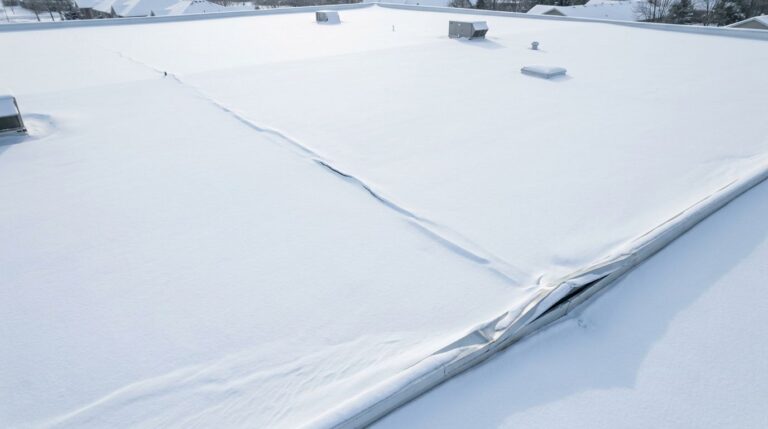
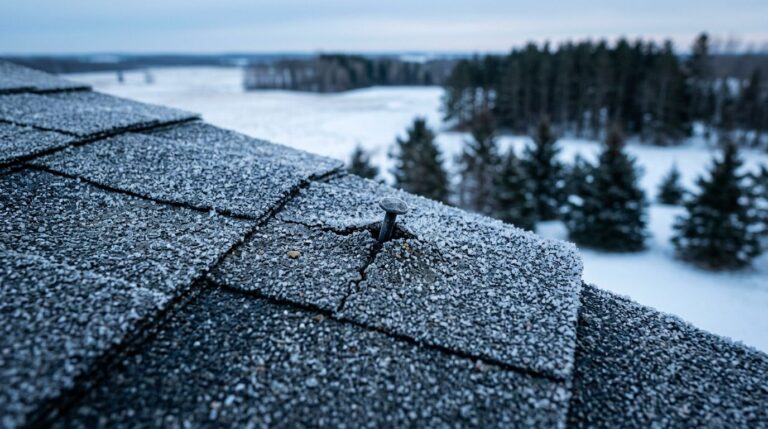
There are times when a full replacement is the wrong spend this year. If the membrane is generally sound and the problems are isolated (failed seams, a few penetrations, damage from foot traffic), commercial flat roof repair or roof restoration can be a smart bridge to extend the lifespan of a commercial roof, as long as you still fund a replacement plan.
Edge cases that change the answer fast
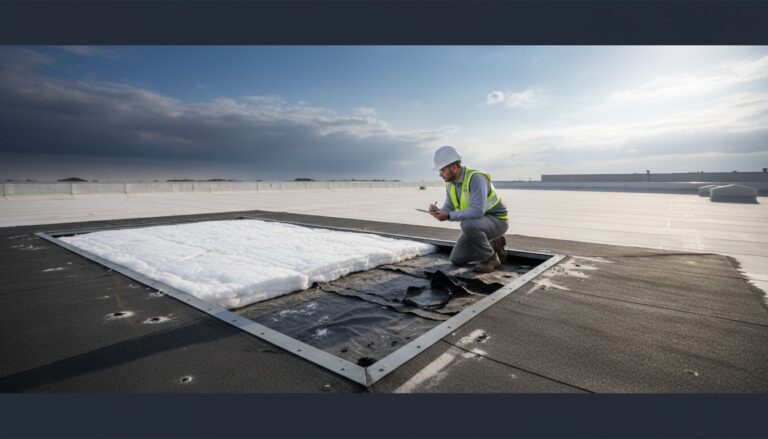
If your commercial roof needs repair because insulation is wet across large areas, the budget should shift toward replacement (or at least a major tear-off zone). Wet insulation keeps holding water like a sponge, and small repairs, which are reactive rather than preventative maintenance, won’t stop the long-term cost creep.
Step-by-Step
Set the goal, scope, and “what happens if we wait” risk
- Write down what success means for your building (stop leaks, improve energy efficiency, lower energy bills, avoid tenant disruption, meet code, extend life 20-plus years).
- Define the roof area and constraints that change cost (parapet walls, number of penetrations, skylights, roof drainage system, access limits, occupied spaces below), including insights from a roof inspection.
- Put a dollar value on failure. If a leak shuts down a line, ruins inventory, or triggers mold remediation, you should budget for higher reliability, not just lower first cost.
Choose between repair, restoration, recover, and full replacement
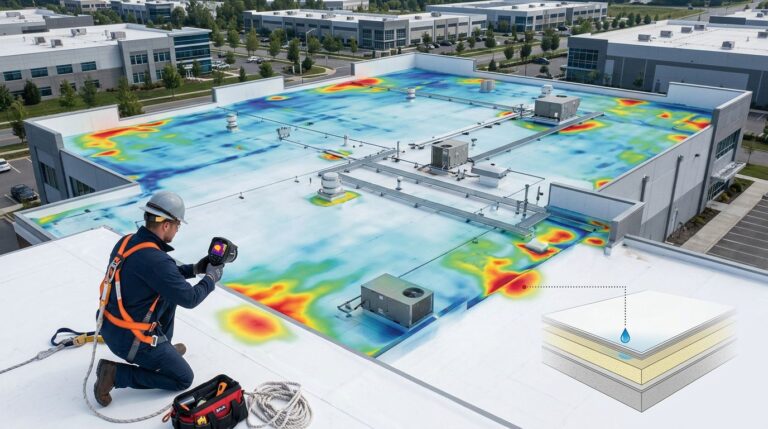
- Ask for a condition assessment that separates “surface issues” from “system issues” (membrane condition, insulation moisture via moisture testing or infrared moisture scans, fastening pattern, flashing quality, drainage performance).
- Use repair when defects are limited and the roof still has useful life. This is where targeted commercial flat roof repair and a roof maintenance plan can reduce risk while you build reserves.
- Consider roof restoration or coatings when the roof is stable but weathered, and when the manufacturer supports the approach for your existing system.
- Budget for full replacement when problems keep coming back, when insulation is saturated, or when the roof has multiple layers that can’t be recovered without creating future failure points.
Match the roof system to your capital plan and operations
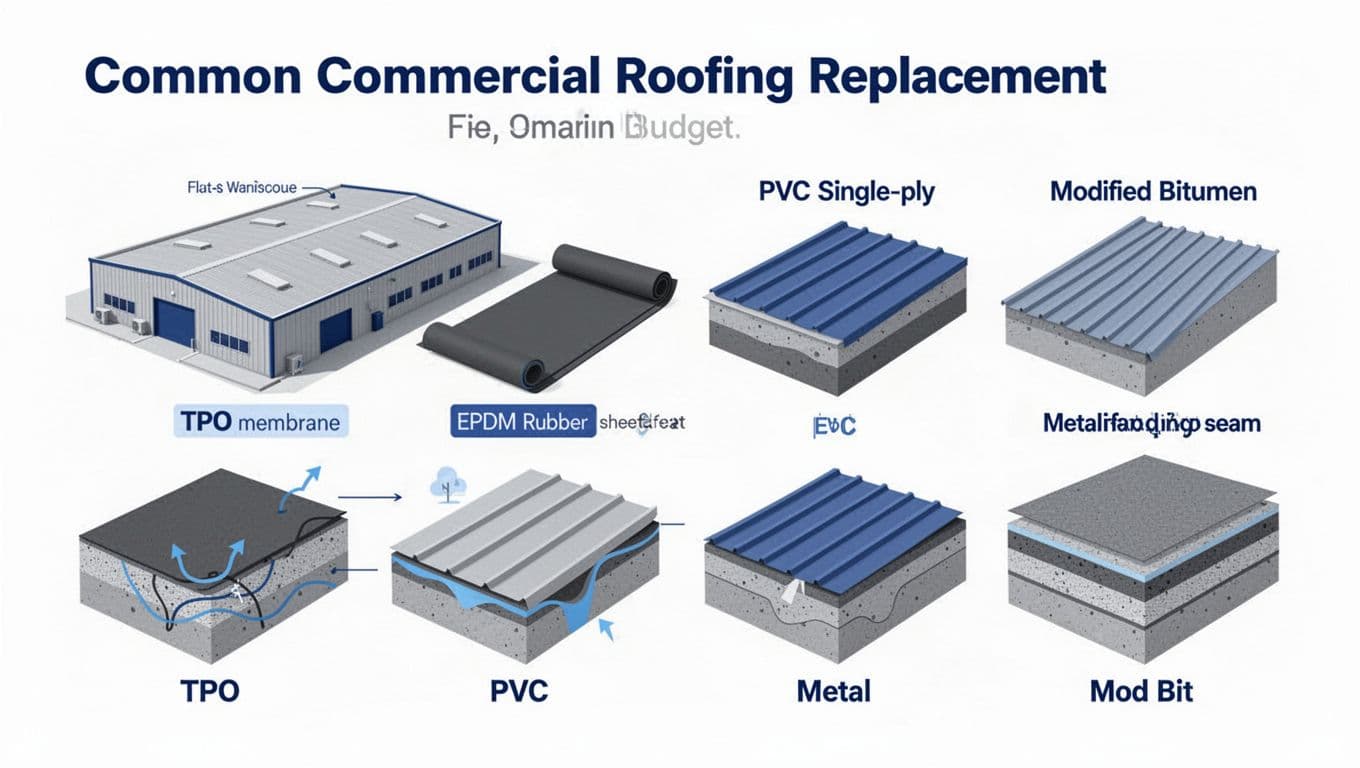
- Pick the system family that fits your building’s abuse level (foot traffic, hail exposure, grease exhaust, chemicals, temperature swings), such as TPO, EPDM, or single-ply membrane options.
- Decide what you’re buying beyond the membrane: thicker insulation, better drainage, upgraded edge metal, and higher wind resistance can cost more up front but reduce leaks and callbacks.
- Align warranty goals with budget reality. Longer warranties can require specific assemblies, details, and inspections that add cost, but also reduce surprises.
- Get local input early. A Saint Paul roofing contractor can flag building codes and climate-specific details before they hit as change orders. For Twin Cities owners, start with a commercial roofing company in St. Paul MN that can price real site conditions.
Build the budget with line items that prevent change orders
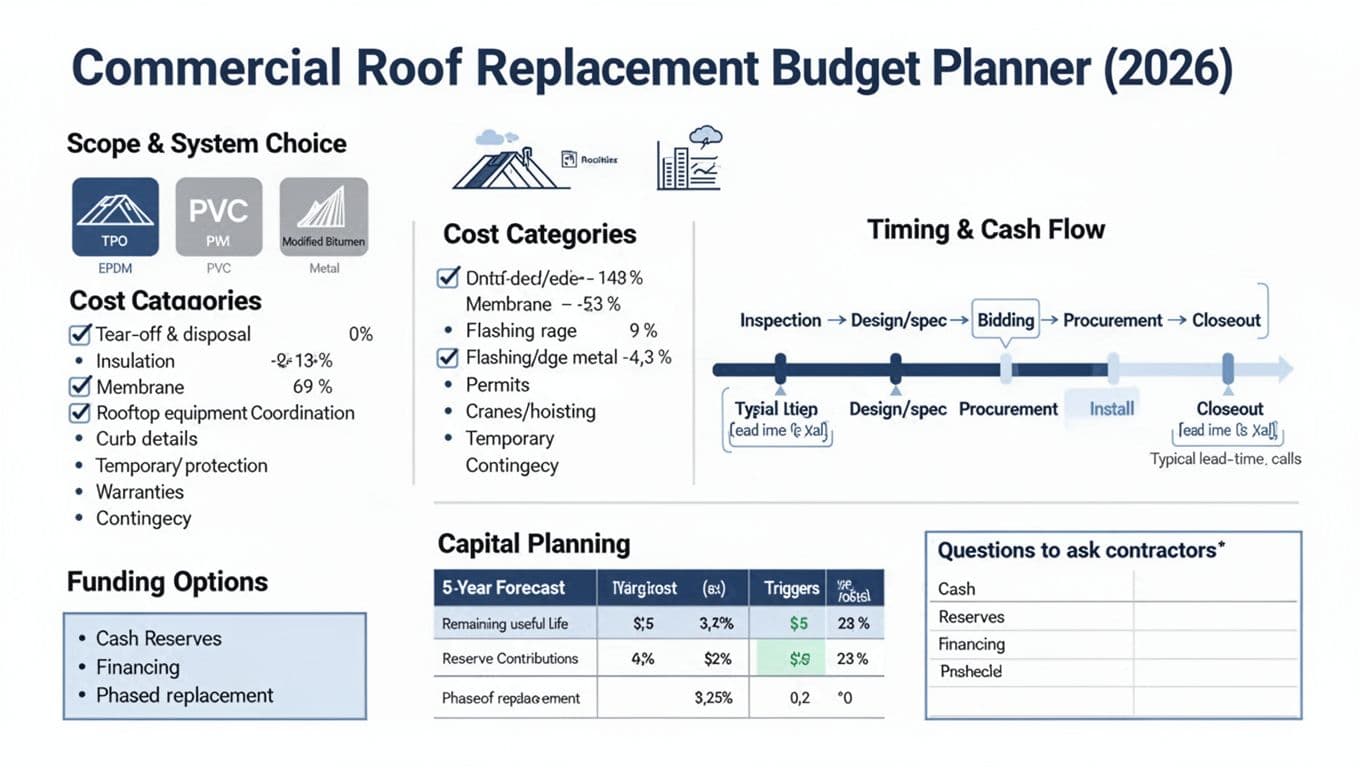
- Break your estimate into categories: tear-off and disposal, insulation, membrane, flashing and edge metal, drains, curb details, rooftop equipment coordination, permits, protection of interiors, and closeout documentation for the commercial roofing system.
- Add a contingency line for hidden conditions (roof deck repairs, wet insulation, unexpected code upgrades). Recommend a 10-20% buffer that accounts for inflation and ensures projects do not fail financially; contingency is not “optional.”
- Ask bidders to list assumptions in plain language (what’s included, what’s excluded, and unit prices for add-ons). If it’s vague, it’s a future invoice.
Time the project so pricing and lead times don’t corner you
- Back-plan your replacement timeline from the target install window and build in time for inspections, design or spec, bidding, material ordering, and permitting.
- Avoid scheduling the tear-off phase during periods when weather commonly stalls drying and adhesion. Delays cost money when crews, cranes, and protection are already mobilized.
- Coordinate rooftop unit work, tenant notifications, and after-hours needs before signing. Operational constraints often drive the real cost.
Plan funding and approvals like a capital project, not a repair ticket
- Build a 3 to 5-year forecast for each roof section: remaining useful life, annual reserve contribution, and the trigger that flips you from repair to replacement, incorporating capital planning tips.
- Compare funding paths: cash, reserves, financing options, phased replacement, or a mix. If you’re weighing replacement vs restoration for cash flow as a capital expenditure, the decision framework in budgeting for a commercial roof replacement can help you pressure-test assumptions.
- Lock approvals early. Delayed sign-off is one of the most common reasons owners end up paying “rush pricing” when leaks get worse.
FAQ
How do I tell if a commercial roof needs repair or full replacement?
A thorough roof inspection can help determine this. If leaks are isolated and the roof is otherwise stable, repair or roof restoration may be enough. If you’re seeing recurring leaks in new areas, widespread ponding, membrane shrinkage, or wet insulation, a commercial roof replacement is more likely. A contractor should document findings so “commercial roof needs repair” doesn’t turn into guesswork.
What do common commercial roofing systems cost per square foot?
Costs vary by building and scope, and many published ranges exclude tear-off and complexity. In Saint Paul, typical installed costs for roofing materials (often excluding tear-off) can look like:
| System | Typical range (per sq ft) |
|---|---|
| TPO | $7 to $13 |
| EPDM | $3 to $4 |
| PVC | $6 to $9.50 |
| Metal | $5.50 to $12 |
| Built-up or modified bitumen | $3.50 to $7 |
What’s the most common budget item owners forget?
Roof details. Penetrations, curbs, edge metal, and roof drainage system take time and skilled labor. If the bid is light on details, expect add-ons later. Also budget for temporary interior protection if your operation can’t risk water during tear-off.
Can I phase a commercial roof replacement to spread costs?
Yes, if the roof can be divided without creating weak seams between phases. The key is a plan that controls water flow and tie-ins, not random sections done only when leaks appear. Phasing works best when paired with interim repairs, a roof maintenance plan, and clear triggers along a defined replacement timeline for the next phase.
How should I compare bids so I’m not fooled by a low number?
Ask each roofing contractor for the same scope across bidders, the same warranty target, and the same assumptions about tear-off, insulation, and flashing. Require a line-item breakdown and unit pricing for roof deck repair and wet insulation. If a roofing contractor’s proposal can’t be compared on paper, it won’t be comparable on the roof.
A roof budget shouldn’t feel like gambling. Treat it like an asset plan: define risk, price the details, and schedule work before small problems turn into big ones. If you’re facing leaks or suspect a commercial roof replacement is near, get a documented assessment and a written scope, then build a budget that includes contingency and a post-install inspection plan. Consider options like repairs, roof coatings, or a full commercial roofing system replacement. The goal is simple: fewer surprises, and a roof you don’t have to think about every time it rains.
Need a roof inspection in Saint Paul or the Twin Cities? Call Sellers Roofing Company at +1-651-703-2336 or schedule a free estimate. We are a black-owned, NMSDC-certified MBE roofing contractor with 9+ years experience.