Last updated: 2026-08-01 by Ted Sellers, Owner
Hail can hit Saint Paul hard, then disappear, leaving a roof that looks fine until the next big rain. The problem is that hail damage asphalt shingles can be subtle. A shingle can be bruised under the granules, like a bad apple under perfect skin.
How to spot hail damage on asphalt shingles in Saint Paul, MN starts with three common signs you can photograph and compare:
(1) bruises (mat fractures) that feel soft when you press the shingle,
(2) granule loss where fresh dark asphalt shows in a defined impact spot, and
(3) punctures where hail or debris breaks through the shingle surface. Photos help you keep your notes straight, but a professional inspection is what confirms functional damage.
Minnesota hail season often ramps up in late spring and summer, and damage can blend in after a few freeze-thaw cycles.
What counts as hail damage asphalt shingles, and what doesn’t
Hail damage is impact damage that changes how the shingle protects your roof. On asphalt shingles, hail can compress the granules and asphalt into the fiberglass mat. That compression can fracture the mat under the surface, even when the top still looks “mostly normal.”
What matters most is whether the shingle has functional damage (the kind that can shorten roof life or raise leak risk). Cosmetic scuffs happen too, but they don’t always mean the shingle is compromised.
Usually hail (in photos):
- Round or slightly irregular impact spots with a defined edge
- Fresh granule loss that exposes darker asphalt (often looks “new” compared to surrounding weathering)
- Bruises that feel soft or “spongy” when gently pressed
- Repeating hits across the same roof slope, not just one isolated mark
Usually not hail (common look-alikes):
- Blisters (small raised bumps that pop)
- Foot traffic scuffs in lines or near access points
- Even, widespread granule thinning from age
- Single, large gouges from branches or tools
The 3 main hail damage types, bruise (mat fracture), granule loss, and punctures
A bruise (mat fracture) is the classic “hidden” hail hit. The impact compresses the shingle, cracking the mat under the granules. In photos, bruises can be faint. In person, they often show up when light hits at an angle, and they may feel slightly soft in the center.
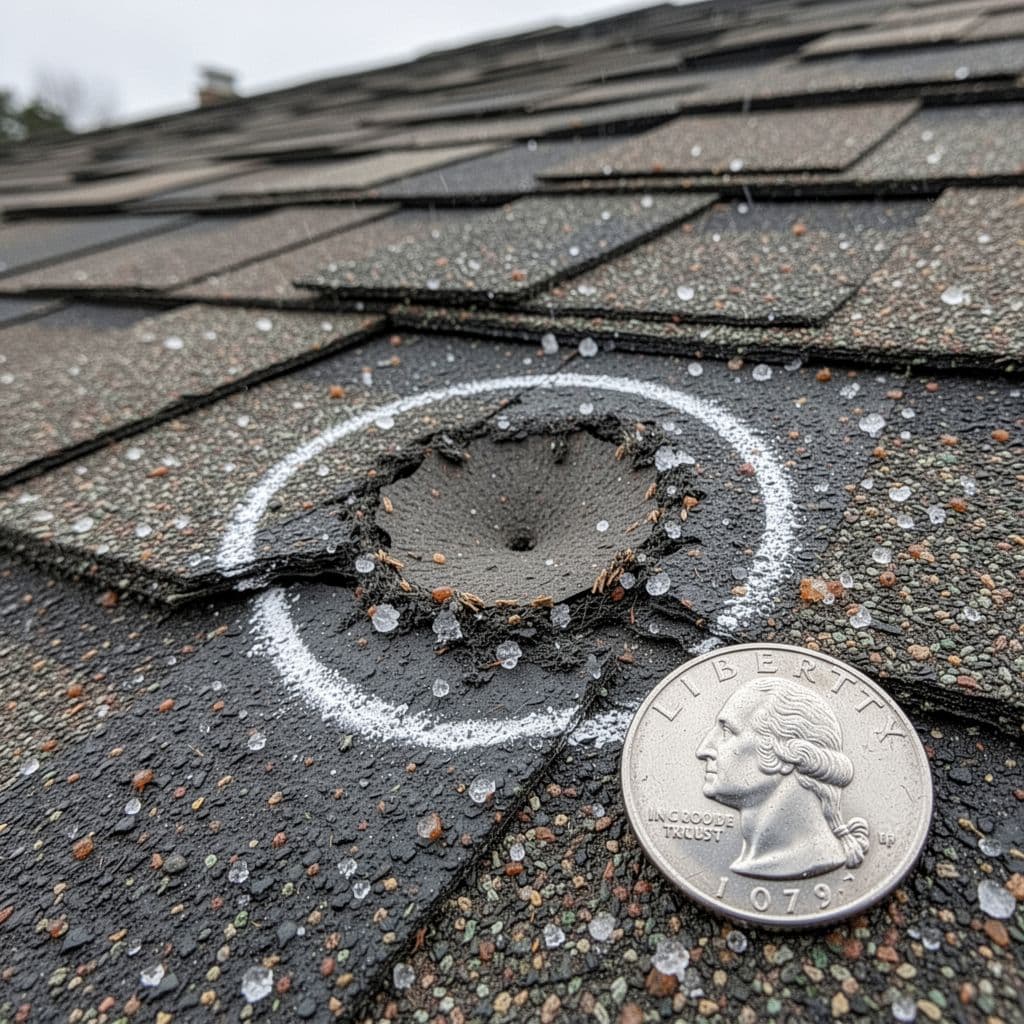
Granule loss from hail looks like a defined “hit” where the protective granules are gone. The exposed asphalt often looks darker than surrounding areas, and the impact edge can look sharp instead of feathered.
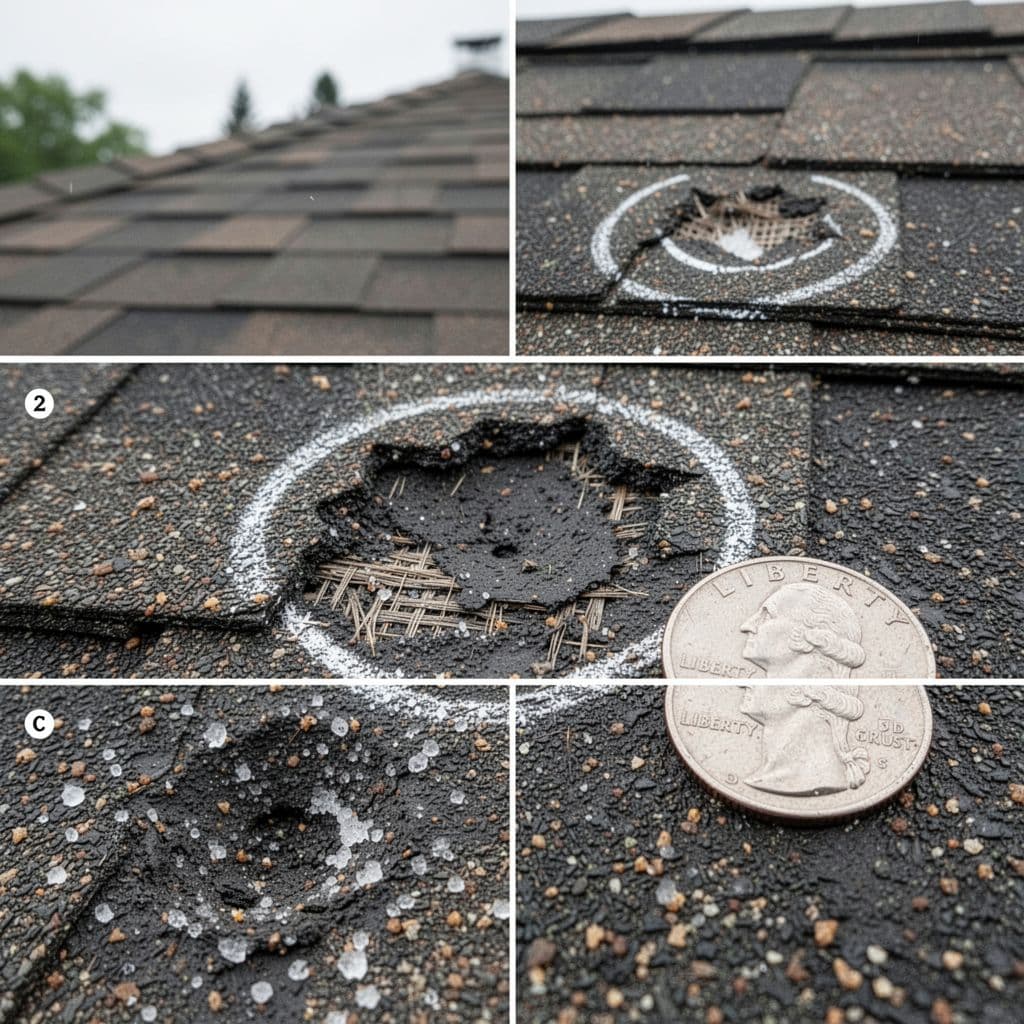
Punctures are less common on architectural shingles, but they happen. In photos, look for a break through the surface, exposed fiberglass, or a clean divot that goes deeper than granule loss. True punctures are often paired with obvious collateral damage on soft metals.
A key clue: hail damage often repeats across multiple shingles on the same slope, not just one “weird spot.”
Cosmetic look-alikes that often get blamed on hail
Normal aging can shed granules and make shingles look patchy, especially after Saint Paul’s temperature swings. Manufacturing blisters pop and leave tiny craters that can look like hits, but they usually don’t have a bruised feel. Thermal cracking creates splits that follow stress lines, not round impacts.
Algae staining can look dramatic in photos, but it’s a surface issue. Nail pops can lift shingles and create raised bumps that catch light and mimic impact shadows.
Don’t assume. Label your photos by slope and condition, then have an inspector confirm what you’re seeing.
Safe step-by-step hail check, from the yard to the roof (with photo tips)
Start simple. Your goal is to document clues safely, then decide if a professional roof walk is needed.
- Find the storm date. Check your phone photos, texts, or local alerts, then write it down.
- Walk the perimeter first. Look at gutters, downspouts, and siding at eye level.
- Take wide shots. Get one photo per elevation (front, back, left, right).
- Use binoculars on the roof. Scan each slope for repeating marks or odd “peppering.”
- Only use a ladder if conditions are safe. Wet shingles, steep pitches, height, and wind raise fall risk fast.
- Only get on the roof if it’s safe. In Saint Paul, don’t climb when there’s frost, snow, or ice. If you’re unsure, stop at ground documentation and call a pro.
Property managers: the same storm that bruises shingles can also trigger commercial roofing problems after hailstorm on nearby flat roofs. If you’re seeing active leaks or membrane splits, you may need commercial flat roof repair while the steep-slope inspection is underway.
Start with easy tells, siding dents, gutters, downspouts, and soft metals
Soft metals are your “weather vane.” Check roof vents, gutter faces, downspouts, and drip edge for dents. If you have AC equipment, look for fin damage (don’t touch fins, just photograph).
These clues help confirm hail size and direction, which supports your roof photos. Take a wide shot first, then a close-up with a coin or tape for scale.
A quick photo checklist you can use on every slope
- Shoot in bright daylight, avoiding harsh noon glare when possible.
- Take a wide shot of each roof plane (front, back, left, right).
- Take close-ups along the shingle surface (low angle shows bruises better).
- Lightly add a chalk circle around suspected hits (don’t grind granules).
- Use a coin or tape for scale, and include a landmark for location.
- Note date/time and the storm date in your phone notes.
- Keep hands out of frame, and don’t edit images.
- Organize photos by slope in separate folders.
Photo comparisons homeowners can use, hail vs common shingle damage
In Saint Paul, older shingles often show wear from freeze-thaw cycles, and that can hide bruises until the light hits just right. Use the table below to match what you see to what it usually means, then photograph it the same way on every slope.
| What you see | How it feels | Pattern | Most likely cause | What to photograph |
|---|---|---|---|---|
| Round spot with faint impact ring | Slightly soft center | Repeats across a slope | Hail bruise (mat fracture) | Low-angle close-up, chalk circle, scale |
| Dark “bald” spot with sharp edge | Rough, granules missing | Clustered hits, similar sizes | Hail granule loss | Close-up plus wide shot of roof plane |
| Small crater with raised rim | Hard, brittle edges | Scattered, random | Thermal blister (not hail) | Macro close-up showing raised rim |
| Linear scuff or crease | Abraded surface | Near vents, valleys, access lines | Foot traffic (not hail) | Context shot showing path plus close-up |
| Even thinning over large areas | Normal roughness | Uniform across slopes | Aging and weathering | Wide shots, gutter granules, edges |
| One big gouge or missing tab | Sharp tear | Isolated | Mechanical damage | Surrounding debris, branch marks, close-up |
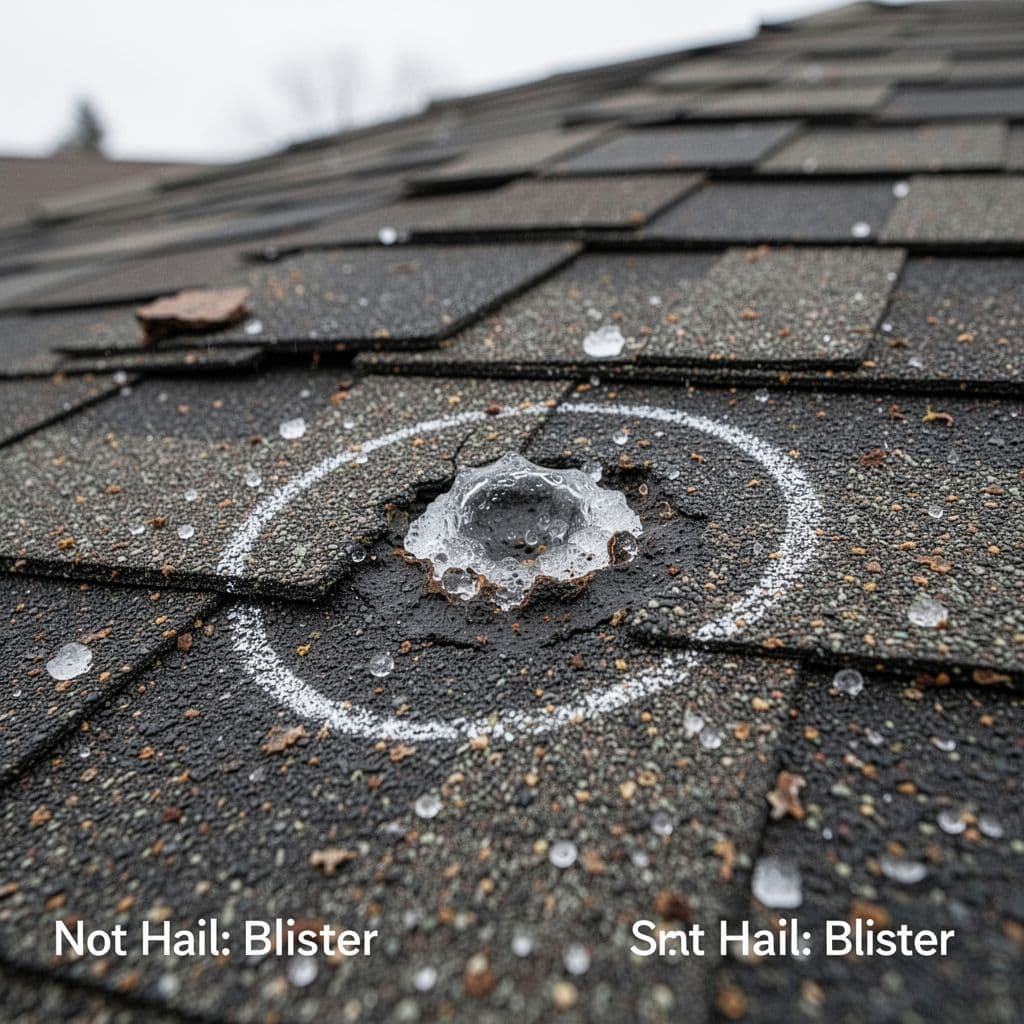
Hail vs blistering, similar circles, very different cause
Blistering often shows a raised edge around a tiny crater, like a popped bubble. Hail is more likely to show a bruise feel, sharp granule loss, and matching dents on soft metals.
Hail vs foot traffic, scuffs and creases from walking
Foot traffic usually leaves streaks and creases, not round impacts. It often shows up near valleys, around vents, and where a ladder would land. Photograph the close-up, then step back and capture the “route” across the roof.
Hail vs aging and granule loss, when “bald spots” are just wear
Aging tends to look even and widespread, with granules collecting at downspout outlets. Hail tends to look sharper and more defined, with repeat hits. A roof can have both, so don’t force a single explanation.
Property managers tracking whether a commercial roof needs repair should keep separate folders for steep-slope shingles versus low-slope membranes.
Hail vs mechanical damage, thrown debris, tools, and tree hits
Mechanical damage is often a one-off: a gouge, a torn tab, a long scratch, or damage next to branch rub marks. Hail usually leaves many smaller impacts across open shingle fields, not one dramatic wound.
When to call a Saint Paul roofing pro, and how insurance usually documents hail
Call a licensed pro if you see repeating hits, soft-metal dents, or any active leak signs. A real inspection checks multiple slopes, not just the easiest one, and looks at vents, flashing, ridge caps, and attic conditions.
If you manage facilities, hail season is also a good time to refresh commercial roof leak detection tips (interior leak mapping, after-hours checks, and moisture entry logs) and basic commercial roofing maintenance tips (drain checks, edge metal review, and photo documentation). When functional damage is confirmed, planning can shift from spot repair to commercial roof replacement, depending on system type and condition.
What a real roof inspection includes, and what you should ask for
Ask for: labeled photos, a slope map, test-square notes (hits per square), soft-metal observations, and a repairability summary.
Questions to ask:
- Who will be on the roof, and what safety steps do they use?
- How do you separate hail damage from wear and blistering?
- Will you document each slope the same way?
- What signs mean an urgent water entry risk?
Insurance documentation basics, what adjusters look for
Adjusters often look for test-square consistency, functional indicators (mat fracture, punctures), and collateral damage that supports the event. Keep storm photos, weather alerts, and any receipts for emergency tarping.
Be honest and don’t alter shingles or stage damage. Clear, repeatable photos beat “perfect” photos every time.
FAQ: spotting hail damage on asphalt shingles in Saint Paul
Q: Can hail damage leak right away?
A: Sometimes, but not always. Bruises and granule loss can shorten shingle life without an immediate leak. Punctures and torn flashing are more likely to leak quickly.
Q: Can you see hail damage from the ground?
A: You can often see patterns and severe granule loss with binoculars. Bruises (mat fractures) are easy to miss from the ground because light angle matters.
Q: How many hail hits mean I need a new roof?
A: There’s no universal number. Pros use test squares on multiple slopes and look for functional damage and consistency, not just one “busy” shingle.
Q: What size hail damages asphalt shingles?
A: It depends on shingle age, temperature, wind, and hail density. Smaller hail can still bruise older shingles, and larger hail can cause obvious granule loss and punctures.
Q: How soon should I document hail damage in Saint Paul?
A: Document as soon as it’s safe. Photos taken close to the storm date can better show “fresh” granule loss and collateral dents.
Q: I manage a building. How do I separate steep-slope hail from commercial roofing problems after hailstorm on flat roofs?
A: Use separate photo folders and inspection notes by roof type. A steep-slope shingle bruise is documented differently than a membrane split or puncture that may drive commercial flat roof repair decisions.
Conclusion
The most reliable tells are a bruise you can feel, sharp-edged granule loss that looks fresh, matching dents on soft metals, and repeat patterns across a slope. Take consistent photos, stay off the roof when conditions are risky, and don’t try to “make” damage show up.
If your pictures suggest functional hail damage asphalt shingles, schedule a professional inspection to confirm it and document it correctly.
Need a roof inspection in Saint Paul or the Twin Cities? Call Sellers Roofing Company at +1-651-703-2336 or schedule a free estimate. We are a black-owned, NMSDC-certified MBE roofing contractor with 9+ years experience.