Last updated: 2026-05-26 by Ted Sellers, Owner
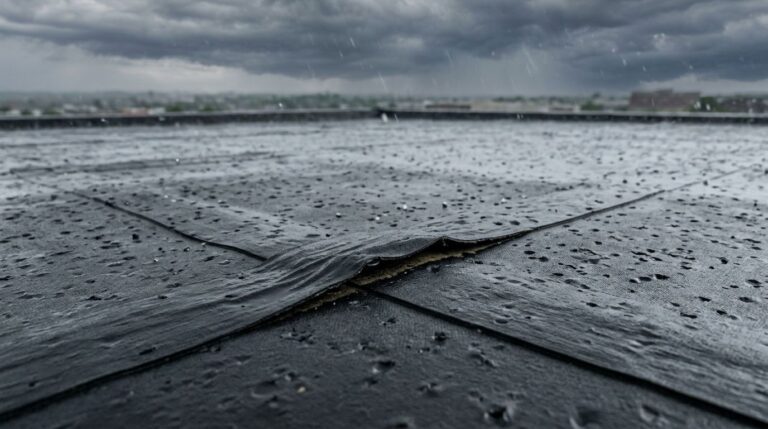
Short answer: On algae-streaked asphalt shingles, hail damage usually shows up as crisp, round spots of granule loss, small cracks, or “bruises” that feel soft when you press them. Algae staining looks like a surface smear or streak, not distinct impact marks. Confirm hail by checking matching dents on metal roof parts, then photograph patterns across multiple slopes.
Algae streaks can make a roof look “already damaged,” which is why hail inspections on stained shingles get messy fast. For commercial owners, the stakes are higher because missed storm damage like a bruise today can become a leak during the next hard rain.
When This Applies
This is most useful for commercial buildings with shingle areas
This applies if your property has asphalt shingles (unlike wood shingles) on any portion of the building constructed with diverse building materials, such as an entry canopy, mansard, office wing, or a steep-slope section above a flat roof. It also applies when your roof has dark streaks (often algae) that mask small impact marks.
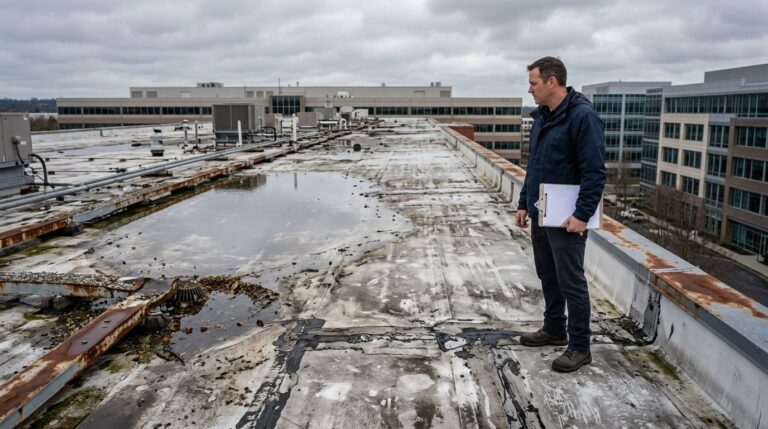
On the other hand, this does not apply if your building is all membrane roofing with no shingles at all. In that case, hail damage shows up differently (punctures, seam stress, crushed insulation, dented flashings). Still, one storm can hit both roof types, so you may end up coordinating shingle repairs with commercial flat roof repair on adjacent sections.
Common edge case: “It’s only stains, right?”
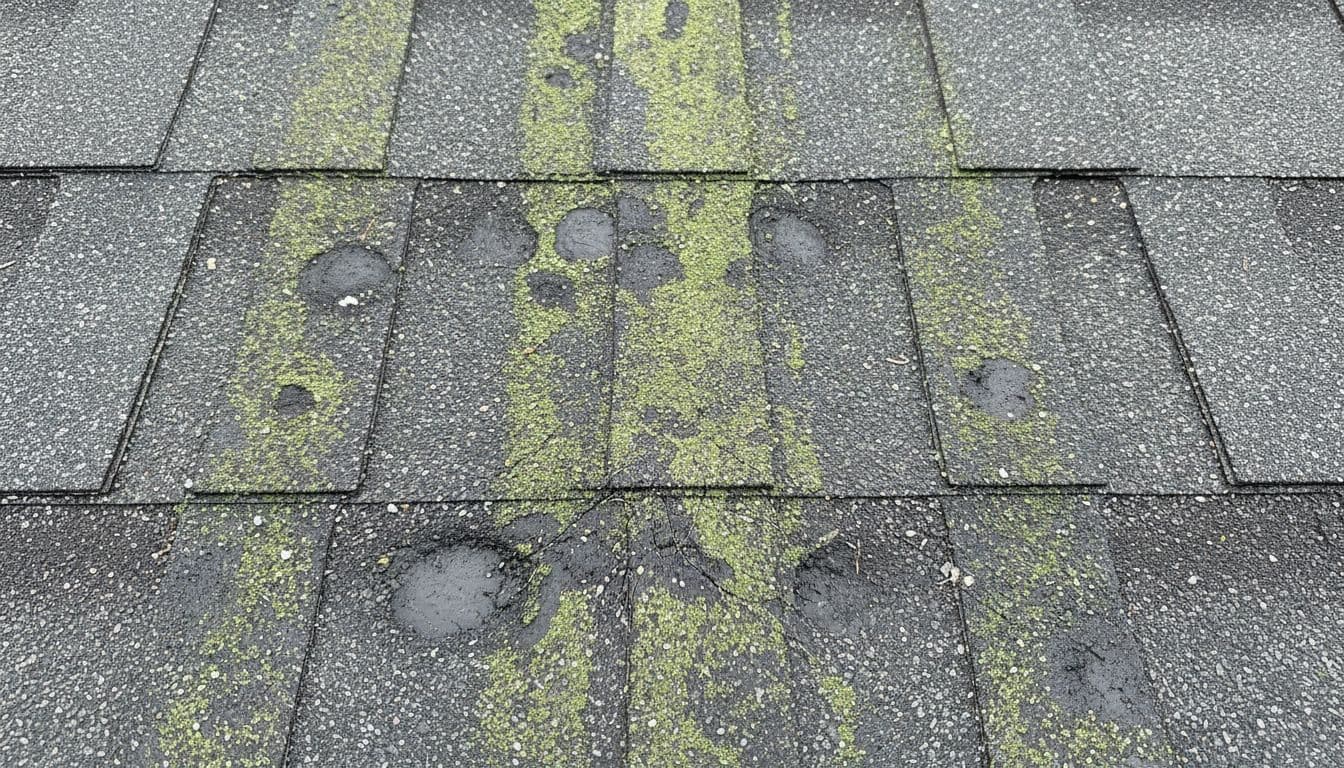
Sometimes it really is only staining. Algae causes long, uneven streaks that follow water flow and stay consistent over time. Hail tends to leave random, repeated impact marks across a defined area.
When algae streaks make hail damage harder to see
Algae acts like a dirty filter on top of the shingle surface. That matters because hail damage often starts under the granules, like a bruise under skin. The roof can look fine until you get close.
Use this simple mindset: algae changes color, hail changes texture. Staining shifts the shingle’s shade. Hail changes what’s physically there.
If you can lightly wipe it and the surface stays intact, you’re likely seeing staining. If granules are missing or the mat is cracked, you’re looking at damage.
If you want a technical reference for identifying functional damage from hail impacts on asphalt shingles, review guidance on identifying hail damage to asphalt shingle roofs. It helps when you need consistent terms for reports, tenants, or insurance conversations.
Another edge case: old shingles vs. hail
Brittle, aged shingles can shed granules from wear and tear due to heat and time, often showing widespread mat fracture that looks “dusty” and uniform, unlike clean, circular hits. Hail damage more often forms distinct spots that repeat across a slope on fresh hail damage shingles.
</EXISTING_CONTENT>
Step-by-Step
Start with evidence that doesn’t involve walking the roof
- Pin down the storm window for your roof inspection. Note the date, hail stones size reports you heard, wind speed, and wind direction. Timing matters because fresh hits look different than months-old wear.
- Scan for collateral indicators like dents at eye level. Check gutters and downspouts, metal fascia, metal vents, HVAC covers, rooftop units, and condenser fins. Shingles rarely take a beating while nearby soft metal stays perfect.
- Look for a pattern, not a single mark. One odd spot can be a defect. Repeated marks across a slope point to a storm.
Confirm you’re seeing hail impacts, not algae
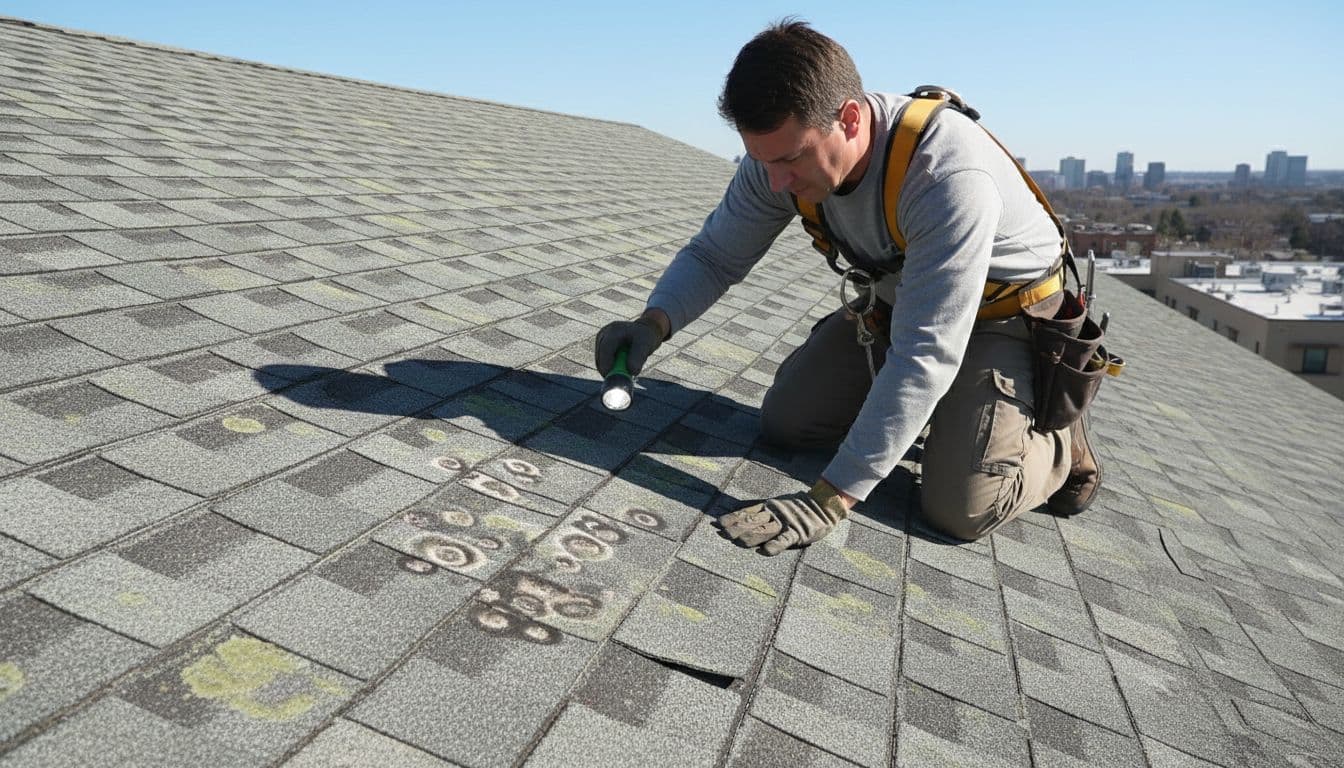
- Use light at a low angle. A flashlight held sideways can reveal shallow depressions that algae hides in flat light.
- Compare stain flow to impact scatter. Algae usually tracks water paths and stays streaky. Hail leaves scattered dots that ignore those streak lines.
- Spot-check an area with gentle cleaning. Use water and a soft cloth on a small test area. Don’t scrub hard. If the “mark” is just algae, the shading often changes. If it’s hail, you’ll still see missing granules or cracking.
Inspect algae-streaked shingles up close (only if safe)
-
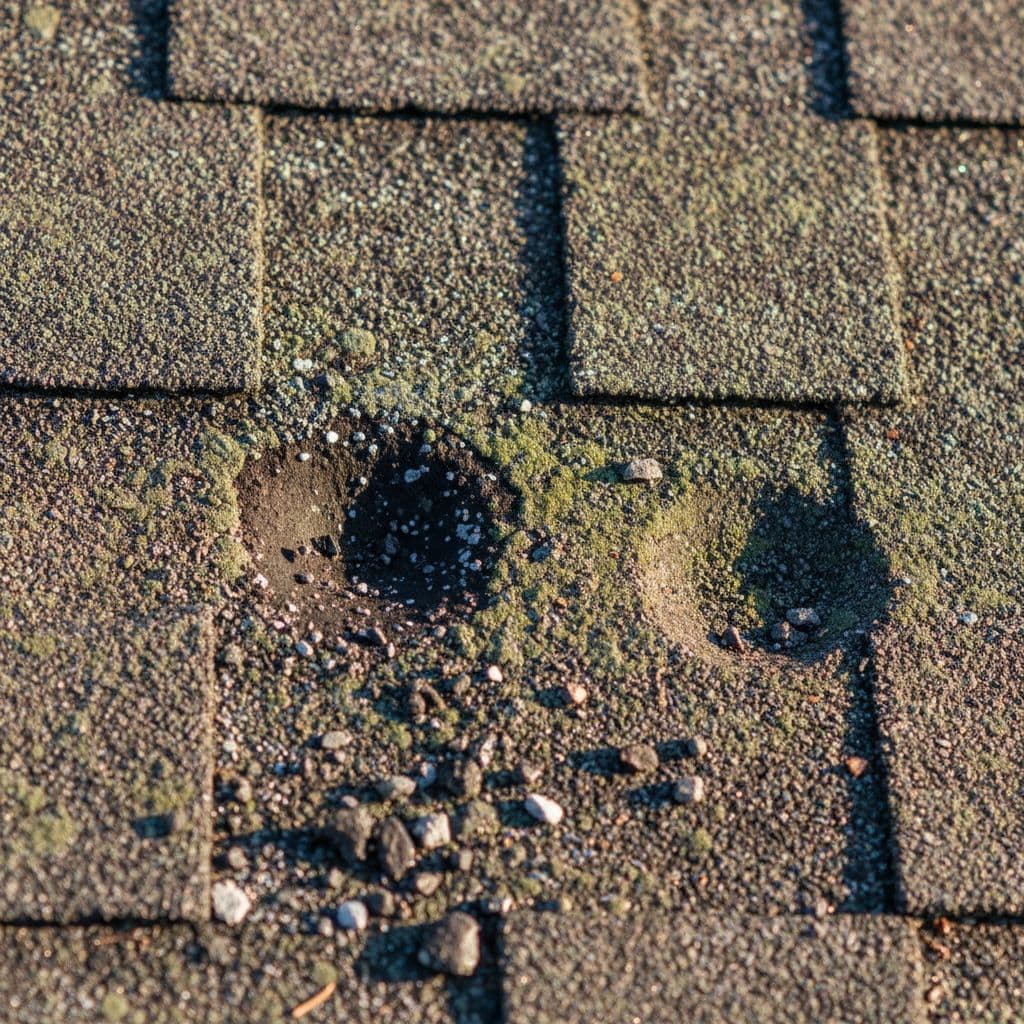
Find crisp granule loss circles or spatter marks. Hail strikes often knock granules loose in round or slightly oval patches. The asphalt beneath looks darker and cleaner than the surrounding stained field. For visual examples, see this hail damage photo guide for roof inspections.

-
Check for bruised shingles by feel, not just looks. With a gloved hand, press gently on suspected hits. A true bruise may feel slightly soft, like a dent with give. Algae streaks won’t change how the shingle feels.
-
Watch for cracks, split shingles, and exposed mat around roof flashing. Algae can make small cracks harder to see. Tilt your light and look for lines that break the granule layer or show fiberglass mat.
-
Rule out “mechanical” scuffs. Foot traffic, dropped tools, and satellite work can scrape granules too. Those marks often look linear or clustered near access points, not scattered across the whole field.
Document for decisions (repair, claim, or replacement)
- Photograph wide, then close. Take one photo showing the slope, then a close-up of each suspected hit, then a “context” photo showing that same hit near a vent or ridge.
- Translate findings into an action. Localized hits can lead to targeted repair. Widespread bruising, multiple slopes affected, or active leaks can shift the discussion toward roof replacement, especially if the shingles are near end-of-life.
FAQ
Will algae streaks cause an insurance claim to get denied?
Algae alone usually won’t support an insurance claim because it’s not sudden damage. However, algae can hide storm impacts. Strong claims often include collateral dents, consistent impact patterns on multiple test squares, and time-stamped photos. A third-party inspection summary helps keep the conversation factual and prepares you for a meeting with the insurance adjuster, the standard next step.
Should algae-streaked shingles be cleaned before an inspection?
Avoid aggressive cleaning. Power washing and harsh chemicals can strip granules and complicate the story of what happened when. If you need a cleaner view, limit it to a small test spot with water and a soft cloth. Then document what changed and what didn’t.
What if the roof “looks fine” but tenants report leaks later?
That happens because bruised shingles can crack over time. Water also finds weak points around flashings first, leading to roof leaks. If leaks start after a storm, treat it as a sign your commercial roof needs repair, even if the shingles still look decent from the ground. Common interior symptoms include water stains. Pair the shingle check with a moisture scan or targeted leak investigation, or consult a professional roofer for a specialized roof inspection.
Can hail damage on shingles mean my flat roof is also damaged?
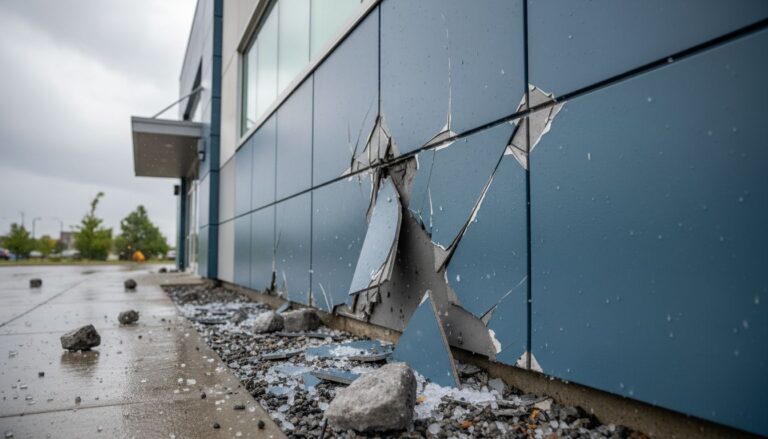
Often, yes. Hail that bruises shingles can also dent metal coping, stress seams, damage ridge caps, or compromise the roof deck’s structural integrity on low-slope areas. That’s why many owners schedule one inspection that covers steep-slope shingles and membrane details. If you catch it early, commercial flat roof repair may stay small and localized.
When is replacement smarter than spot repairs?
Roof replacement becomes more practical than spot repairs when storm damage is widespread, multiple slopes show bruising, or repairs would be scattered across large areas, especially when distinguishing it from ordinary wear and tear. Age matters too. A roof near the end of its service life may not justify repeated patchwork, particularly if you manage uptime-sensitive spaces like retail, medical, or light industrial. Consider upgrading to impact resistant shingles if a full roof replacement is needed.
Algae streaks can make hail damage feel like a guessing game, but it doesn’t have to be. Focus on texture changes, repeated impact patterns, and matching collateral dents. Then document what you see and act quickly, because small bruises can turn into big water problems later.
Need a roof inspection in Saint Paul or the Twin Cities? Call Sellers Roofing Company at +1-651-703-2336 or schedule a free estimate. We are a black-owned, NMSDC-certified MBE roofing contractor with 9+ years experience.