Last updated: 2026-05-26 by Ted Sellers, Owner
Most chimney leaks don’t start in the shingles — they start at the seam where the roof has to “wrap” a brick chimney. That seam is protected by a layered system: step flashing tucked into the shingles, counterflashing set into the masonry, plus sealant and a solid chimney crown that sheds water. When one layer loosens, rusts through, or cracks, water has an easy entry point.
In Saint Paul, freeze-thaw does the rest. Snowmelt finds a hairline gap, refreezes overnight, expands, and slowly pries the opening wider. What looked like a harmless crack in October can become a steady drip by February.
You can spot a lot from the ground. Look for a lifted flashing edge, rust streaks, missing mortar, a cracked crown, or a dark stain line running down the roof below the chimney. Those clues usually tell you who you need:
- Roofer if the metal flashing is loose, bent, or corroded
- Mason if the crown is cracked, mortar is failing, or bricks are shifting
- Both if you’re seeing metal problems and masonry damage (common after a few rough winters)
If you’re seeing interior staining near the chimney, it’s worth treating it as time-sensitive — once water reaches decking or insulation, repairs get more expensive fast.
When This Applies
Who should use these chimney leak checks (and who shouldn’t)
These checks are built for Saint Paul properties with masonry chimneys — especially older 1.5-story homes, colonials, duplexes, and small mixed-use buildings.
They’re most useful when you’re seeing:
- Ceiling stains near the chimney
- Peeling paint or bubbling drywall
- Musty odors in the chimney chase
- Wet insulation in the attic near brick
If you manage a duplex or small apartment building, chimney leaks can escalate quickly. One tenant call about “a small drip” often turns into drywall damage and a second call within weeks. Early verification saves far more than reactive patchwork.
If you suspect mold growth near the chimney chase or attic, treat it as a roof-and-ventilation issue until proven otherwise. A qualified roofing contractor can confirm whether the source is flashing, masonry, or attic moisture.
When This Guide Doesn’t Apply
Not every “chimney leak” is actually a chimney leak. This guide won’t help much if:
- You don’t have a brick chimney and the penetration is a metal vent pipe (those use boot flashing, not step and counterflashing).
- The leak is clearly coming from an upper wall, siding seam, or window above the roofline.
- The wet spot moves around and appears far from the chimney (often plumbing, condensation, or eave-related ice backup).
If you oversee multiple roofs and want fast confirmation instead of trial-and-error repairs, start with a local Saint Paul roofing inspection that includes active leak tracing — especially for commercial or mixed-use properties where downtime matters.
When It Looks Like a Chimney Leak (But Isn’t)
Water rarely drips straight down. It travels along rafters and sheathing before it shows up on drywall. Before blaming the chimney, look for these common Saint Paul look-alikes:
Ice Dams & Winter Backup
If the leak appears during deep freezes or mid-winter warmups, melting snow may be refreezing at the eaves and forcing water under shingles. The University of Minnesota Extension outlines how ice dams form and how to prevent them — a frequent cause of “chimney-adjacent” leaks that aren’t flashing failures at all.
Attic Condensation
If stains appear after bitter cold spells — without rainfall or snowmelt — warm indoor air may be condensing on cold framing near the chimney chase. Poor attic ventilation and air sealing often masquerade as roof leaks.
Masonry Saturation (Not Roof Failure)
A cracked chimney crown, missing cap, or deteriorated mortar joints can allow water to soak into the masonry. The chimney then releases moisture inside the attic or walls even when the roof system is intact. This is common in Saint Paul’s older brick chimneys, especially those that haven’t been tuckpointed in 20+ years.
Step-by-Step
Ground-only chimney leak photo checklist: step-by-step checks from the ground (Saint Paul-friendly)
Pin down the timing before you look up. Note whether the leak happens during wind-driven rain, after steady rain, or during thaw days. A “only when snow melts” pattern often points to ice back-up or slow seepage at flashing seams.
Map the interior stain like you’re triangulating a signal. Take a photo of the ceiling spot, then measure its distance from the nearest exterior wall and from the chimney edge (if visible). This helps later when you compare the stain line to where the chimney meets the roof outside.
From the yard, get an overview of the flashing line. Binoculars inspection or phone zoom from multiple angles (front and side). You’re looking for a clean, continuous metal transition at the chimney base, not wavy, lifted, or patched metal.
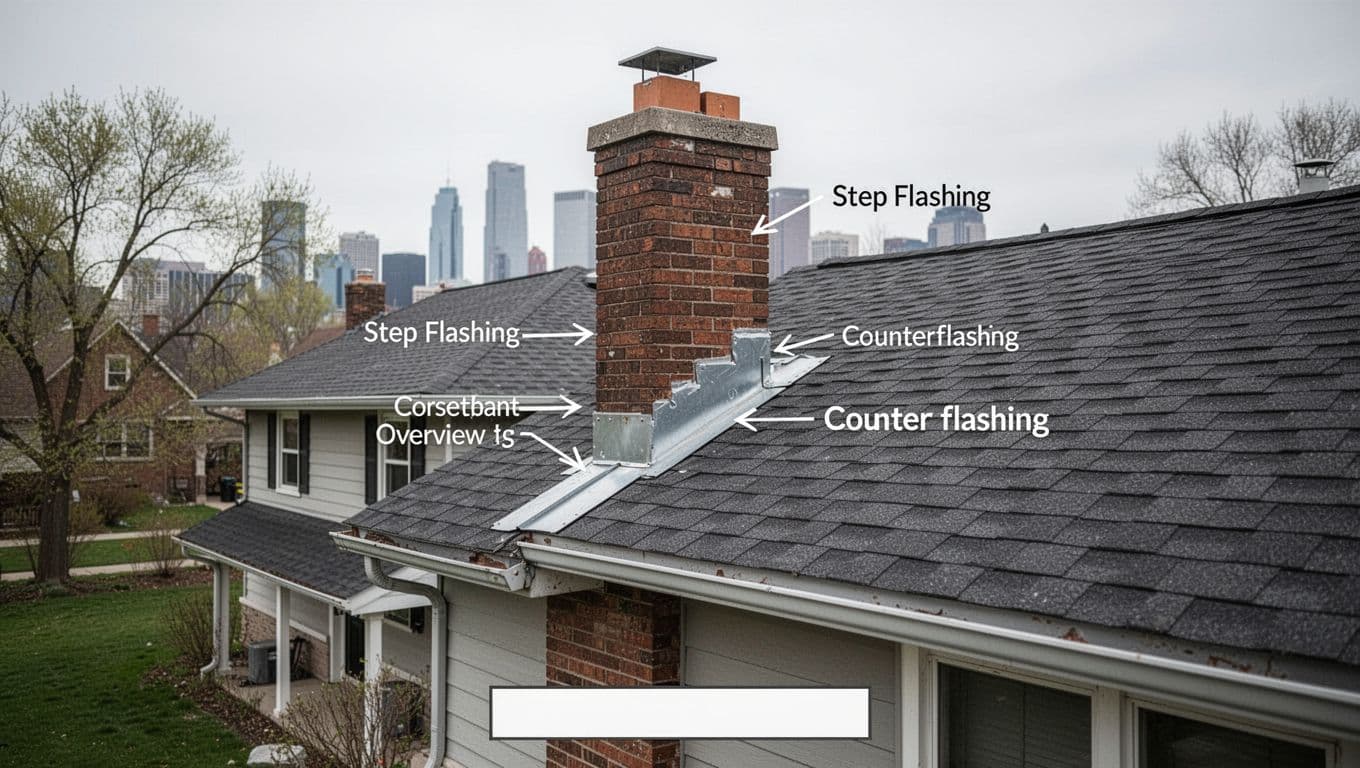
Flashing overview from the ground, with key parts called out,
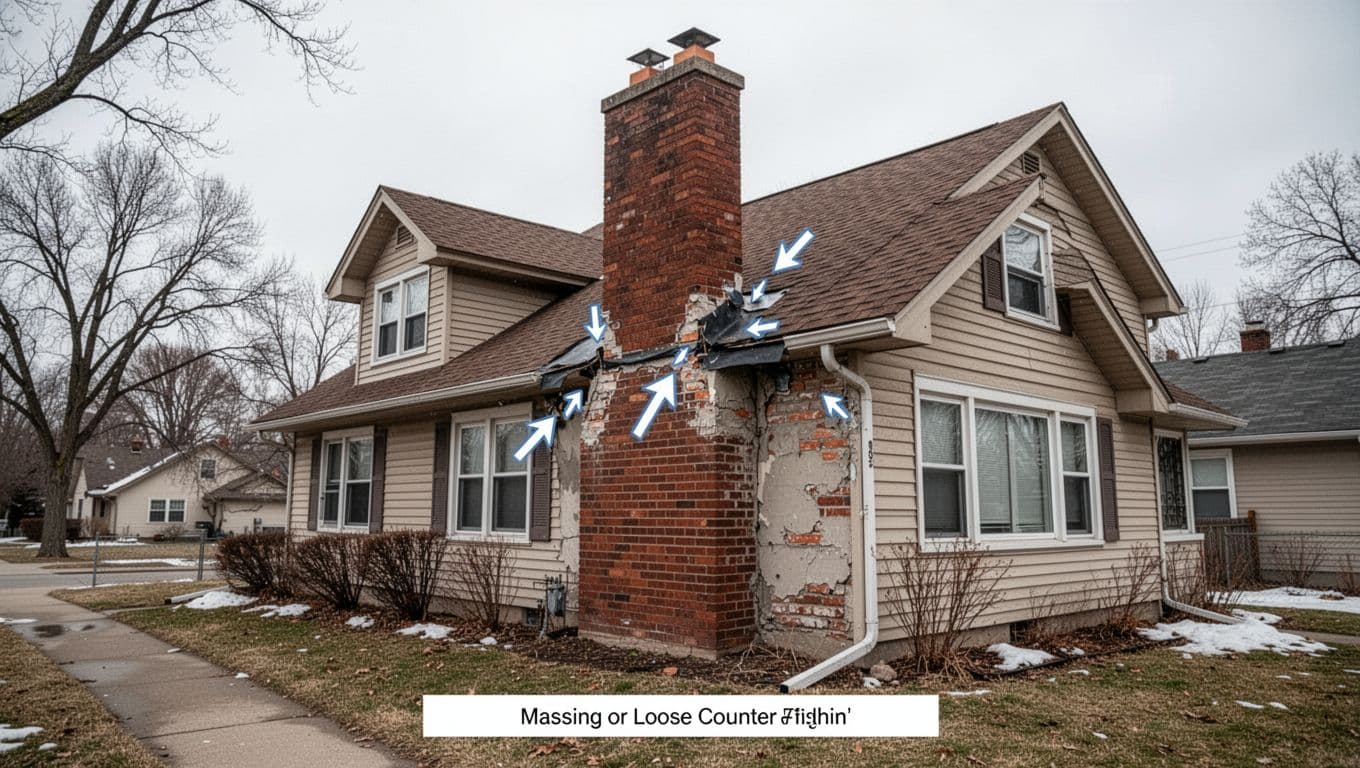
Check counter flashing where it meets brick mortar joints. Counter flashing should be set into the mortar joints (or properly fastened), then overlap the step flashing below. If you see gaps, missing pieces, or sections pulled away, water can run straight behind the metal.

Loose or missing counterflashing can open a direct path for water,
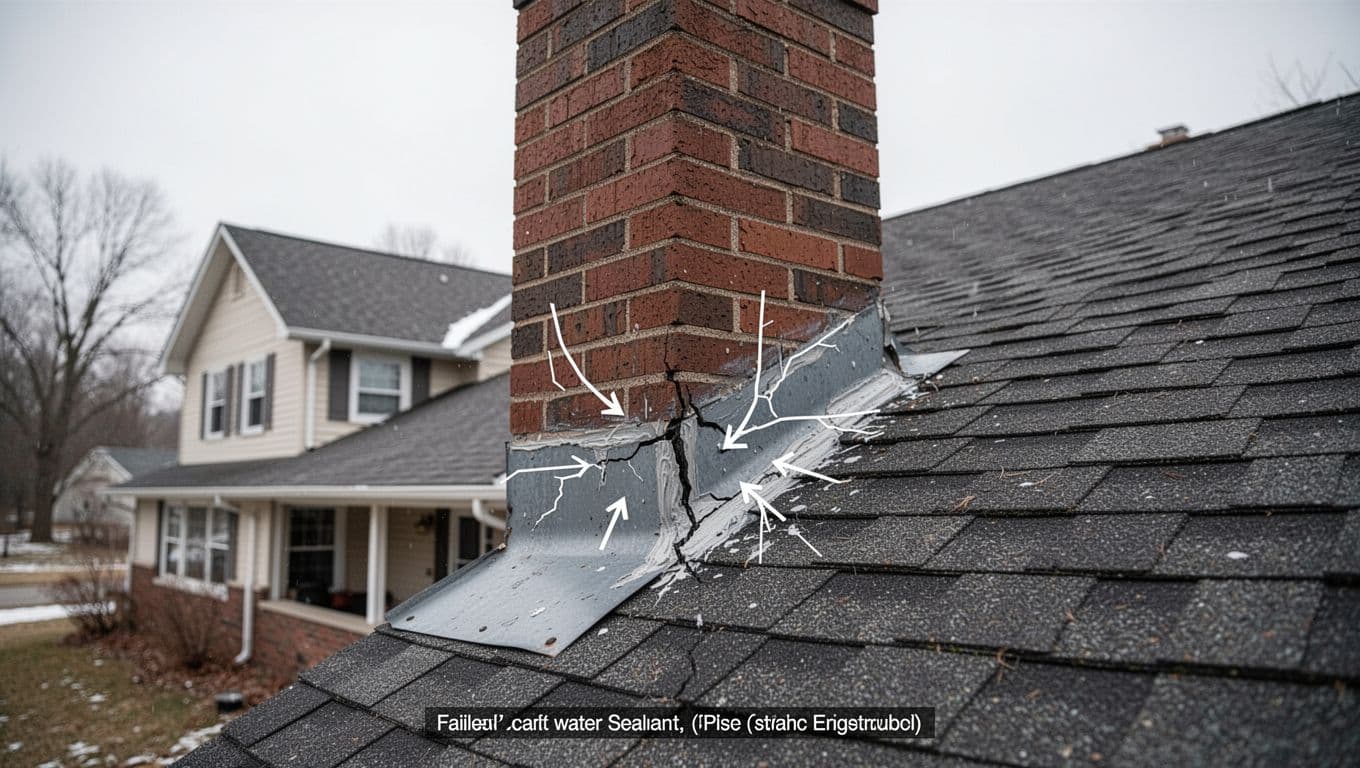
Look for cracked waterproofing sealant at metal edges (and be skeptical of “caulk fixes”). A thin bead of waterproofing sealant at flashing edges often cracks under temperature swings. If you can see split, peeling, or missing waterproofing sealant from the ground, it’s a sign the detail may be failing, not a sign it was “sealed for good.” Applying roofing cement is often a temporary fix.
Failed sealant at flashing edges is a common leak starter.
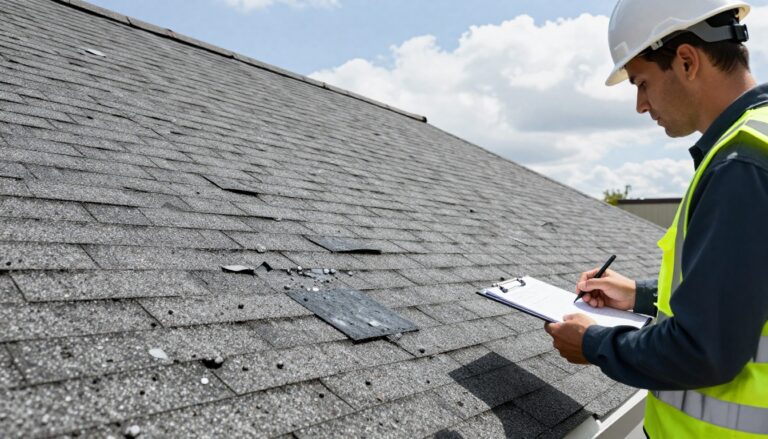
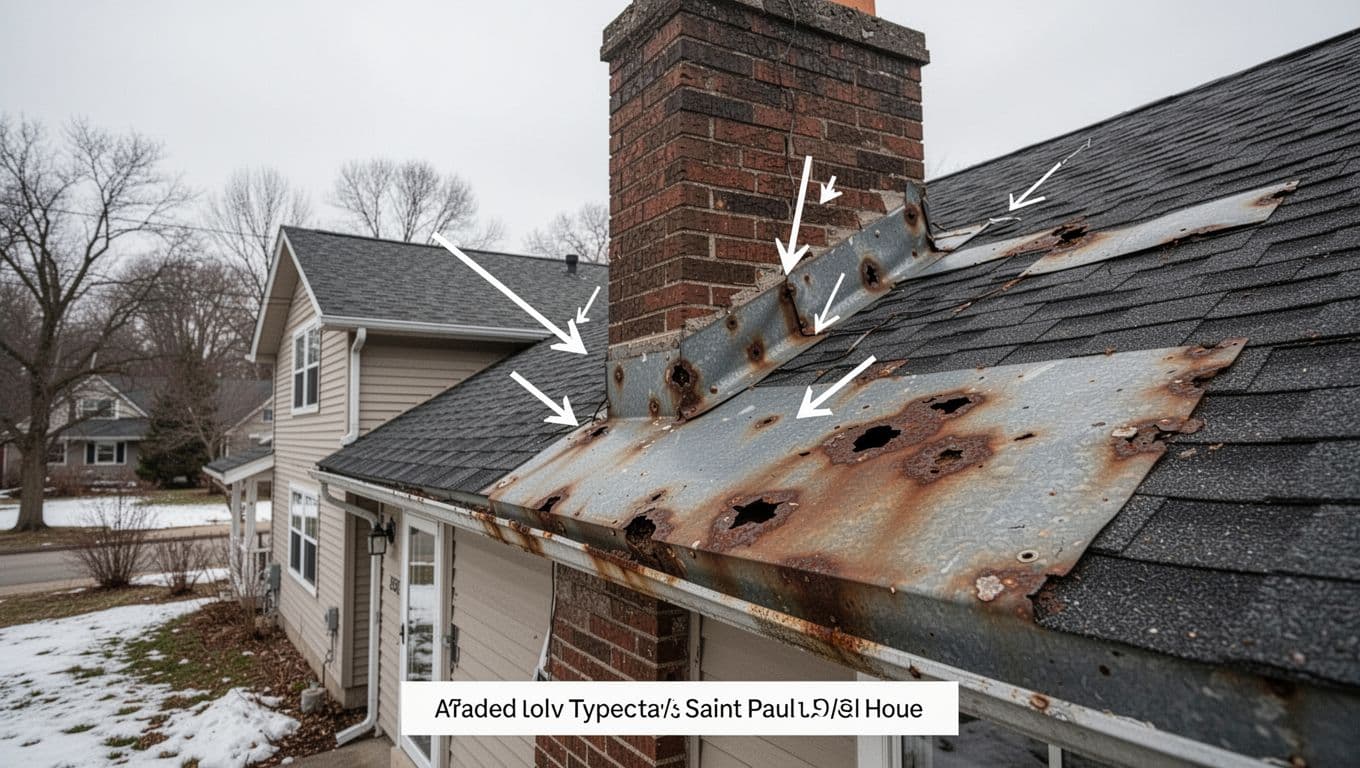
Scan for rust, pinholes, or bent flashing. Rust spots are not just cosmetic. Corrosion can turn into pinholes, then the first hard rain finds it. Also watch for flashing that looks “oil-canned,” dented, or curled up at corners. Check for damaged shingles near the roof valley if the chimney is located near an intersection.
Rust and holes in metal flashing can leak even in light rain,
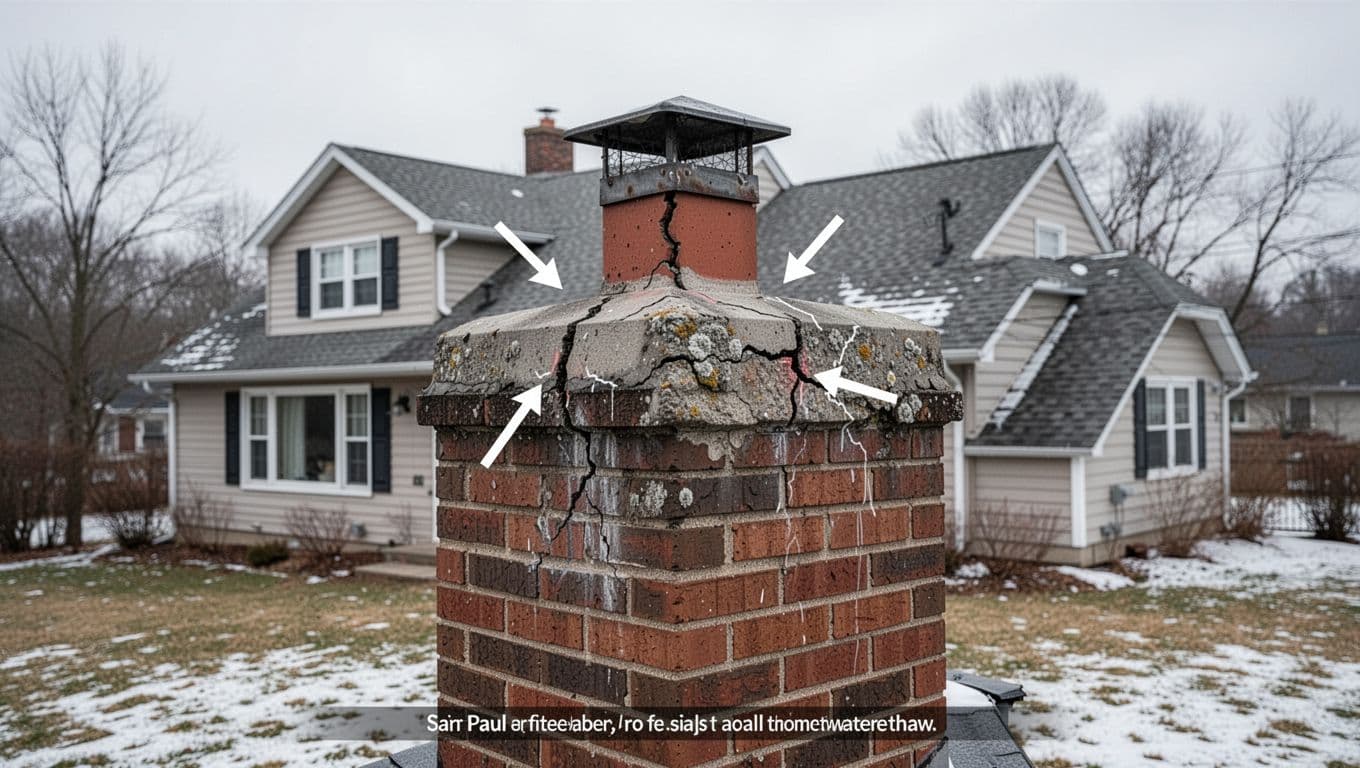
Inspect the chimney crown and the area around the flue. A cracked crown (the chimney cap on top) can send water into the chimney structure. That water can appear inside near the chimney and get blamed on the roof. From the ground, look for obvious cracks, missing chunks, or gaps around the flue.
Crown cracks can let water in and mimic a roof leak,
Watch for spalled brick, missing mortar, and white staining. Saint Paul winters can pop the face off brick (spalling) after water freezes inside it. If the chimney looks crumbly, has missing mortar joints, or shows white mineral deposits, water is likely soaking into the masonry.
Look for rust on damper or efflorescence on bricks. These are visible signs of moisture. Rust stains near the flue opening or powdery white efflorescence on the bricks indicate water penetration and potential internal damage.
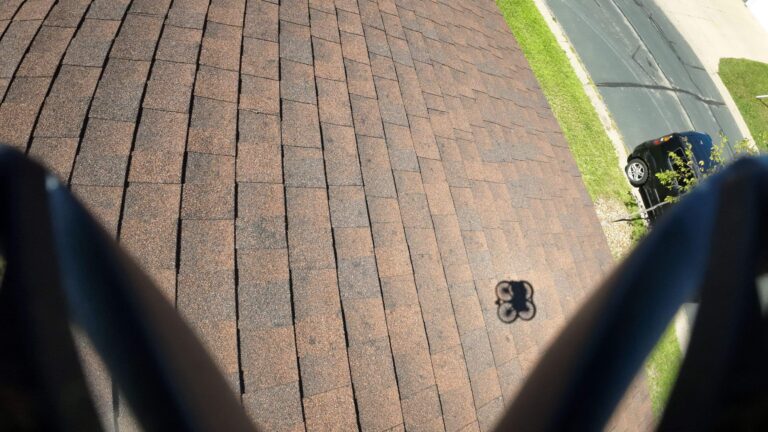
Check for damaged shingles right around the chimney base. From the ground, look for damaged shingles such as lifted tabs, missing shingles, heavy granule loss, or a dark “track” that suggests water flow. For roofs with steep pitches, check the chimney cricket; if the chimney sits on a roof slope (not at the ridge), poor drainage behind it can also be part of the story.
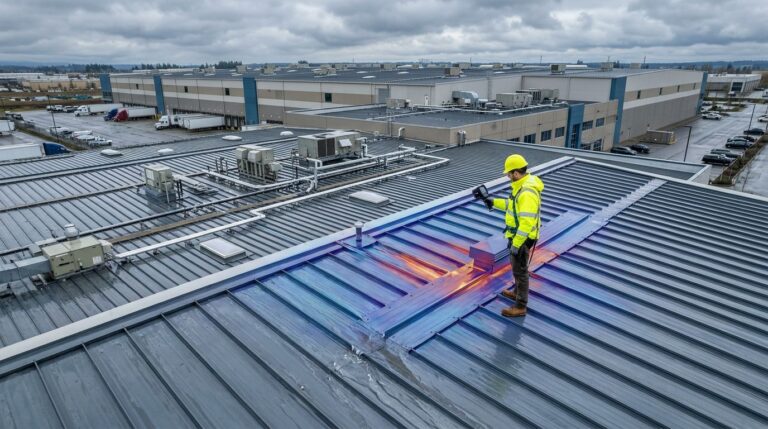
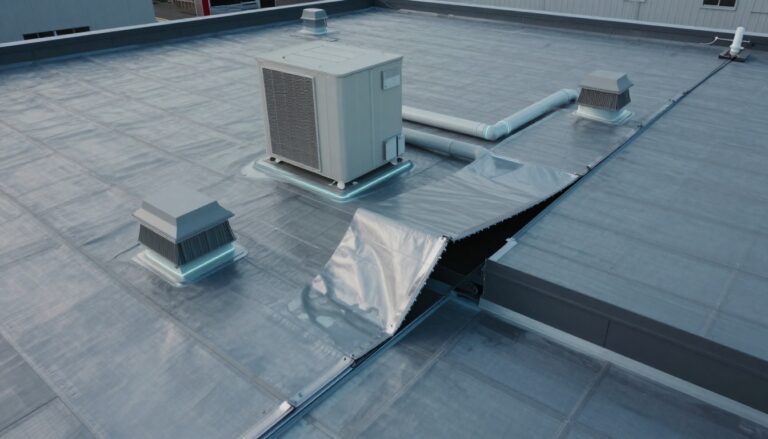
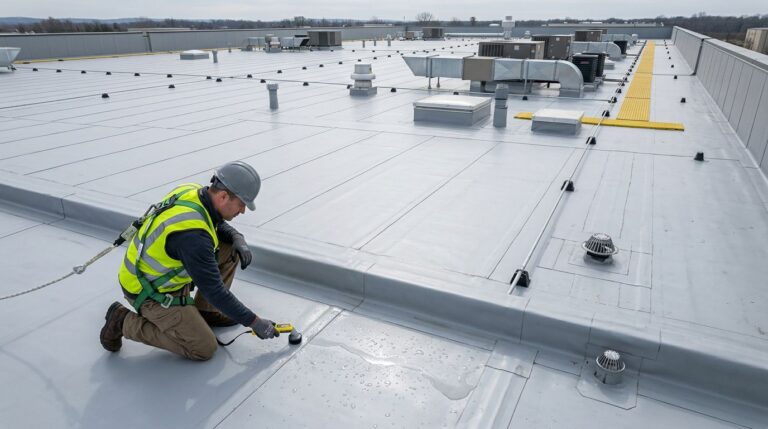
Decide what the signs point to, then pick the right fix path. If you see flashing gaps, rust, or pulled counter flashing, it’s time for a hands-on inspection by a roofing contractor. For masonry issues, consider masonry repair. For owners juggling more than one property, the same logic applies on business roofs: a small breach can turn into commercial flat roof repair, and repeated leaks can push you toward commercial roof replacement.
If your commercial roof needs repair, documenting what you see now helps speed up diagnosis and reduce downtime. For general background on how different roof leaks start, see this plain-language overview of roof leak causes and solutions. Effective roof leak detection prevents structural damage, while preventive maintenance stops water penetration.
FAQ
Can a chimney crown leak really look like a roof leak inside?
Yes. Water can enter at the crown, soak the chimney, and lead to symptoms like firebox water intrusion, then show up as a ceiling stain near the chimney line. It often appears after long wet periods or thaw days, even when the roof surface itself is intact.
What’s the clue from the ground?
Cracks, gaps around the flue, missing pieces, or a crown that looks flat (no slope) are common red flags.
Is it okay to seal chimney flashing with caulk from the outside?
Caulk is usually a short-term patch. In Saint Paul, sun and cold cycles make many sealants crack. Proper flashing relies on layered metal details that shed water, not a bead that has to stay perfect for years.
Why do chimney roof leaks show up when it’s not raining?
Two big reasons: thawing snow or condensation. Thaw water can back up under shingles or seep through tiny flashing gaps. Condensation can wet the attic framing near the chimney chase and drip down later.
When should I suspect ice dam back-up?
If the leak appears during freezes and warm-ups, especially after heavy snow, ice dam conditions move to the top of the list.
How does gutter cleaning help?
Regular gutter cleaning prevents water backup near the roof edge, which can worsen leaks around the chimney.
Do I need a roofer or a mason for leaks around chimneys?
It depends on what failed. Flashing and shingles are roofing work, crowns, brick, and mortar are masonry work. Many real-world chimney roof leaks involve both, because failing mortar can loosen counterflashing, and failing flashing can keep masonry wet.
How urgent is a small stain near the chimney?
Treat it as urgent. Small stains can mean ongoing wet insulation, mold risk, and hidden wood rot, particularly from ice dams during winter.
Take photos, note the weather pattern, then schedule an inspection before the next storm or melt cycle widens the damage.
A leak near a chimney rarely fixes itself. The good news is you can often spot the cause from the ground, document it clearly, and move fast on the right repair, before chimney flashing failure causes water stains on ceiling and chimney roof leaks turn into interior rebuilds. Early detection is key to avoiding bigger problems.
Need a roof inspection in Saint Paul or the Twin Cities? Call Sellers Roofing Company at +1-651-703-2336 or schedule a free estimate. We are a black-owned, NMSDC-certified MBE roofing contractor with 9+ years experience.