Last updated: 2026-08-01 by Ted Sellers, Owner
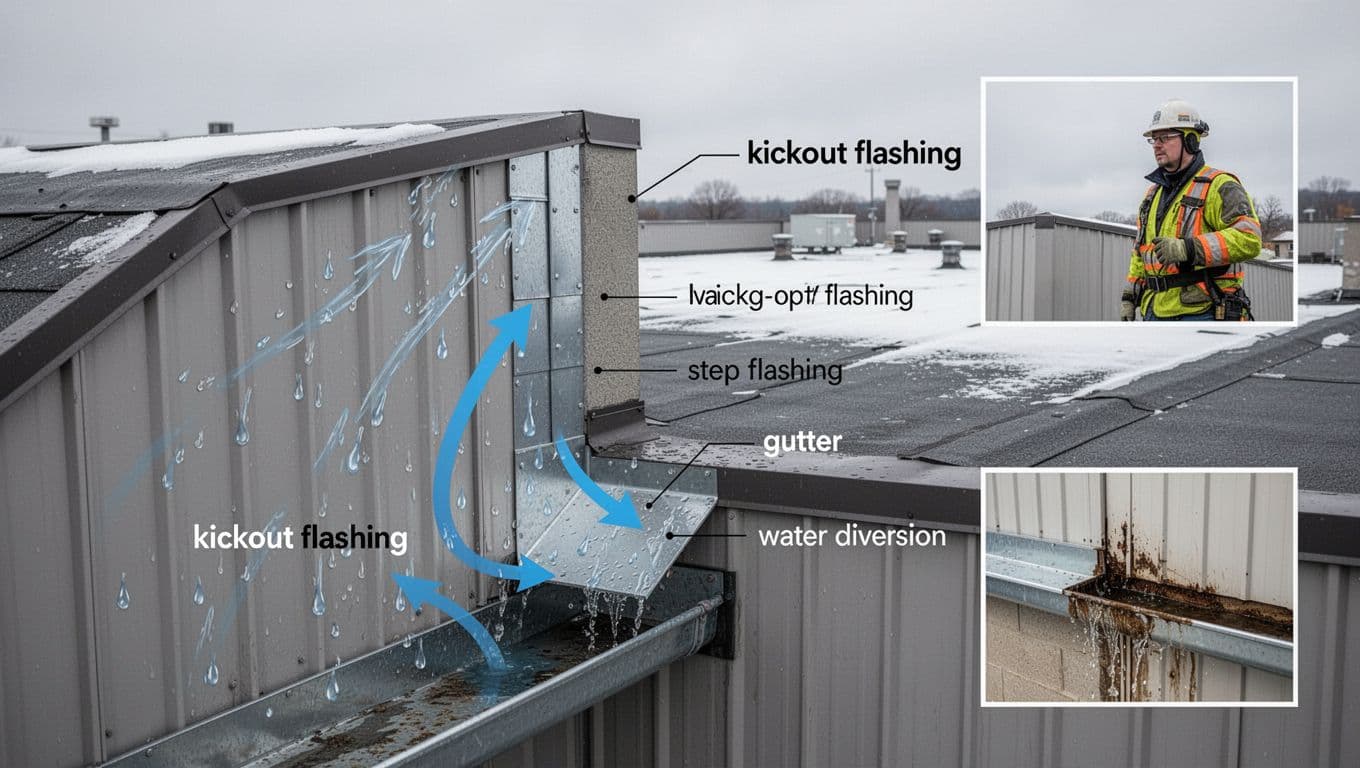
Kickout flashing is a small, shaped piece of metal installed where a sloped roof ends against a wall, right above the gutter. Its job is simple: push roof runoff into the gutter instead of letting water slide behind siding. In Minnesota’s snow, ice, and wind-driven rain, its absence can lead to water damage and moisture intrusion within exterior walls, causing rot, mold, and costly repairs.
When This Applies
Roof and wall intersections that need a “water exit”
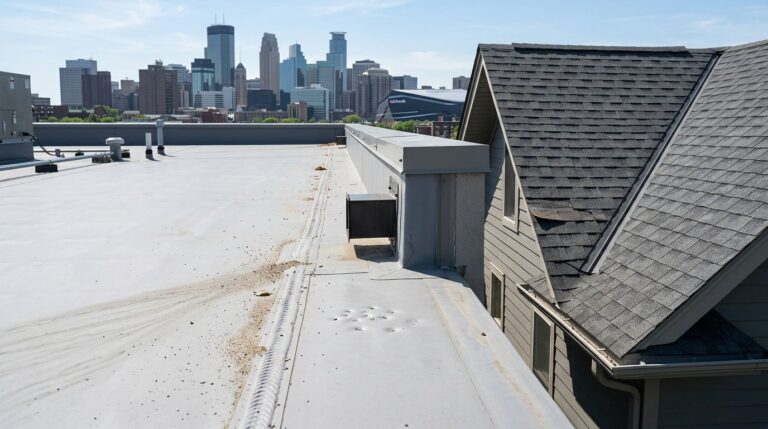
Kickout flashing applies when a sloped roof plane runs alongside a vertical wall and stops at the eave at the roof-to-wall intersection. Think of a garage roof meeting a second-story wall, a dormer sidewall, or any spot where step flashing climbs the wall and the roof edge ends near a gutter.
Without a kickout at the bottom, water doesn’t “drop cleanly” into the gutter. Instead, it hugs the wall like a curtain and sneaks behind the cladding and siding. Over time, that moisture can soak sheathing, rot framing, cause structural damage within the building envelope, and stain interior finishes. Minnesota freeze-thaw cycles make it worse because wet materials expand, crack, and keep accepting more water.
If you want a clear, code-style definition, see the kick-out flashing definition, as outlined in the International Residential Code and other building codes, which describes it as flashing that diverts water where a roof stops within the plane of an intersecting wall.
When it doesn’t apply (and common exceptions)
Some buildings don’t have the conditions for kickout flashing:
No roof-to-wall run at the eave
If the roof doesn’t die into a wall near a gutter, there may be no place for kickout flashing.
Flat roofs and parapets
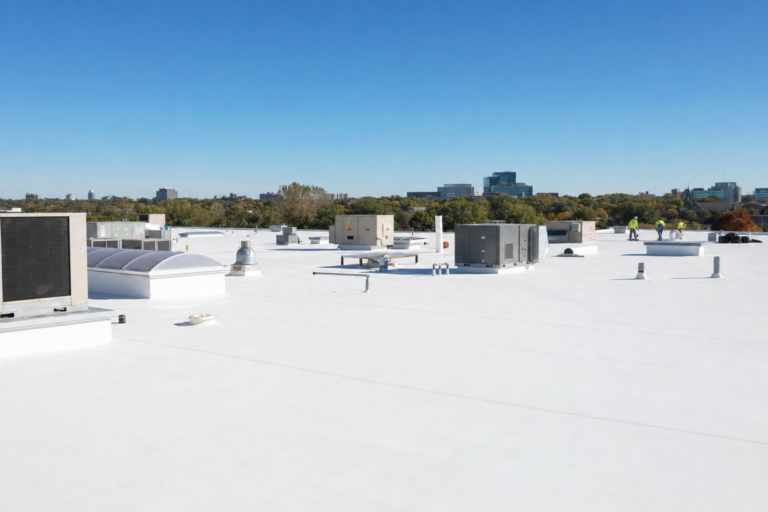
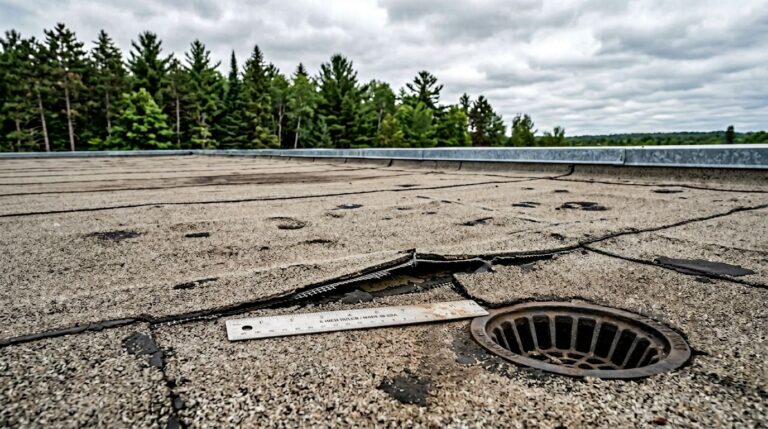
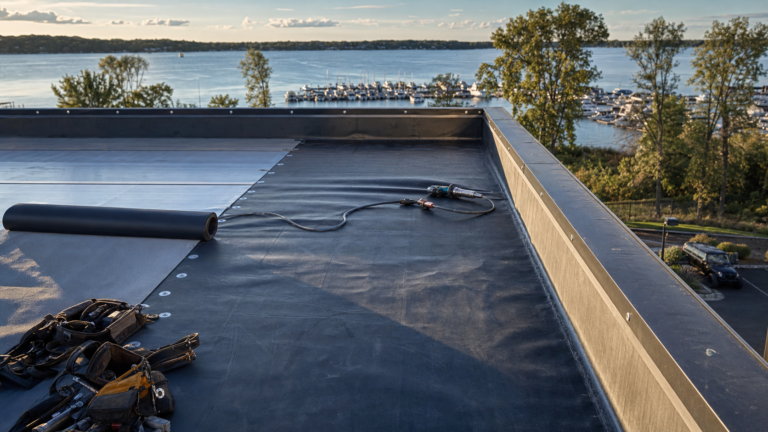
On many low-slope commercial roofs, water control happens through edge metal, scuppers, and internal drains instead. Still, some commercial properties have sloped entries, canopies, or mansards where kickout flashing is absolutely relevant, even if the main roof is flat.
No gutters
Kickout flashing is designed to direct water into a gutter system. If there’s no gutter system (common on some older buildings), you need a different water management plan, not a missing piece of metal doing nothing.
Why Kickout Flashing Matters in Minnesota Weather
Minnesota’s snow and ice turn small leaks into big damage
In Minnesota’s harsh winters, ice dams and snowmelt are major factors in moisture management. Water is persistent, but ice is forceful. When snow melts on a sunny February day and refreezes overnight, runoff can back up at edges and corners. That’s often where roof-to-wall intersections sit. If kickout flashing is missing, water can enter the wall assembly and freeze again, widening gaps and stressing caulk lines.
Even well-installed aluminum flashing step flashing can’t fix the “exit problem” at the bottom. Step flashing protects the run up the wall, while kickout flashing finishes the system by steering water away from the wall at the end.
If runoff keeps touching the wall, it’s only a matter of time before it finds a way behind it.
Why business owners should care, even if this sounds “residential”
Many commercial owners in the Twin Cities have buildings with residential-style details: sloped porch roofs, peaked entryways, or additions that tie into vertical walls. When that detail fails, it can look like a small stain, but the repair scope often spreads into siding, insulation, and framing, leading to mold and rot.
Also, water problems don’t stay in one trade lane. A wall leak can lead to interior damage, tenant complaints, and emergency calls. If you’re already dealing with a symptom and suspect your commercial roof needs repair, it’s smart to address flashing details early instead of paying for repeated patches.
For a practical explanation with visuals, this Minnesota-based inspection write-up on kickout flashing failures shows why this detail gets flagged so often.
Step-by-Step
Find the spots where kickout flashing should exist
Follow this simplified home inspection process:
- Walk the building perimeter and look for any sloped roof that runs alongside a wall (siding, brick, stucco, or metal panels).
- Trace that roof-to-wall run downward to where it ends above a gutter.
- Look for a small metal “flared” piece at the bottom that pushes water outward into the gutter, not straight down the wall.
- Use binoculars or your phone zoom from the ground, since ladders add risk.
What “missing” often looks like
- You see step flashing up the wall, but nothing that kicks water out at the bottom.
- The last shingle edge dumps water tight to the wall line.
Check for early warning signs before opening walls
- Inspect siding near the intersection for peeling paint, swelling, soft wood, or loose caulk joints.
- Look for dark streaks on the wall, especially below the roof-to-wall run.
- Inside, check for staining at the top corner of the room that matches that exterior wall.
- If you manage a facility, ask maintenance to check ceiling tiles and wall corners after heavy melt cycles.
Choose the right fix based on scope
- If there’s no interior damage and materials feel solid, schedule a targeted kickout flashing installation during dry weather.
- If water is active or stains keep returning, prioritize diagnosis first, because water can travel and compromise the weather-resistive barrier, trapping moisture in the wall cavity; this is a concern for both new construction and older buildings. commercial roof leak detection in Saint Paul can help locate the true entry point.
- If the roof is near end-of-life, bundle flashing installation upgrades into a larger plan, because a proper edge and wall transition belongs in any commercial roof replacement scope.
- When runoff has damaged wall sections on a low-slope building, coordinate with a professional roofing contractor for flashing work tied to commercial flat roof repair so water paths don’t get “patched” in the wrong place.
FAQ
Can you add kickout flashing without replacing the whole roof?
Yes, in many cases. A roofer can often lift shingles at the bottom of the roof-to-wall run, perform the installation by integrating the kickout with the step flashing, and restore the courses. However, brittle shingles, short clearances, or rotten sheathing can force a wider repair.
What happens if kickout flashing is installed but still leaks?
It usually means one of three issues: the kickout is too small, it isn’t integrated with the step flashing and water-resistive barrier, or the gutter line is set too low to catch the diverted water.
A quick tell
If water marks appear on the wall below the kickout, the diverter may be missing the gutter entirely.
Does kickout flashing matter on metal roofs?
While commonly found on residential buildings, on sloped metal roofs that terminate into a wall, the principles of water diversion still matter: you need a deliberate exit that sends water into the gutter. The exact detailing changes (counterflashing, closures, fasteners), so it’s best handled by a roofing contractor familiar with the roof system.
Can ice dams damage kickout flashing?
Yes. Ice can bend thin metal, loosen fasteners, and stress sealant lines. If you see wintertime leaking at a roof-to-wall corner, don’t assume it’s only insulation or ventilation. Check the kickout detail too.
What should I ask for in a bid so this detail isn’t skipped?
Ask the contractor to specify “kickout flashing at all roof-to-wall terminations above gutters,” and to confirm integration with step flashing and the wall water-resistive barrier. If you want a simple installation overview to understand the parts, read installing kickout flashing basics.
Conclusion
Kickout flashing is small, but it controls where roof water goes at a high-risk corner to protect gutter system integrity. In Minnesota, that corner sees snowmelt, refreeze, and wind-driven rain, so details matter. If you spot staining, swelling, or repeated leaks, treat it as a system issue that risks water damage, not just a caulk problem. The fastest way to cut risk is to verify kickout flashing installation at every roof-to-wall termination across the property and fix any missing or undersized pieces before the next thaw. For help planning repairs on a business property, start with Saint Paul commercial roofing services.
Need a roof inspection in Saint Paul or the Twin Cities? Call Sellers Roofing Company at +1-651-703-2336 or schedule a free estimate. We are a black-owned, NMSDC-certified MBE roofing contractor with 9+ years experience.