Last updated: 2026-08-01 by Ted Sellers, Owner
A TPO wall flashing leak, a common roof leak on a flat roof, is usually found by tracing water from the interior stain back to the nearest wall, then inspecting the roof to wall flashing where the TPO membrane turns up the wall. Focus on terminations (termination bars, counterflashing, reglets), corner patches, fasteners, and sealant breaks. Confirm with moisture mapping or low-pressure water testing so you repair the real entry point, not the symptom.
When This Applies
You have a TPO roof that meets a vertical wall
This applies to many commercial roofing systems on buildings with parapet walls, rising masonry facades, rooftop penthouses, or equipment screens. In these areas, the TPO single-ply membrane must turn up the wall and get mechanically terminated and protected. If any part of that “roof-to-wall” transition loosens, water can slip behind the membrane and travel until it finds an opening.
Wall flashing leaks often show up after wind-driven rain, snow melt, or freeze-thaw cycles. Minnesota weather is rough on sealants and metal edges. A tiny gap can act like a straw. Unresolved leaks can lead to significant water damage over time.
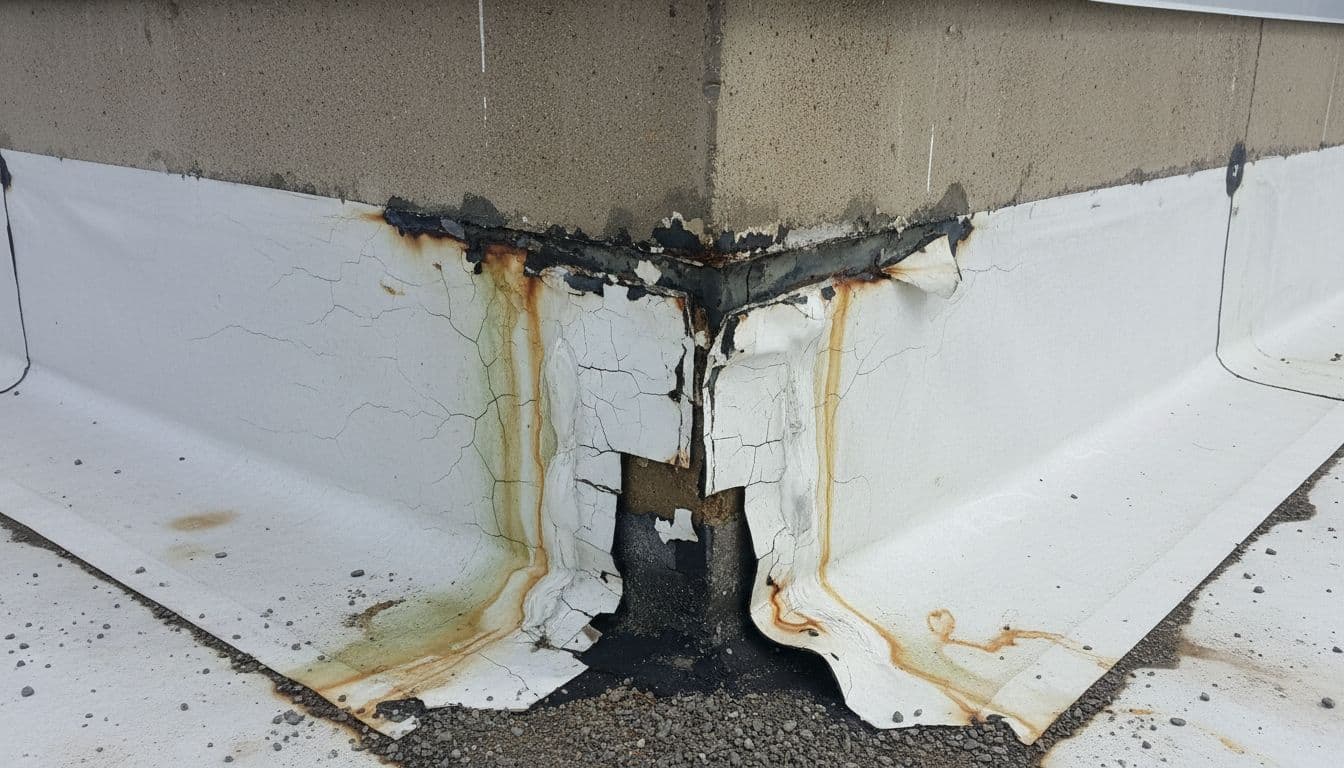
When it’s probably not wall flashing
Sometimes the wall is a coincidence. Water can travel far on a low-slope system, then drip near a wall because that’s where a deck seam, conduit, or ceiling grid makes it easy to show up.
Common look-alikes (and why they fool people)
If you see any of these, treat them as “check nearby first” items, not proof of a wall flashing failure:
- Rooftop unit curbs near the wall: water enters at the curb, then runs to the closest low spot.
- Clogged drains or scuppers in the drainage system: ponding water pushes into seams, then shows up at the perimeter.
- Condensation on cold surfaces: looks like a leak, but it’s humidity meeting a cold deck.
- Interior plumbing in the wall: a slow supply-line leak can mimic roof staining.
If you want a reference for typical TPO inspection observations, this TPO inspection narrative library is a helpful checklist-style overview.
Step-by-Step
Confirm the leak path (inside first)
- Mark the interior drip point on a ceiling tile or deck with painter’s tape, then note the date and rain direction.
- Measure to two fixed points (for example, exterior wall and a column line) so you can transfer the location to the roof.
- Look for a “line” of staining that trends toward a wall, because water often rides decking ribs or steel flutes.
- Check the nearest wall section for wet insulation signs (musty odor, soft drywall, bubbling paint), since wall cavities can carry water.
Roof Inspection: Wall Flashing Details
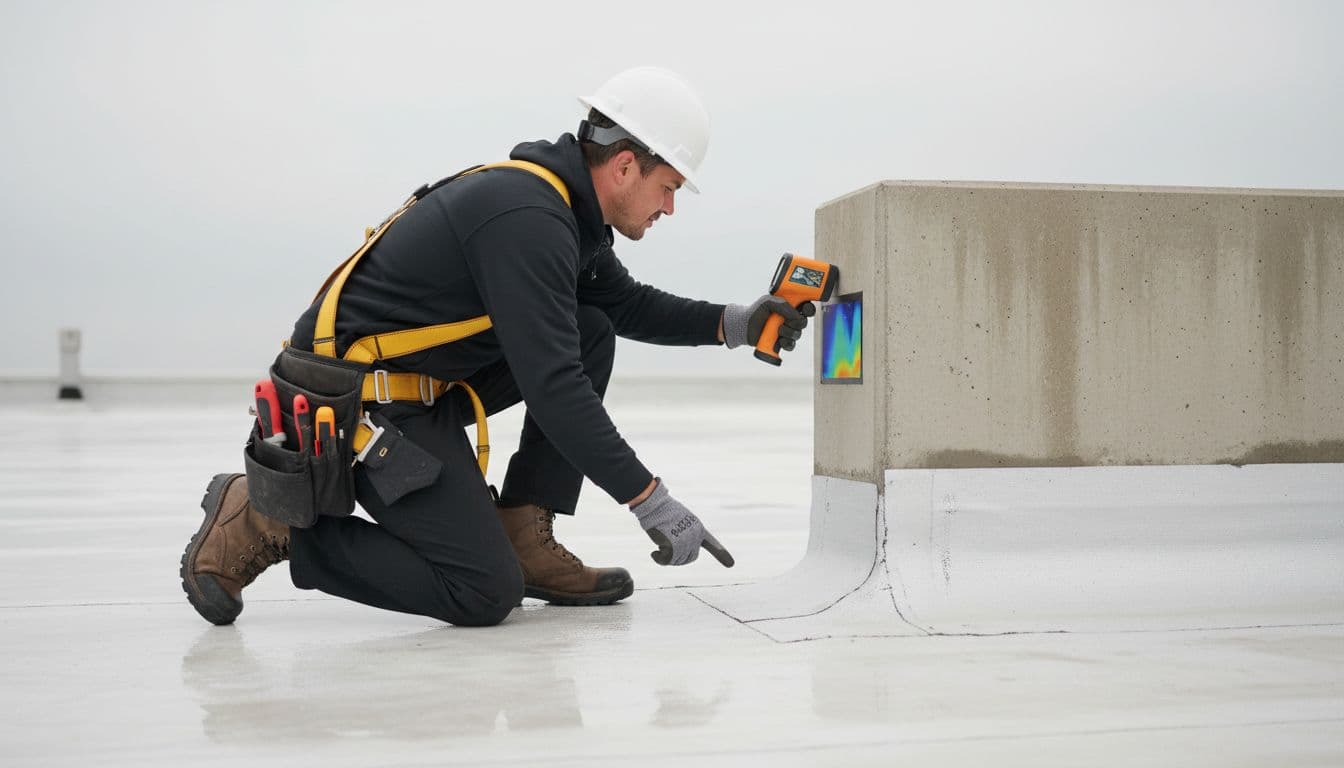
- Start at corners first, because inside and outside corners take the most movement and abuse.
- Inspect the base flashing for fishmouths, wrinkles, or shrink-back at the top edge.
- Check the termination bar line for loose or missing sealant, loose fasteners, missing screws, or fasteners that spin without tightening.
- Examine counter-flashing or metal flashing (coping) above the termination; look for open seams, failed joints, or missing sealant.
- Probe for voids (gently) where the membrane meets the wall, because a hollow spot can hide a channel.
- Look for punctures near the wall from ladders, tools, or snow removal equipment.
Pinpoint the entry point without causing more damage
- Use infrared at the right time (often evening after a sunny day) to see trapped moisture patterns that lead back to the source.
- Try a controlled water test with low pressure, starting below the suspected point and working upward in short intervals, while checking heat welding quality at seams.
- Avoid pressure washers, because they can force water under details and create a false “fail.”
- Chalk-outline suspect areas, then re-check after the next rain to see if the wet pattern repeats; for minor fixes on confirmed issues, TPO patches work well.
- Consider professional electronic testing if the leak is costly or disruptive; it can pinpoint breaches that eyes miss.
For more context on why commercial leaks can be hard to trace, this overview on commercial roof leak detection methods explains why water often shows up far from where it entered.
Decide what happens next (repair, restore, or replace)
- If the top termination is compromised, plan a targeted re-termination and new counter-flashing detail.
- If the membrane is brittle or pulling back in many areas, budget for broader perimeter work, not just one patch.
- If moisture is widespread in insulation, expect more than surface work, because wet insulation keeps feeding leaks.
- If repeat leaks keep returning, treat it as a system problem, not a one-spot problem.
What Your Findings Mean for Repair Decisions
Match the symptom to the most likely wall flashing failure
Here’s a quick way to connect what you see to what usually needs fixing, especially TPO wall flashing leaks that cause roof leaks:
| What you notice at the wall | What it often means | Typical next move |
|---|---|---|
| Drip appears after windy rain | Water driven behind termination | Re-terminate, add proper counterflashing |
| Staining spreads along the wall line | Water traveling behind base flashing | Moisture mapping, selective tear-back |
| Loose coping or open coping seams | Water entering above flashing | Repair coping joints, verify slope and laps |
| Repeated patch failures in corners | Corner detail stressed or poorly welded | Rebuild corner patches, verify weld quality |
| Musty odor, long dry-out time | Wet insulation holding moisture | Cut test areas, replace saturated sections |
A good rule for business owners is simple: if the roof keeps “bleeding” money, the roof is talking.
If your commercial roof needs repair, the cheapest fix is the one that stops repeat call-backs. Finding the true entry point in the roof to wall flashing is the whole game.
TPO Roof Repair: When a targeted fix is enough (and when it isn’t)
If the membrane is otherwise in good shape, a qualified crew can often solve the issue with commercial flat roof repair focused on terminations and flashing metal. That’s especially true when the leak is new and insulation is still mostly dry, as proper installation of the waterproof membrane preserves energy efficiency.
On the other hand, if you find multiple wet zones, aged membrane, or widespread perimeter failure, you may be closer to a commercial roof replacement than you hoped. Waiting too long can lead to structural damage. In that case, it helps to bring in a contractor who can document conditions and lay out options. Start with a local team that handles the full range of services, like Saint Paul commercial roofing experts and their commercial roof leak detection in Saint Paul for pinpointing the source before you spend on repairs.
For additional tips on early warning signs and urgency, this guide on identifying leaks in TPO roofing offers practical red flags that often get ignored.
FAQ
Can I just caulk the top of the wall flashing and call it done?
Caulk alone rarely lasts on a moving roof edge. It can also trap water behind the detail. In many cases, you need proper mechanical termination plus counterflashing made from materials like aluminum flashing or galvanized steel that sheds water, then sealant as a secondary barrier.
When sealant is appropriate
Sealant works best as a finishing step after you correct loose bars, open joints, or failed metal laps.
What if water shows up at a wall, but the flashing looks perfect?
Water may be entering higher (coping, wall cap, masonry joint) or traveling under the membrane from another breach, such as a complex roof penetration leak near the wall. Moisture mapping or electronic testing helps separate “near the wall” from “at the wall.” Consult a roofing professional for these tricky cases.
How do I know if wet insulation is forcing me into bigger work?
If the roof area stays spongy, smells musty, shows signs of mold and mildew, or reveals degraded material, or keeps leaking days after rain, assume insulation is saturated. A contractor can confirm with core cuts and moisture readings, then propose selective replacement instead of guessing.
Will repairing wall flashing affect my TPO warranty?
It can. Many manufacturers require approved materials and certified installers that comply with building codes, especially at terminations and flashings. Before any repair, document the condition, then confirm repair requirements so you don’t void coverage.
How fast should I act if the leak is small and intermittent?
Move quickly anyway. Intermittent leaks often mean wind-driven entry, and the next storm can turn “minor” into soaked insulation and interior damage. If tenants, inventory, or equipment sit below the leak path, treat it as urgent.
Wrap-up: Stop the Leak Where the Roof Meets the Wall
Finding a wall flashing leak on TPO membrane, a common roof leak, comes down to disciplined tracing, careful inspection, and proof testing. Once you confirm the entry point, the repair scope gets clearer and the spend gets easier to control. While step flashing is common in residential work, TPO roof to wall flashing requires specialized thermal welding. If the same area keeps leaking, don’t keep buying patches; push for a plan that protects the whole edge detail and entire transition. The goal is simple: keep water outside, where it belongs.
Need a roof inspection in Saint Paul or the Twin Cities? Call Sellers Roofing Company at +1-651-703-2336 or schedule a free estimate. We are a black-owned, NMSDC-certified MBE roofing contractor with 9+ years experience.