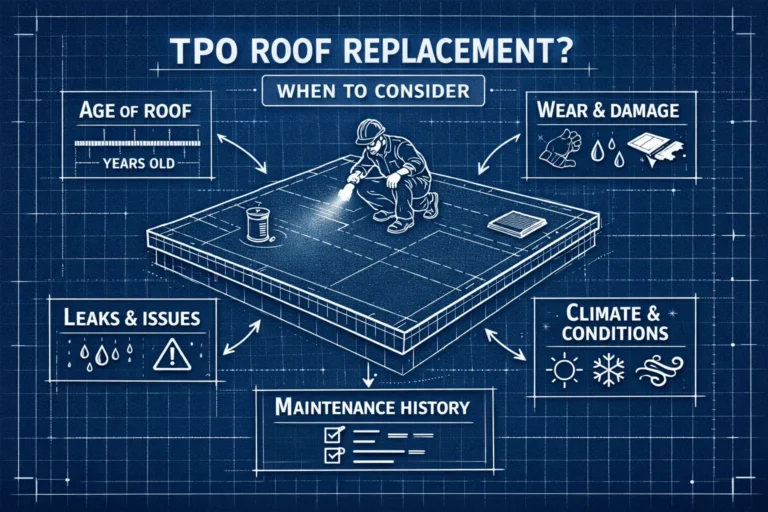
Last updated: 2026-08-01 by Ted Sellers, Owner
For most commercial buildings, call a roofer first, then notify insurance the same day. A roofer can document impact points, stop active leaks, and tell you if the damage is minor or claim-worthy. That order usually makes a hail damage roof insurance claim cleaner, especially on flat or low-slope systems.
When This Applies
This applies to most business owners after a hailstorm
This advice fits owners and managers of offices, warehouses, retail centers, churches, and multi-tenant buildings. It helps most when hail hit a low-slope roof, metal roof, or older membrane system and you need facts before you open a claim.
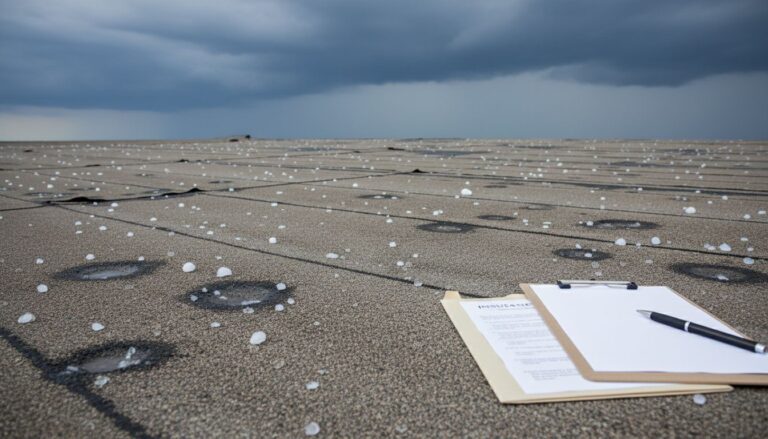
A first inspection matters because commercial damage is often hard to spot from the ground. Hail can bruise membrane, crack flashing, loosen seams, or dent metal without causing an instant leak. If you line up commercial storm damage roofing help early, you start with photos, field notes, and a repair path.
This also applies when tenants, stock, electronics, or production areas sit below the roof. In those cases, time matters because a small puncture can turn into interior loss fast.
It does not fit every storm. If hail only damaged wall panels, signage, or rooftop equipment, another trade may need to lead first. The same goes for buildings with a roof warranty that requires a certain inspection or notice process.
Cases where insurance may need a first call
Call insurance first if your policy has strict notice language and no roofer can inspect quickly. Do the same if part of the roof looks unsafe, power lines are involved, or a collapse risk exists. If you lease the space, contact the owner or property manager right away because you may not have claim authority.
A roofer shouldn’t replace claim notice
A roofer gives you damage facts, not coverage approval. So after you book the inspection, report the loss to your carrier the same day. That timing helps because long delays can create avoidable questions.
If water is entering the building, the roof isn’t a wait-and-see issue. It means your commercial roof needs repair now, even if the full claim review happens later.
Step-by-Step
What to do in the first 24 hours
Use this order if hail hit your building and you need a practical next move.
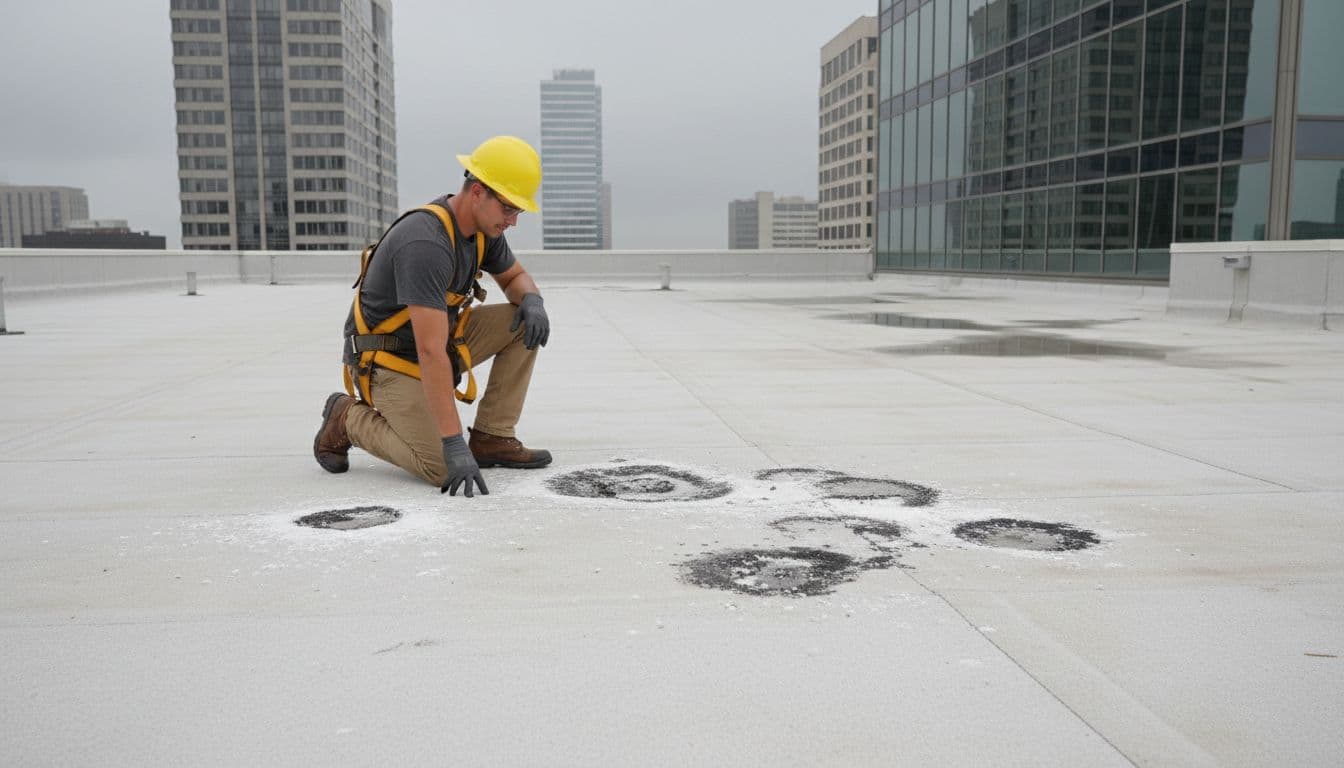
- Protect people and property first. Move stock away from leaks, place containers where water is falling, and block off slick floors. If the roof looks unstable, keep staff off it and call for emergency service.
- Document visible signs from the ground and inside. Take dated photos of dents, ceiling stains, broken skylights, puddles, damaged HVAC covers, and any ruined materials. Save weather alerts and note the storm date and time.
- Schedule a commercial roof inspection before guessing at claim size. On low-slope systems, post-hail leak detection can find punctures, wet insulation, and seam failure that don’t show from the parking lot. That matters because some buildings need targeted commercial flat roof repair, while others have broader membrane damage.
- Notify your insurer once the inspection is booked, or sooner if the carrier wants immediate notice. Give clear facts, not guesses. Share the building address, storm date, visible effects, and any steps taken to limit damage.
- Ask the roofer for a written summary with photos. Good notes should show location, roof type, slope area, damaged flashings, soft spots, and whether water may have traveled beyond the impact area. This gives the adjuster something useful to review.
- Meet the adjuster with your roofer if possible. A good contractor can point out test squares, seam damage, flashing splits, and areas where moisture moved away from the strike zone. That keeps the discussion tied to evidence instead of opinion.
- Pick the remedy that matches the findings, not the fear. If hail damage is isolated, repairs may be enough. If seams have failed across large sections, insulation is wet, or the system is worn out, commercial roof replacement may make more sense than repeated patching.
FAQ
What if there are no leaks after the storm?
No leaks doesn’t mean no damage. Hail often weakens seams, flashing, coating, or membrane first. On a commercial roof, water may travel sideways before it shows inside, so hidden damage can sit there for weeks.
Can temporary repairs hurt the claim?
Only if they erase the evidence
Reasonable temporary protection usually helps because it shows you acted to limit loss. Still, avoid permanent repairs before the roof is documented, and keep damaged pieces, invoices, and photos.
What if the adjuster says the damage is cosmetic?
That depends on the roof system. A dent may be cosmetic on one assembly but a real performance issue on another if it affects seams, fasteners, drainage, or membrane life. Ask for the basis of that call and compare it with the roofer’s photos and test results.
How do I know if my roof needs repair or full replacement?
Age matters, but spread matters more. A few isolated hits may call for repairs only. Widespread punctures, wet insulation, failed seams, or repeat leak paths usually push the roof closer to replacement.
What if the hail exposed old roof problems?
Age and storm damage can exist together
Insurance may not pay for long-term wear, but hail can still create covered damage on an older system. Good records help separate pre-existing conditions from fresh storm impact, which can change the outcome of the claim.
The Bottom Line
Make the first call count
After hail, start with a qualified commercial roofer, then report the loss to insurance right away. That order helps you protect the building, document the damage, and avoid guessing about scope.
The wrong first move can muddy the record. The right one gives you evidence, speed, and a better shot at a fair result.
If hail hit your property, don’t wait for a ceiling stain to make the decision for you.
Need a roof inspection in Saint Paul or the Twin Cities? Call Sellers Roofing Company at +1-651-703-2336 or schedule a free estimate. We are a black-owned, NMSDC-certified MBE roofing contractor with 9+ years experience.