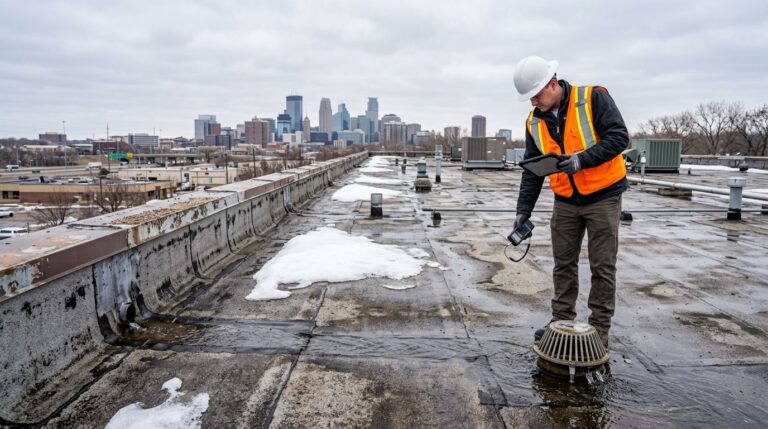
Last updated: 2026-08-01 by Ted Sellers, Owner
Yes, sometimes. You can replace one roof slope in a hail damage roof claim when the damage stays limited to that section, the surrounding roof still performs well, and new materials won’t create matching, code, warranty, or drainage problems. If impact marks spread across multiple areas, or moisture moved below the surface, a larger repair scope is usually the better call.
When This Applies
When one-slope replacement makes sense
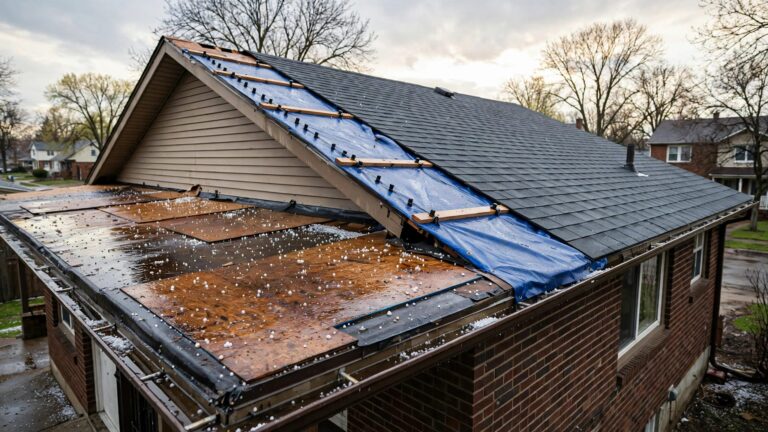
A one-slope replacement works best when the storm hit one side harder than the others. That happens often after wind-driven hail, especially on buildings with taller parapets, nearby structures, or one exposed elevation. In simple terms, one side took the beating, while the rest stayed functional.
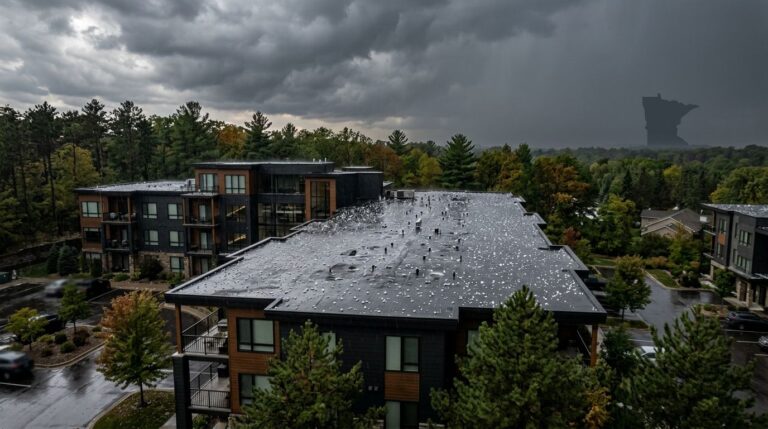
On commercial buildings, “one slope” may mean one roof-facing section, not always one isolated system. That distinction matters. A front metal slope with dented panels may be easy to separate. A large membrane field may not be. Clear break lines, such as ridges, hips, expansion joints, or distinct panel runs, make selective replacement far safer.
What matters most is performance. Cosmetic dents alone don’t always justify broad work. On the other hand, if the hits changed drainage, opened seams, or damaged flashing, the scope grows fast. A qualified Saint Paul commercial roofing company can tell you whether the damaged area is truly independent, or whether the commercial roof needs repair across connected sections too.
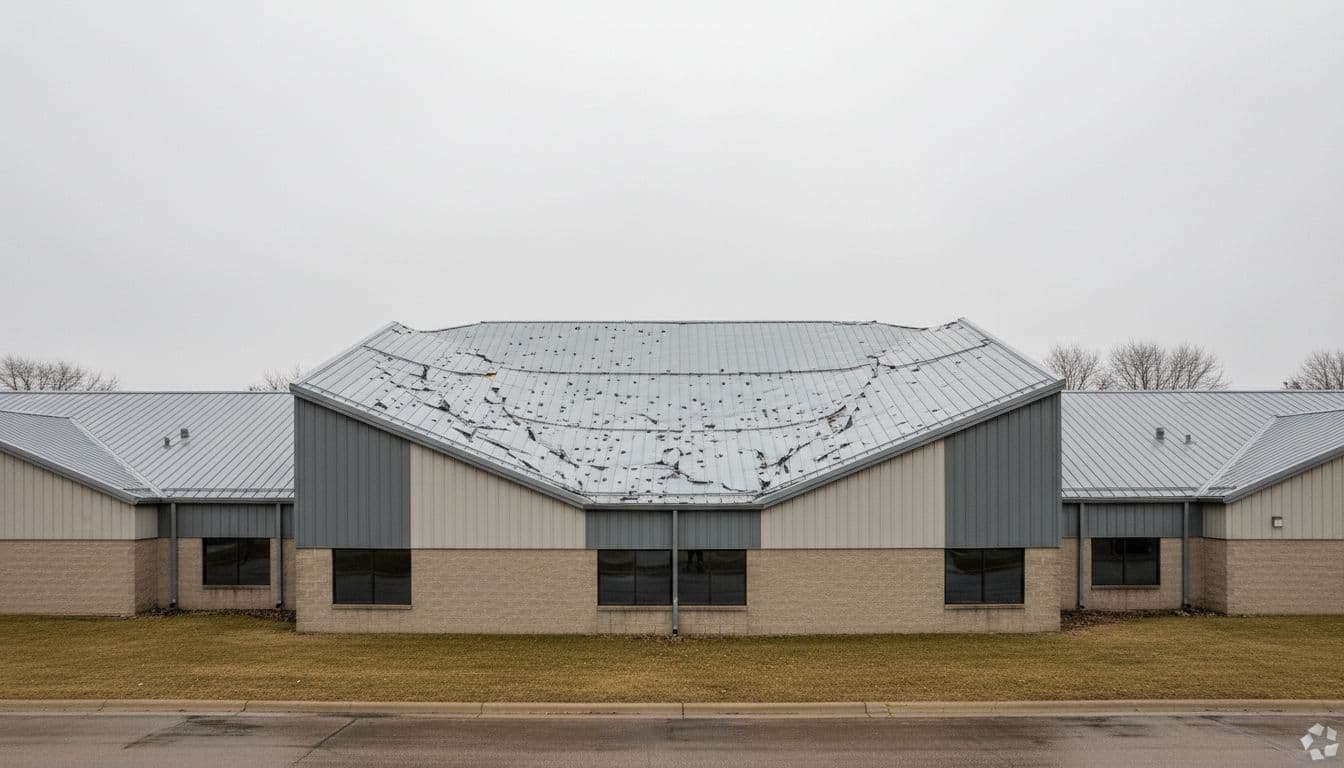
When it doesn’t, even if damage looks isolated
A partial replacement stops making sense when damage extends beyond what you can see from the ground. Hail can bruise insulation, loosen fasteners, crack coatings, or weaken seams outside the obvious strike zone. That’s why one damaged slope can act like the tip of the iceberg.
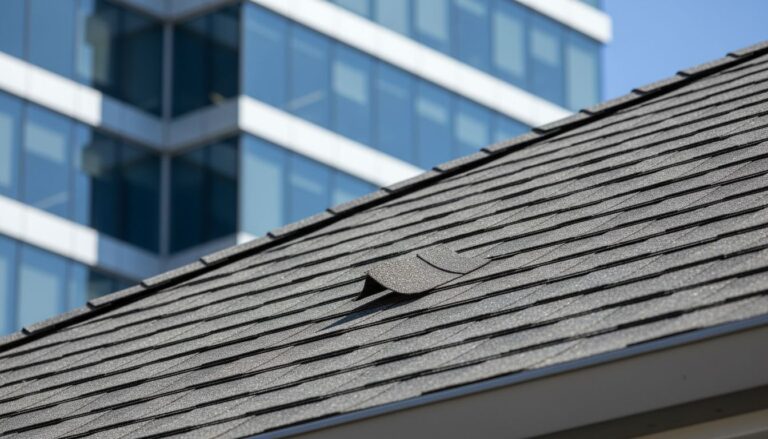
Material matching also drives the decision. If the old panel profile, membrane thickness, or shingle color is gone, the new section may age differently, look patchy, or create warranty trouble. In that case, selective repair may save cash now but cause repeated service calls later.
Edge cases on flat and metal roofs
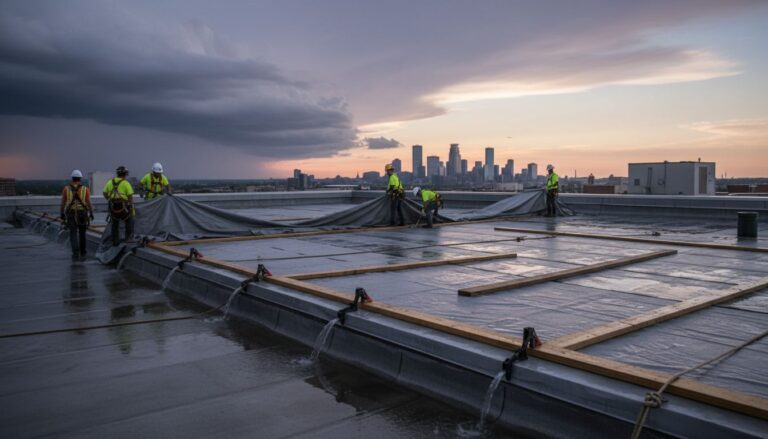
With low-slope systems, a repair boundary isn’t always the same as a visible slope line. Continuous membranes often tie large roof areas together. So a job that starts as one-slope work may turn into wider commercial flat roof repair once a contractor opens the assembly. Metal roofs have their own issue, because panels, clips, and finishes must match exactly.
If the repair crosses wet insulation, open seams, or failed flashing, a smaller scope can become the expensive option.
Step-by-Step
Use this order to avoid the wrong repair scope
- Map the strike pattern. Photograph every dent, puncture, exposed seam, curb, drain, skylight, and edge detail. Note which elevation faced the storm. A one-slope repair only makes sense when the damage pattern stays clearly confined.
- Confirm the roof system and its break points. Shingles, metal, TPO, EPDM, and built-up roofs react to hail in different ways. A steep section with clean valleys may separate well. A continuous membrane often doesn’t, which is why the repair area may extend past the visible hits.
- Check for hidden moisture before approving work. Interior stains are only one clue. Soft spots, damp insulation, and trapped moisture often show up later. If water may have traveled beyond the impact area, schedule commercial roof leak detection Saint Paul before signing off on a limited repair.
- Review age, availability, and warranty terms. A newer roof with matching materials still in production is a strong candidate for a partial fix. An older roof with faded or discontinued components may push you toward broader work, or even full commercial roof replacement.
- Compare repair risk, not just repair price. A cheap bid looks good until the adjacent section fails next season. Ask whether the proposed repair restores drainage, flashing, and seam strength, or just swaps the most obvious damaged material.
- Get the final scope in writing. Your contractor and adjuster should both spell out what is damaged, what is excluded, and how matching or code items are handled. Written scope protects your budget and reduces claim disputes.
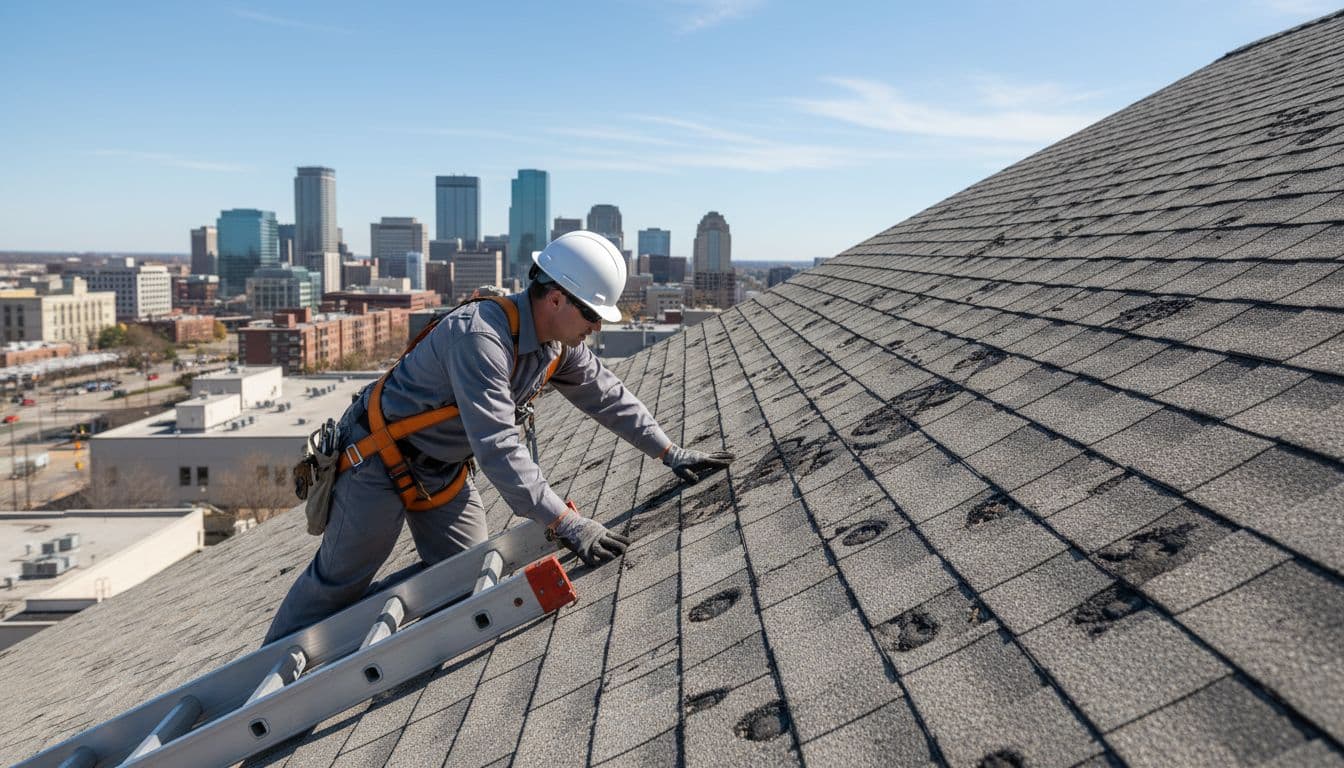
If the roof is flat or membrane-based
Ask where the new seams will land and how wet insulation will be removed. If those answers sound fuzzy, the scope is probably too small.
FAQ
Will replacing one slope make the roof look uneven?
Sometimes, yes. New materials usually look cleaner and reflect light differently. On a back warehouse elevation, that may not matter much. On an office, retail, or tenant-facing building, the mismatch can affect appearance and long-term value.
Can insurance pay for only one slope?
Yes, many carriers approve only the section with direct storm damage. Still, the final scope can grow if matching fails, code work expands the repair, or nearby components were also harmed. Ask for the written basis behind the adjustment.
What if hail hit a flat commercial roof, not a steep one?
Then the word “slope” may not be the best guide. Flat systems often act as one connected field. So the roof may still qualify for a partial repair, but not in one neat rectangle. The repair has to follow seams, moisture spread, and drainage paths.
Can leaks show up weeks after the hailstorm?
Absolutely. Small punctures, bruised insulation, and stressed seams can stay quiet until the next hard rain or freeze-thaw cycle. That’s why a prompt inspection matters, even when no water has reached the interior yet.
Does one-slope replacement affect the warranty?
It can. Manufacturers and installers may limit coverage if the repair uses incompatible materials or poor seam placement. Before work starts, ask who will warranty the repaired area and how it connects to the older roof around it.
Final Take
What should a business owner do next?
You can replace only one slope after hail damage, but only when that area stands on its own and the repair restores the roof as a system. If the damage crosses seams, wet insulation, flashing, or matching limits, the safer answer is bigger than one slope. The right fix is the one that prevents the next leak, not just the next invoice.
Need a roof inspection in Saint Paul or the Twin Cities? Call Sellers Roofing Company at +1-651-703-2336 or schedule a free estimate. We are a black-owned, NMSDC-certified MBE roofing contractor with 9+ years experience.