Last updated: 2026-08-01 by Ted Sellers, Owner
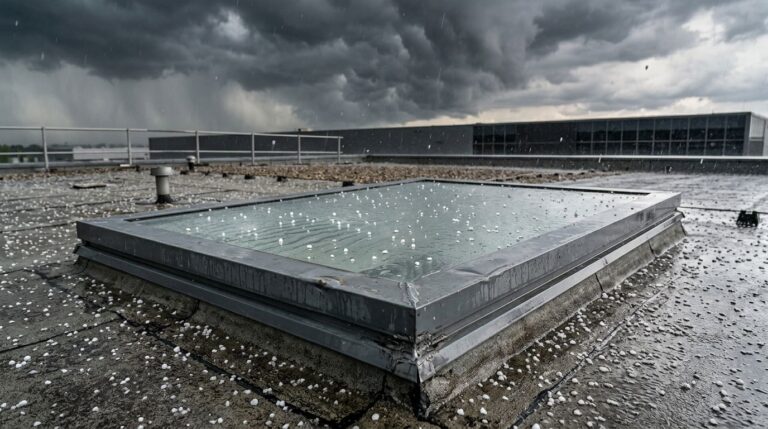
Yes, ballasted EPDM leak detection can work with electronic leak detection (ELD), but not in a “scan right over the rocks” way. In most real-world cases, crews must move ballast in controlled sections to expose the EPDM membrane, wet this synthetic rubber surface, and then test. If the roof was built with ELD-friendly components, results can be faster and more precise.
When This Applies
Ballasted EPDM leak detection works best when the membrane can be exposed
Ballasted EPDM roofs hide the EPDM membrane under river rock, and that’s the whole point: UV protection, wind resistance, and less movement. The downside is simple. If you can’t reach the waterproof membrane, you can’t reliably test it.
ELD is strongest when you can (1) access the EPDM in commercial roofing, (2) create a controlled wet surface, and (3) confirm a conductive substrate below the membrane (often a metal deck, or another reliable ground). That’s why many owners use ELD after a leak turns into a pattern, hail damage, or repeated patch attempts.
If you’re trying to stop water infiltration quickly, pairing ELD with a contractor’s broader commercial roof leak detection Saint Paul process often makes sense, because you get moisture mapping including insulation saturation, detail checks, and membrane testing in one plan.
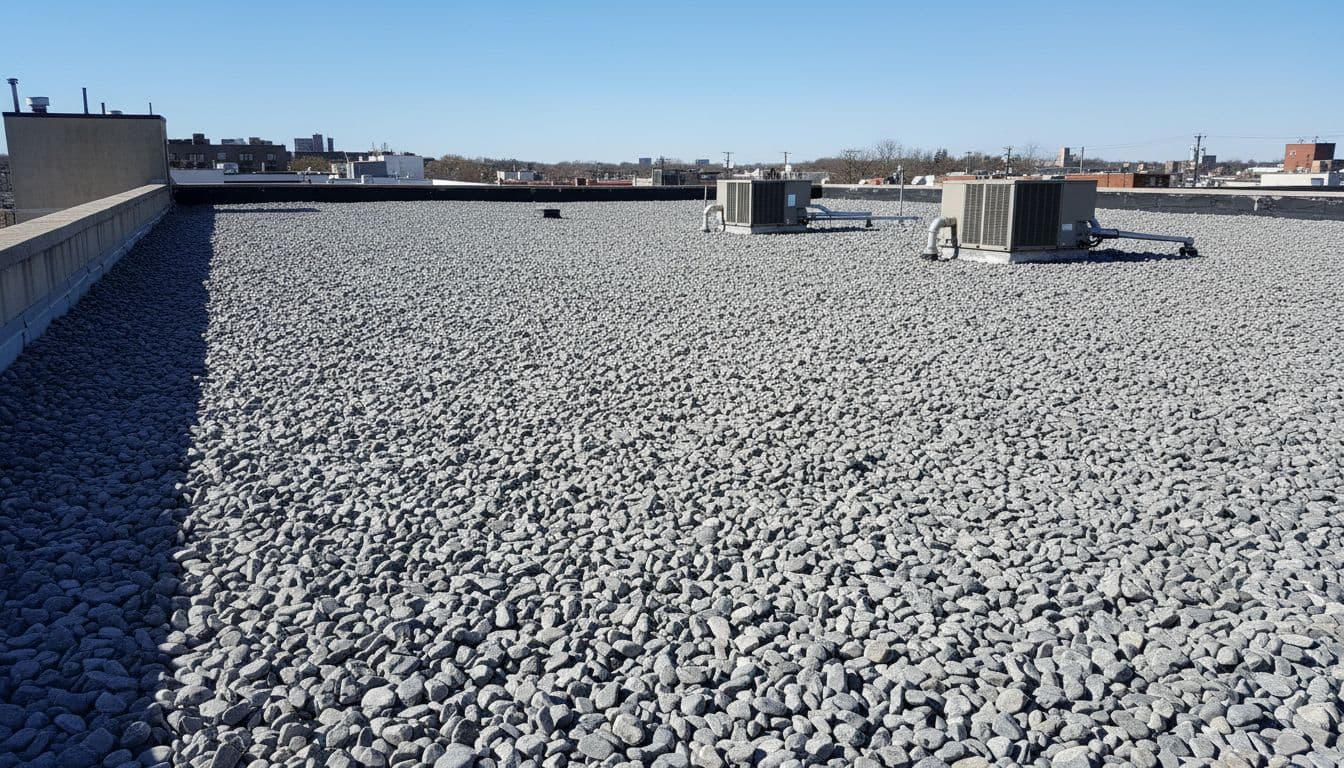
A good rule of thumb: the more ballast you have to move, the more you should treat ELD as a “targeted investigation,” not a quick add-on.
To put it plainly, ballast is like a thick blanket over a smoke detector. The alarm may still work, but you’ve made it harder to hear and pinpoint.
When ELD isn’t the right first move (and what to do instead)
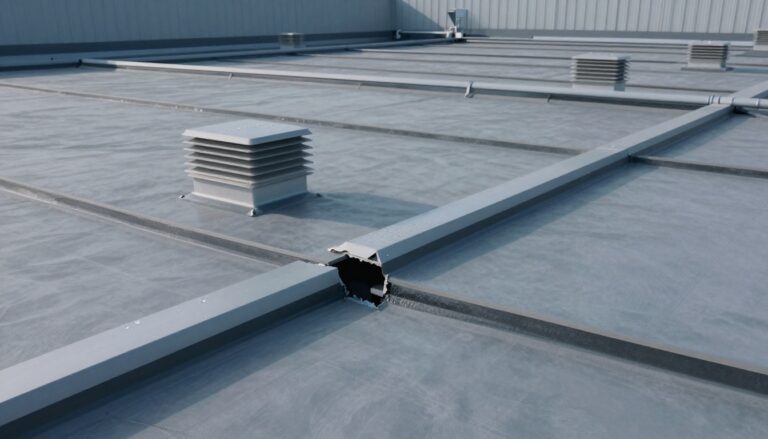
Sometimes your building leaks, yet the roof isn’t the main culprit. Wall caps, rooftop units, and roof flashing can send water inside even when the field membrane is fine. In those cases, ELD can confirm the EPDM is intact, but it won’t replace good diagnostics like visual inspection at edges and penetrations.
Before committing to electronic testing, it helps to match the method to the situation. Industry groups outline ELD methods and limitations in resources like IIBEC’s ELD technical advisory, which is useful when you’re comparing options with your roofer.
Here’s a quick way to think about fit:
| Roof situation | Is ELD a good fit? |
|---|---|
| Ballast can be moved in sections and returned | Yes, often very effective |
| Active leak, but water may be traveling from a curb or wall | Maybe, use with detail inspection |
| Very thick ballast, tight access, lots of rooftop equipment | Sometimes, expect higher labor |
| Widespread wet insulation already suspected | Use ELD to confirm scope, then plan repairs |
If the roof shows broad saturation, ELD can still help, but the result may be a bigger decision about commercial roof replacement instead of another patch.
Edge case: the roof “needs repair,” but the leak isn’t in the membrane
If your commercial roof needs repair because of recurring leaks, don’t assume the EPDM field is torn. A loose termination, failed pitch pan, or clogged drain can create the same interior stain again and again.
For context on why ELD is often chosen for covered membranes (ballast, pavers, vegetated assemblies), see Carlisle’s overview of electronic leak detection systems.
Step-by-Step
A practical ELD workflow for ballasted EPDM roofs
- Confirm the roof type (true ballasted EPDM vs. adhered EPDM with loose stone in spots), then document where leaks show inside.
- Map likely paths for lateral water travel on the roof surface (drains, low spots, expansion joints), because water can migrate far on low-slope roofs.
- Select the ELD method (most ballasted EPDM investigations use low-voltage scanning or field vector mapping rather than spark testing, per ASTM D7877).
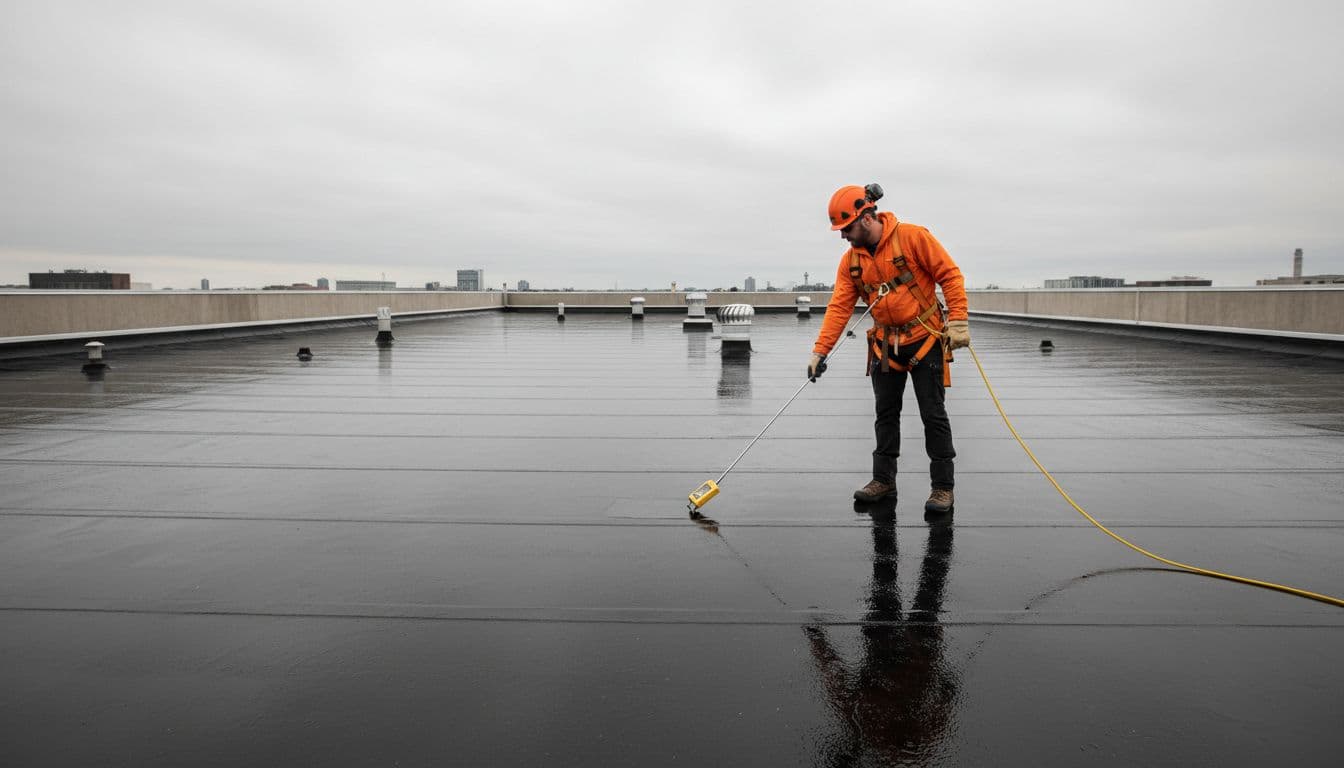
- Set up safety and staging for this non-destructive testing, then choose test zones that minimize disruption to operations and rooftop equipment access while preparing the moisture scanning equipment.
- Move ballast off the first test zone, separating stone from pavers (if present), and protect drains from rock migration.
- Clean and expose the single-ply roofing EPDM membrane, then inspect details in the zone (seams, patches, penetrations) before testing.
- Wet the membrane in a controlled way (enough for signal continuity, not enough to create uncontrolled runoff).
- Connect the ELD equipment and establish a stable ground reference to the conductive underlay, then verify the system reads properly before scanning.
- Scan the test zone and pinpoint membrane punctures, then mark each location clearly for repair.
- Re-test after repairs to confirm watertightness, then return ballast and move to the next zone if symptoms suggest more than one breach.
FAQ
Will ELD still work if we can’t remove all the aggregate ballast?
Yes, but expectations matter. Crews can test in sections and use the results to narrow repairs. If the leak source sits outside the exposed zones, the first round won’t catch it. A smart plan uses interior leak clues to pick the first test areas. Low-voltage ELD performs well here since it requires access only to tested zones.
What usually happens in practice?
Most teams start with the most likely “uphill” areas from the interior leak, then expand only if needed.
Does electronic leak detection tell me how much insulation is wet?
Not by itself. ELD pinpoints membrane breaches, while infrared scanning and core samples help confirm the extent of insulation saturation. When owners want a repair-versus-replace decision, combining methods is often the cleanest way to avoid guessing.
How accurate is ELD on EPDM compared to other roof types?
Accuracy can be excellent when the membrane is exposed and properly wetted. Ballast is the real obstacle, not EPDM. EPDM’s carbon black content aids conductivity for reliable low-voltage testing. Once crews access the field membrane, ELD often finds tiny punctures that visual checks miss.
If ELD finds multiple holes, does that mean we need replacement?
Not always. A cluster of punctures from seam failure might still be handled with commercial flat roof repair, especially if the roof is otherwise in good shape. On the other hand, repeated breaches plus widespread moisture can push the decision toward larger section replacement or a full system change.
A useful decision cue
If repairs keep moving around the building every season, the roof may have a system-wide problem, not a single defect.
What should I ask a contractor before approving ELD on a ballasted roof?
Ask how they’ll handle ballast staging and restoration, how they’ll confirm grounding to the roof deck, and how they’ll verify the repair afterward. Also ask what you’ll receive as documentation, including marked roof diagrams and photos, so future repairs don’t start from zero. Note that high-voltage electronic leak detection may apply if full ballast removal is feasible.
Conclusion
Electronic leak detection can find leaks under ballasted EPDM roofs, but only after crews create access to the membrane and test in a controlled way. When done right, it replaces guesswork with mapped, repairable points. If you’re balancing downtime, tenant impact, and long-term costs, integrate it into a preventive maintenance program for commercial roofing systems; start with a contractor experienced in commercial roofing in Saint Paul and treat ELD as verification, not a magic wand.
Need a roof inspection in Saint Paul or the Twin Cities? Call Sellers Roofing Company at +1-651-703-2336 or schedule a free estimate. We are a black-owned, NMSDC-certified MBE roofing contractor with 9+ years experience.